标签: Asia

亚洲

  • Star power sells: Dubai developers turn to Bollywood

    Star power sells: Dubai developers turn to Bollywood

    Dubai’s property developers are increasingly leveraging the star power of Bollywood celebrities to distinguish their projects in an intensely competitive market. With billions of dirhams worth of real estate launches each quarter, prominent Indian actors have become central to marketing strategies targeting the emirate’s substantial Indian investor community.

    The trend has evolved from conventional endorsements to deep brand integrations. Danube Properties made a significant move in November 2025 by naming a premium 55-story commercial tower on Sheikh Zayed Road ‘Shahrukhz by Danube’ in association with Shah Rukh Khan. According to Danube Group founder Rizwan Sajan, this represents the company’s first integration of a global celebrity’s name directly into a commercial development, signaling how branding has become central to project positioning.

    This celebrity-driven approach has been adopted across the market. Damac Properties featured Alia Bhatt and Ranbir Kapoor in campaigns for Damac Islands 2, while Hrithik Roshan partnered with Imtiaz Developments for design-led residential projects. HRE Development recently appointed Salman Khan to promote its premium portfolio, further strengthening connections with Indian investors.

    The strategy has advanced beyond traditional ambassador roles. Actor Vivek Oberoi now serves as co-founder and managing director of BNW Developments, which has over Dh30 billion in assets under development. His involvement is operational rather than symbolic, representing a new level of celebrity engagement in real estate.

    Market analysts note that while celebrity associations accelerate visibility during crowded launch cycles, fundamental factors remain decisive. Property consultant Rashmi Thakur emphasized that buyers ultimately evaluate location, construction progress, and developer history before committing. According to Rishika Mihani, CEO of Wolves International Real Estate, ‘Celebrity endorsement can open the door, but the deal closes on fundamentals.’

    The evolution continues with innovative approaches such as Fakhruddin Properties appointing John Abraham as Wellness Ambassador for their wellbeing-focused residential concept, and Pantheon Development hosting large-scale concerts as part of community engagement strategies. As competition intensifies, Dubai’s real estate market demonstrates how cultural connections and lifestyle positioning are becoming increasingly vital to marketing success.
  • Buddhist monks rally in Sri Lanka to pressure the government for a wider role in affairs of state

    Buddhist monks rally in Sri Lanka to pressure the government for a wider role in affairs of state

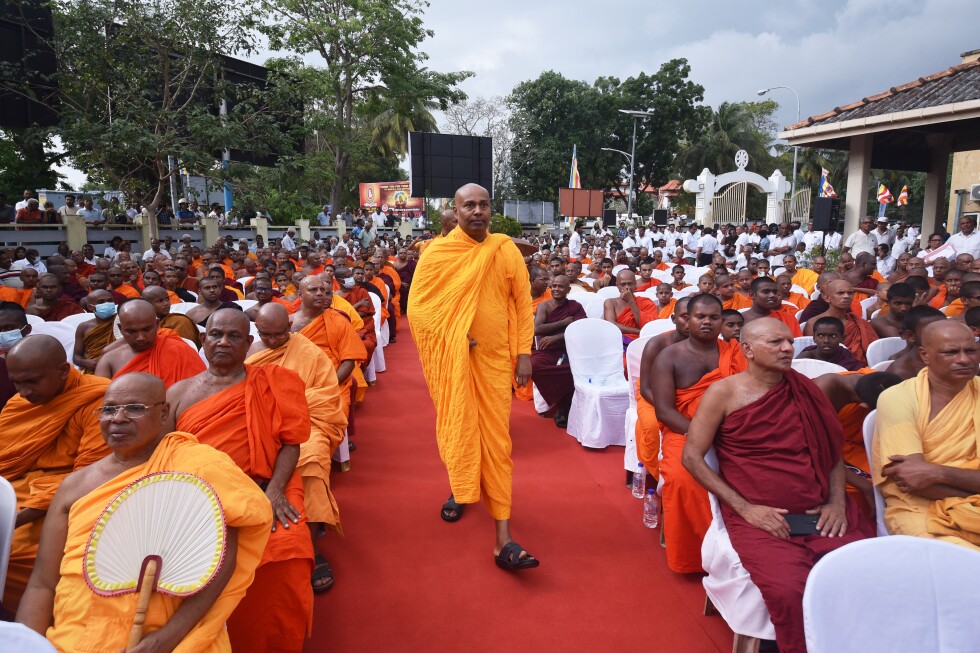
    COLOMBO, Sri Lanka — Hundreds of Buddhist monks organized a peaceful demonstration in Sri Lanka’s capital on Friday, voicing concerns over perceived governmental disregard for their religious authority and the erosion of traditional consultation practices in state affairs.

    The protest proceeded without incident or violence, highlighting the ongoing tension between religious institutions and political leadership in the predominantly Buddhist nation. Sri Lanka’s constitution explicitly recognizes Buddhism as the state religion while simultaneously guaranteeing freedom of religion for all citizens. The charter further mandates that the government must actively protect and nurture Buddhist traditions.

    With Buddhism representing over 70% of the island’s 22 million inhabitants, the clergy maintains substantial influence across social, cultural, and political domains. The nation also hosts significant minority populations including Hindus, Muslims, and Christians.

    During the Colombo gathering, religious leaders publicly recited a formal appeal intended for President Anura Kumara Dissanayake. The document emphasized the government’s constitutional responsibility to ground national values in Buddhist principles, which originated in ancient India during the 5th century B.C. It specifically asserted the clergy’s traditional right to provide counsel on matters of governance.

    The monks’ demands included excluding non-Buddhists from holding highest governmental offices, integrating Buddhist values throughout educational curricula, and enhancing protection for archaeological sites connected to their religious heritage. This demonstration appears to represent a strategic effort by the Buddhist community to reinforce their influence on national policy direction.

  • Shanghai scientists develop pioneering AI system for rare disease diagnosis

    Shanghai scientists develop pioneering AI system for rare disease diagnosis

    Scientists from Shanghai have achieved a groundbreaking advancement in medical artificial intelligence with the development of DeepRare, the world’s first evidence-based reasoning diagnostic system specifically engineered for rare disease identification. This pioneering technology represents a significant leap beyond conventional medical AI systems, offering superior diagnostic capabilities across multiple parameters.

    The innovative system emerged from a collaborative effort between Shanghai Jiao Tong University’s School of Artificial Intelligence and Xinhua Hospital Affiliated to Shanghai Jiao Tong University School of Medicine. Their research findings were formally published in the prestigious scientific journal Nature, marking a milestone in medical AI development.

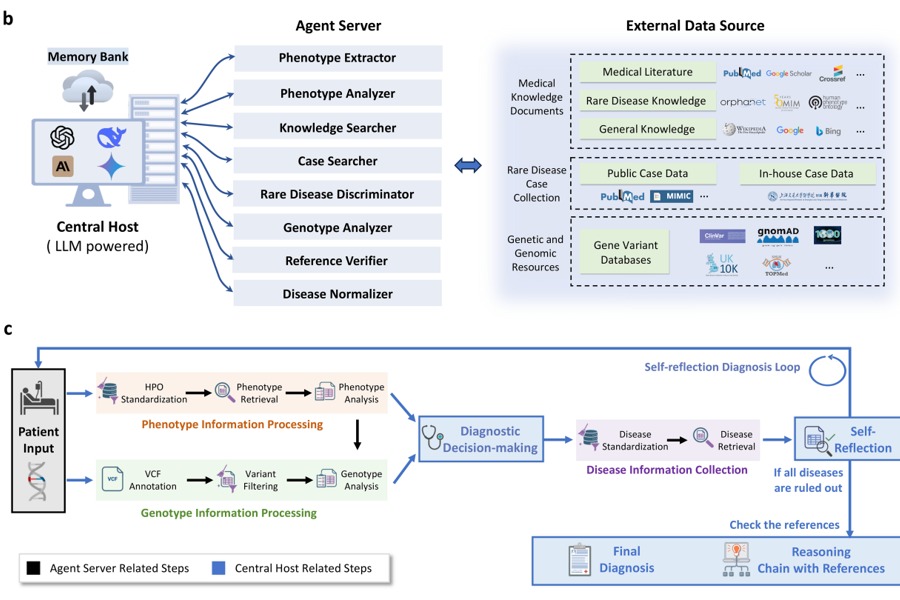
    DeepRare distinguishes itself through its unique architecture that integrates extensive medical literature databases with real-time clinical information. Unlike traditional AI that depends on rapid pattern recognition, this system emulates the methodical ‘slow thinking’ approach characteristic of human medical experts. The technology engages in proactive information gathering by asking clarifying questions to address knowledge gaps, then refines diagnostic hypotheses through continuous cycles of verification and self-assessment to eliminate potential logical inconsistencies.

    A critical feature of DeepRare is its transparent decision-making process. Every diagnostic conclusion generated by the system includes a comprehensive evidence trail, enabling physicians to understand not just the final diagnosis but the complete reasoning pathway that led to that determination.

    In performance evaluations using only clinical phenotype information without genetic data, DeepRare demonstrated remarkable diagnostic accuracy of 57.18%—representing a substantial 23.79 percentage point improvement over previous international models. This capability positions the system as an invaluable tool for initial screening in primary healthcare environments where specialized diagnostic resources may be limited.

    The system’s performance reaches even greater heights when augmented with genetic sequencing data. In complex clinical scenarios utilizing multimodal information, DeepRare achieves comprehensive diagnostic accuracy exceeding 70.6%, dramatically outperforming the widely adopted international benchmark tool Exomiser, which records 53.2% accuracy under comparable conditions.

  • Two giant pandas debut at Urumqi Water Park Zoo

    Two giant pandas debut at Urumqi Water Park Zoo

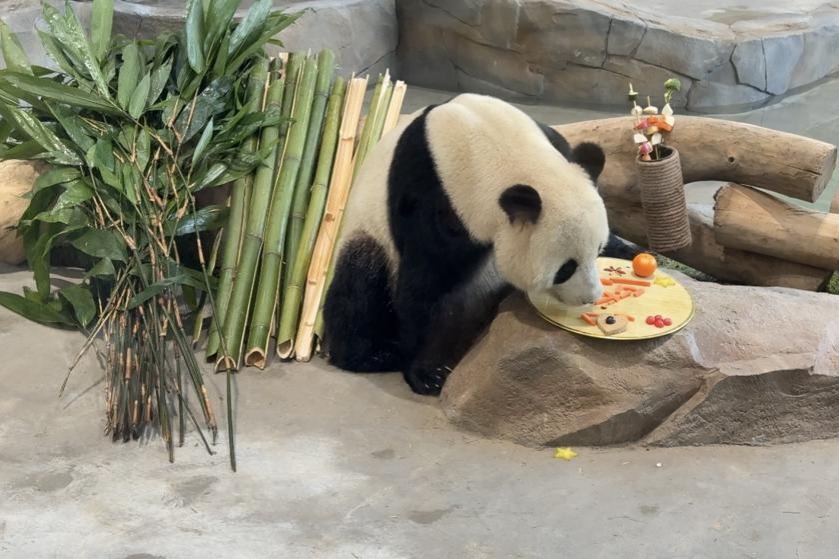
    URUMQI – In a landmark event for wildlife conservation and public education, two giant pandas have officially made their public debut at the Urumqi Water Park Zoo in Northwest China’s Xinjiang Uygur autonomous region. The pandas, named Bao Yuan and De Rui, arrived in the city on February 5 and have now completed a crucial two-week acclimatization period, allowing them to settle into their new habitat.

    The zoo’s newly opened Giant Panda Pavilion commenced its trial operation on Thursday, introducing a unique viewing system to ensure the animals’ welfare. To facilitate a smooth transition and minimize stress, each visitor is allotted a five-minute viewing window. The pavilion will be open daily from 11 am to 7 pm. This carefully managed approach is designed to protect the pandas’ natural behaviors while accommodating public interest, enabling a larger number of guests to witness the celebrated creatures.

    The arrival of the pandas marks a significant cultural and ecological milestone for Xinjiang, enhancing the region’s biodiversity conservation efforts and providing a unique educational resource for residents and tourists. The event underscores China’s ongoing commitment to the protection and preservation of its national treasure, the giant panda.

  • Why emotional connection has become the ultimate luxury

    Why emotional connection has become the ultimate luxury

    In an era defined by digital saturation and transactional interactions, a profound shift is redefining the very essence of luxury. Moving beyond traditional markers of wealth and status, contemporary luxury now manifests in the quality of human connection, intentional presence, and emotional depth. This transformation represents a fundamental evolution from material possession to experiential richness.

    The hyper-connected nature of modern life has created an unexpected scarcity: genuine emotional engagement. As screens mediate relationships and efficiency dominates social exchanges, the capacity for unhurried, focused attention has become increasingly rare. This scarcity positions emotional connection as an exquisite form of luxury that transcends conventional economic measures.

    Travel exemplifies this paradigm shift. Aircraft cabins, once merely functional transit spaces, have evolved into environments cultivating human experience. The luxury of presence enables travelers to engage more authentically with companions, colleagues, and themselves. This intentional focus amplifies the value of every moment, transforming ordinary interactions into extraordinary experiences.

    True modern luxury manifests not through grand gestures but through carefully designed time and quality interactions. It emerges in conversations without agenda, shared adventures requiring collaboration, and the quiet comfort of unspoken presence. These moments demand deliberate boundaries against digital distractions and the courage to prioritize depth over efficiency.

    This evolution challenges traditional success metrics that emphasize output, speed, and scale. Instead, it values patience, curiosity, and emotional resonance as sophisticated indicators of refinement. The luxury of emotional depth represents a more evolved understanding of value—one where the ability to invest in meaningful moments becomes the ultimate currency.

    For leaders, creators, and travelers alike, emotional connection functions as essential nourishment for creativity, insight, and fulfillment. Just as restorative sleep revitalizes the body, intentional emotional engagement sustains the heart and mind. Both require conscious design—from physical environments that encourage presence to conversations that minimize distraction.

    Ultimately, the most valuable experiences cannot be purchased or scheduled. They must be cultivated through authentic presence, shared journeys, and conversations that unfold organically. As luxury continues evolving in the 21st century, its core principles remain constant: agency, intentionality, and the freedom to choose experiences that genuinely enrich human existence.

  • German leader to make his 1st visit to China next week as country seeks ‘right balance’ in ties

    German leader to make his 1st visit to China next week as country seeks ‘right balance’ in ties

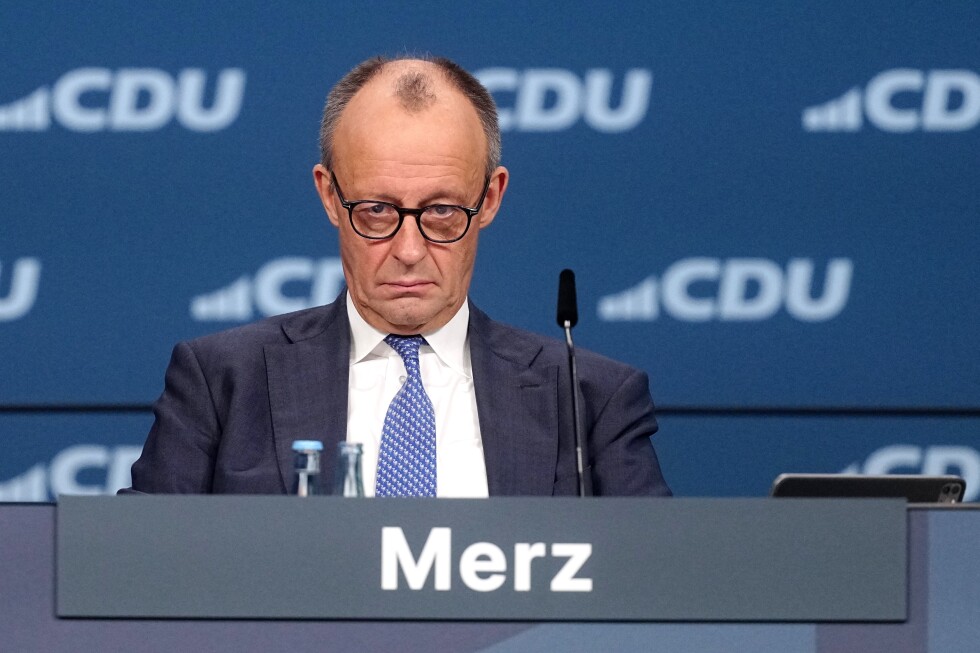
    BERLIN — In a significant diplomatic move, German Chancellor Friedrich Merz is scheduled to undertake his inaugural visit to China since assuming leadership of Europe’s largest economy. The high-stakes visit, set for next week, comes as Germany navigates an increasingly complex international landscape dominated by assertive global powers.

    Government spokesperson Sebastian Hille confirmed on Friday that Chancellor Merz will engage in high-level meetings with Chinese Premier Li Qiang and Chinese leader Xi Jinping in Beijing on Wednesday, followed by a visit to Hangzhou in southeastern China. The diplomatic mission carries the thematic focus of ‘competition,’ with officials emphasizing the critical need to strike an appropriate balance in cooperation with the Asian superpower.

    ‘We seek cooperation where it is necessary and aligns with our mutual interests,’ Hille stated during a press briefing in Berlin, outlining Germany’s nuanced approach to Sino-German relations.

    This diplomatic engagement occurs against the backdrop of Germany’s delicate balancing act in recent years—maintaining robust ties with China while expressing concerns over Beijing’s growing assertiveness and its stance regarding Russia’s invasion of Ukraine. Simultaneously, Berlin has pursued strategic diversification of its commercial partnerships and supply chains to avoid excessive reliance on Chinese trade.

    Recent economic data from Germany’s Federal Statistical Office reveals China reclaimed its position as Germany’s primary trading partner in the previous year, with bilateral trade reaching 251.8 billion euros ($297 billion). This development marks a significant shift, as the United States had briefly displaced China from this position in 2024. Trade with China demonstrated growth during this period, while commercial exchanges with the U.S. declined to 240.5 billion euros.

    Addressing his Christian Democratic Union party convention in Stuttgart, Chancellor Merz emphasized the necessity of global business connections, explicitly including China. ‘China remains a crucial trading partner for Germany, which is why I will travel to China next week accompanied by a substantial business delegation,’ he stated. Neither the Chancellor nor his spokesperson disclosed specific delegation members.

    However, Merz maintained a realistic perspective, cautioning against illusions regarding China’s geopolitical ambitions. He noted that China ‘asserts the claim to define a new multilateral order according to its own rules,’ signaling fundamental shifts in the international landscape.

    The Chancellor articulated that the established rules-based order has fundamentally transformed, with ‘a new world order, an order of great powers, taking shape at accelerated pace.’ He stressed Europe’s urgent need to enhance its economic and military capabilities while aggressively pursuing trade agreements with diverse global partners.

    This diplomatic development occurs alongside preparations for U.S. President Donald Trump’s anticipated visit to China in April, highlighting the intricate interplay of major power diplomacy in contemporary global affairs.

  • Cute meets technology in fashion’s latest obsession

    Cute meets technology in fashion’s latest obsession

    The fashion landscape is undergoing a profound transformation as artificial intelligence merges with emotional design to create irresistible consumer products. The emergence of interactive robotic accessories like Mirumi demonstrates how technology is reshaping purchasing decisions through sophisticated algorithmic targeting and psychological engagement strategies.

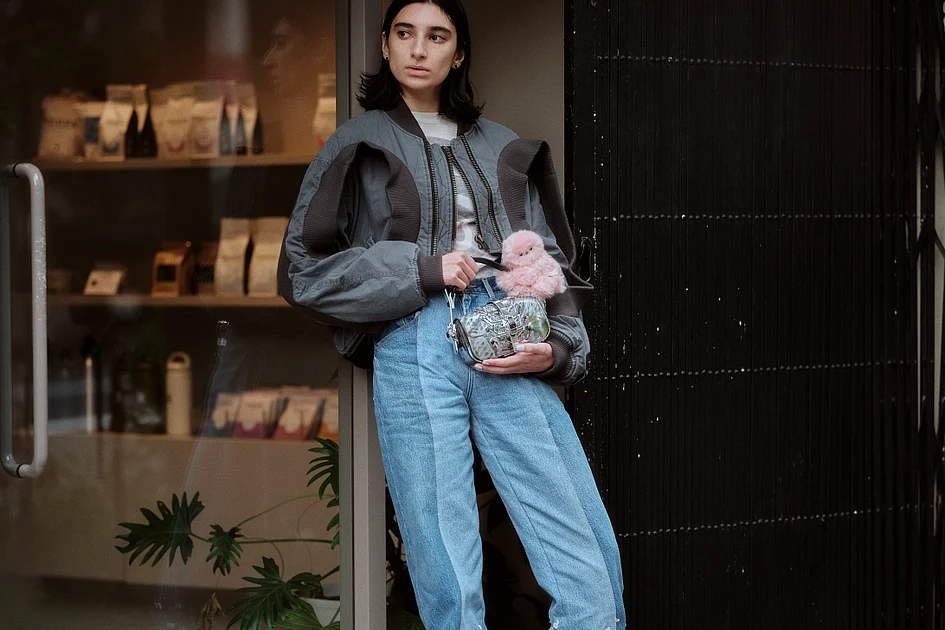
    This technological revolution began capturing consumer attention through precisely targeted social media advertisements that identified potential buyers based on their digital behavior patterns. The Mirumi robotic bag charm—available in pastel pink, cream, and grey—represents a new category of fashion-tech hybrids that combine tactile appeal with interactive artificial intelligence. Unlike traditional accessories, these devices employ sophisticated algorithms to mimic lifelike behaviors, including responsive head movements and simulated emotional expressions designed to trigger nurturing instincts.

    The commercial implications are substantial. Industry analysis from McKinsey projects that AI-mediated commerce could influence between $3 to $5 trillion in global consumer spending by 2030. This shift extends beyond obvious technological displays like LED-enhanced clothing to more subtle algorithmic interventions that determine which fashion styles consumers encounter during online searches.

    What makes these products particularly compelling is their ability to forge emotional connections. The Mirumi’s design intentionally mimics infant-like characteristics, leveraging psychological principles that trigger caregiving responses. This approach has proven remarkably effective, with similar emotional design strategies having generated approximately $20 billion in value for previous viral products like Labubu.

    The rise of fashion technology coincides with growing discussions about AI’s broader societal impact, including recent warnings from AI researchers about potential risks. Yet in the consumer space, the technology is increasingly integrated into daily life through agentic commerce systems that mediate between consumers and products with growing sophistication.

    For those preferring technology-free alternatives, brands like Veganologie offer sustainable options featuring endangered species designs crafted from bamboo fiber leather. However, the dominant trend clearly points toward increasingly interactive fashion-tech hybrids that blend physical products with digital intelligence, creating new categories at the intersection of technology, fashion, and emotional design.

  • Iran warns US bases, assets ‘legitimate targets’ if attacked

    Iran warns US bases, assets ‘legitimate targets’ if attacked

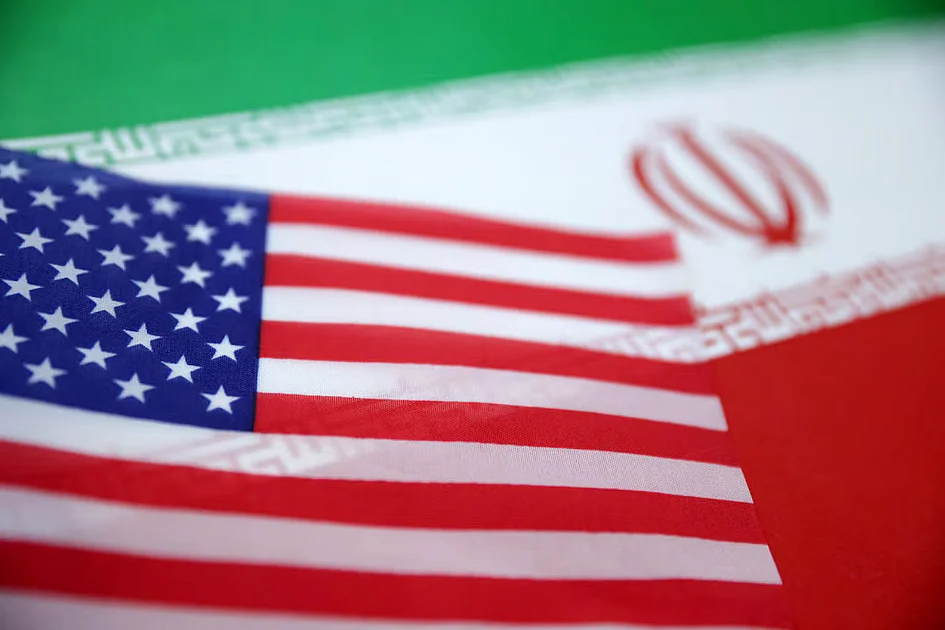
    In a significant escalation of diplomatic tensions, Iran has formally declared United States military installations and assets as “legitimate targets” should Washington initiate military action against the Islamic Republic. The warning was delivered through an official letter from Amir Saeid Iravani, Iran’s ambassador to the United Nations, to Secretary-General Antonio Guterres and the Security Council president.

    The communication directly referenced President Donald Trump’s recent social media post suggesting potential use of UK military bases, including facilities in the Indian Ocean, for operations against Iran. Ambassador Iravani characterized these statements as “belligerent” and indicative of “a real risk of military aggression” that would have catastrophic regional consequences and pose grave threats to international peace.

    This development occurs amid substantial US military deployments to the Middle East, including warships and fighter aircraft, ostensibly to prevent Iranian nuclear weapons development—a ambition Tehran consistently denies pursuing. The Iranian delegation simultaneously affirmed its commitment to diplomatic solutions and addressing concerns regarding its nuclear program on a reciprocal basis.

    President Trump has intensified rhetoric against Iran following recent internal crackdowns on protesters and continued nuclear program concerns, issuing an ultimatum giving Tehran approximately 15 days to reach an agreement. This warning follows indirect talks in Geneva between US envoys, including presidential son-in-law Jared Kushner, and Iranian diplomatic representatives, which reportedly showed some progress despite previous negotiation failures following Israeli strikes on Iranian facilities last June.

  • Hainan Free Trade Port is the future of globalization

    Hainan Free Trade Port is the future of globalization

    The global economic paradigm is undergoing a profound transformation as the traditional model of unfettered globalization demonstrates increasing vulnerabilities. Where once borderless trade and complete market liberalization were considered inevitable pathways to prosperity, recent crises including the 2008 financial collapse, pandemic disruptions, and geopolitical fractures have prompted a fundamental reassessment among major economies.

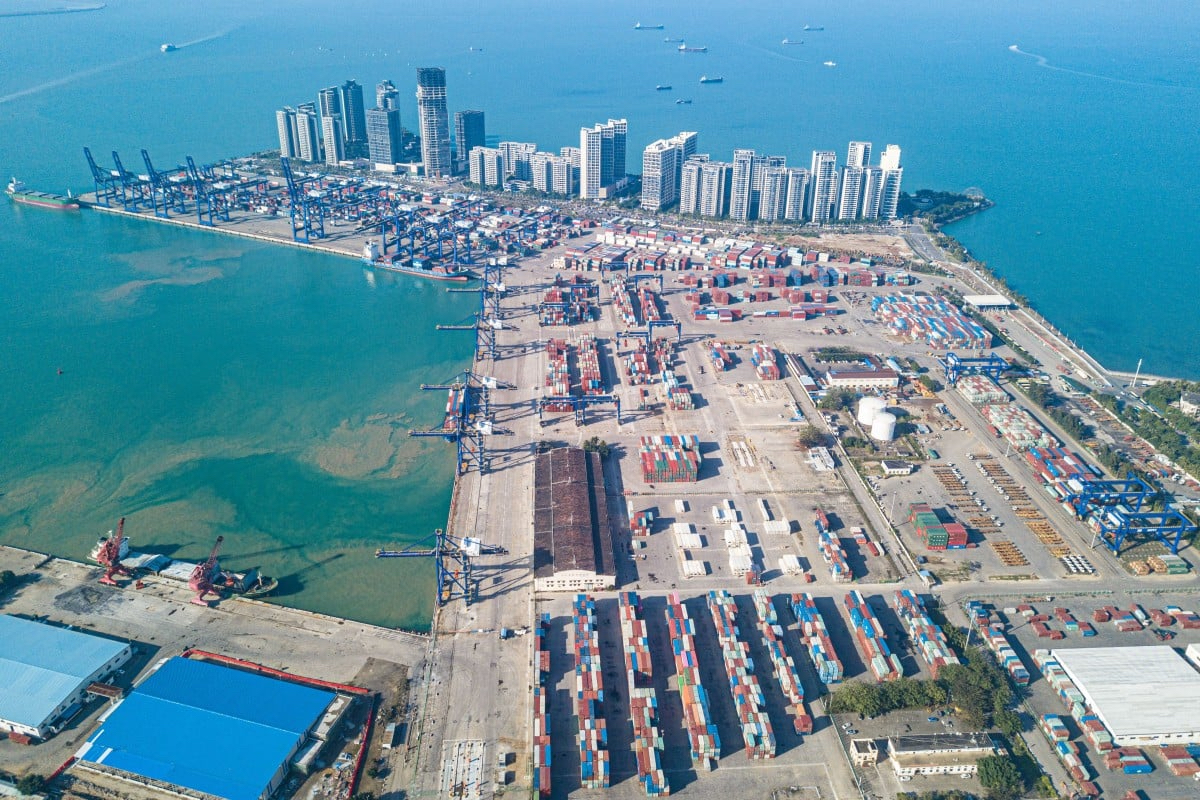
    China’s Hainan Free Trade Port emerges as a groundbreaking response to this new reality, representing not merely another logistics hub but a sophisticated recalibration of how nations might engage with global markets. Unlike conventional free trade zones that function as open gateways, Hainan operates as an institutional filter—a controlled experimental space where globalization is permitted selectively within carefully defined parameters.

    The port’s distinctive architecture creates a deliberate separation between international commerce and China’s domestic economy. Within Hainan’s boundaries, enterprises benefit from minimal tariffs, streamlined administration, and predictable legal frameworks. However, when goods or capital transition to mainland China, standard national regulations and tariffs reappear, ensuring the state maintains oversight of economic flows.

    This innovative approach embodies what analysts term ‘selective globalization’—a middle path between complete isolation and unconditional openness. The strategy reflects China’s evolving perception of economic security, where risk management now rivals efficiency as a primary policy consideration. Rather than retreating from global engagement, China is architecting a more deliberate, state-guided form of international economic integration.

    For international businesses, Hainan presents both opportunity and clarification: advantageous operating conditions coexist with the clear understanding that China’s openness will be strategically managed rather than comprehensive. The port functions simultaneously as an economic zone and a geopolitical instrument, allowing China to maintain global connections while buffering against external vulnerabilities.

    The implications extend beyond China’s borders, particularly for Southeast Asian economies that have positioned themselves as alternative manufacturing hubs. Hainan’s combination of fiscal incentives, regulatory clarity, and proximity to Chinese markets may attract higher-value activities, potentially reshaping regional supply chain dynamics and compelling neighboring nations to reconsider their own strategic economic positioning.

    Hainan ultimately signals a broader transformation in global economic governance—away from neutrality and toward politically conscious engagement where nations actively design their integration parameters. This model acknowledges interconnectedness while asserting national priorities, potentially establishing a new template for how major economies navigate an increasingly fragmented international landscape.

  • Trump sets Iran deadline of 10-15 days, warns Tehran of ‘really bad things’

    Trump sets Iran deadline of 10-15 days, warns Tehran of ‘really bad things’

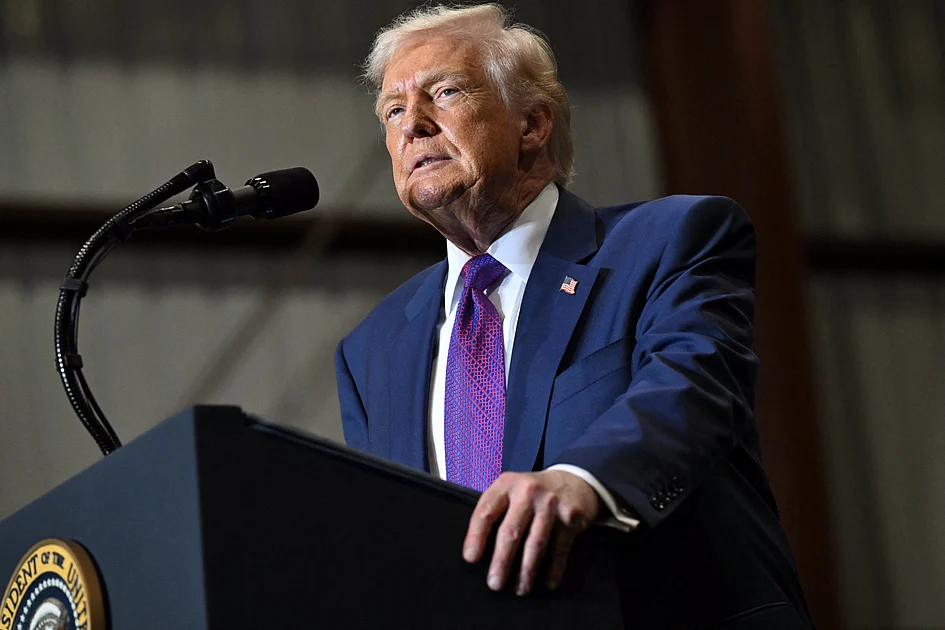
    In a dramatic escalation of tensions, US President Donald Trump has delivered a stark ultimatum to Iran, demanding a nuclear agreement within 10-15 days or facing severe consequences. Speaking at the inaugural meeting of his ‘Board of Peace’ in Washington, Trump declared negotiations were progressing but insisted Tehran must reach a “meaningful” agreement to avoid catastrophic outcomes.

    The presidential warning came amid substantial US military deployments across the Middle East that have intensified fears of regional conflict. While Trump referenced successful airstrikes against Iranian nuclear facilities in June that allegedly “decimated” capabilities, he explicitly threatened further military action should diplomacy fail.

    Iran responded with measured defiance through an official letter to UN Secretary-General Antonio Guterres. While assuring no initiation of hostilities, Tehran warned that any American aggression would trigger “decisive and proportionate” self-defense measures targeting all US bases and assets throughout the region. The communication emphasized that Washington would bear “full and direct responsibility for any unpredictable and uncontrolled consequences.”

    The geopolitical standoff has already influenced global markets, with oil prices climbing amid the heightened tensions. Adding complexity to the situation, Russian naval forces participated in joint exercises with Iran in the Gulf of Oman, a critical maritime corridor for energy transportation.

    Despite diplomatic engagements between Iranian and US negotiators that reportedly established “guiding principles,” significant divisions persist. The White House acknowledges remaining disagreements on crucial issues. Trump maintains his fundamental position: “They can’t have a nuclear weapon. You can’t have peace in the Middle East if they have a nuclear weapon.”

    Iran continues to resist discussions beyond its nuclear program, specifically identifying missile arsenal limitations as an absolute “red line.” Satellite imagery analysis reveals both reconstruction efforts at damaged nuclear sites and military preparations across US installations in the region.

    International concern continues mounting, with Poland becoming the latest European nation to urgently advise citizen evacuation from Iran. Russian officials concurrently cautioned against “unprecedented escalation” while advocating for restraint from all involved parties.