标签: Asia

亚洲

  • Journalists in Bangladesh demand protection amid rising attacks

    Journalists in Bangladesh demand protection amid rising attacks

    DHAKA, Bangladesh — Media professionals across Bangladesh issued a collective demand for government protection Saturday following coordinated mob assaults against the nation’s leading newspapers, raising alarms about press freedom under Nobel laureate Muhammad Yunus’s interim administration.

    Journalists, editors, and media proprietors convened at a conference organized jointly by the Editors Council and Newspapers Owners Association of Bangladesh, condemning the December attacks on Daily Star (the premier English-language daily) and Prothom Alo (the largest Bengali-language newspaper). Both publications operate from the capital city of Dhaka.

    The violent incidents saw enraged mobs storm newspaper offices, set buildings ablaze, and trap staff inside following the death of a prominent Islamist activist. Media authorities accused the interim government of failing to respond to emergency requests for intervention, resulting in extensive property damage and looting. A senior Editors Council representative was physically assaulted when attempting to address the situation on-site.

    Simultaneously, liberal cultural institutions in Dhaka faced similar attacks, though the precise motivations remain unclear. Some protesters have previously accused these media outlets of maintaining connections with India.

    Editors Council President Nurul Kabir characterized these events as reflecting “a dangerous pattern” of institutional suppression. “Those attempting to silence vehicles of democratic aspiration are employing legislation, force, and intimidation,” stated Kabir, who also edits New Age daily.

    The United Nations Special Rapporteur Irene Khan expressed deep concern regarding these developments, noting that “the weaponization of public anger against journalists proves particularly dangerous during election periods.” Khan warned of potential chilling effects on media freedom and minority voices with serious democratic consequences.

    Yunus assumed power in August 2024 after former Prime Minister Sheikh Hasina departed amid mass protests. Despite initial stability promises, international human rights organizations including Human Rights Watch and Amnesty International have criticized the administration’s civil rights record. The government faces additional accusations of enabling radical Islamist elements while pursuing legal action against journalists allegedly supporting the previous administration.

  • Fun-loving Kiwi Campbell Wright gives the US hope for its first biathlon Olympic medal

    Fun-loving Kiwi Campbell Wright gives the US hope for its first biathlon Olympic medal

    The United States stands on the precipice of ending its most enduring Winter Olympic drought as the biathlon team prepares for next month’s Games with unprecedented advantages. While Team USA has captured medals across all other winter disciplines throughout Olympic history, biathlon remains the solitary exception—a distinction the current squad is determined to eliminate.

    Central to this ambition is 23-year-old phenom Campbell Wright, whose remarkable journey from New Zealand to Team USA represents one of the season’s most compelling narratives. Born to American parents who emigrated to New Zealand in the 1990s, Wright honed his skills at the Snow Farm cross-country ski center before developing into a world-class biathlete in Europe. His dual citizenship facilitated a strategic transition to the U.S. team in 2023, bringing with him exceptional credentials including two world championship silver medals from 2025 and the U23 Globe award as the sport’s premier young athlete.

    Beyond Wright’s individual prowess, the American team benefits from what CEO Jack Gierhart describes as “almost a second home” advantage in Antholz, the Italian village hosting Olympic biathlon competitions. Head coach Armin Auchentaller, who grew up in the region, provides intimate knowledge of the terrain, climate, and logistics alongside his Italian support staff. This localized expertise creates an environment where athletes can compete with heightened focus and reduced stress.

    Wright’s technical excellence combines blistering skiing speed with remarkable shooting precision under pressure—a duality that head coach Auchentaller attributes to both innate talent and exceptional mental fortitude. “Beneath his talent lies a core of grit, a fearless heart, and a grounded, simple work ethic,” Auchentaller observed. “His success feels like the natural outcome of years of hard, intelligent work fueled by genuine love for what he does.”

    The team composition blends experience and fresh talent, with four-time Olympian Sean Doherty providing veteran leadership alongside Olympic newcomers Maxime Germain, Margie Freed, and Lucinda Anderson. On the women’s side, Joanne Reid returns after a two-year competitive hiatus for her third Olympic appearance.

    Wright approaches the Games with characteristic equanimity, noting that his relative youth alleviates pressure: “I’m hopefully at the start of a long career. If this season goes poorly, there are many more years to try again.” This philosophical approach, combined with his proven competition methodology, positions the U.S. team to potentially rewrite Olympic history books next month.

  • Snapshots of Chinese space station passing in front of sun

    Snapshots of Chinese space station passing in front of sun

    China Daily Information Co (CDIC) has issued a formal copyright notice asserting exclusive ownership over all content published across its digital platforms. The comprehensive declaration covers textual materials, photographic content, multimedia information, and all other published elements appearing on the organization’s website.

    The notice explicitly prohibits republication or utilization of any protected content without obtaining prior written authorization from CDIC. This restriction applies to all potential forms of reuse, establishing clear legal boundaries around the company’s intellectual property.

    Technical recommendations accompany the copyright statement, with the publisher advising visitors to utilize display resolutions of 1024*768 pixels or higher for optimal viewing experience. The notice further references the organization’s official multimedia publishing license (0108263) and registration details (Number: 130349) to establish its legitimate operational status.

    Complementing the copyright information, the platform provides navigation to corporate information sections including organizational background, advertising opportunities, contact channels, and employment information. The latter includes specific attention to expatriate employment opportunities, indicating the international scope of the organization’s operations.

    The publisher encourages audience engagement through social media channels with a prominent ‘FOLLOW US’ call-to-action, balancing protective copyright measures with community outreach initiatives.

  • China accelerates nuclear fusion engineering, targeting power generation demonstration by 2030

    China accelerates nuclear fusion engineering, targeting power generation demonstration by 2030

    China is dramatically accelerating its nuclear fusion program, shifting from fundamental research to large-scale engineering implementation. The ambitious Burning Plasma Experimental Superconducting Tokamak (BEST) project represents this strategic pivot, with construction advancing rapidly toward demonstrating net fusion power gain and electricity generation by approximately 2030.

    This groundbreaking update emerged from the Fusion Energy Technology and Industry Conference 2026 in Hefei, Anhui Province, where scientists described the project as potentially lighting humanity’s “first nuclear-fusion-powered lamp.” The BEST facility marks a historic transition in global fusion development from scientific exploration to practical energy demonstration.

    Unlike previous experimental devices, BEST is specifically engineered to achieve actual “burning” of deuterium-tritium plasma, replicating the nuclear fusion process that powers the sun. Fusion energy, often termed the “ultimate energy source,” promises virtually limitless clean energy without the radioactive waste associated with nuclear fission.

    China’s fusion program is recognized as a global leader, with its Experimental Advanced Superconducting Tokamak (EAST) having repeatedly set world records. Chinese teams have also contributed significantly to the International Thermonuclear Experimental Reactor (ITER) through multiple key procurement packages.

    The conference additionally announced plans for a “Fusion City” in Changfeng County, Hefei—a comprehensive science and innovation demonstration zone integrating research campuses, industrial clusters, and residential facilities centered around major fusion engineering projects.

    This development occurs within a competitive global context, with the United States, Japan, and the United Kingdom similarly accelerating their fusion power plant initiatives, many targeting fusion electricity generation before 2040.

  • Xinjiang leads China in cross-border rail traffic, central Asian connectivity in 2025

    Xinjiang leads China in cross-border rail traffic, central Asian connectivity in 2025

    Northwest China’s Xinjiang Uygur Autonomous Region has solidified its position as the nation’s foremost hub for Eurasian connectivity, achieving unprecedented cross-border rail traffic volumes throughout 2025. Regional authorities confirmed on January 17, 2026, that Xinjiang’s strategic ports handled the highest rail freight volume across all Chinese provinces, marking a significant milestone in China’s transnational infrastructure development.

    The region has simultaneously emerged as the dominant aviation corridor to Central Asia, with flights connecting regional capital Urumqi to Kazakhstan, Kyrgyzstan, Tajikistan, Uzbekistan and Turkmenistan comprising 35.1% of China’s total passenger flights to these nations. This dual achievement in both rail and air connectivity demonstrates Xinjiang’s evolving role as a critical nexus in China’s Belt and Road Initiative.

    With 19 operational ports, Xinjiang implemented comprehensive measures to accommodate diverse logistical requirements. At Urumqi’s international port, the introduction of specialized cargo zones and expedited clearance protocols for priority shipments catalyzed a remarkable 170.6% year-on-year surge in international cargo flights, according to Liu Peng, an official with the Xinjiang Immigration Inspection General Station.

    The region welcomed over 58 million international travelers in 2025, drawn by cross-border commerce, tourism opportunities, and border-area cultural exchanges. To accommodate this substantial influx, immigration service centers established at major ports including Horgos and Urumqi now provide integrated services encompassing policy consultation, emergency medical assistance, and currency exchange facilities.

    Through strategic investments in ‘smart port’ infrastructure and continued institutional reforms, Xinjiang is enhancing its capacity as China’s primary conduit to Central Asia and beyond, effectively bridging economic networks across Eurasia with increasing operational efficiency.

  • Japanese mayor apologises after calling staff ‘human scum’

    Japanese mayor apologises after calling staff ‘human scum’

    In an extraordinary public confrontation that has shocked Japan’s political establishment, Yokohama Mayor Takeharu Yamanaka has issued a formal apology following damning harassment allegations leveled by the city’s own human resources director. The scandal erupted when Jun Kubota, the municipality’s top personnel official, held an unprecedented press conference to detail what he described as a pattern of abusive behavior from the mayor.

    Kubota presented a disturbing catalog of alleged verbal abuses, claiming Yamanaka routinely deployed dehumanizing language including calling municipal staff ‘idiots,’ ‘human scum,’ ‘useless,’ and ‘low-spec’ employees. The HR chief further asserted that the mayor made inappropriate comments about subordinates’ physical appearances and compared them to animals in what workplace experts would classify as classic power harassment.

    The most severe allegation involved Kubota’s claim that Yamanaka threatened him with ritual suicide demands, telling the official he would have to ‘commit seppuku’ if he failed to secure an international conference bid for the city—a remark that crosses into potentially criminal intimidation under Japan’s workplace laws.

    Initially, Mayor Yamanaka denied all allegations through a statement on his personal website. However, facing mounting pressure, he subsequently acknowledged partial responsibility during a Friday press conference. ‘I want to frankly apologize for placing a psychological burden on the personnel director,’ Yamanaka stated, conceding he had used terms like ‘idiot’ and ‘human scum’ during personnel evaluation discussions.

    While admitting to some verbal misconduct, the mayor denied other accusations including making comments about physical appearances. He announced that an investigation supervised by the deputy mayor was being considered, promising his ‘sincere’ cooperation should such a probe move forward.

    Kubota immediately rejected the partial apology as insufficient, stating: ‘The mayor doesn’t understand anything. I cannot accept that as an apology. I want him to change.’ The public nature of this confrontation between a sitting mayor and his senior HR official represents a remarkable breach of Japan’s typically reserved bureaucratic culture, signaling potentially significant repercussions for municipal governance and workplace practices nationwide.

  • Things to know about the High Seas Treaty as it takes effect

    Things to know about the High Seas Treaty as it takes effect

    A transformative era for global ocean conservation commenced this Saturday as the world’s first legally binding framework for protecting marine life in international waters officially took effect. This historic milestone, formally known as the High Seas Treaty, culminates nearly two decades of complex diplomatic negotiations and establishes governance mechanisms for nearly half the planet’s surface—the vast marine territories beyond national jurisdictions.

    The treaty’s activation follows its September 2023 ratification threshold achievement, requiring endorsement from 60 nations. Current ratification status stands at 83 countries, with recent participation from major maritime powers including China and Japan significantly strengthening its global implementation prospects.

    This groundbreaking agreement establishes the first comprehensive framework for creating Marine Protected Areas (MPAs) across the high seas, which constitute approximately two-thirds of the world’s oceans. Currently, a mere 1% of these international waters benefit from formal protection despite facing escalating threats from destructive fishing practices, commercial shipping, plastic pollution, overexploitation of marine resources, and potential deep-sea mining operations—all exacerbated by climate change impacts.

    With immediate effect, ratifying nations must now collaborate on oceanographic research and technological development while assisting developing countries in building capacity for meaningful participation in ocean governance. Commercial entities planning activities with potential marine environmental impacts must conduct rigorous environmental assessments meeting treaty standards. Researchers investigating marine organisms with commercial applications, such as pharmaceutical development, must implement transparency protocols including international notification and knowledge-sharing mechanisms.

    Critically, signatory countries must now advocate for the treaty’s conservation objectives within other international regulatory bodies governing ocean activities, including regional fisheries management organizations, the International Maritime Organization, and the International Seabed Authority.

    Conservation organizations emphasize the urgency of rapid implementation to achieve the scientifically endorsed target of protecting 30% of global oceans by 2030. Megan Randles of Greenpeace’s Ocean Campaign noted that “the marine protected areas under the treaty will only be as strong as the governments make them,” highlighting the necessity of robust enforcement mechanisms against commercial fishing interests.

    While key institutional structures including the treaty’s secretariat and scientific advisory body remain under development, nations can immediately commence preparatory work for proposed MPAs. Potential conservation sites include the Emperor Seamounts in the North Pacific, the Sargasso Sea in the Atlantic Ocean, and the Salas y Gomez and Nazca Ridges off South America’s coast.

    The United States, having signed but not ratified the agreement, will participate as an observer without voting rights. Despite this absence, treaty advocates maintain that broad international support ensures strong implementation momentum. Rebecca Hubbard of the High Seas Alliance affirmed that while U.S. ratification would be preferable, its current status doesn’t undermine the treaty’s operational viability.

    The first Conference of Parties (COP) is scheduled within twelve months to establish critical operational parameters including budgetary allocations and committee compositions. The earliest possible approval for initial MPAs is anticipated during the second COP session, pending establishment of the scientific review body.

  • Astronauts say training helped ensure safe return

    Astronauts say training helped ensure safe return

    In their first public appearance since returning from orbit, the crew of China’s Shenzhou XX mission provided a detailed account of how they managed a critical emergency involving a damaged spacecraft window, attributing their successful response to exhaustive training and seamless coordination with ground control.

    Mission Commander Senior Colonel Chen Dong and crew members Colonel Chen Zhongrui and Colonel Wang Jie addressed media at Beijing Aerospace City on January 16, 2026, nearly two months after their safe return from the Tiangong space station. Their homecoming, originally scheduled for November, was delayed when the crew discovered a triangular crack in their return capsule’s window during final pre-departure checks.

    The damage, potentially caused by micro-meteoroid or space debris impact, prompted immediate consultation with Earth-based mission specialists. Commander Chen described how the crew quickly documented the damage with photographs while coordinating observations with the Shenzhou XXI mission crew already aboard the station.

    ‘Trust was paramount in that moment,’ Chen emphasized. ‘We maintained absolute confidence in our ground team, who exhausted every methodology to develop the safest possible return protocol. Equally, we trusted in our own capabilities as thoroughly trained astronauts prepared to address unexpected system failures.’

    The mission headquarters ultimately determined the damaged capsule posed unacceptable re-entry risks, activating contingency procedures that saw the crew return aboard the Shenzhou XXI vehicle instead. Colonel Chen Zhongrui highlighted the psychological preparation behind their composed response: ‘We operated with complete assurance, knowing our nation’s robust space program and unified team supported us.’

    Colonel Wang Jie, the mission’s spaceflight engineer, noted how his ground-based construction experience with the space station proved immediately applicable when addressing equipment anomalies in orbit. ‘The additional knowledge we accumulate and repetitions we perform on Earth enable our calm effectiveness during critical moments in space,’ he explained.

    The incident represents one of the most significant in-flight emergencies publicly acknowledged by China’s space program, demonstrating evolving transparency in its rapidly advancing space operations.

  • UN Security Council holds emergency meeting on Iran

    UN Security Council holds emergency meeting on Iran

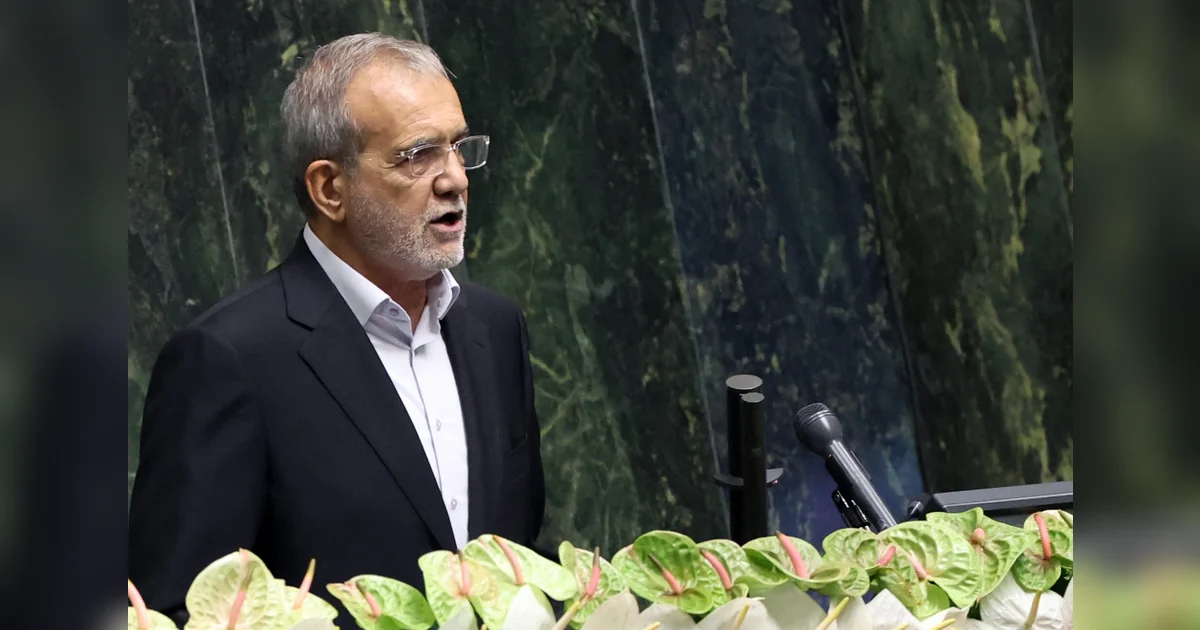
    The United Nations Security Council convened an urgent session on Thursday to address escalating tensions surrounding Iran, revealing a stark geopolitical divide between Western powers and their opponents. The emergency meeting, requested by the United States, became a platform for heated diplomatic exchanges as multiple nations warned against military aggression while others threatened forceful response.

    U.S. Ambassador Mike Waltz set a confrontational tone by declaring that “all options are on the table” regarding potential actions against Iran. This position faced immediate pushback from multiple council members who advocated for de-escalation and peaceful resolution mechanisms.

    Iran’s Deputy Permanent Representative Gholamhossein Darzi delivered a firm response, stating that while his nation seeks neither confrontation nor escalation, it would exercise its right under Article 51 of the UN Charter to respond decisively to any aggression. “Any act of aggression, direct or indirect, will be met with a decisive, proportionate, and lawful response,” Darzi asserted.

    Chinese representative Sun Lei issued a stark warning against military adventurism, cautioning that such actions “would only push the region toward an unpredictable abyss.” He emphasized the need for the United States to abandon its “fixation on the use of force” and adhere to UN Charter principles, while noting that history has repeatedly demonstrated that force and interference generate only further conflict and hatred.

    Russian Ambassador Vassily Nebenzia condemned what he characterized as “extremely dangerous and irresponsible rhetoric” from U.S. leadership, accusing Washington of openly advocating for the overthrow of Iran’s constitutional order. He expressed particular concern about America’s “aggressive course toward the use of military force” and urged “hotheads” in the United States and other nations to “come to their senses.”

    The session revealed broad international consensus against military action, with representatives from Pakistan, Liberia (speaking for African members), and Colombia all warning that threats or use of force would dangerously destabilize an already volatile region and undermine global peace and security.

  • FAST reveals insights into cosmic signals

    FAST reveals insights into cosmic signals

    In a groundbreaking astronomical discovery, China’s Five-hundred-meter Aperture Spherical radio Telescope (FAST) has provided compelling evidence illuminating the origin of mysterious cosmic phenomena known as fast radio bursts. An international research team has determined that at least some of these powerful energy emissions stem from compact binary star systems, resolving a long-standing cosmic enigma that has puzzled astronomers since 2007.

    The research, published in the prestigious journal Science, documents unprecedented observations of repeating fast radio burst FRB 20220529 over a 26-month monitoring period from June 2022 through August 2024. This marks the first time scientists have captured the complete evolutionary process of such a burst, offering critical insights into their generation mechanisms.

    Fast radio bursts represent among the most energetic transient events in the universe—millisecond-duration flashes that release energy equivalent to our sun’s output over an entire week. Despite detecting thousands of these events, astronomers have struggled to pinpoint their precise origins, with theories predominantly suggesting extreme stellar remnants like neutron stars as potential sources.

    Led by astronomers from the Chinese Academy of Science’s Purple Mountain Observatory, the research team utilized FAST’s unparalleled sensitivity to detect clear magnetic environment fluctuations described as ‘surge and recovery’ patterns—a phenomenon never before observed in such detail.

    Duncan Lorimer, the West Virginia University astrophysicist who first discovered fast radio bursts, praised the findings as “an amazing result” that demonstrates “the power of FAST in China to make these monitoring observations.” He emphasized how coupling FAST’s capabilities with survey instruments like the Canadian Hydrogen Intensity Mapping Experiment continues to transform understanding of these cosmic phenomena.

    Since becoming fully operational in 2020, FAST has established itself as a premier facility for pulsar studies, galactic structure mapping, and gravitational wave research. China now plans a significant upgrade to the facility, adding dozens of medium-aperture antennas around the main dish to create the world’s only mixed synthetic aperture array centered on a giant single-dish radio telescope. This enhancement would dramatically improve precision in locating fast radio burst sources.

    Senior engineer Sun Jinghai of the National Astronomical Observatories noted that continued observations may ultimately solve one of astronomy’s most persistent puzzles: what exactly produces these cosmic flashes and why certain variants repeat their brilliant performances across the cosmic stage.