标签: Asia

亚洲

  • Restaurant review: Year of the Horse, wishes and an intimate Lunar New Year experience at MiMi Mei Fair Dubai

    Restaurant review: Year of the Horse, wishes and an intimate Lunar New Year experience at MiMi Mei Fair Dubai

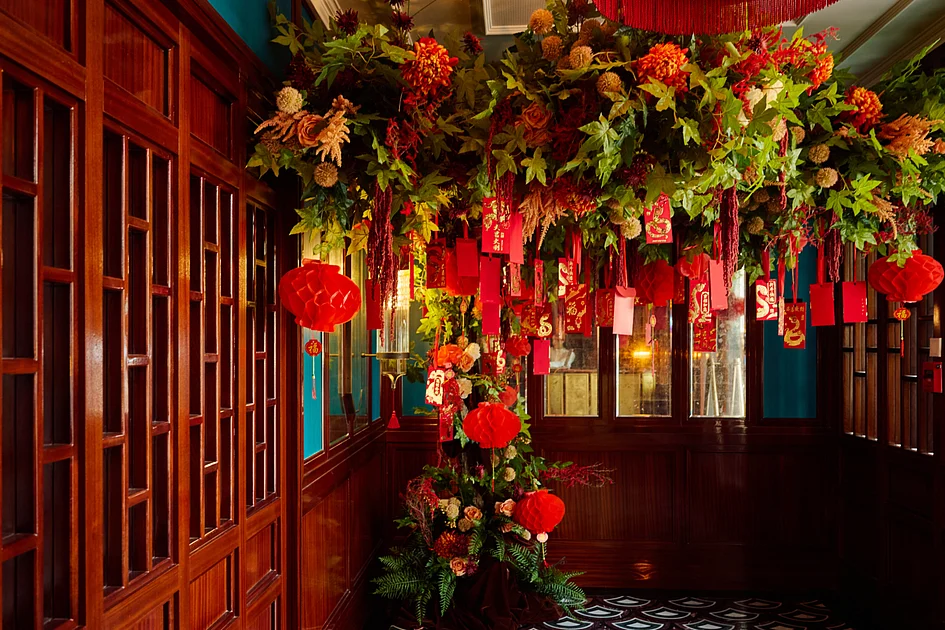
    Nestled within the prestigious Address Residences Dubai Opera, MiMi Mei Fair Dubai has crafted an immersive Lunar New Year celebration that transcends conventional dining. The restaurant’s centerpiece—an elegant wishing tree adorned with crimson ribbons and envelopes—invites patrons to participate in a meaningful ritual: penning their aspirations for the Year of the Horse and hanging them alongside others’ hopes, creating a collective tapestry of wishes.

    The ambiance embodies refined intimacy, with mood lighting casting a warm glow across deep green and scarlet accents. Despite operating at full capacity, the space maintains an atmosphere of cozy exclusivity rather than crowded chaos, facilitating effortless conversation without auditory interference. The layout features distinct lounges, each with its unique character, making the venue ideal for romantic evenings or special celebrations though less suited for formal business engagements.

    Culinary offerings commence with the symbolic ‘basket of wealth’ dim sum assortment, featuring prawn and coriander, truffle edamame, and chicken and chives dumplings—a standout opening act. The steamed XO okra provides a nostalgic yet sophisticated flavor profile, while rock oysters offer a briny freshness enhanced by citrus notes.

    Main courses showcase smoked Chilean seabass glazed in black bean sauce, sweet and sour chicken with bell pepper and pineapple, and a braised truffled mushroom trio accompanied by stir-fried green beans and hakka noodles. The theatrical table-side preparation of wok-baked lobster—where staff expertly extract the tender meat—adds culinary drama to the experience.

    The celebration concludes with classic crème brûlée, though the dessert serves more as a pleasant epilogue rather than matching the memorability of the savory courses. Priced at AED 478 per person for the Lunar New Year sharing menu, the experience positions itself as a premium occasion destination rather than everyday dining, justified by meticulous service, thoughtful details, and well-executed cuisine.

  • Back in the jungle: Nick Jonas begins filming for ‘Jumanji 3’

    Back in the jungle: Nick Jonas begins filming for ‘Jumanji 3’

    Nick Jonas has officially rejoined the production of the upcoming Jumanji sequel, marking his return as the character Jefferson ‘Seaplane’ McDonough. The singer-actor confirmed his participation through an Instagram Reel posted on February 22, 2026, with the caption “We are so back. Jumanji round 3,” expressing evident enthusiasm for reprising his role as the skilled pilot avatar.

    The production, informally referred to as Jumanji 3 (though technically the fourth installment in the franchise), initially commenced filming in Los Angeles during November 2025. Jonas rejoins an ensemble cast featuring returning stars Dwayne ‘The Rock’ Johnson, Jack Black, Kevin Hart, and Karen Gillan. Johnson himself recently shared production updates, including a tribute post on February 17, 2026, commemorating the completion of Danny DeVito’s scenes.

    Jonas’s return to the action-adventure series follows a significant milestone in his music career—the February 6, 2026 release of his fifth solo studio album, ‘Sunday Best.’ Billboard describes the 37-minute project as his most “honest and introspective” work to date, featuring a departure from his typical pop sound toward a more organic, stripped-down aesthetic incorporating acoustic guitars, piano, choirs, and string arrangements. The album explores themes of family, love, faith, and his two-decade journey living with Type 1 diabetes, even featuring his Dexcom G7 glucose monitor on the cover art as a symbol of transparency.

    The upcoming Jumanji film is scheduled for global theatrical release on December 11, 2026, continuing the successful revival of the popular adventure franchise.

  • China’s railways handle 258 mln passenger trips since start of 2026 Spring Festival rush

    China’s railways handle 258 mln passenger trips since start of 2026 Spring Festival rush

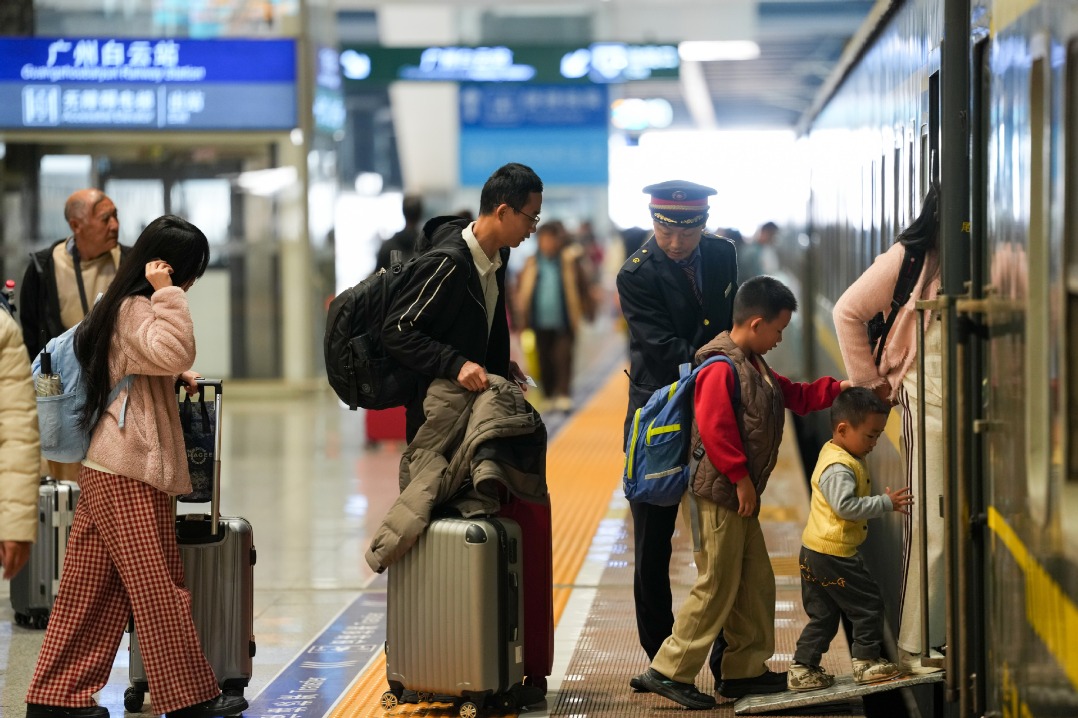
    China’s railway network has demonstrated extraordinary capacity during the 2026 Spring Festival travel period, handling a staggering 258 million passenger journeys as the annual migration reached its midpoint. The China State Railway Group Co Ltd reported these figures on Sunday, highlighting the massive scale of transportation operations during the world’s largest annual human migration event.

    Recent data reveals that February 21st, marking the 20th day of the chunyun season, witnessed approximately 17.19 million railway trips. Transportation authorities anticipated even higher volumes for the following day, with projections reaching 17.93 million passenger journeys. To accommodate this unprecedented demand, railway operators have deployed an additional 2,203 special service trains across the national network.

    The comprehensive transportation strategy has involved significant capacity expansion on major routes, coupled with enhanced station facilities and upgraded onboard services. Railway authorities have implemented multiple measures to optimize passenger experience throughout the travel period, which officially spans from February 2 to March 13, 2026.

    This year’s Spring Festival, traditionally known as the Chinese New Year, occurred on February 17, triggering the massive population movement that characterizes modern Chinese society. The chunyun phenomenon represents not only a transportation challenge but also a cultural tradition that sees millions of Chinese citizens returning to their hometowns for family reunions and celebrations.

  • Eileen Gu in tears after defending her Olympic halfpipe title, learning of her grandmother’s death

    Eileen Gu in tears after defending her Olympic halfpipe title, learning of her grandmother’s death

    LIVIGNO, Italy — Eileen Gu, the 22-year-old freestyle skiing phenomenon, achieved an unprecedented milestone at the 2026 Winter Olympics by securing her third Olympic gold medal in the women’s halfpipe event. This victory not only solidified her status as the most decorated freeskier in Olympic history but unfolded against a backdrop of profound personal loss, as Gu learned of her grandmother’s passing shortly after her triumph.

    Gu’s emotional victory was dedicated to her grandmother, Guozhen Feng, whom she described as an inspirational figure who ‘commanded life and made it into what she wanted it to be.’ The Stanford student revealed she had made a promise to her grandmother before the Games to compete with bravery, a commitment she fulfilled through her record-breaking performance.

    Beyond her athletic achievements, Gu has become a transformative figure in winter sports. Her influence has reportedly inspired over 300 million people in China to try snow sports for the first time since her initial Olympic success. ‘There are girls in China whose lives are going to be touched by the beautiful and wonderful power of sport,’ Gu stated, emphasizing her commitment to expanding the sport’s global reach.

    The accomplished skier has consistently navigated questions about her decision to compete for China, her mother’s homeland, rather than her birth country of the United States. She maintains a diplomatic approach, encouraging critics to focus their energies on making positive contributions to the world in their own ways.

    Looking ahead, Gu envisions a future centered on creating ‘global beneficial impact’ through sports, fashion, and beyond. While she remains focused on her current pursuits, she acknowledges the evolving competitive landscape as other athletes begin to close the gap in technical proficiency.

    Canadian skier Amy Fraser, who finished fourth, acknowledged Gu’s transformative impact: ‘She’s a great skier, and she raises the level for everyone else. But she’s not unbeatable.’ This sentiment aligns with Gu’s own philosophy that true progress comes from elevating the entire sport rather than dominating competitors.

    As Gu continues to break barriers both on and off the slopes, her legacy extends far beyond medal counts, embodying the power of sport to inspire cultural exchange and personal courage across international boundaries.

  • New Dubai road project to slash journey time from 24 minutes to 5 on Hessa Street

    New Dubai road project to slash journey time from 24 minutes to 5 on Hessa Street

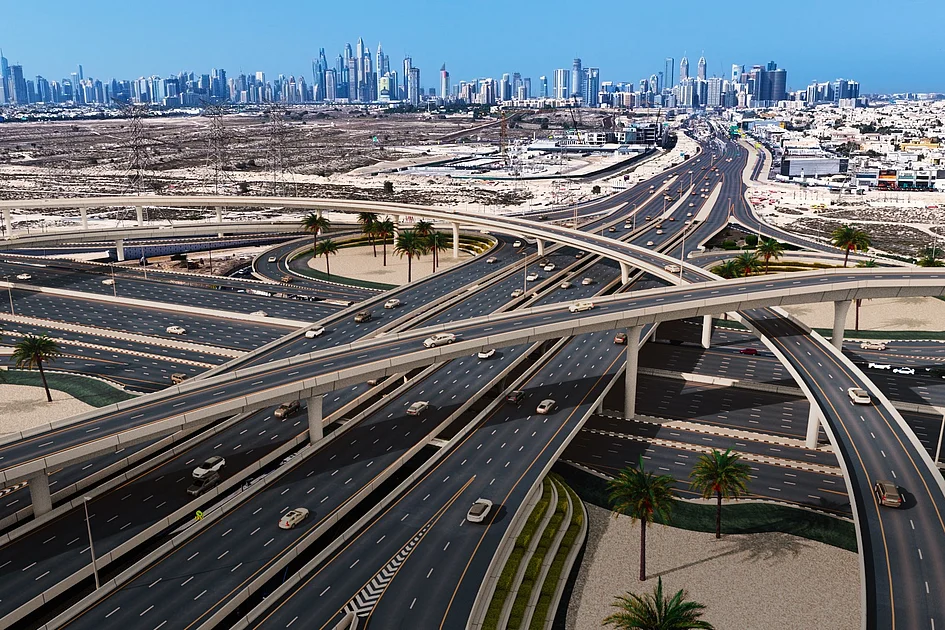
    Dubai’s Roads and Transport Authority (RTA) has initiated a transformative infrastructure project that will dramatically reduce travel times along Hessa Street, cutting a typical 24-minute journey to just five minutes. The ambitious development, currently in its second phase, spans the crucial 3-kilometer corridor between Al Khail Road and Sheikh Mohammed bin Zayed Road, serving as a vital artery for urban mobility.

    The comprehensive upgrade involves sophisticated engineering solutions including the construction of 8,835 meters of bridges and a 480-meter tunnel, significantly enhancing three major intersections. The project will double Hessa Street’s capacity from 4,000 to 8,000 vehicles per hour, directly benefiting approximately 650,000 residents across ten residential and development areas including Al Barsha South, Arjan, Dubai Science Park, and Motor City.

    Phase two specifications include expanding Hessa Street from two to four lanes in each direction, constructing grade-separated collector roads, and implementing multiple directional ramps to optimize traffic flow. A notable 2,215-meter bridge system will accommodate 18,200 vehicles hourly, while a 525-meter braided ramp will eliminate congestion points between Al Khail Road and Al Khamila Street.

    Concurrently, Phase one developments nearing April completion feature upgraded intersections at Sheikh Zayed Road, First Al Khail Street, Al Asayel Street, and Al Khail Road. This initial phase already delivered a 1,000-meter bridge enabling travel time reduction from 15 to 3 minutes between key corridors, alongside a 13.5-kilometer cycling track integrating with Dubai Internet City Metro Station.

    The project incorporates sustainable mobility solutions through a 10.4-kilometer dedicated cycling and e-scooter track connecting Dubai Hills and Dubai Motor City. This infrastructure includes two architecturally distinctive bridges spanning Sheikh Zayed Road and Al Khail Road, each featuring segregated lanes for cyclists and pedestrians with capacity for 5,200 users hourly.

    Additional enhancements involve converting all existing roundabouts to signalized intersections, widening Al Hadaeq Street to dual carriageway with three lanes each direction, and implementing comprehensive traffic management systems throughout the corridor. The development represents Dubai’s continued commitment to cutting-edge urban planning and multimodal transportation integration.

  • Ramadan rush: How Saudi Arabia is managing Umrah crowd at Grand Mosque

    Ramadan rush: How Saudi Arabia is managing Umrah crowd at Grand Mosque

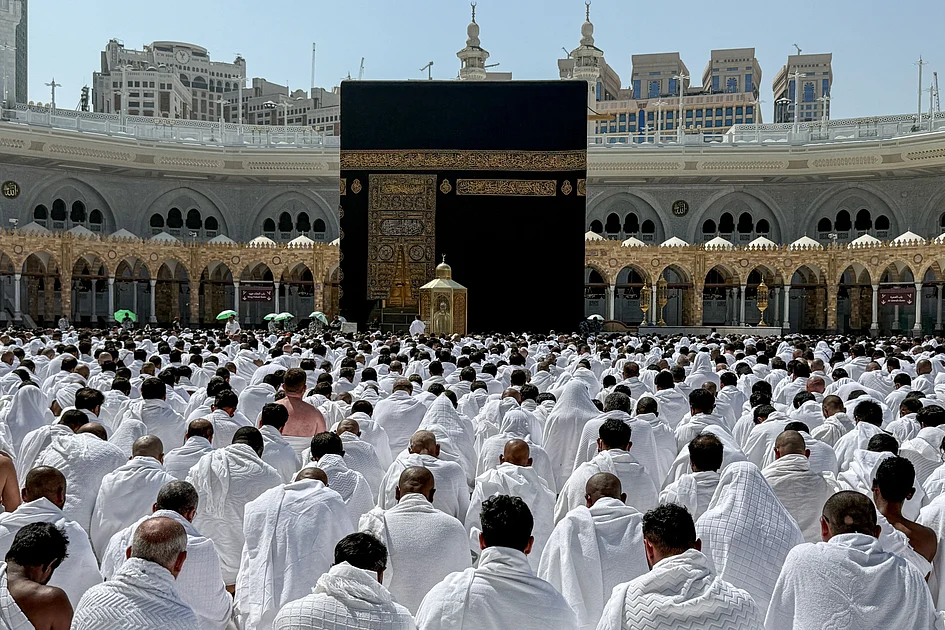
    Saudi authorities have enacted a sophisticated crowd control framework to accommodate the substantial surge in Umrah pilgrims during Ramadan at Mecca’s Grand Mosque. With visitor numbers escalating significantly before, during, and after prayer times, officials have prioritized pedestrian safety through strategic traffic regulations and dedicated walking corridors.

    The comprehensive plan includes establishing pedestrian-exclusive zones in the central area with extended vehicle restrictions around prayer periods. Unauthorized motorcycles and bicycles face prohibition, while improperly parked vehicles disrupting pedestrian flow are subject to immediate towing and penalties.

    Transportation logistics have been meticulously organized, featuring public bus services from King Abdulaziz International Airport and fourteen designated parking facilities—nine within the holy capital and five along approach roads. During peak congestion, worshippers unable to access the Grand Mosque or its external courtyards are redirected to alternative prayer facilities equipped for their needs.

    The sacred Mataf area, the white marble precinct encircling the Kaaba, has been reserved exclusively for Umrah rituals throughout daylight hours to ensure ceremonial safety and sanctity.

    Access management employs an innovative illuminated signage system at mosque entrances: green signals indicate available space, while red denotes full capacity. Security personnel actively guide worshippers to accessible prayer, tawaf, and sa’i areas across multiple levels and courtyards.

    Transport alternatives include Haramain train services to Rusayfah station, shuttle connections between parking areas and central transport hubs, regulated taxi services, and walking routes from adjacent neighborhoods. Private vehicle access remains restricted to non-Muhrim drivers complying with onsite traffic directives.

    Capacity constraints emerge particularly during Friday prayers, Maghrib, Isha, Tarawih, and the spiritually significant Tahajjud prayers in Ramadan’s final ten days. Authorities emphasize strict adherence to directional signage and prohibit congregation in walkways, roads, and courtyards.

    Accessibility provisions allocate ground floor space (excluding Mataf) for persons with disabilities, while electric carts operate on the first floor for Umrah performers requiring mobility assistance.

    Mandatory Umrah permits remain essential, with pedestrian routes receiving priority in the Grand Mosque’s immediate vicinity. Muhrim drivers must utilize designated city-entry parking and complete their journey via public transport.

    Prohibited activities encompass weapons possession, smoking, vending, begging, donation collection, luggage storage, escalator interference, and bringing children into overcrowded zones. Any action compromising safety or disrupting worship activities is strictly forbidden.

  • Pakistan launches deadly strikes in Afghanistan; children among dozens killed

    Pakistan launches deadly strikes in Afghanistan; children among dozens killed

    Pakistan executed a series of military airstrikes targeting militant positions within Afghan territory during overnight operations, marking a significant escalation in cross-border tensions. The Pakistani Ministry of Information and Broadcasting confirmed the offensive targeted seven locations along the border region, specifically aimed at Afghanistan-based militant organizations including the Pakistani Taliban and an Islamic State affiliate.

    The operation, described as retaliatory measures following recent suicide bombing incidents within Pakistan, represents the most substantial military action since October border clashes that resulted in over seventy casualties. According to Islamabad’s official statement, the strikes were conducted in response to security failures by Taliban authorities to address militant sanctuaries within their territory.

    Afghan government spokesperson Zabihullah Mujahid reported the attacks struck provinces of Nangarhar and Paktika, resulting in numerous casualties including women and children. An AFP journalist in Bihsud district witnessed emergency responders using heavy machinery to search for victims beneath collapsed structures. Confidential security sources indicated that among the deceased were twelve children and teenagers killed when a residential compound was struck.

    The deteriorating relationship between the neighboring nations has intensified since the Taliban’s return to power in 2021, with security concerns constituting the primary point of contention. Pakistan maintains that Afghan territory serves as a base for militant operations against its interests, while Kabul consistently denies these allegations.

    The recent escalation follows a particularly devastating suicide bombing at a Shiite mosque in Islamabad two weeks prior, which claimed at least forty lives and injured over 160 people—the deadliest attack on the capital since 2008. Islamic State claimed responsibility for that assault, though Pakistan attributes broader militant activity to Taliban-tolerant policies.

    Previous border conflicts had been temporarily resolved through Qatar and Turkey-mediated ceasefires, though subsequent diplomatic negotiations in Doha and Istanbul have failed to establish lasting security agreements between the two nations.

  • Respect Moment | Guardians of Peace

    Respect Moment | Guardians of Peace

    While millions of Chinese families gathered for traditional Spring Festival reunions, the nation’s military personnel maintained unwavering vigilance across the country. During the most important cultural celebration in China, these dedicated service members continued their protective duties to ensure national security and public safety.

    The Spring Festival period, marking the Lunar New Year and characterized by massive domestic travel and family gatherings, represents a time when security demands intensify significantly. Military personnel across all branches remained deployed at their stations, from remote border outposts to urban security details, demonstrating their commitment to public welfare.

    This annual display of military dedication has become an integral part of China’s Spring Festival tradition, symbolizing the sacrifice made by armed forces personnel for national stability. Their continuous service enables the peaceful celebration enjoyed by citizens nationwide, particularly during this period of heightened cultural significance and mass movement.

    The presence of military guardians during festive periods reflects China’s comprehensive approach to national security and public safety management. Their preparedness during major public holidays ensures that traditional celebrations proceed without disruption, maintaining the peaceful environment that characterizes modern Chinese society.

  • T20 World Cup co-hosts lose as South Africa ends India’s winning run and England beats Sri Lanka

    T20 World Cup co-hosts lose as South Africa ends India’s winning run and England beats Sri Lanka

    In a stunning reversal of fortunes, South Africa delivered a crushing blow to defending champions India in the Super Eights stage of the T20 World Cup, securing a commanding 76-run victory at Ahmedabad’s Narendra Modi Stadium on Sunday.

    The Proteas’ comprehensive performance marked a significant redemption after their defeat to India in the 2024 tournament final. South Africa’s decision to bat first proved strategic as they posted a formidable 187-7, powered by David Miller’s explosive 63 runs off just 35 deliveries, featuring seven boundaries and three sixes.

    India’s response faltered dramatically, collapsing to 111 all out in 18.5 overs against South Africa’s relentless bowling attack. Left-arm paceman Marco Jansen emerged as the chief architect of India’s downfall, claiming impressive figures of 4-22 in 3.5 overs. The defeat terminated India’s impressive 12-match winning streak that had persisted since the 2024 championship.

    The day proved equally disappointing for tournament co-hosts Sri Lanka, who suffered a 51-run defeat to England in Pallekele. England’s innings of 146-9 was anchored by Phil Salt’s resilient 62 off 40 balls, with Will Jacks providing crucial late momentum through his 21-run contribution. Sri Lanka’s batting lineup crumbled at 95 all out as Jacks’ spin bowling dismantled their power play, securing England’s 12th consecutive T20 victory against the host nation.

  • Eileen Gu finds gold on the halfpipe to make it 6 medals in 6 Olympic events over her career

    Eileen Gu finds gold on the halfpipe to make it 6 medals in 6 Olympic events over her career

    LIVIGNO, Italy — Eileen Gu’s calculated risk culminated in Olympic immortality Sunday as the freeskiing phenom secured her third career gold medal in the women’s ski halfpipe final at the Milan Cortina Winter Games. The 22-year-old Stanford student completed an unprecedented medal sweep across three Olympic events, solidifying her status as the most decorated athlete in her sport’s history.

    Gu’s victory marked the triumphant conclusion of a grueling 16-day odyssey that saw her compete in halfpipe, slopestyle, and big air disciplines—a scheduling marathon no other female athlete attempted. Her final performance delivered both the highest individual run score (94.75) and the two best overall scores among all competitors, despite an initial stumble on her first attempt that echoed previous qualifying round struggles.

    “I took a big risk in trusting myself,” Gu reflected after securing China’s first 1-2 finish in the event alongside silver medalist Li Fanghui. “There was a chance everything could go wrong and I could have walked away with nothing because I was trying to do too much. But in my head, even if everything crashes and burns, I tried. I’ll never regret trying.”

    The California-born skier, who competes for her mother’s homeland, now stands alone in freeskiing history with six Olympic medals (three gold, three silver) across two Winter Games. Her technical superiority was evident in her winning run, which featured two 900-degree spins in opposite directions and six complex tricks—one more than her Chinese teammate attempted.

    Gu’s impact extends far beyond competitive results. She has become a cultural phenomenon who has reportedly inspired over 300 million Chinese citizens to take up winter sports since her Beijing 2022 debut. Though her geopolitical positioning continues to generate discussion, Gu maintains focus on sport development: “I encourage those people to use that energy and direct it toward something that makes the world better in their own way.”

    As spectators chanted “Gu Ailing”—the Mandarin pronunciation of her name—the exhausted but elated champion acknowledged the significance of her accomplishment: “I walked away as the most decorated free skier of all time, male or female. I have the most gold medals of any free skier ever, and that is something that I’m so, so proud of.”