标签: Asia

亚洲

  • China braces for peak air travel as Spring Festival rush starts

    China braces for peak air travel as Spring Festival rush starts

    China’s civil aviation network has activated comprehensive operational measures as the nation’s massive Spring Festival travel migration (chunyun) commenced on February 2, 2026. This year’s extended nine-day holiday period—the longest in recorded history—has triggered unprecedented demand for air transportation, testing the capacity of the country’s aviation infrastructure.

    According to the Civil Aviation Administration of China (CAAC), the opening day witnessed approximately 19,080 scheduled flights transporting an estimated 2.19 million passengers. Major aviation hubs including Guangzhou Baiyun, Shanghai Pudong, Shenzhen Bao’an, Beijing Capital, and Chengdu Tianfu airports reported particularly heavy traffic volumes, with robust demand on routes connecting Shanghai, Hangzhou, Guangzhou, Shenzhen, and Beijing.

    The extended holiday period has fundamentally altered travel patterns, stimulating long-distance journeys and prolonging the pre-festival peak travel window. Aviation authorities project daily flight operations could approach 20,000 in the week preceding the Spring Festival, while the holiday period itself (excluding New Year’s Eve and the first day) is expected to maintain a daily average of approximately 19,500 flights—representing a substantial increase of roughly 1,000 flights daily compared to 2025 levels.

    Throughout the entire 40-day travel period spanning February 2 to March 13, China’s aviation sector anticipates processing approximately 95 million passenger journeys. This translates to a daily average of 19,400 flights and 2.38 million passenger trips, demonstrating the immense scale of this annual population movement.

    Airlines have implemented significant capacity expansion strategies to accommodate surging demand. Air China revealed plans to operate over 70,000 passenger flights during the chunyun period, marking a year-on-year increase exceeding 10%. The carrier has strategically focused additional capacity on trunk routes connecting major urban clusters and popular tourist destinations. Notably, the airline has deployed all nine of its domestically manufactured C919 aircraft for Spring Festival services, showcasing China’s growing aviation manufacturing capabilities.

    Air traffic management authorities have enhanced coordination protocols to ensure operational efficiency. The North China Air Traffic Management Bureau forecasts that Beijing’s Capital and Daxing airports will collectively handle 88,800 takeoffs and landings throughout the travel rush. Refined traffic flow management measures have been implemented to optimize efficiency during peak operational periods.

    At Beijing Capital International Airport—projected to process 7.89 million passengers during the 40-day period, representing a 1.5% increase from 2025—authorities have adjusted staffing patterns at critical passenger service points and strengthened coordination with municipal transportation authorities. These measures aim to ensure seamless air-rail connections and ground transportation integration. The airport has also introduced specialized assistance programs catering to elderly passengers, children, and family groups traveling together.

    With the travel rush gaining momentum, aviation authorities confirm that cross-sector coordination between airlines, airports, and air traffic control systems has been fully activated to manage peak passenger flows. Through expanded capacity, refined operational procedures, and high-intensity operations at key transportation hubs, China’s civil aviation network is positioned to navigate the world’s largest annual human migration event with emphasis on safety, efficiency, and service reliability.

  • Epstein advised former Israeli PM Ehud Barak to ‘look at’ Palantir

    Epstein advised former Israeli PM Ehud Barak to ‘look at’ Palantir

    Newly released audio evidence from the US Department of Justice reveals convicted financier Jeffrey Epstein actively advised former Israeli Prime Minister Ehud Barak on potential collaboration with controversial technology firm Palantir. The recording, dated February 2013, captures Epstein characterizing Palantir co-founder Peter Thiel as behaving “really strange, like he’s on drugs” while simultaneously proposing Barak’s potential board membership with the company.

    This revelation emerges amid the ongoing release of thousands of Epstein documents under congressional pressure, depicting the disgraced financier operating as an unofficial intermediary for numerous political figures. Despite Barak’s recent attempts to minimize their association, documentation shows 4,078 references to the former Israeli leader within the Epstein files, including their 2015 joint venture funding Reporty Homeland Security (now Carbyne) – established years after Epstein’s initial sex crime convictions.

    Further correspondence from December 2016 reveals Epstein’s accountant discussing opportunities to acquire Palantir shares at approximately 50% discount, coinciding with reports of the company’s strategic meeting with then-President-elect Donald Trump.

    The disclosures gain particular significance given Palantir’s substantial role in Israeli military operations. The AI-driven surveillance technology company established its Tel Aviv headquarters in 2015 and has since become integral to Israel’s defense infrastructure. Company leadership has openly endorsed Israel’s military campaigns in Gaza, with co-founder Alex Karp’s writings confirming Palantir software was deployed in the controversial 2024 pager attacks across Lebanon that targeted Hezbollah members and civilians.

    United Nations experts have condemned these operations as “terrifying” violations of international law, while a report from UN Special Rapporteur Francesca Albanese indicates reasonable grounds to believe Palantir provided predictive policing technology and automated battlefield decision-making systems for military applications.

  • Gaza’s Rafah crossing reopens with heavy Israeli restrictions and monitoring

    Gaza’s Rafah crossing reopens with heavy Israeli restrictions and monitoring

    The Rafah border crossing connecting Gaza and Egypt resumed operations on Monday following a nearly two-year closure after Israeli forces dismantled the transit point. This reopening marks a significant development in regional mobility under a newly implemented security arrangement.

    Israeli authorities finalized checkpoint installations within the crossing early Monday, enabling a carefully regulated flow of movement. The new protocol permits 50 Palestinians to enter Gaza from Egypt daily, while approximately 150 residents may exit the enclave each day.

    A sophisticated approval system requires all travelers to undergo security vetting with mandatory authorization from both Egyptian and Israeli authorities. European Union personnel from the EU Border Assistance Mission will administer the crossing’s operations, though Israeli forces maintain a presence in surrounding areas.

    Notably, Israeli security teams will conduct physical inspections of individuals returning to Gaza after they depart the crossing facility. Advanced surveillance measures, including facial recognition technology, will monitor departing travelers according to Israeli media reports.

    This strategically vital passage—Gaza’s sole border crossing bypassing Israeli territory—had remained sealed since May 2024 when Israeli forces assumed control. The reopening forms part of the October 10 ceasefire agreement mediated by the United States, fulfilling longstanding appeals from United Nations agencies and humanitarian organizations.

    While Hamas officials acknowledged the crossing’s reopening, they criticized Israeli-imposed restrictions as obstructive to civilian movement. Senior Hamas representative Ghazi Hamad accused Israel of deliberately complicating transit procedures.

    Concurrently, Hamas announced completion of administrative transfers to the newly formed National Committee for the Administration of Gaza (NCAG). This 15-member technocratic body, established under the ceasefire agreement, will oversee governance for Gaza’s 2.2 million residents under supervision of a US-chaired ‘Board of Peace’.

    The reopening offers potential relief for medical emergencies, as Israeli authorities had previously blocked healthcare delegations and essential supplies during the conflict. According to Gaza’s Government Media Office, approximately 22,000 injured individuals and patients await urgent medical evacuation, though current quota limitations suggest extended waiting periods for most seeking overseas treatment.

  • Singapore to launch space agency in response to global investment surge

    Singapore to launch space agency in response to global investment surge

    Singapore has announced the creation of its National Space Agency, scheduled to commence operations on April 1st, 2026. The groundbreaking initiative was unveiled by Tan See Leng, Minister for Energy Technology at Singapore’s Ministry of Trade and Industry, during the country’s inaugural space summit.

    The newly formed agency will serve as Singapore’s central coordinating body for space-related activities, focusing on developing and operating national space capabilities while creating supportive legislative frameworks for innovation and commercial space enterprises. This strategic move positions Singapore to leverage its existing technological strengths in advanced manufacturing, aerospace systems, micro-electronics, precision engineering, and artificial intelligence within the rapidly expanding space sector.

    Current statistics reveal Singapore’s growing space ecosystem, hosting 70 space companies employing approximately 2,000 professionals across various segments of the space value chain. The establishment of the space agency comes amid unprecedented global investment in space technology, with 2025 recording historic funding levels according to data from investment firm Seraphim Space, with further growth anticipated.

    The Singaporean government emphasized that this institutional framework will enable the nation to fully capitalize on the increasing opportunities within the global space economy, transforming the country into a significant player in the international space technology landscape.

  • Cypress-smoked pork lines Guizhou shops for Spring Festival

    Cypress-smoked pork lines Guizhou shops for Spring Festival

    As the Lunar New Year approaches, storefronts throughout Tongzi county in Guizhou province have transformed into vibrant exhibitions of traditional cured pork, signaling the arrival of Spring Festival celebrations. This annual culinary tradition represents both a household staple and a cultural centerpiece for family reunions during China’s most significant holiday period.

    The distinctive Guizhou-style cured pork, a renowned southern Chinese specialty, undergoes an elaborate smoking process that yields its characteristic dark, glossy appearance. Local artisans employ cypress branches in the smoking technique, imbuing the meat with its deep coloration and distinctive savory aroma that has become synonymous with regional culinary heritage.

    Annual production cycles intensify around the winter solstice, when shops significantly ramp up their sausage stuffing and pork smoking operations to accommodate surging consumer demand. This meticulous preparation ensures patrons receive diverse flavor profiles and premium quality products for their festive gatherings. The visual spectacle of numerous smoked pork displays creates a festive atmosphere throughout the community, connecting modern celebrations to generations of culinary tradition.

    The preservation of this food preparation method demonstrates how regional customs continue to thrive within contemporary holiday practices, offering both residents and visitors an authentic taste of Guizhou’s rich cultural tapestry during the Spring Festival season.

  • Dozens of Cambridge academics urge university to divest from arms industry

    Dozens of Cambridge academics urge university to divest from arms industry

    A significant coalition of Cambridge University academics is intensifying pressure on the institution to immediately withdraw all investments from defense and arms manufacturing companies. This development precedes a critical University Council meeting scheduled for Monday to review a commissioned report on defense sector investments.

    The controversy stems from mounting accusations against the university administration regarding what professors characterize as ‘maximal obfuscation’ concerning its £4.2 billion endowment fund. Senior faculty members report being unable to properly scrutinize these investments due to the university’s refusal to disclose specific company involvements.

    Middle East Eye has obtained statements from 29 Cambridge academics demanding both transparency and complete divestment from arms manufacturers. The movement gained momentum following prolonged pro-Palestine student encampments in 2024, where protesters specifically demanded severed financial ties with Israel and defense contractors.

    Professor Jason Scott-Warren, an English faculty member and University Council representative, criticized the administration’s investment strategy: ‘The university’s investment managers are employing the same obstruction tactics they used during fossil fuel divestment campaigns. They claim their ‘fund of funds’ model prevents disclosure of specific investments or basic ethical screening.’

    Professor Christopher Burlinson of the English faculty expressed stronger condemnation: ‘I maintain the firm conviction that Cambridge University must eliminate all arms industry investments. These financial engagements directly fund and enable repression, genocide, and ethnic cleansing.’

    The university’s endowment is managed by University of Cambridge Investment Management Limited (UCIM), which utilizes a complex ‘fund of funds’ structure that distributes investments across multiple sectors under external management. This opacity has become increasingly controversial since King’s College Cambridge became the first Oxbridge institution to divest from companies complicit in ‘the occupation of Ukraine and Palestinian territories’ last year.

    The upcoming Council meeting, attended by Vice-Chancellor Deborah Prentice, college heads, and elected representatives, represents a pivotal moment for the divestment movement. Student protesters previously agreed to dismantle their encampment contingent on the university’s commitment to review defense industry linkages.

  • Trump plans to lower tariffs on Indian goods to 18% after India agreed to stop buying Russian oil

    Trump plans to lower tariffs on Indian goods to 18% after India agreed to stop buying Russian oil

    In a significant diplomatic development, President Donald Trump has announced a major trade agreement with India that links tariff reductions to energy policy shifts. The arrangement will see U.S. tariffs on Indian goods drop from 25% to 18%, contingent on India’s commitment to cease purchasing Russian oil.

    The agreement culminates months of pressure from the Trump administration urging New Delhi to reduce its reliance on discounted Russian crude. India had substantially increased its purchases of Russian oil following Moscow’s February 2022 invasion of Ukraine, capitalizing on price reductions as Western nations sought to isolate Russia economically.

    In reciprocal measures, India has committed to eliminating import taxes on U.S. goods and purchasing approximately $500 billion worth of American products. President Trump characterized the arrangement as a strategic move that would “help END THE WAR in Ukraine” by targeting Russia’s oil revenues.

    Indian Prime Minister Narendra Modi expressed enthusiasm for the agreement, describing Trump’s leadership as “vital for global peace, stability, and prosperity” in a social media post. Modi further indicated his intention to deepen the bilateral partnership to “unprecedented heights.”

    The announcement coincides with planned trilateral talks in Abu Dhabi later this week involving Trump’s special envoy Steve Witkoff and son-in-law Jared Kushner meeting with Russian and Ukrainian officials. According to a White House official speaking anonymously, these discussions aim to establish an endgame for the ongoing conflict.

    This trade breakthrough follows nearly a year of escalating tariffs, including a 25% duty imposed in June 2023 over concerns about India’s trade surplus with the U.S., and additional 25% tariffs implemented in August specifically targeting India’s Russian oil purchases.

    The U.S.-India agreement emerges alongside other significant trade developments, including India’s recently concluded free trade pact with the European Union after nearly two decades of negotiations. These shifting trade alliances reflect broader realignments in global economic relationships as major economies respond to changing geopolitical dynamics.

    Despite historical defense ties between India and Russia, the new arrangement signals India’s strategic pivot toward Western economic partnerships. The agreement addresses longstanding U.S. concerns about market access while acknowledging India’s reservations regarding sensitive sectors like agriculture and dairy that employ significant portions of its population.

    The United States recorded a $53.5 billion trade deficit in goods with India during the first eleven months of last year, highlighting the economic significance of this newly negotiated balance.

  • Iran says framework for negotiations with US to be finalised in coming days

    Iran says framework for negotiations with US to be finalised in coming days

    Iran’s Foreign Ministry revealed on Monday that a structured framework for diplomatic negotiations with the United States is nearing completion, with expectations for finalization within days. This development emerges amid heightened tensions as President Donald Trump continues to threaten potential military action against Tehran.

    Foreign Ministry spokesman Esmaeil Baqaei confirmed that regional nations are actively facilitating backchannel communications between the two historically adversarial states. “Countries of the region are acting as mediators in the exchange of messages,” Baqaei stated, while maintaining discretion regarding the specific content under discussion.

    The diplomatic breakthrough follows Saturday’s announcement by top Iranian security official Ali Larijani, who declared via social media platform X that substantive progress was being made despite what he characterized as “artificial media warfare” creating a misleading perception of deadlock. Larijani’s statement emphasized that contrary to public assumptions, the architectural foundation for formal negotiations was actively taking shape.

    Baqaei elaborated that multiple critical elements have already been addressed, with technical teams currently refining the procedural details of each phase within the proposed diplomatic process. “Several points have been addressed and we are examining and finalising the details of each stage,” he noted, underscoring the complexity of establishing mutually acceptable communication channels between nations with decades of entrenched hostility.

    This diplomatic maneuvering occurs against a backdrop of increasingly confrontational rhetoric from Washington, where President Trump has simultaneously expressed openness to dialogue while authorizing military preparations for potential engagement. The paradoxical situation presents a delicate balancing act for both governments as they navigate domestic political pressures and international expectations.

  • China’s Spring Festival travel rush begins

    China’s Spring Festival travel rush begins

    China has officially initiated its monumental Spring Festival travel period, known as Chunyun, marking the beginning of the world’s largest annual human migration. The extensive travel season commenced on Monday, February 2, 2026, and will extend for forty consecutive days until March 13.

    The travel surge coincides with the Lunar New Year celebration, with Spring Festival falling on February 17 this year. Official national holidays have been scheduled from February 15 through February 23, providing a nine-day break that enables millions of Chinese citizens to undertake journeys to reunite with family members across the country.

    Early scenes from Beijing West Railway Station captured the initial wave of travelers, with passengers forming orderly queues while awaiting train boarding procedures. Transportation hubs nationwide are implementing enhanced operational measures to accommodate the unprecedented passenger volume characteristic of this annual phenomenon.

    The Chunyun period represents a critical logistical challenge for China’s transportation infrastructure, with railway networks, highway systems, and air travel corridors all experiencing substantial capacity demands. Authorities have coordinated comprehensive preparations to ensure safe and efficient transit during this culturally significant migration period that underscores the deep-rooted tradition of family reunion in Chinese culture.

  • China boosts wetland conservation, adds over 1 million hectares since 2012

    China boosts wetland conservation, adds over 1 million hectares since 2012

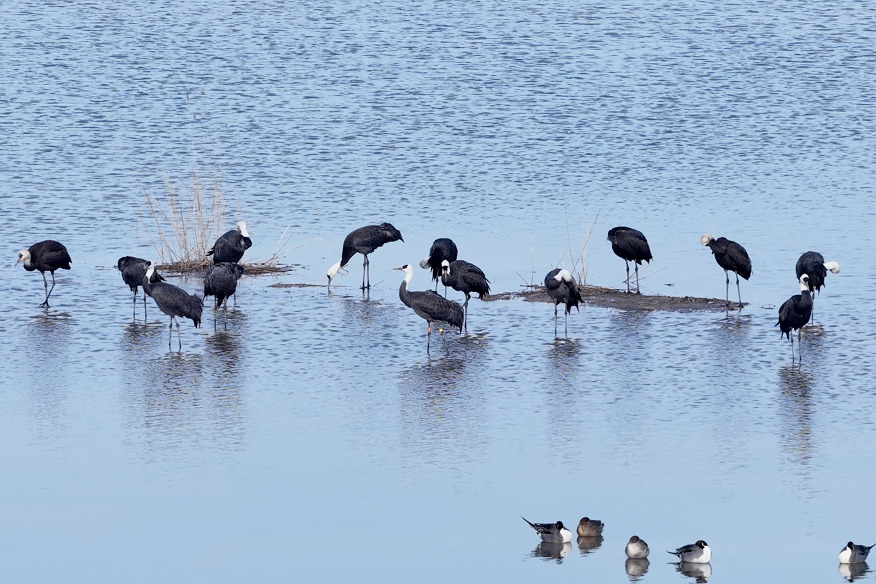
    China has demonstrated extraordinary progress in ecological preservation, having successfully rehabilitated and expanded its wetland territories by more than one million hectares since 2012. This monumental achievement reinforces the nation’s status as Asia’s largest wetland ecosystem and the world’s fourth most significant wetland reservoir.

    The National Forestry and Grassland Administration unveiled these accomplishments during the 30th World Wetlands Day celebrations, highlighting how this environmental milestone was realized through the implementation of over 3,800 specialized conservation projects. This year’s observance carried the theme ‘Wetlands and Traditional Knowledge: Celebrating Cultural Heritage,’ emphasizing the cultural dimensions of ecological stewardship.

    China has pioneered a novel conservation framework that integrates prioritized restoration with categorized protection systems. The administration emphasized wetlands’ indispensable ecological, social, economic, and cultural values, noting strengthened legal protections including the 2022 national wetland conservation law and updated regulations across 21 provincial regions.

    The country has established a comprehensive tiered management system featuring 82 internationally significant wetlands, 80 nationally designated sites, and 1,208 provincial-level protected areas. Additionally, 903 national wetland parks now operate with approximately 90% offering free public access, collectively attracting about 320 million annual visitors.

    Mangrove conservation efforts have seen particular success with 9,200 hectares planted since 2012. The International Mangrove Center, launched in late 2024, has expanded its consortium to 20 member nations, demonstrating China’s growing leadership in global wetland preservation.

    The administration outlined ambitious plans for the 15th Five-Year Plan period (2026-30), including legal framework enhancements, total wetland area control systems, and improved monitoring and early warning mechanisms.

    At Zhalong National Nature Reserve in Heilongjiang province, technological innovation transforms conservation practices. Staff employ integrated monitoring networks combining remote sensing, video surveillance, drone technology, and ground patrols. ‘This comprehensive biodiversity monitoring system significantly enhances our conservation efficiency and effectiveness,’ stated Zhang Jianfei, director of the reserve’s protection center.

    Field rangers like 47-year-old Li Chuanling utilize Beidou navigation devices and drone technology to monitor the reserve’s 210,000-hectare expanse. These technological advancements have enabled more successful rescues of rare bird species, with 28 birds from 15 protected species saved in 2025 alone.

    Conservation efforts have yielded particularly impressive results for red-crowned cranes, with the reserve maintaining a stable population of approximately 300 birds—the world’s largest breeding ground for this first-class protected species.