标签: Asia

亚洲

  • Initial online pediatric consultations offered

    Initial online pediatric consultations offered

    Beijing has initiated a pioneering healthcare program that authorizes first-time virtual medical consultations for pediatric patients, signaling a transformative shift in China’s digital healthcare landscape. The National Health Commission approved this innovative pilot project, which effectively overturns existing regulations that previously limited online medical services exclusively to follow-up appointments after initial in-person visits.

    The year-long trial program will be implemented through two of Beijing’s premier pediatric institutions—Beijing Children’s Hospital and the Capital Institute of Pediatrics, both operating under the affiliation of Capital Medical University. These facilities will provide initial remote consultations across three specialized domains: child growth and development, pediatric nutrition, and childhood dermatological conditions.

    According to official statements from the Beijing Municipal Health Commission, the telemedicine services became accessible starting January 31 through the hospitals’ dedicated WeChat platforms. The comprehensive digital healthcare package includes preliminary online assessments, virtual diagnostic consultations, and home delivery services for prescribed medications.

    This strategic initiative addresses the significant challenge of geographical healthcare disparities, particularly relevant given Beijing’s status as a medical hub that attracts substantial numbers of patients from across China. The commission emphasized that internet-based medical services effectively eliminate geographical barriers while providing convenient access to specialized care.

    The selection criteria for participating hospitals incorporated multiple factors including institutional management capabilities, prior experience with virtual follow-up consultations, the volume and profile of non-local patients, and overall physician service capacity. The three designated specialties were specifically chosen due to their high proportion of out-of-town patients and relatively manageable diagnostic risks associated with remote assessment.

    Participating physicians must meet rigorous qualification standards, including minimum three years of independent clinical experience, the professional rank of attending physician or higher, and at least one year of prior teleconsultation experience. Additional requirements include demonstrated communication proficiency, completion of specialized digital healthcare training, and successful passage of competency assessments.

    The regulatory framework mandates that a guardian must be present during all pediatric teleconsultations. Physicians are instructed to immediately terminate virtual sessions and recommend in-person visits if a child’s condition appears unsuitable for remote diagnosis. Health authorities will maintain strengthened supervision throughout the pilot program, with particular attention to medical quality, patient safety, and cybersecurity protocols.

    This development aligns with China’s rapidly expanding digital healthcare infrastructure, which recorded 130 million online medical consultations during 2024 across 3,756 internet hospitals nationwide. The National Healthcare Security Administration had previously announced in January 2025 the establishment of pricing guidelines for initial online consultations, indicating systematic preparation for broader implementation of telemedicine services.

  • Guterres says rule of law ‘outmuscled’

    Guterres says rule of law ‘outmuscled’

    United Nations Secretary-General Antonio Guterres delivered a stark warning during the opening of the 61st UN Human Rights Council session in Geneva, declaring that the rule of law is being systematically “outmuscled” by the rule of force worldwide. The UN leader emphasized that human rights are facing “a full-scale attack around the world” with devastating consequences.

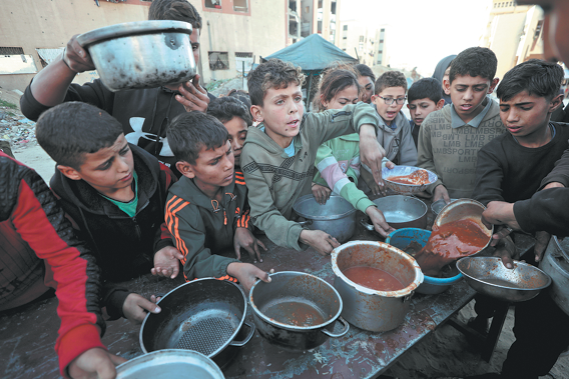
    Guterres specifically highlighted the deteriorating situation in the Occupied Palestinian Territory, stating that “the two-state solution is being stripped away in broad daylight” through blatant violations of human rights and international law. He called on the international community to prevent this deliberate undermining of peace prospects.

    The warning comes amid escalating tensions in the West Bank, where Israeli forces recently raided the towns of Silwad and Turmus Ayya according to Palestinian news agency WAFA. In a separate incident, the Palestinian Foreign Ministry condemned the torching of Abu Bakr al-Siddiq Mosque in Tell village by Israeli settlers, demanding international intervention.

    Diplomatic pressure is mounting as nearly twenty nations from the Middle East, Europe, and Asia—plus the League of Arab States and Organization of Islamic Cooperation—issued a collective statement condemning Israel’s expanding control over the West Bank. The coalition criticized recent measures that reclassify Palestinian land as Israeli state territory and accelerate illegal settlement activity.

    The international community expressed particular concern about violations of Jerusalem’s historic status quo during Ramadan, warning these actions threaten regional stability. Meanwhile, high-level discussions between Egyptian President Abdel Fattah El-Sisi and Saudi Crown Prince Mohammed bin Salman Al Saud in Jeddah focused on ceasefire implementation, humanitarian aid delivery to Gaza, and reaffirmed rejection of Palestinian displacement.

    Chinese Foreign Ministry spokeswoman Mao Ning urged restraint and dialogue, stating that escalating Middle East tensions serve no party’s interests. Indonesian legal scholar Arie Afriansyah supported Guterres’ assessment, noting that military and political power increasingly override legal restraints, with inconsistent application of UN Charter protections for civilians.

  • Park’s Siberian tigers get a ‘light-fasting’ program

    Park’s Siberian tigers get a ‘light-fasting’ program

    In an innovative conservation measure, Heilongjiang Province’s Siberian Tiger Park has launched a rotational ‘light-fasting’ program to safeguard its endangered big cats from overfeeding during peak tourist seasons. The strategy, implemented across 13 free-range enclosures from February 1 to March 31, designates one enclosure daily as a no-feeding zone while maintaining normal feeding opportunities in others.

    The park, operated by China Hengdaohezi Feline Breeding Center, houses over 300 Siberian tigers—nearly 200 residing in free-range habitats. During winter tourism peaks, daily visitor numbers exceed 10,000, with enthusiastic tourists feeding tigers beef strips and live chickens at designated points.

    Huang Haitao, director of the park’s feeding and veterinary department, explained the biological rationale: ‘The rotating fasting model allows tigers to periodically restore natural hunger rhythms, preventing digestive system overload and preserving hunting instincts.’ The approach balances animal welfare with visitor experience, as concentrated fasting could disappoint travelers.

    Implementation involves multi-channel communication including entrance notices, guided explanations, and sightseeing bus announcements. Zhang Weihua, a park driver, noted visitors’ cooperative response: ‘We create feeding opportunities in permitted areas to ensure visitor satisfaction while protecting tigers.’

    Tourists like Zhou Wei from Haikou expressed support: ‘I now understand reasonable control constitutes true protection.’ The park further customizes fasting schedules based on individual tiger health, visitor flow, and feeding patterns, occasionally isolating ‘celebrity tigers’ for health monitoring when overfed.

    As one of China’s three major Siberian tiger conservation facilities, the park continues refining scientific breeding systems to contribute to the species’ preservation. Siberian tigers remain critically endangered, primarily inhabiting northeastern China and eastern Russia.

  • From Kerala to Keralam: UAE’s Malayali community reacts to proposed renaming

    From Kerala to Keralam: UAE’s Malayali community reacts to proposed renaming

    The United Arab Emirates’ substantial Malayali expatriate community is engaging in vigorous debate following India’s Union Cabinet approval to officially rename their home state from ‘Kerala’ to ‘Keralam’. This proposed constitutional amendment has sparked diverse reactions among the estimated one million Malayalis residing in the UAE, who constitute one of the largest expatriate groups in the country.

    Proponents of the change view it as a significant cultural correction, drawing parallels to previous successful renaming initiatives such as Bombay becoming Mumbai and Madras transforming into Chennai. Sree Prakash Purayath, General Secretary of the Indian Association Sharjah, emphasized the linguistic importance of this transition, stating: ‘This represents a powerful act of linguistic and cultural affirmation. In Malayalam, our native language, the state has always been referred to as Keralam—the term Kerala is largely perceived as a colonial-era adaptation used in official documentation.’

    The proposed name carries deep historical significance, potentially deriving either from ‘Cheram’ (connected to the ancient Chera dynasty) or from the combination of ‘Kera’ (coconut tree) and ‘Alam’ (land), collectively meaning ‘The Land of Coconut Trees’.

    However, the community remains divided on the initiative. Nissar Thalangara, President of the Indian Association Sharjah, expressed reservations, noting that ‘Kerala has established international recognition, particularly in tourism, whereas Keralam remains predominantly local.’ He advocated for conducting a public referendum before implementing such a substantial change.

    Practical concerns have emerged alongside cultural debates. Firoz Sainudeen, a Dubai-raised interior design professional, questioned the timing of the initiative, suggesting that governmental focus should prioritize pressing issues like youth unemployment and drug abuse rather than symbolic nomenclature changes.

    The discussion has generated considerable humor within the diaspora, particularly following Congress parliamentarian Shashi Tharoor’s playful social media inquiry about whether residents should now be called ‘Keralamites,’ ‘Keralamians,’ or simply continue as ‘Malayalis.’

    The constitutional process requires the Kerala (Alteration of Name) Bill, 2026 to secure parliamentary approval and presidential assent before implementation. Until then, the proposal continues to stimulate conversation across UAE community centers, labor camps, and digital forums, reflecting the complex intersection of cultural identity, historical preservation, and practical governance.

  • Ramadan in Philippines: Filipino Muslims propose new mosque at historic Luneta

    Ramadan in Philippines: Filipino Muslims propose new mosque at historic Luneta

    As Ramadan commences, Manila’s Muslim community has initiated a significant cultural preservation effort by petitioning for the construction of a new mosque within the iconic Rizal Park, commonly known as Luneta. The proposal, advanced by the organization Markazuz Zakah, seeks to reestablish a place of worship that historically existed on the site before Spanish colonial forces destroyed it during their 1570s invasion of Manila.

    The initiative carries profound historical symbolism, as the proposed location lies adjacent to Intramuros, the historic Spanish walled city that once housed the fort of Rajah Sulayman—Manila’s final Muslim ruler prior to European colonization. Advocates emphasize that this project would acknowledge the Islamic heritage that predates the arrival of Christianity in the Philippines, highlighting that Muslim Rajahs governed Manila before Spanish colonization.

    Gambae Macatanong, president of Markazuz Zakah, articulated the dual purpose of the proposed mosque: serving as both a functional space for prayer and community connection for Muslims, and as an educational center where non-Muslims can learn about Islamic culture and traditions. The organization has assured that private funding would cover construction costs, though specific architectural details and dimensions remain undisclosed.

    The petition has been formally submitted to key government figures, including Muslim legislators Senator Robinhood Padilla and Representative Haima Kiram Ismula, Manila Mayor Francisco Domagoso, and Tourism Secretary Ma. Esperanza Frasco. While no official responses have been received yet, proponents remain hopeful for support, particularly from their fellow Muslims in government positions.

    This proposal emerges amidst a broader context of recognizing the Philippines’ Islamic heritage, with approximately seven million Muslims residing in the predominantly Catholic nation of 115 million citizens. The initiative represents not merely architectural construction but a meaningful step toward inclusive recognition of the nation’s diverse religious and cultural tapestry.

  • Will UAE petrol prices rise in March as oil gains due to US-Iran tensions?

    Will UAE petrol prices rise in March as oil gains due to US-Iran tensions?

    Escalating geopolitical friction between the United States and Iran continues to exert significant pressure on global oil markets, creating substantial volatility that may impact fuel prices in the United Arab Emirates for March 2026. The ongoing tensions have injected a considerable risk premium into crude valuations, with Brent benchmark briefly surpassing the $71 per barrel threshold during February trading sessions.

    Market analysts observe that the current climate of uncertainty has created an unusually volatile trading environment. As of Tuesday evening, Brent crude traded at $66.31 per barrel while West Texas Intermediate reached $71.38. The monthly average for Brent stood at $68.90 per barrel, marking a noticeable increase from January’s average of $63.47.

    Norbert Rücker, Head of Economics and Next Generation Research at Julius Baer, provided critical insight: ‘The US-Iran conflict dominates oil market dynamics, with prices currently inflated by substantial geopolitical risk premiums. While military escalation appears increasingly probable, historical precedent suggests such developments don’t automatically translate to oil supply disruptions.’

    Rücker further emphasized the market’s current resilience: ‘Today’s oil landscape demonstrates remarkable supply stability, supported by ample storage capacities, production exceeding consumption patterns, and significant spare output capacity. Although uncertainty persists regarding whether prices will peak in the high $70s or high $80s range, we anticipate risk premiums diminishing with prices returning below $60 by mid-year.’

    The strategic significance of the Strait of Hormuz adds another dimension to market concerns. Recent temporary closures by Iranian authorities caused insurance premiums for this critical shipping channel to increase substantially. Daniela Hathorn, Senior Market Analyst at Capital.com, noted: ‘Iran’s geographical position adjacent to the Strait—through which approximately 20% of global oil shipments pass—means any sustained disruption could have profound consequences for energy markets worldwide.’

    Despite February’s price reduction of 8-9 fils per liter for UAE consumers, bringing Super 98, Special 95 and E-Plus 91 to Dh2.45, Dh2.33 and Dh2.26 respectively, market watchers remain cautious about March pricing. The complex interplay between geopolitical tensions and market fundamentals continues to create an unpredictable pricing environment for both crude and refined petroleum products.

  • Indonesia frees and deports American who spent 11 years in prison for Bali ‘suitcase murder’

    Indonesia frees and deports American who spent 11 years in prison for Bali ‘suitcase murder’

    JAKARTA, Indonesia — Indonesian authorities deported American national Tommy Schaefer on Tuesday evening following his 11-year incarceration for the premeditated 2014 murder of Sheila von Wiese-Mack, his girlfriend’s mother, in a case that gained international notoriety as the Bali “suitcase murder.”

    Schaefer’s release and subsequent removal from Bali International Airport came after he completed his reduced prison term, having originally received an 18-year sentence. Felucia Sengky Ratna, Head of the Bali Regional Office of Immigration, confirmed that Schaefer qualified for early deportation due to accumulated sentence remissions awarded for consistent good behavior during imprisonment.

    The case dates back to August 2014, when the severely beaten body of 62-year-old Chicago socialite von Wiese-Mack was discovered inside a suitcase in the trunk of a taxi parked at the exclusive St. Regis Bali Resort. The victim had been vacationing at the luxury property with her daughter, Heather Mack, who was then 18 years old and several weeks pregnant, and Mack’s boyfriend, Schaefer, then 21.

    Both Mack and Schaefer were apprehended on the Indonesian island within 24 hours of the grim discovery. Mack ultimately served seven years of her 10-year Indonesian sentence for complicity in her mother’s murder before being deported to the United States in October 2021. Earlier this year, in January 2024, a Chicago court sentenced Mack to an additional 26 years imprisonment after she pleaded guilty to U.S. charges related to the murder conspiracy and concealment of her mother’s body in a suitcase.

  • Don’t break up NewJeans and I’ll forgo $18m payout, says ex-K-pop boss

    Don’t break up NewJeans and I’ll forgo $18m payout, says ex-K-pop boss

    In a dramatic turn within the K-pop industry, former ADOR CEO Min Hee-jin has proposed sacrificing a substantial court-awarded settlement to resolve the escalating legal conflict between entertainment conglomerate Hybe and chart-topping girl group NewJeans.

    The dispute reached a critical juncture when Min publicly declared her willingness to forgo 25.6 billion won ($17.9 million) awarded to her in a recent put option ruling if Hybe withdraws all ongoing lawsuits against the five-member ensemble. The executive emphasized her emotional connection to the artists, stating she could no longer witness the group being ‘torn apart’ in legal battles when they should be performing on stage.

    The conflict originated in August 2024 when Hybe terminated Min’s position as CEO of ADOR, its subsidiary label managing NewJeans. This triggered a chain reaction wherein the group announced intentions to follow their mentor out of the company. However, a Seoul district court ruling in October 2024 enforced the members’ contractual obligations with ADOR until 2029.

    Hybe escalated the situation in December by initiating termination proceedings against member Danielle Marsh for alleged contract violations, simultaneously pursuing damages. This move intensified fan outrage and drew global attention to the treatment of artists within the K-pop industry’s corporate structure.

    Min’s proposal extends beyond financial settlement, demanding the withdrawal of all civil and criminal proceedings not only against NewJeans members but also involving external partners, former ADOR employees, and fans entangled in the dispute. She framed the offer as necessary to protect the artists, their families, and supporters from ‘unnecessary noise.’

    The ball now rests in Hybe’s court, with industry observers awaiting the entertainment giant’s response to this unprecedented settlement offer. Min concluded her statement with a symbolic appeal to Hybe chairman Bang Si-hyuk, suggesting they shift their confrontation ‘from the courtroom to the space of creation.’

  • Deepening roots of understanding

    Deepening roots of understanding

    A transformative educational journey through China’s heartlands has provided Cornell University students with unprecedented insights into the nation’s innovative agricultural practices and rural development strategies. The two-week immersive program, spanning Beijing, Hebei, and Sichuan provinces, offered participants firsthand exposure to China’s distinctive approach to rural revitalization and community-based farming systems.

    During their January expedition, the agricultural sciences students experienced authentic rural living by staying with local families in Sanggang village, situated within the mountainous terrain of Hebei’s Yixian county. This residential component enabled deep cultural exchange as students shared meals, observed farming techniques, and conducted interviews with community members.

    Abbie Jobe, a senior agricultural sciences major from New York with Gambian heritage, discovered profound differences in agricultural philosophy between Chinese and American approaches. “The real essence of rural livelihood here involves taking what you know and helping your neighbors grow,” Jobe observed, contrasting China’s collectivist model with what she characterized as more individualistic practices in the US.

    The program featured academic components led by Professor Ye Jingzhong from China Agricultural University, whose three decades of research in Yixian county has yielded significant developments in rural infrastructure and market systems. His team pioneered the concept of “nested markets” after 2010, creating direct connections between urban consumers and smallholder farmers—an innovative approach that later gained national recognition as an early model of consumption-based poverty alleviation.

    Dallas Selle, a master’s student in global development, noted the foundational importance of land reform in China’s rural development strategy. “Infrastructure created the basis for everything else, including culture, nested markets, and long-term development,” she observed, highlighting China’s distinctive emphasis on elevating entire communities collectively rather than focusing on individual advancement.

    The experience provided comparative perspectives on global development challenges. Gio Rodriguez, a senior global development student, examined rural labor migration patterns and discovered surprising differences in how Chinese households manage gender dynamics during extended work-related separations compared to practices in Latin America.

    For Indonesian student Nor Anisa, the participatory methodologies witnessed in Sanggang village offered practical approaches that could potentially be adapted to development challenges in her home country, demonstrating the program’s broader applicability beyond China’s borders.

    The Cornell delegation’s immersion in China’s agricultural landscape provided not only academic enrichment but also fostered cross-cultural understanding and revealed innovative solutions to universal rural development challenges that transcend national boundaries.

  • Oversight assisted 14th Five-Year Plan

    Oversight assisted 14th Five-Year Plan

    As China prepares for its annual ‘Two Sessions’ political gatherings in March, national political advisers are finalizing policy recommendations informed by extensive grassroots research. Jin Hua, a member of the Chinese People’s Political Consultative Conference (CPPCC) National Committee from Qinghai’s Haixi Mongol and Tibetan Autonomous Prefecture, has conducted thorough field investigations into elderly care challenges in high-altitude regions.

    Her research at rural mutual-aid elderly care centers in Dulan county revealed that despite the construction of over 140,000 rural elderly care facilities during the 14th Five-Year Plan period (2021-2025), seniors in remote plateau areas require more specialized support. While increased state investment has provided adequate nursing beds for disabled elderly, institutions face low occupancy rates and staffing shortages due to harsh climatic conditions and traditional attitudes toward institutional care.

    Jin emphasized the urgency of establishing village-level elderly care teams to ensure remote seniors receive assistance when needed. For the upcoming CPPCC session, she will propose guidelines for plateau medical-nursing institutions including critical emergency oxygen supply services.

    The CPPCC National Committee’s preparatory work builds upon five years of systematic oversight conducted from 2021-2025. During this period, the committee executed continuous supervisory activities across ten key areas including business environment optimization, black soil conservation, development of the Guangdong-Hong Kong-Macao Greater Bay Area, elderly-friendly social transformation, veterans’ benefits, rural habitat improvement, and sports-education integration.

    This oversight mechanism involved 47 grassroots inspection tours led by CPPCC vice-chairpersons with participation from 779 committee members, resulting in 48 specialized reports and 323 governmental recommendations that facilitated implementation of 25 laws and regulations.

    Meanwhile, Clarence Ling Chun-kit, a CPPCC National Committee member from Hong Kong, has focused his research on youth development and enterprise expansion. Having conducted investigations at the Dagang Oilfield in Tianjin, Hainan Free Trade Port, and interregional economic exchanges, Ling plans to submit proposals addressing the integration challenges Hong Kong youth face in the Greater Bay Area, particularly regarding cultural adaptation and career development.

    Ling emphasized that young people represent a vital force for national development and praised China’s consultative democracy system for ensuring the ‘scientific soundness and rigor’ of national policies. Approximately 2,100 CPPCC National Committee members will convene in Beijing in March, where the formulation of the 15th Five-Year Plan (2026-2030) will serve as a central focus of deliberations.