标签: Asia

亚洲

  • King Salman chairs cabinet days after leaving hospital, says Saudi state TV

    King Salman chairs cabinet days after leaving hospital, says Saudi state TV

    In a significant demonstration of resumed royal duties, King Salman bin Abdulaziz of Saudi Arabia personally convened and chaired a cabinet meeting on Tuesday, January 20, 2026. This public appearance came just days after the monarch’s brief hospitalization for comprehensive medical evaluations at a Riyadh medical facility last Friday. Saudi state television broadcast verified footage showing the 88-year-old king actively engaged in governmental proceedings, reviewing official documents alongside his ministers.

    The cabinet session addressed matters of international diplomacy, with the King formally expressing Saudi Arabia’s endorsement of U.S. President Donald Trump’s recently established ‘Board of Peace’ initiative. This diplomatic gesture reinforces the enduring strategic alliance between the Kingdom and the United States, particularly significant given Saudi Arabia’s position as the world’s leading oil exporter and a pivotal Middle Eastern power.

    The monarch’s prompt return to official responsibilities carries substantial symbolic weight, effectively dispelling concerns about his health status following his 2024 treatment for lung inflammation. The transparent dissemination of this development through official state media channels underscores the government’s commitment to maintaining stability and continuity in leadership during a period of regional geopolitical significance.

  • Dubai Police launch new digital platform for lawyers, unveil AI-powered website upgrade

    Dubai Police launch new digital platform for lawyers, unveil AI-powered website upgrade

    Dubai Police have launched a groundbreaking digital platform exclusively for legal professionals, marking a significant advancement in the emirate’s digital transformation journey. The initiative, unveiled on January 20, 2026, introduces a specialized portal accessible through the Dubai Police website using secure UAE Pass authentication.

    The platform represents the second generation of Dubai Police’s digital services, featuring seven specialized legal services designed to streamline procedures and enhance efficiency. Legal professionals can now complete paperwork, submit requests, upload documents, and monitor case progress around the clock without physical visits to police stations. Each registered lawyer receives a personalized digital dashboard to manage cases, consultants, and client-related requests comprehensively.

    Major General Saleh Abdullah Murad, Assistant Commander-in-Chief for Administrative Affairs, emphasized that the project transcends mere visual upgrades, delivering a complete digital experience built on three foundational pillars: service, empowerment, and vision. The system prioritizes accuracy, interactivity, and the elimination of bureaucratic hurdles.

    A standout feature is the AI-powered consultant, AiX, which provides step-by-step guidance through services, inquiries, and reports, ensuring rapid access to precise information. Brigadier Majed Al Suwaidi, Director of the General Department of Police Stations, noted that the platform constitutes a qualitative shift in legal services, substantially reducing the need for in-person station visits and alleviating pressure on frontline services.

    The initial rollout will proceed on a trial basis with select lawyers receiving invitation emails for registration. Once logged in, legal professionals can choose between general services and the dedicated lawyers’ portal. The comprehensive service suite includes linking powers of attorney, electronic document signing, criminal complaint filing, good conduct certificates, virtual detainee visit permits, and circular enquiries with direct digital payment capabilities.

    Major General Khalid Nasser Al Razooqi, Director of the General Department of Artificial Intelligence, described the release as the ‘most comprehensive’ to date, developed under the highest institutional standards. This digital transformation aligns with Dubai’s zero bureaucracy objectives and represents a new era of accelerated, secure, and accessible digital services for the legal community.

  • UAE President accepts Trump’s invitation to join Gaza ‘Board of Peace’

    UAE President accepts Trump’s invitation to join Gaza ‘Board of Peace’

    In a significant diplomatic development, UAE President Sheikh Mohamed bin Zayed Al Nahyan has formally accepted an invitation from the United States to participate in the newly established ‘Board of Peace’ for Gaza. The Ministry of Foreign Affairs (Mofa) confirmed the nation’s involvement on January 20, framing the decision as a strategic move to advance regional stability and Palestinian rights.

    The UAE’s participation aligns with its endorsement of President Donald Trump’s comprehensive 20-point peace framework for Gaza. According to official statements, the Board will operate under Trump’s chairmanship with a mandate to provide strategic oversight, mobilize international resources, and ensure accountability throughout Gaza’s reconstruction process.

    This commitment follows the recent appointment of Reem Al Hashimy, Minister of State for International Cooperation, to the Gaza Executive Board. This subsidiary body functions as a critical liaison between the National Committee for the Administration of Gaza (NCAG) and the broader Peace Board structure.

    The White House has outlined that the initiative’s second phase will involve comprehensive demilitarization efforts and the reconstruction of Gaza’s infrastructure. Special Envoy Steve Witkoff emphasized that these measures include “the disarmament of all unauthorized personnel” as a fundamental component of the peace process.

    The UAE joins several Arab nations recruited by the US administration to contribute to this multilateral effort, reflecting Abu Dhabi’s growing influence in Middle Eastern diplomacy and conflict resolution initiatives.

  • Hangzhou residents enjoy rare snowfall

    Hangzhou residents enjoy rare snowfall

    The historic city of Hangzhou experienced an extraordinary meteorological phenomenon on Monday as a rare snowfall transformed its urban landscape into a winter wonderland. During Dahan, China’s traditional coldest period of the year, temperatures plunged sufficiently to produce sustained snowfall across the metropolitan area.

    The precipitation commenced in elevated mountainous regions approximately at 8:00 PM local time. By early Tuesday morning at 6:00 AM, light snow had reached the iconic shores of West Lake, with the city center experiencing steady snowfall by 8:45 AM. This created an unusual visual spectacle in a region typically characterized by mild winter conditions.

    Residents enthusiastically embraced the uncommon weather event, flocking to renowned landmarks including West Lake and the celebrated Broken Bridge. Visitors documented the picturesque scenes through photography while appreciating the seasonal transformation of their city. The snowfall created a striking visual contrast against Hangzhou’s traditional architecture and natural landscapes, providing a unique opportunity for both residents and tourists to experience the city’s beauty under winter conditions.

    The event represents a significant deviation from Hangzhou’s typical climate patterns, offering a rare glimpse of winter aesthetics in a region more commonly associated with temperate seasonal variations. Local authorities reported no significant disruptions to city operations, allowing citizens to safely enjoy the temporary winter scenery.

  • UAE: AD Ports acquires Spain’s Balenciaga Astilleros Shipyard to fuel global expansion

    UAE: AD Ports acquires Spain’s Balenciaga Astilleros Shipyard to fuel global expansion

    In a decisive move to accelerate its international growth strategy, Abu Dhabi’s AD Ports Group has secured full ownership of Spain’s historic Balenciaga Astilleros Shipyard through a €11.2 million transaction. The acquisition, executed by group subsidiary Safeen Drydocks, marks a significant expansion of the Emirati company’s European footprint and enhances its capabilities in the rapidly evolving offshore energy sector.

    The Basque-based shipyard brings nearly a century of specialized shipbuilding expertise to the UAE ports and logistics operator, including two drydocks, a 105-meter slipway, and automated fabrication facilities spanning over 22,000 square meters. This strategic asset positions AD Ports among the limited number of European operators capable of constructing Service Operation Vessels critical for offshore wind farm maintenance, alongside research vessels and specialized maritime support craft.

    Captain Ammar Al Shaiba, Chief Executive of the Maritime and Shipping Cluster at AD Ports Group, emphasized that the acquisition aligns with the company’s portfolio diversification objectives and clean energy ambitions. The transaction enables significant technology transfer and operational synergies across Safeen Drydocks and the group’s expanding global maritime network.

    This European expansion occurs alongside robust operational growth within the UAE, where Khalifa Port has demonstrated consistent container throughput increases supported by new shipping services and expanded terminal capacity. The group has reported double-digit revenue growth across recent reporting periods, driven by simultaneous expansion across its ports, maritime, logistics, and economic cities divisions.

    The Balenciaga acquisition represents the latest in a series of strategic international investments spanning Europe, Africa, and Central Asia over the past three years. These moves have included the earlier acquisition of Spanish logistics firm Noatum and numerous port concessions and inland terminals that strengthen trade corridors connecting Asia, the Middle East, and Europe.

    Notably, the shipyard’s geographic proximity to major offshore wind clusters in Northern Europe positions AD Ports to capitalize on the region’s accelerating renewable energy expansion. The move complements the group’s existing partnership with Masdar in offshore wind development and anticipates growing demand for specialized vessels as European nations intensify their transition to clean energy sources.

  • Israel raids Hebron amid fears for Ibrahimi Mosque and settlement expansion

    Israel raids Hebron amid fears for Ibrahimi Mosque and settlement expansion

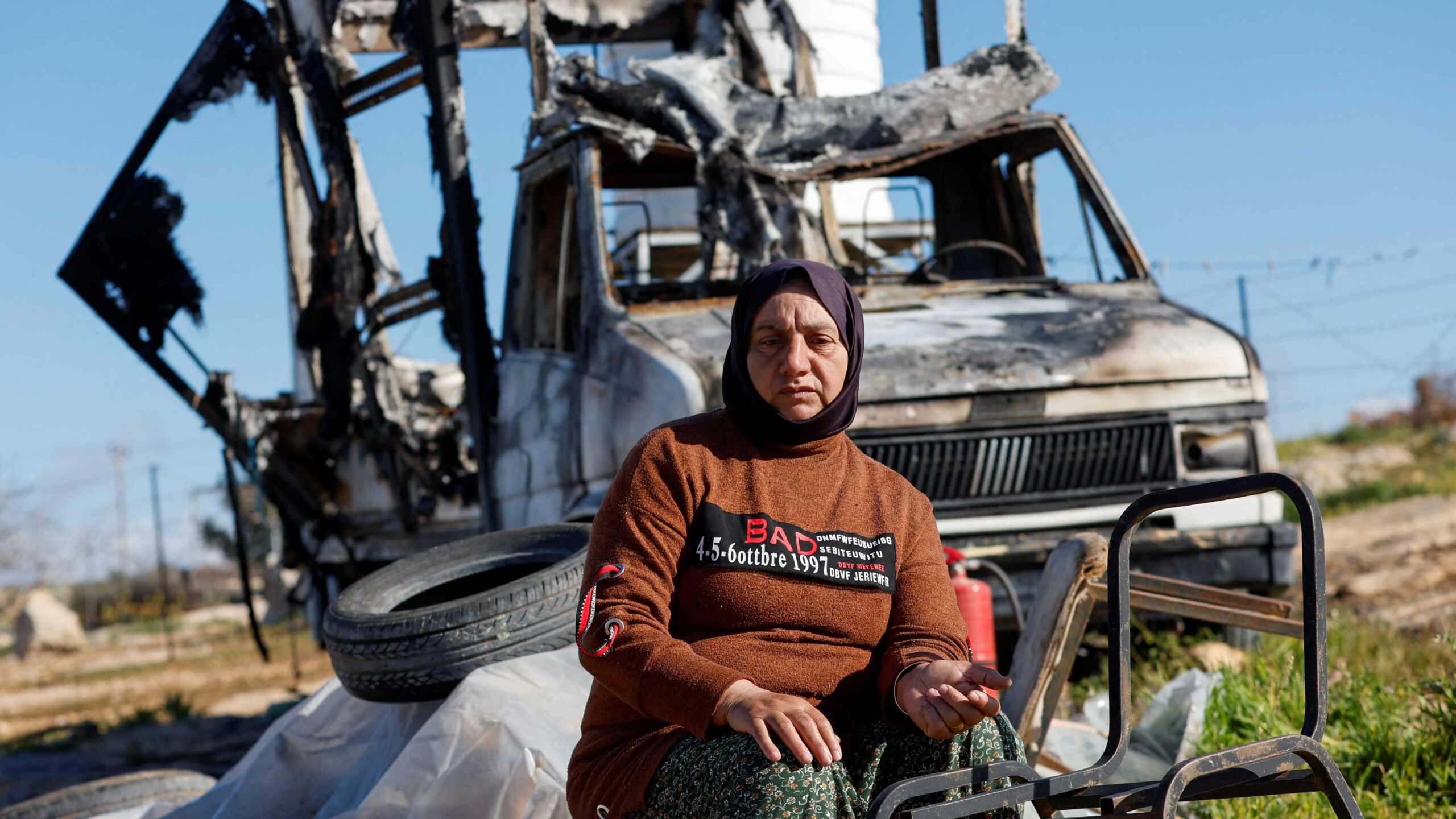
    A major Israeli military operation has entered its second day in the occupied West Bank city of Hebron, imposing severe restrictions on Palestinian residents while raising concerns about long-term displacement objectives. The extensive assault involves road closures, home raids, and a comprehensive curfew affecting approximately 18,750 Palestinians across multiple southern neighborhoods including Khilat al-Qubba, Jabal Jawhar, and al-Sahla.

    The Israeli military announced the operation would continue for several days, warning residents to expect increased troop movements and audible explosions. According to official statements, the raid aims to confiscate weapons and enhance security through coordinated efforts between the army, police, and border guard units.

    Residents report extreme measures including the deployment of military vehicles and bulldozers creating barriers with earth mounds, iron gates, and even repurposed civilian vehicles. A security cordon encompassing approximately four square kilometers has effectively isolated the targeted areas, with concrete blocks and checkpoints sealing all access points.

    Local accounts describe intensive house raids, arbitrary arrests, and the occupation of Palestinian homes as military barracks. Farid Burqan, a Jabal Jawhar resident, revealed that the army informed locals of an eight-day curfew minimum, preventing them from leaving their homes. Educational institutions have been shuttered since the operation’s inception, while access to basic necessities and freedom of movement remain severely constrained.

    The industrial zone containing several major factories has ceased operations, disrupting livelihoods and economic activity. Lafi Ghaith, a stone factory employee, reported being unable to reach his workplace while his family endured home invasions and property destruction. Many residents interpret the operation as part of a broader strategy to facilitate settlement expansion and Palestinian displacement.

    Hebron’s political complexity adds significance to the operation. Under the 1997 Hebron Agreement, the city remains divided into H1 (Palestinian Authority control) and H2 (full Israeli control, including the Old City and Ibrahimi Mosque). For over 25 years, Israel has maintained approximately 120 checkpoints and gates around the mosque area, which houses both Palestinian residents and settlement outposts.

    Deputy Mayor Asma Sharabati emphasized the operation targets a densely populated area containing 12 government schools and four municipal service centers. She warned that the assault extends beyond immediate security concerns to broader political objectives, including altering the architectural character of the Ibrahimi Mosque and expanding settlement infrastructure connecting to Kiryat Arba.

    The timing coincides with unprecedented restrictions barring the Ibrahimi Mosque’s director and head custodian from entering the holy site for 15 days—a move reminiscent of Jerusalem’s Al-Aqsa Mosque restrictions. This development suggests potential efforts to transfer administrative control from Hebron Municipality to the religious council of Kiryat Arba settlement.

    Youth Against Settlements coordinator Issa Amr identified the operation’s core objective as separating eastern and southern areas from central Hebron while depopulating the industrial zone. The absence of arrests targeting known lawbreakers in the area further reinforces concerns about ulterior motives behind the military action.

    Local authorities are calling for urgent intervention from the Palestinian Authority and international community, emphasizing Hebron’s unique vulnerability as a city containing settlement outposts within its urban fabric. Any expansion of these outposts could trigger significant Palestinian displacement and complicate territorial control indefinitely.

  • B’Tselem says at least 84 Palestinians killed in Israeli torture camps

    B’Tselem says at least 84 Palestinians killed in Israeli torture camps

    A damning investigation by Israeli human rights organization B’Tselem has exposed the nation’s prison system as a coordinated network of facilities engaging in systematic torture against Palestinian detainees. The report, released Tuesday, documents widespread abuse, deaths in custody, and what the group identifies as a deliberate state-sanctioned policy of violence.

    According to the findings, at least 84 Palestinians have died in Israeli detention facilities since October 2023, with the actual number believed to be significantly higher due to unverified and concealed cases. The victims include 50 from Gaza, 31 from the occupied West Bank, and three Palestinian citizens of Israel, alongside one child. Israeli authorities are additionally withholding the bodies of 80 Palestinians, refusing to return them to families as of January 2026.

    Disturbing testimonies from released detainees describe systematic physical and psychological violence, inhuman conditions, deliberate starvation, and denial of medical treatment. Several former prisoners reported experiencing or witnessing sexual violence while in custody.

    B’Tselem’s Executive Director Yuli Novak characterized the findings as evidence of a coordinated campaign against Palestinians as a collective people. “The Israeli regime has turned its prisons into a network of torture camps for Palestinians,” Novak stated, connecting the prison conditions to broader policies of “genocide in Gaza and ethnic cleansing in the West Bank.”

    The report concludes that the abuse represents declared, deliberate policy originating from the highest levels of government, with political backing and institutional protection. National Security Minister Itamar Ben Gvir, who oversees the prison service, has publicly boasted about the treatment of Palestinian detainees.

    Parallel findings from Palestinian rights organizations reinforce these conclusions, documenting at least 100 Palestinian deaths in custody since October 2023. As of September 2025, approximately 10,900 Palestinians were held in Israeli prisons under conditions described as appalling, with the number dropping to around 9,200 by January 2026 following prisoner exchanges.

    The organizations emphasize that Israel’s mass incarceration of Palestinians—over 800,000 detained over decades, many without charge or trial—represents a central pillar of its system of control, designed to fragment Palestinian society through fear, violence, and collective punishment.

  • Zigong lantern festival combines cultural heritage with advanced technology

    Zigong lantern festival combines cultural heritage with advanced technology

    The 32nd Zigong International Dinosaur Lantern Festival commenced on Friday at Sichuan province’s Chinese Lantern World, showcasing an extraordinary synthesis of traditional artistry and cutting-edge technology. This annual spectacle, renowned for its cultural significance, has elevated its presentation through innovative technological integration while preserving centuries-old craftsmanship traditions.

    Spanning multiple themed zones, the festival features 11 monumental lantern installations complemented by over 200 smaller displays. The exhibition demonstrates remarkable artistic ingenuity through its use of sustainable materials, including a 4-meter-tall golden Hou beast constructed from 100 kilograms of straw, a phoenix adorned with 15,000 red chilies, and a mythical Qilin assembled from 46,000 repurposed medicine bottles.

    Among the standout attractions is the 210-meter-long ‘Magical China’ installation, drawing inspiration from the ancient Zhuangzi classic to depict the legendary Kunpeng—a mythical bird-fish hybrid symbolizing national strength. Equally impressive is the 180-meter ‘Legend of Mulan’ display, created in anticipation of the upcoming Year of the Horse, which intertwines the heroine’s story with dynamic equine imagery to convey profound patriotic themes.

    The festival incorporates advanced interactive technologies including artificial intelligence interfaces, smart touch controls, and light-sensing systems. These innovations enable visitors to engage with virtual performers and lifelike robotic dinosaurs, creating immersive experiences that bridge historical storytelling with futuristic entertainment.

    According to Chen Jinhong, Director of Zigong’s Culture, Radio, Television, and Tourism Bureau, the event masterfully combines intangible cultural heritage techniques—such as traditional lantern-making, tie-dye, and paper-cutting—with mythological narratives and historical accounts. This approach not only preserves cultural legacy but also recontextualizes it for contemporary audiences through technological enhancement.

  • Dubai: International DJs, UAE-based content creators come together for football showdown

    Dubai: International DJs, UAE-based content creators come together for football showdown

    DUBAI – In an innovative fusion of music and sports, Red Bull UAE orchestrated a unique football showdown last Friday, pitting international DJs against prominent UAE-based content creators. The friendly match took place at Precision Football in Ibn Battuta, serving as both an energetic warm-up and a competitive battle for bragging rights.

    Leading the DJ squad was Francis Mercier, the Haitian electronic music producer who was in Dubai for his scheduled performance at Ushuaïa Dubai Harbour. Partnering with Red Bull for the initiative, Mercier expressed enthusiasm for the unconventional pre-show activity. ‘Football is a genuine passion of mine,’ Mercier stated before the match. ‘When Red Bull proposed this collaboration with talented UAE creators, we immediately recognized it as a perfect opportunity for fun and connection.’

    Mercier’s football affinity traces back to his childhood in Haiti, where he developed admiration for Brazilian football legends including Ronaldo R9, Cafu, and Rivaldo. On the field, Mercier prefers commanding the midfield position, utilizing his stamina to control game tempo – skills that complement his rigorous fitness regimen.

    Opposing the DJ team was Ramy Hamdan, a Dubai-based travel content creator with formal football experience from his teenage years playing club football in Lebanon. ‘Our team shares existing chemistry as friends and former teammates,’ Hamdan explained, confirming his tactical shift from his traditional right-back position to an offensive role as left wing and striker for this match.

    The event highlighted Dubai’s distinctive cultural ecosystem where international artists and local digital creators converge through shared interests beyond their professional domains. As Mercier observed, the city’s dynamic environment fosters these cross-industry collaborations where football served as the universal language.

    Despite Mercier’s confident prediction of a DJ victory, the content creators’ team ultimately triumphed with an 8-5 scoreline. Both Mercier and Hamdan managed to score during the high-energy match, which successfully set an vibrant tone for the weekend’s entertainment activities.

  • China meets initial soybean purchase goal, but Trump’s shifting trade policy could disrupt deal

    China meets initial soybean purchase goal, but Trump’s shifting trade policy could disrupt deal

    Despite China fulfilling its initial commitment to purchase 12 million metric tons of American soybeans, the sustainability of the October trade agreement remains uncertain due to the Trump administration’s volatile trade policies. Treasury Secretary Scott Bessent confirmed China’s compliance during the World Economic Forum in Davos, where he met with Chinese Vice President He Lifeng, who reaffirmed Beijing’s commitment to future purchases.

    The agreement, forged after Trump and Xi Jinping’s meeting in South Korea ended last summer’s purchasing halt, requires China to buy 25 million metric tons annually over the next three years. However, recent policy shifts—including threatened tariffs on countries trading with Iran and proposed levies on European allies—create instability that agricultural economists warn could jeopardize the deal.

    American farmers continue struggling with soaring production costs for fertilizer, seeds, and labor, despite approximately $12 billion in federal aid. Soybean prices briefly surged to $11.50 per bushel post-agreement but have since fallen to $10.56—insufficient to cover most operational expenses. China’s strategic diversification toward Brazilian and Argentine suppliers, which now account for over 70% of its imports compared to America’s 21% share, further complicates long-term trade prospects.

    Agricultural experts like Iowa State’s Chad Hart and University of Nebraska’s Cory Walters emphasize that market unpredictability and evolving tariff landscapes are crippling farmers’ decision-making capabilities and financial stability.