标签: Asia

亚洲

  • Top ally of South Korea’s Yoon given 23 years in prison for rebellion over martial law crisis

    Top ally of South Korea’s Yoon given 23 years in prison for rebellion over martial law crisis

    In a landmark ruling with profound implications for South Korea’s democracy, the Seoul Central District Court on Wednesday declared former President Yoon Suk Yeol’s 2024 imposition of martial law an act of rebellion, sentencing his prime minister to 23 years imprisonment for his central role in the constitutional crisis.

    Former Prime Minister Han Duck-soo became the first official from the Yoon administration convicted of rebellion charges, marking a pivotal moment in the legal proceedings stemming from the December 2024 martial law declaration that ultimately led to Yoon’s impeachment and removal from office. The court’s verdict establishes critical legal precedent for upcoming rulings involving Yoon and his associates, who face similar charges.

    In its televised verdict, the court determined that Yoon’s martial law decree constituted what it characterized as ‘a riot’ or ‘a self-coup,’ specifically citing his deployment of troops and police officers to Parliament and election offices as actions intended to undermine South Korea’s constitutional order. The court found these measures sufficiently severe to potentially destabilize the entire region.

    The judiciary sentenced Han for providing procedural legitimacy to Yoon’s rebellion by orchestrating its passage through a Cabinet Council meeting. Additional convictions included falsifying the martial law proclamation, destroying evidence, and committing perjury under oath.

    Presiding Judge Lee Jin-gwan delivered a stern rebuke, stating: ‘Because of the defendant’s action, the Republic of Korea could have returned to a dark past when the basic rights of the people and the liberal democratic order were trampled upon, becoming trapped in the quagmire of dictatorships for an extended period.’

    Following the ruling, Han was immediately taken into custody. His 23-year sentence exceeded expectations, as independent counsel had previously requested a 15-year term. Han maintains his innocence, claiming he opposed Yoon’s martial law plan and denying most charges. He retains the right to appeal Wednesday’s ruling.

    The case represents one of multiple legal proceedings against the former conservative leader. Yoon, already incarcerated for months, faces eight criminal trials including the rebellion case. Last Friday, he received a five-year prison term for defying detention attempts, fabricating the martial law proclamation, and denying Cabinet members their deliberation rights. Yoon continues to deny all rebellion charges, asserting he merely sought public support against opposition party obstruction and denouncing investigations as ‘frenzied’ operations involving ‘manipulation’ and ‘distortion.’

    The court is scheduled to rule on Yoon’s rebellion charges on February 19, with prosecutors having requested the death penalty for the former president.

  • Japan bids farewell as pandas set to return home

    Japan bids farewell as pandas set to return home

    Tokyo’s Ueno Zoo is witnessing emotional farewells as Japan prepares to return its last remaining giant pandas to China, marking the end of a five-decade tradition. The twin cubs Xiao Xiao and Lei Lei, born in June 2021, will depart on January 27 under the terms of the China-Japan panda loan agreement expiration, leaving Japan without pandas for the first time since 1972.

    The zoo has implemented sophisticated crowd management measures to accommodate overwhelming public interest. Since December 16, visitor numbers have been restricted, with an online reservation system introduced on December 23. The final viewing period from January 14-25 utilized a lottery system that attracted intense competition, with approximately 24.6 applications for each available slot. The zoo estimates 178,000 visitors will have viewed the pandas during this farewell period.

    Japanese visitors have expressed deep emotional connections to the departing pandas. Tokyo resident Tezuka, though unsuccessful in securing a viewing slot, still visited the zoo to participate in the collective farewell experience. ‘I couldn’t see the pandas, but I still came,’ she told China Daily. ‘Watching photos taken by others and helping visitors take pictures made me feel part of the farewell.’

    Another visitor, Shirakuma, who identifies as part of Japan’s ‘panda generation,’ secured access through persistent online applications. She recalled childhood visits to see the original pandas Kang Kang and Lan Lan with her father, noting how pandas have provided ‘fond memories at different stages of her life.’

    Ueno Zoo has organized extensive farewell activities including commemorative photo spots, developmental photo exhibitions, keeper message displays, and an online message board where Japanese netizens have posted heartfelt messages such as ‘Thank you for your companionship all this time’ and ‘Thank you, lovely pandas, for healing me.’

    The pandas will undergo quarantine at China’s Ya’an Bifengxia base upon arrival. This panda diplomacy program, initiated in 1972 to commemorate normalized diplomatic relations, has been widely regarded as successful, yielding significant progress in breeding techniques, veterinary care, and public education. Over 30 pandas have been loaned to Japan or born there during this cooperation period.

  • Retired spacesuit to help design upgrades

    Retired spacesuit to help design upgrades

    Chinese aerospace engineers have commenced comprehensive analysis of a retired extravehicular spacesuit recently returned from the Tiangong space station, marking a significant milestone in the nation’s space technology development. The B-type spacesuit, transported back to Earth aboard the Shenzhou XX return capsule on January 20, 2026, represents China’s first spacewalk garment to complete orbital service and undergo systematic post-mission examination.

    According to the China Manned Space Agency, the suit possesses exceptional scientific value and historical significance following its extensive service in orbit. The garment was originally delivered to Tiangong via the Tianzhou 2 cargo spacecraft in May 2021 and achieved operational distinction during the Shenzhou XII mission’s inaugural spacewalk that July – a landmark extravehicular activity outside China’s space station that lasted six hours and 46 minutes.

    Astronaut Tang Hongbo utilized the suit during this pioneering mission to install critical station components including robotic arm systems while simultaneously validating the suit’s performance parameters in actual space conditions. The returned equipment will now undergo meticulous technical evaluation and material degradation analysis to gather precise data on its orbital endurance characteristics.

    Research outcomes are expected to directly inform design enhancements for future orbital spacesuits and establish fundamental engineering benchmarks for China’s developing lunar extravehicular activity system. The investigation particularly aims to support the nation’s ambitious crewed moon landing initiatives by providing authentic performance data from actual space operations.

  • Retired judges lend skills to’silver-haired mediation’

    Retired judges lend skills to’silver-haired mediation’

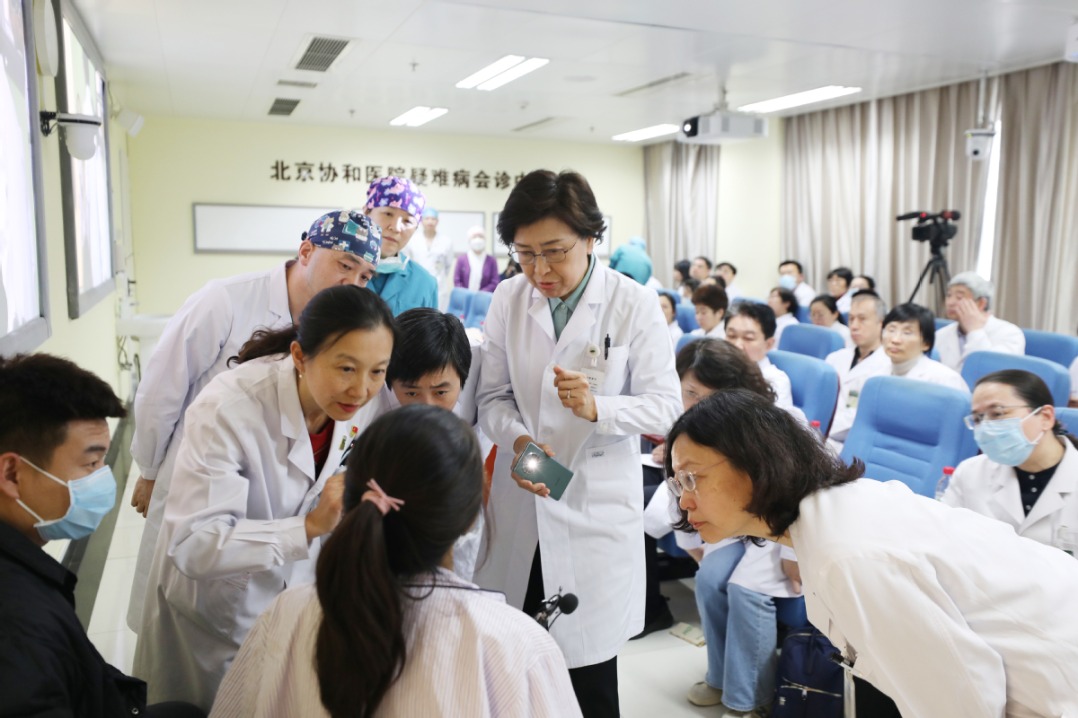
    In a innovative approach to justice administration, retired judges across China are returning to courtrooms as mediators, leveraging their decades of legal expertise to resolve complex disputes that have eluded conventional resolution. This ‘silver-haired mediation’ program represents a strategic utilization of experienced legal professionals to strengthen grassroots governance and promote the rule of law.

    The effectiveness of this initiative was recently demonstrated in Beijing’s Chaoyang District, where 71-year-old retired judge Hou Chunying successfully mediated a 37-year-old heating fee dispute that had persisted since 1987. The case involved 48 households of former radio factory employees facing a collective debt exceeding 1 million yuan ($142,000) in overdue heating fees, plus substantial penalties.

    Judge Hou discovered that the conflict stemmed from outdated accounting methods, differing opinions among residents, and the factory’s financial difficulties. Rather than proceeding with litigation that would have placed undue burden on the residents, she identified an existing agreement between the heating provider and the factory that offered a pathway to resolution.

    Through separate negotiations with both parties, Hou persuaded the factory to acknowledge its social responsibilities while convincing the heating center to reduce the debt amount considering the factory’s financial constraints. Her mediation resulted in a one-time settlement payment of 700,000 yuan, resolving the nearly four-decade-old dispute to the satisfaction of all parties involved.

    The Supreme People’s Court has officially endorsed this growing movement, recognizing retired judges as valuable legal assets whose extensive experience and specialized knowledge make them particularly effective in alternative dispute resolution. These veteran jurists bring not only technical legal expertise but also the wisdom gained from handling thousands of cases throughout their careers.

    Beyond resolving specific cases, the program addresses systemic challenges within China’s judicial system by reducing caseloads for active judges, easing court congestion, and providing cost-effective resolution mechanisms for complex historical disputes. For the retired judges themselves, the initiative offers meaningful engagement in their post-retirement years, allowing them to continue contributing to the legal system and society.

  • Heady scent of wintersweet beckons all this season

    Heady scent of wintersweet beckons all this season

    As an unusual cold snap blankets even southern Chinese cities in snow, a timeless seasonal tradition has captivated citizens nationwide: the pursuit of wintersweet blossoms. This hardy flower, scientifically known as Chimonanthus praecox, transforms winter landscapes with its vibrant yellow petals and intoxicating fragrance from December through March each year.

    In Beijing’s Summer Palace, the golden-glazed roofs dusted with snow create an imperial backdrop for clusters of wintersweet that burst forth against vermilion walls. This striking contrast of imperial red, pure white, and floral gold forms living paintings that embody both elegance and endurance against the harsh winter elements.

    Southern classical gardens offer equally exquisite settings for the seasonal spectacle. Jiangsu Province’s Humble Administrator’s Garden features delicate pavilions and winding corridors that artfully frame the blossoms, while Shanghai’s Guyi Garden showcases the flowers against ancient architecture with ornate towers and terraces. The blooms’ subtle beauty reflects China’s deep appreciation for seasonal transitions and natural resilience.

    The phenomenon has gained particular attention this year as rare snowfall in southern cities like Wuhan and Shanghai has created extraordinary photographic opportunities. Social media platforms have been flooded with images of snow-dusted wintersweet branches, with many citizens braving the cold to capture the perfect shot of these fragrant blossoms against unusual snowy backdrops.

  • Rapid unravelling of SDF removes ‘main irritant’ in US-Turkey ties

    Rapid unravelling of SDF removes ‘main irritant’ in US-Turkey ties

    The rapid collapse of the Kurdish-led Syrian Democratic Forces (SDF) amid President Ahmed al-Sharaa’s military offensive has fundamentally transformed the geopolitical landscape in Syria while removing a persistent source of tension between the United States and its NATO ally Turkey, according to regional experts.

    The disintegration of Rojava—the semi-autonomous Kurdish administration in northeastern Syria—marks the culmination of a strategic shift within the Trump administration that has effectively endorsed Turkey’s security concerns over Kurdish aspirations for autonomy. This development represents a dramatic reversal of Washington’s previous policy that had supported Kurdish forces as primary partners in the fight against the Islamic State since 2015.

    Ankara had long viewed the SDF as an extension of the Kurdistan Workers’ Party (PKK), which both the US and European Union designate as a terrorist organization. The SDF’s defeat, facilitated by Arab tribal forces switching allegiances to Damascus, has enabled Syrian government forces to reclaim territories including the oil-rich provinces of Deir Ezzor and Raqqa for the first time in over a decade.

    The Trump administration’s appointment of billionaire envoy Tom Barrack signaled a new approach prioritizing alignment with Turkish interests. Barrack declared the US security partnership with Kurdish forces ‘largely expired’ and backed a ceasefire agreement that requires SDF fighters to integrate individually into the Syrian army, explicitly rejecting any form of Kurdish semi-autonomy or federal system.

    Regional analysts note that this resolution of the Kurdish question has created unprecedented alignment between Washington and Ankara that could influence ongoing conflicts in Gaza and Ukraine, where the Trump administration seeks Turkish cooperation. The absence of Israeli intervention despite Kurdish efforts to solicit support further strengthened Turkey’s position, according to experts at the Middle East Institute.

    While some US lawmakers like Senator Lindsey Graham threatened sanctions against Damascus, the administration’s support for the new Syrian government—reportedly facilitated by Turkish and Saudi diplomacy—appears to have prevailed, fundamentally reshaping America’s Middle East policy and its relationship with key regional allies.

  • Wall Street holds steadier after Trump says he won’t use force to take Greenland

    Wall Street holds steadier after Trump says he won’t use force to take Greenland

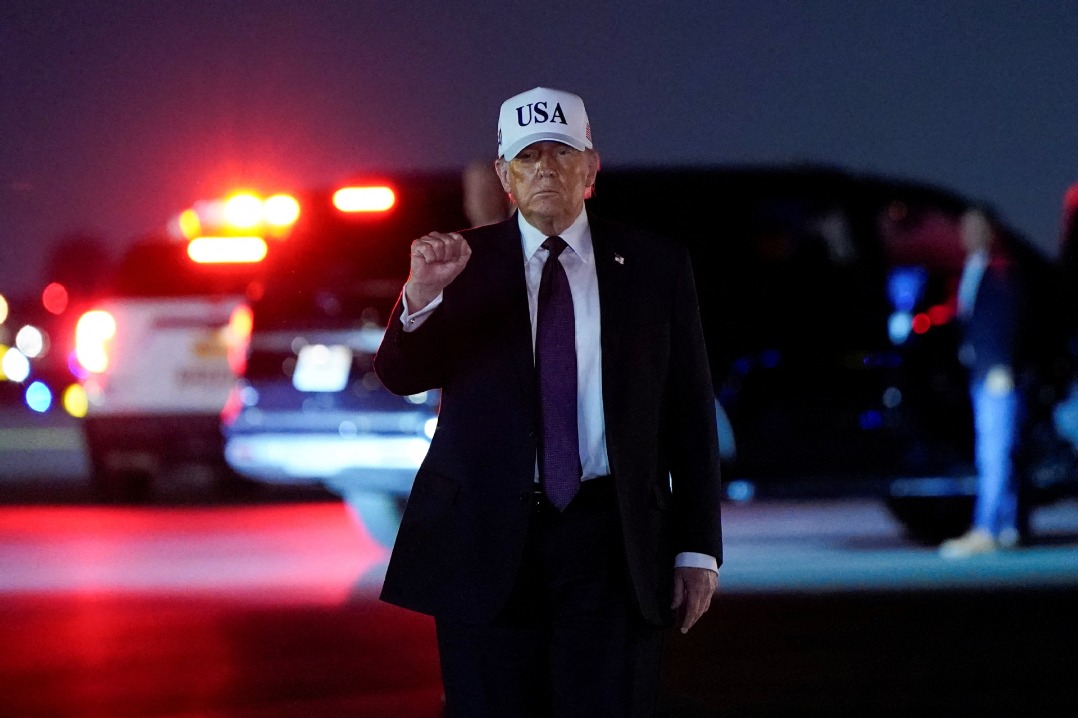
    Wall Street exhibited tentative stabilization on Wednesday as investor nerves settled following President Trump’s clarification that he would not employ military force to acquire Greenland. This statement helped the market recoup a fraction of the substantial losses incurred during the previous session’s sell-off, which was triggered by the geopolitical uncertainty surrounding the proposal.

    The S&P 500 index advanced 0.3%, edging closer to its recent all-time peak after a 2.1% plunge on Tuesday. The Dow Jones Industrial Average climbed 200 points (0.4%), while the Nasdaq composite registered a more modest 0.1% gain. The calming of tensions was also reflected in the bond market, where the yield on the 10-year Treasury note retreated slightly to 4.28% from 4.30%.

    Corporate earnings emerged as a primary market driver, providing pockets of strength. Halliburton surged 3.6% after the oilfield services giant delivered quarterly profits that surpassed analyst expectations. United Airlines ascended 3.5% following a similarly robust earnings report and optimistic revenue guidance from CEO Scott Kirby for 2026.

    However, not all corporate news was positive. Netflix shares tumbled 4.8% as investor focus shifted from its profit beat to concerns over decelerating subscriber growth. Kraft Heinz faced even steeper losses, plummeting 6.6% after Berkshire Hathaway signaled a potential divestiture of its massive 325-million-share stake, a move compounded by recent board resignations and a major write-down.

    Underlying anxieties persisted, evidenced by a 1.9% rally in gold, which breached $4,800 per ounce for the first time. Market participants continued to monitor the implications of proposed 10% tariffs on several European nations and evolving fiscal policies in Japan, where Prime Minister Sanae Takaichi’s snap election call sent government bond yields to record levels amid expectations for expansive tax cuts and spending.

  • Man who assassinated former Japanese prime minister gets life in prison

    Man who assassinated former Japanese prime minister gets life in prison

    A Japanese court has imposed a life imprisonment sentence on Tetsuya Yamagami, the 45-year-old perpetrator who assassinated former Prime Minister Shinzo Abe in July 2022. The Nara District Court delivered its verdict on Wednesday, aligning with prosecutors’ demands for maximum punishment under applicable statutes.

    The courtroom proceedings revealed Yamagami’s meticulously planned attack during Abe’s campaign speech in Nara, where he employed a homemade firearm to fatally strike the prominent statesman. This violent act profoundly shocked a nation renowned for its stringent firearm regulations and generally low incidence of political violence.

    Yamagami’s testimony unveiled his underlying motivations, explaining that he targeted Abe after viewing a video message the former leader had sent to an affiliate of the Unification Church. The assailant expressed intense animosity toward the religious organization, claiming his actions aimed primarily to damage the church and expose its deep-rooted connections with Japan’s political establishment.

    The trial exposed decades of intertwined relations between the ruling Liberal Democratic Party and the controversial South Korean-based religious movement. These revelations prompted significant political repercussions, including the party’s strategic distancing from the church and subsequent governmental investigations.

    These investigations culminated in the revocation of the church’s tax-exempt religious status in Japan and ultimately led to its ordered dissolution. Additionally, the assassination has triggered comprehensive reviews of security protocols for public figures and dignitaries throughout Japan.

    While prosecutors sought life imprisonment, defense attorneys advocated for a reduced sentence of no more than 20 years, citing Yamagami’s traumatic childhood as the son of a church adherent. Japanese law permits capital punishment in murder cases, though prosecutors typically reserve this for incidents involving multiple fatalities.

    The case has generated unusual public sympathy for Yamagami, with thousands petitioning for clemency and sending care packages to his detention facility. His actions have also spurred legislative changes, including new regulations restricting aggressive donation solicitations by religious organizations.

  • Tourist helicopter goes missing near volcano in Japan

    Tourist helicopter goes missing near volcano in Japan

    Rescue operations are underway in southwestern Japan’s Kumamoto Prefecture after a sightseeing helicopter carrying three individuals vanished during a tour near the volatile Mount Aso volcano. The aircraft, operated by Takumi Enterprise, departed from Aso City Zoo at 10:52 local time Tuesday for what should have been a routine 10-minute scenic flight but failed to return as scheduled.

    According to local authorities, police helicopters scanning the area later identified an object resembling an aircraft within the crater of Nakadake—one of Mount Aso’s five distinct peaks—during afternoon surveillance. Official confirmation regarding whether this object is indeed the missing Robinson R44 helicopter remains pending as investigation continues.

    The flight manifest included a 64-year-old veteran pilot with four decades of aviation experience and two Taiwanese tourists. The operator confirmed the aircraft had completed two uneventful tours earlier that day before disappearing on its third scheduled trip. Weather conditions at the time of disappearance were reported as cloudy over the Nakadake region, complicating initial search efforts which were suspended Tuesday evening due to visibility constraints before resuming at dawn Wednesday.

    In response to the incident, Takumi Enterprise has temporarily grounded its entire fleet of sightseeing helicopters. The volcanic helicopter tours represent a significant tourism attraction for the region, offering aerial views of one of Japan’s most geologically active landscapes. This incident echoes a previous emergency involving the same company in 2024 when one of their helicopters made an emergency landing at Mount Aso, resulting in injuries to three occupants.

    Mount Aso, which last erupted in October 2021 producing substantial volcanic plumes, remains one of the country’s most monitored volcanic zones due to its persistent activity.

  • NRIs in UAE: Can I buy property on behalf of a friend in India?

    NRIs in UAE: Can I buy property on behalf of a friend in India?

    Legal authorities are issuing stern warnings to non-resident Indians in the UAE regarding property transactions involving resident Indian friends. Recent advisory highlights significant legal risks when NRIs make property payments on behalf of residents in India, contrary to foreign exchange regulations.

    The Reserve Bank of India’s Liberalised Remittance Scheme permits resident Indians to remit up to $250,000 annually for specified transactions, including overseas property acquisitions. However, when non-resident Indians or foreign citizens make payments on behalf of resident Indians, this constitutes a violation of Section 3(a) of the Foreign Exchange Management Act (FEMA).

    The Enforcement Directorate has demonstrated increased vigilance in investigating such cases, treating them as serious contraventions of exchange control regulations. Offenses under FEMA are compoundable but involve substantial financial penalties for the resident Indian beneficiary, who becomes subject to comprehensive investigation procedures.

    Concurrently, India has implemented sweeping labor reforms through four consolidated labor codes that replace century-old regulations. The new framework expands wage definitions, enhances social security coverage for unorganized workers, and establishes minimum wage protections across all employment categories. The reforms specifically address gender-based wage discrimination and extend benefits to gig economy workers and contract employees.

    Despite global automotive industry challenges, Indian automobile exports demonstrated remarkable resilience with 858,000 vehicles exported in 2025—a 15% increase from previous years. Manufacturing giants including Maruti Suzuki, Hyundai, and Kia have expanded their global footprint across African, South American, and developed markets, with India emerging as a strategic export hub for new electric vehicle models.

    Legal experts emphasize that cross-border financial assistance for property purchases, while well-intentioned, exposes both parties to significant regulatory consequences and recommend strict adherence to authorized banking channels for all international remittances.