标签: Asia

亚洲

  • Journalists in Jammu and Kashmir asked to sign pledge vowing to keep peace

    Journalists in Jammu and Kashmir asked to sign pledge vowing to keep peace

    In a significant development for press freedom in the contested region, Jammu and Kashmir police have compelled multiple journalists to sign a formal commitment vowing not to “disturb peace” through their reporting. This move has sparked immediate concerns among media watchdogs and press freedom advocates.

    According to verified reports, at least three journalists received official summons to police stations in Srinagar, the capital of the federally administered territory. While two journalists confirmed receiving these directives, one assistant editor from the respected Indian Express newspaper notably refused to sign the document despite repeated police summons between January 15-19.

    The situation emerges against the backdrop of India’s 2019 revocation of Jammu and Kashmir’s constitutional autonomy, which was followed by numerous restrictions in the Muslim-majority region. These developments include established guidelines governing how media outlets cover the ongoing insurgency and related security matters.

    The Press Club of Kashmir confirmed in an official statement that multiple members had received either formal summons or informal advisories from authorities requesting they cease reporting on police investigations into religious institutions’ funding and management structures.

    Kunal Majumder, Asia-Pacific coordinator for the Committee to Protect Journalists, characterized these actions as “part of a pattern of intimidation against the media in Jammu and Kashmir,” emphasizing that using police powers to summon journalists over legitimate reporting represents a concerning trend for democratic principles.

    The Srinagar police spokesperson has not yet responded to requests for commentary regarding these developments. Meanwhile, the Indian Express has publicly affirmed its commitment to “uphold and protect the rights and dignity of its journalists” in response to these pressures.

  • Middle Eastern leaders including Netanyahu and Sisi line up to join Trump ‘Board of Peace’

    Middle Eastern leaders including Netanyahu and Sisi line up to join Trump ‘Board of Peace’

    A significant diplomatic schism is forming within the international community regarding U.S. President Donald Trump’s newly proposed ‘Board of Peace’ initiative. While several Middle Eastern and regional powers have confirmed participation, key European nations are expressing reservations or outright refusing to join the controversial body.

    Egyptian President Abdel Fattah el-Sisi and Turkish President Recep Tayyip Erdogan both confirmed their nations’ involvement on Wednesday, with Turkey’s Foreign Minister Hakan Fidan representing the country at Thursday’s signing ceremony during the World Economic Forum in Davos. This follows Israeli Prime Minister Benjamin Netanyahu’s earlier acceptance of membership.

    The initiative, which would feature Trump as lifetime chairman, requires a $1 billion fee from participating nations for permanent membership, though Turkish officials confirmed the first three years would be fee-exempt. Approximately 50 countries have received invitations, with about 35 reportedly agreeing to join according to sources close to Trump.

    Notable participants include Hungary, United Arab Emirates, Pakistan, Bahrain, Armenia, Morocco, Argentina, Kazakhstan, Uzbekistan, and Belarus. Egypt’s foreign ministry stated its agreement came “after completing the relevant legal and constitutional procedures,” while expressing appreciation for “Trump’s leadership and his commitment to ending the war in Gaza.”

    However, the initiative faces substantial opposition from European powers. France declared it could not give a “favourable response” at this stage, while Norway outright refused participation, citing the board “raises a certain number of questions.” Ukrainian President Volodymyr Zelensky stated he “does not imagine” participating alongside Russia, calling it inconceivable given ongoing conflicts.

    The United Kingdom expressed apprehension about Russia’s potential involvement, noting concern over inviting Russian President Vladimir Putin who “has proven time and again that he is not seriously committed to peace.” Germany confirmed Chancellor Friedrich Merz would not attend the signing ceremony, departing Davos prior to the event.

    The diplomatic tensions coincide with ongoing strains between Europe and the U.S. regarding Trump’s repeated threats to annex Greenland, though he stated at Davos he would not use force in pursuing negotiations for its acquisition.

  • Watch: Animal lovers save ‘malnourished’ dog stranded on ten-lane Abu Dhabi highway

    Watch: Animal lovers save ‘malnourished’ dog stranded on ten-lane Abu Dhabi highway

    In a remarkable display of community solidarity, animal welfare advocates successfully rescued an severely malnourished Saluki dog stranded on a perilous ten-lane highway in Abu Dhabi’s Al Shawamekh area. The rescue operation, which unfolded on Tuesday afternoon, involved multiple volunteers coordinating efforts to save the endangered canine from traffic moving at speeds exceeding 140km/h.

    The dog, subsequently named Shamekh (Arabic for ‘one who stands tall with dignity, pride, and resilience’), was discovered in critical condition. Veterinary examination revealed severe malnutrition with a body weight of just 15.7kg, anemia, tick fever, ear infections, and visible scars indicating possible trauma. The absence of a microchip suggests the animal had been abandoned.

    Rawan Ghunaim, founder of rescue organization House of Hounds (HOH), spearheaded the coordinated response after being alerted by fellow rescuer Majeda Al Hosani, who initially spotted the dog during her commute. Al Hosani maintained vigil for over two hours to ensure the dog’s safety until experienced Saluki handler Hamad Al Ghanem arrived to execute the actual rescue. The operation was captured on video showing Al Ghanem calmly approaching and comforting the frightened animal before transporting him to the British Veterinary Clinic in Abu Dhabi.

    This incident highlights a disturbing trend in the UAE regarding the treatment of Salukis, a breed traditionally valued as hunting companions and family members. According to Ghunaim, who rescues two to three Salukis daily, many are now abandoned on highways, deserts, or near farms when they’re no longer deemed useful for racing or beauty contests. This represents a significant cultural shift from historical practices where these dogs were respected and integrated into family life.

    Despite their calm, low-maintenance nature often compared to cats, Salukis face adoption challenges within the UAE. Many rescued dogs consequently find homes in Europe through HOH’s international adoption program. The organization, registered as a non-profit in Europe and the United States, facilitates these transfers to families more familiar with the breed’s characteristics.

    Shamekh remains under veterinary care while awaiting eventual placement in a suitable permanent home, representing both a successful rescue story and a sobering reminder of ongoing animal welfare challenges in the region.

  • Syria: Bashar al-Assad’s uncle dies aged 88, say two sources

    Syria: Bashar al-Assad’s uncle dies aged 88, say two sources

    Rifaat al-Assad, the controversial uncle of ousted Syrian President Bashar al-Assad whose brutal suppression of a 1982 uprising earned him the epithet “butcher of Hama,” has died at age 88, according to multiple sources confirmed on Wednesday.

    The former military officer played a pivotal role in helping his brother Hafez al-Assad seize power through a 1970 coup that established decades of authoritarian rule in Syria. Despite spending most of his life in exile, primarily in France, Rifaat consistently maintained presidential ambitions that would repeatedly clash with the political dynasty he helped create.

    His relationship with the Syrian leadership remained complex and fraught with tension. When Hafez al-Assad died in 2000, Rifaat openly challenged the succession plan that transferred power to his nephew Bashar, declaring himself the legitimate heir in a ultimately unsuccessful bid for control.

    The exiled figure reemerged during Syria’s 2011 uprising, publicly urging his nephew to step down to prevent civil war while simultaneously deflecting blame from Bashar himself, attributing the rebellion to accumulated governance errors rather than personal leadership failures.

    In a remarkable turn of events, Bashar al-Assad facilitated his uncle’s return to Syria in 2021, effectively rescuing him from French legal troubles where he had been convicted for acquiring millions in property using misappropriated Syrian state funds. This familial reconciliation proved short-lived when Rifaat was forced to flee again in 2024 following his nephew’s ouster from power.

    His final escape attempt involved a rejected entry request at a Russian airbase before ultimately crossing into Lebanon via unconventional means—reportedly carried across a river on the back of a close associate according to sources with direct knowledge of the incident.

  • ‘Blowback’: Iran’s foreign minister says EU gets what it deserves as Trump threatens trade deal

    ‘Blowback’: Iran’s foreign minister says EU gets what it deserves as Trump threatens trade deal

    Iran’s Foreign Minister Seyed Abbas Aragchi has declared that Europe is experiencing severe “blowback” for its compliance with Washington’s abandonment of the Iranian nuclear agreement, drawing parallels to current transatlantic trade tensions. The statement came shortly after European Commission President Ursula von der Leyen addressed the World Economic Forum in Davos, vowing that the EU would respond “unflinchingly, united and proportionally” to President Donald Trump’s threatened tariffs on European goods.

    The current diplomatic friction stems from Trump’s recent threat to impose 10% tariffs on eight European nations that opposed his proposal to acquire Greenland, a semi-autonomous Danish territory. Von der Leyen maintained that the EU still considers the United States a vital ally but cautioned against escalating trade conflicts, emphasizing that “a deal is a deal” and that “when friends shake hands, it must mean something”—referencing the EU-US trade agreement signed in July.

    Aragchi responded through social media platform X, accusing European powers of selective adherence to international agreements. He reminded the E3 alliance (France, Germany, and the United Kingdom) that they “faithfully obeyed and even abetted” Trump’s unilateral withdrawal from the Joint Comprehensive Plan of Action (JCPOA) during his first term in May 2018. The 2015 nuclear agreement had provided Iran relief from comprehensive economic sanctions in exchange for restrictions on its civilian nuclear program.

    The foreign minister warned that the EU’s current predicament with Trump’s tariff threats and his renewed determination to acquire Greenland—which Trump confirmed there was “no going back” from—demonstrates the consequences of undermining international agreements. Aragchi concluded that either all deals must be honored, or “no handshake means anything,” suggesting the alternative would be “nothing short of the breakdown of the international order.”

    The escalating situation occurs against the backdrop of warnings from other world leaders at Davos, including French President Emmanuel Macron’s caution about a shift toward “a world without rules” and Canadian Prime Minister Mark Carney’s observation that the “old order is not coming back.”

  • Maccabi Tel Aviv ban policing review failed to include local Muslim voices

    Maccabi Tel Aviv ban policing review failed to include local Muslim voices

    A preliminary investigation by Britain’s policing watchdog into the controversial ban on Maccabi Tel Aviv fans from attending a match against Aston Villa has ignited significant controversy due to its complete exclusion of Muslim community perspectives. Andy Cooke, Chief Inspector of Constabulary, submitted a report to Home Secretary Shabana Mahmood that included twenty interviews with prominent figures but notably omitted any representatives from Birmingham’s Muslim community, despite Muslims constituting approximately 30% of the city’s population.

    The report’s findings prompted Home Secretary Mahmood to declare she had ‘no confidence’ in West Midlands Police Chief Constable Craig Guildford, resulting in his immediate retirement. Cooke’s investigation reviewed police intelligence that justified prohibiting Maccabi supporters from the Europa League fixture at Villa Park in November.

    Among those interviewed were diplomatic representatives from the Israeli embassy, the Jewish Representative Council for Birmingham and West Midlands, and Lord Mann, the government’s independent adviser on antisemitism. However, no Muslim community groups or mosque leaders were consulted, despite the significant Muslim population in the region.

    A source familiar with the investigation revealed to Middle East Eye that Cooke’s team had indeed interviewed Muslim community groups but could not include their perspectives due to ‘tight’ deadlines imposed by the Home Office for the preliminary report. The source indicated these interviews would be included in subsequent updates.

    Birmingham Perry Barr MP Ayoub Khan, whose constituency includes Villa Park stadium, expressed profound disappointment that Cooke’s team had not contacted him or local councillors. ‘British Muslims are treated as expendable,’ Khan stated. ‘That is how Muslims on the ground in Birmingham feel at the moment, and there is deep grievance about it.’

    Jewish Voice for Liberation, a group representing Jews critical of Israel, also voiced concerns regarding the lack of Muslim representation in the report. In a letter to West Midlands Police and Crime Commissioner Simon Foster, representatives David Mond and Jenny Manson expressed being ‘surprised and dismayed’ by the omission.

    The controversy stems from West Midlands Police’s decision to ban Maccabi fans based on intelligence from Dutch police regarding the conduct of approximately 200 supporters described as ‘experienced fighters’ who wreaked havoc in Amsterdam during a November 2024 match. Police assessments concluded the most significant violence risk came from extremist fans of the Israeli club, with documents characterizing them as ‘highly organized’ and ‘intent on causing serious violence.’

    Chief Constable Guildford had previously defended the ban as a ‘necessary tactic with a legitimate aim, absolutely not antisemitic, rather a carefully considered, legitimate and necessary measure to ensure public safety.’ He acknowledged that part of the evidence justifying the ban, including reference to a nonexistent match against West Ham, was erroneously obtained using artificial intelligence.

  • Syria’s Rifaat al-Assad reportedly dies in the UAE aged 88

    Syria’s Rifaat al-Assad reportedly dies in the UAE aged 88

    Rifaat al-Assad, the exiled uncle of former Syrian leader Bashar al-Assad infamous for his brutal suppression of dissent, has passed away in the United Arab Emirates at the age of 88. Media outlets confirmed his death on Tuesday, marking the end of a controversial life marked by violence, exile, and legal battles.

    Rifaat, brother of the late Syrian President Hafez al-Assad, earned the moniker ‘Butcher of Hama’ for orchestrating one of modern history’s most severe crackdowns. In 1982, forces under his command besieged the central city of Hama, employing aerial bombardment and ground operations that resulted in an estimated 40,000 casualties during the suppression of an uprising.

    His political ambitions led to a failed coup attempt against his brother, resulting in his prolonged exile primarily in France. During his European residence, Swiss authorities initiated a war crimes investigation in 2013 concerning his alleged involvement in the Hama massacre and additional killings in Tadmor during the early 1980s.

    The French judicial system convicted Rifaat in June 2020, sentencing him to four years imprisonment for embezzling Syrian state funds to acquire extensive French real estate holdings valued at approximately €90 million. His assets were subsequently confiscated. Following the upholding of this verdict by France’s highest court in September 2022, he departed for Syria after three decades abroad, having received permission from his nephew Bashar.

    In a symbolic gesture of displeasure with French authorities, Rifaat returned the Legion d’Honneur medal awarded to him by President Francois Mitterrand in 1986. His return to Syria coincided with the dramatic political shift that saw Bashar al-Assad ousted by rebel factions led by Hay’at Tahrir al-Sham in December 2024, ending the family’s fifty-year dynastic rule.

    The subsequent Syrian administration has called for prosecuting former officials for repression, wartime conduct, and corruption. Despite multiple pending legal cases, Rifaat avoided imprisonment throughout his life, eventually fleeing to Lebanon and subsequently Dubai following his nephew’s removal from power.

  • China unveils flexible urban planning rules to improve lives, foster new industries

    China unveils flexible urban planning rules to improve lives, foster new industries

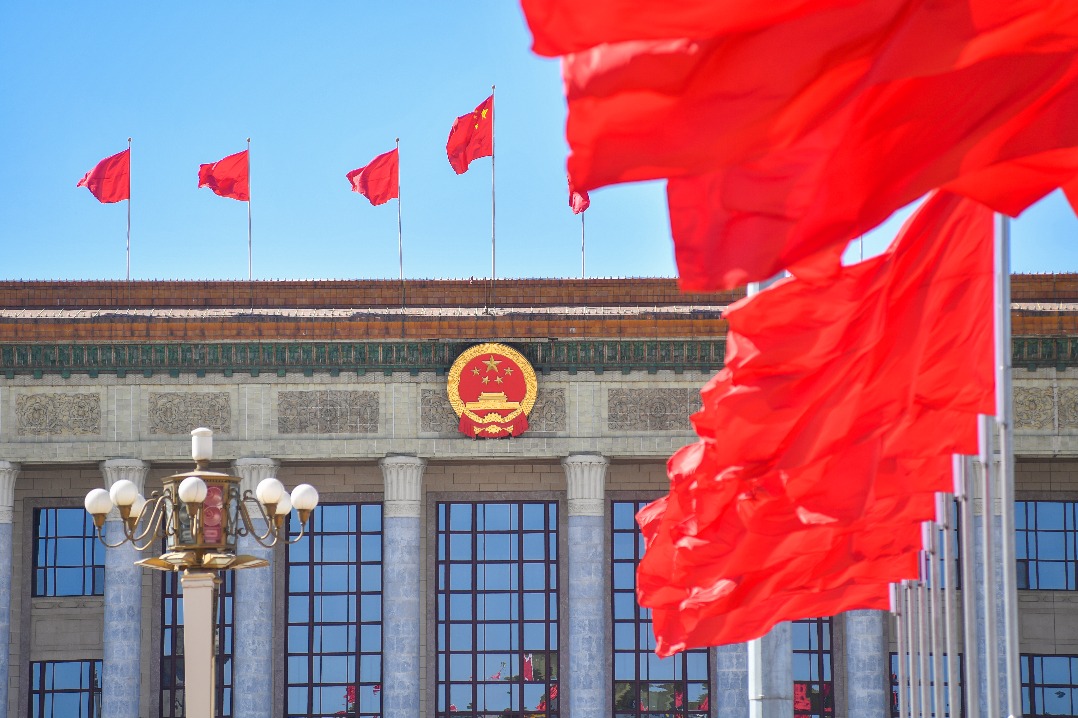
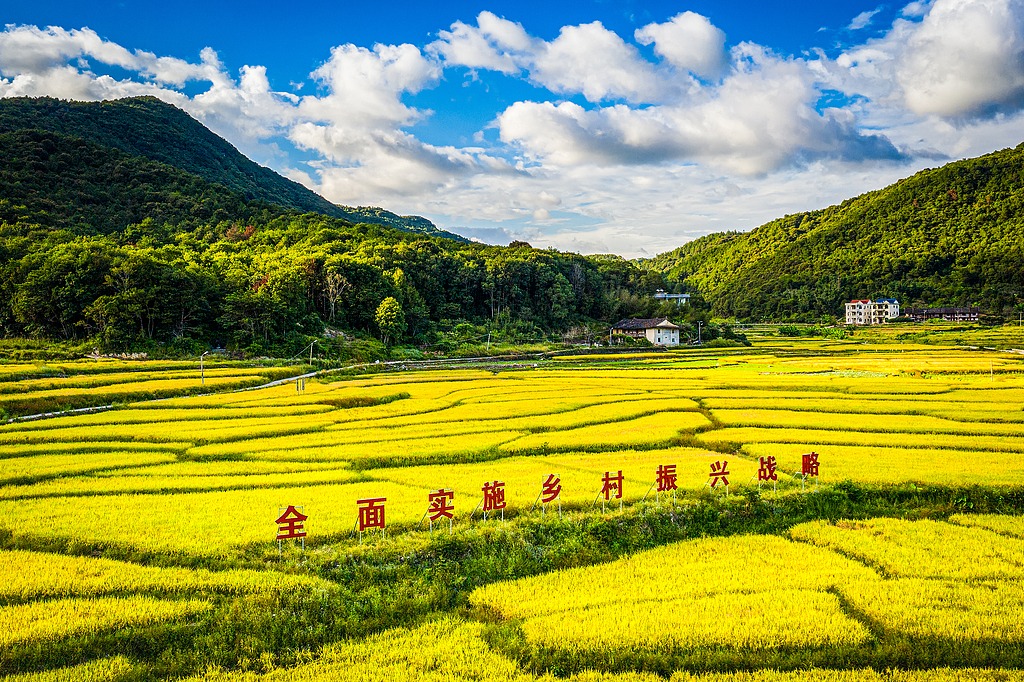
    China has initiated a groundbreaking shift in urban development strategy through newly introduced flexible planning regulations. Jointly issued by the Ministry of Natural Resources and the Ministry of Housing and Urban-Rural Development, these measures represent a fundamental rethinking of urban management as China transitions from rapid urbanization to quality-focused development.

    The innovative framework addresses the growing need for adaptive urban planning that responds to evolving societal demands and market dynamics. Xie Haixia, Director of the National Land Spatial Planning Bureau, emphasized the necessity of enhancing planning flexibility while maintaining legal compliance. The reforms include streamlined procedures for plan modifications and exemptions for certain community improvement projects.

    Significantly, the policy allows minor urban renewal initiatives—including parking facility construction, charging station installation, elevator additions, and green space development—to proceed without formal planning permits, provided they ensure public safety and don’t infringe on neighboring rights.

    The practical implementation of these policies is already demonstrating tangible benefits. In Yancheng, Jiangsu province, authorities creatively repurposed underutilized spaces beneath bridges and in idle buildings to develop 54 sports facilities, capitalizing on the massive popularity of the Jiangsu Super League that attracted nearly 30,000 spectators per game.

    Beyond community enhancements, the policy breakthrough facilitates industrial innovation by breaking rigid land classification systems. Shanghai’s Xinzhuang industrial area exemplifies this approach, where previously idle enterprise properties have been reclaimed and reallocated to establish a comprehensive commercial aerospace industrial chain encompassing rocket design, satellite development, and component manufacturing.

    Officials Zhang Yan from the Ministry of Housing and Urban-Rural Development confirmed that both ministries will collaborate to ensure effective nationwide implementation, including comprehensive assessments to identify challenges and refine solutions throughout the execution process.

  • Seven trillion and one reasons China stocks will keep rallying

    Seven trillion and one reasons China stocks will keep rallying

    TOKYO — Against a backdrop of escalating geopolitical tensions and unconventional US policy maneuvers, China’s financial markets are demonstrating remarkable resilience as global investors recalibrate their strategies. Major financial institutions are now projecting significant growth for Chinese equities, with Goldman Sachs forecasting a 20% surge in the MSCI China Index for 2026, building upon the previous year’s 28% rally.

    According to Kinger Lau, strategist at Goldman Sachs, the anticipated equity appreciation will be predominantly earnings-driven, supported by three critical factors: artificial intelligence advancement, China’s ‘Going Global’ initiative, and ‘anti-involution’ policy measures. This optimistic outlook emerges despite ongoing concerns about China’s economic reforms and property market stability.

    The investment landscape is further bolstered by approximately $7 trillion in Chinese time deposits maturing this year, creating a substantial pool of domestic capital poised for market deployment. This liquidity surge coincides with expectations of additional stimulus measures from Beijing following China’s fourth-quarter 2025 economic performance, which at 4.5% year-on-year growth, represented the weakest expansion in three years.

    Global financial institutions are notably revising their China assessments. Fidelity analyst George Efstathopoulos recently declared China no longer ‘uninvestable,’ while Bernstein Societe Generale Group upgraded its China equities outlook. Wang Dan of Shenzhen Sunrise Asset Management anticipates ‘a slow bull trend’ to continue, citing declining interest rates and strategic positioning in undervalued assets.

    The yuan’s simultaneous strengthening with Shanghai stocks in 2025 has particularly captured strategists’ attention. Christy Tan, Franklin Templeton strategist, notes that ‘a firmer yuan can help equities by improving dollar-based returns and risk sentiment,’ creating a virtuous cycle where genuine equity inflows support currency valuation.

    Citigroup economist Xiangrong Yu observes a ‘markedly positive shift in investor narrative on China,’ predicting managed yuan appreciation to 6.8 against the dollar within 6-12 months from the current 6.96. UBS Group similarly anticipates further yuan gains against trading partner currencies, reflecting robust export performance and trade surplus.

    This renewed confidence in Chinese assets contrasts sharply with mounting concerns about US market stability under the Trump administration’s unconventional policies. Recent actions including tariff escalations, threats to Federal Reserve independence, and unconventional foreign policy moves have created global financial uncertainty. Evercore ISI analyst Krishna Guha warns of a potential ‘sell-America trade’ resurgence similar to April 2025’s market turbulence.

    The implications extend beyond bilateral relations, affecting global debt markets as evidenced by recent volatility in US Treasuries and Japanese government bonds, where 40-year yields reached 4% – the highest in decades. Institute of International Finance economist Emre Tiftik notes investor attention is ‘increasingly shifting toward government bond auctions and borrowing plans’ amid elevated budget deficits.

    This global financial recalibration presents both opportunity and imperative for China. While Trump administration policies inadvertently enhance China’s appeal as a financial alternative, Beijing faces pressure to accelerate promised reforms including fuller yuan convertibility, enhanced transparency, and property market stabilization. With trillions in domestic capital awaiting deployment and global investors watching closely, China’s financial evolution enters a critical phase amid unprecedented global monetary uncertainty.

  • City have to ‘change the dynamic’, says Guardiola after humiliating defeat

    City have to ‘change the dynamic’, says Guardiola after humiliating defeat

    In a stunning Champions League upset that reverberated across European football, Manchester City suffered a humiliating 3-1 defeat against Norwegian minnows Bodo/Glimt on Tuesday. The Premier League giants, reigning European champions from 2023, found themselves comprehensively outplayed at the ecstatic Aspmyra Stadion despite their overwhelming financial and talent advantages.

    The match turned decisively when Spanish midfielder Rodri received his marching orders for two quick bookings, leaving City in complete disarray during the second half. Bodo/Glimt’s remarkable victory was secured through Kasper Hogh’s first-half brace and a clinical finish from Jens Petter Hauge after the interval. Although Rayan Cherki managed to pull one back momentarily for City, the damage had already been done as the Norwegian underdogs celebrated their historic first-ever Champions League group stage victory.

    The contextual disparity between the clubs couldn’t be more dramatic—Bodo’s entire population of merely 55,000 residents could almost fit into City’s Etihad Stadium. Yet manager Kjetil Knutsen’s squad ignored this massive gap to deliver a performance that will be remembered as one of European football’s greatest shocks.

    Manager Pep Guardiola struck a despairing tone in his post-match assessment, acknowledging that his team must urgently “change the dynamic” following this devastating result. City’s campaign to secure automatic qualification for the last 16 now hinges entirely on their final group phase encounter against Galatasaray next week.

    The defeat compounds what has become a concerning slump for the Manchester club, who remain without a victory in their last four Premier League matches. Their recent 2-0 defeat at Manchester United left them trailing league leaders Arsenal by seven points, adding pressure to an already challenging season.

    Guardiola revealed the extent of City’s personnel crisis, with eleven senior players unavailable through injury, illness, suspension, or ineligibility. Despite these circumstances, the manager refused to criticize Rodri for his dismissal, noting the midfielder’s difficult comeback season following last year’s serious knee injury.

    “Everything has started to be, since the new year, against us in many, many things,” Guardiola stated. “We arrived in some departments without important players who give consistency to the team. They are a little bit fragile, as they were last season in a certain period.”