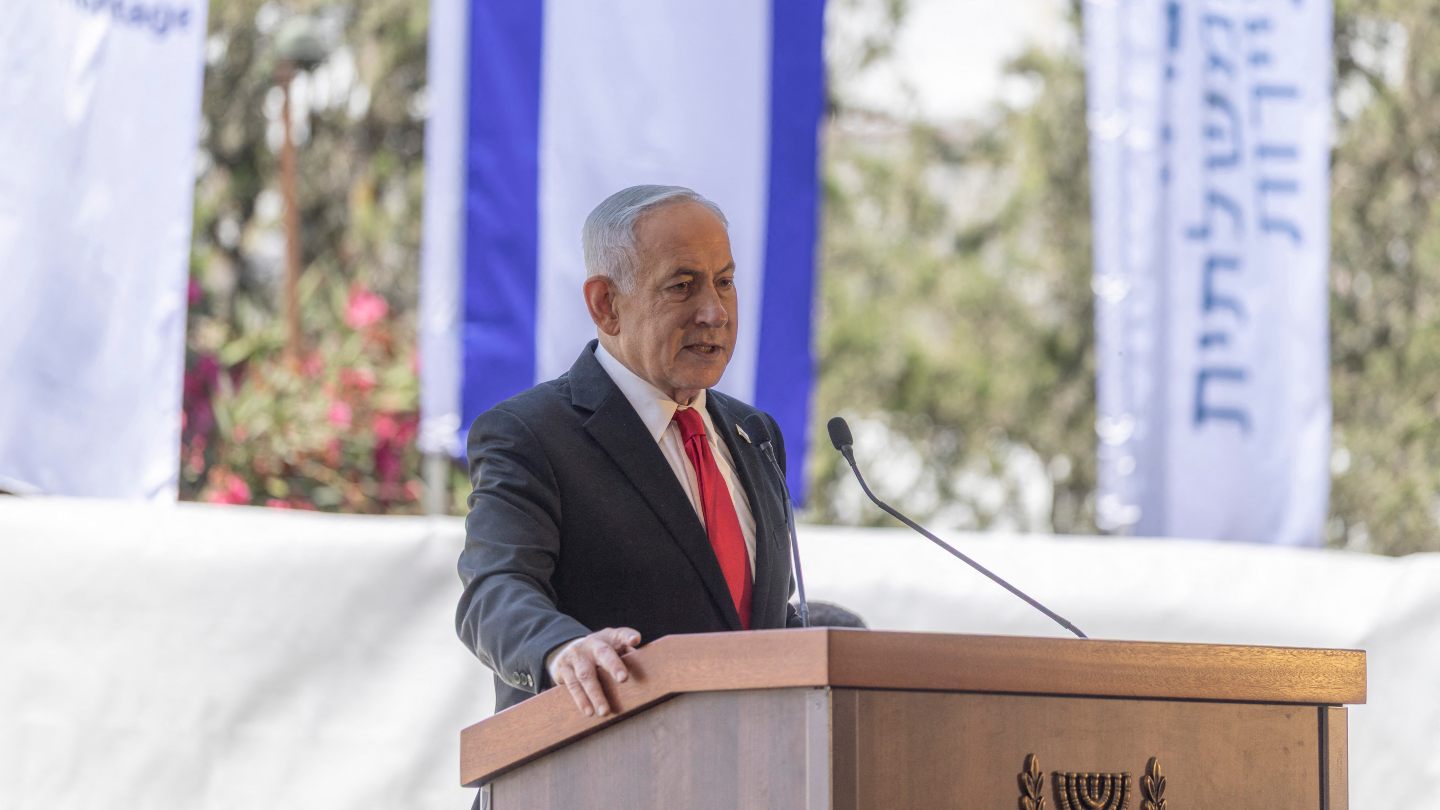
Bangkok, April 21 — Thailand’s newly sworn-in administration has launched a forward-looking overhaul of its foreign affairs strategy, branding the updated framework “Thai Diplomacy 2.0”, which places science, technology and expanded economic partnerships at the center of efforts to advance the Southeast Asian nation’s national interests amid shifting global geopolitical currents. Deputy Prime Minister and Foreign Minister Sihasak Phuangketkeow outlined the new approach in his first formal press briefing with reporters, framing the policy as a more proactive, coordinated response to 21st-century global challenges. The new strategy is built around four core principles: policy coherence, clearly defined national objectives, rapid response to developing crises, and expanded engagement with the Thai public, with the media designated a key partner in advancing diplomatic goals. At its core, the policy expands Thailand’s economic diplomacy beyond traditional regional partners, with a deliberate push to open emerging markets outside of Asia. The foreign ministry is already working across government agencies to deepen trade and bilateral cooperation with Central Asian states and member nations of the Gulf Cooperation Council, Sihasak confirmed. Innovation, science and technology will serve as the foundational pillar of this renewed economic diplomacy, he added. To deliver on this priority, the foreign ministry will partner with Thailand’s Ministry of Higher Education, Science, Research and Innovation (HESRI) under a unified “Team Thailand” framework that aligns diplomatic, commercial and even national security efforts to protect and promote Thai interests across the globe. Sihasak emphasized that modern foreign policy no longer fits into narrow traditional silos, cutting across overlapping spheres of geopolitics, geo-economics and geo-technology. This interconnected landscape demands far closer inter-agency coordination to boost Thailand’s global competitiveness and strengthen its international economic standing, he said. “This is to advance Thailand’s core interests on the international stage and create meaningful change for the Thai people,” the foreign minister told reporters. HESRI Minister Yodchanan Wongsawat recently laid out three high-priority sectors for the joint science diplomacy strategy: the fast-growing global wellness economy, semiconductor development and artificial intelligence, and environmental and energy technologies tailored to address Thailand’s most pressing domestic challenges, including toxic air pollution and long-term energy security. Yodchanan noted that the unified framework will create clear structure for scientific research and commercialize outcomes, with the ultimate goal of lifting Thai livelihoods through targeted technological advancement. Beyond economic and scientific priorities, Sihasak addressed the most pressing geopolitical challenges facing the new administration, starting with the long-running border dispute between Thailand and neighboring Cambodia. With the rules-based international order facing growing global pressure, the foreign minister stressed that bilateral dialogue and mutual cooperation are the only path forward, calling for a fresh start to cross-border relations. “Efforts must focus on moving and turning a ‘new page’ of relations with Cambodia to restore sustainable peace along the border. Rather than exerting pressure on Thailand, Cambodia must demonstrate genuine readiness and sincerity in cooperating with Thailand,” he said. Turning to the ongoing Middle East crisis, Sihasak said Thailand will maintain a careful, strategic positioning that prioritizes the safety of Thai nationals working in the region while ensuring unimpeded passage of essential goods through critical global trade routes. “What I have stated all along is clear — we do not support this war. It should not have happened in the first place,” he said. Looking ahead to long-term strategic priorities, Sihasak reaffirmed that Thailand’s foreign policy will always center national interests, above all territorial and human security. He highlighted the critical importance of securing Thailand’s border regions and deepening practical regional cooperation with neighboring Cambodia, Myanmar, Laos and Malaysia. Amid intensifying great power competition that has divided many regional nations, Sihasak said Thailand advocates for a multi-polar regional order anchored by a strong, unified Association of Southeast Asian Nations (ASEAN). Thailand will maintain its long-held strategic autonomy, he emphasized, declining to take sides in competing global power blocs. “We have to know where our interests lie. We must not be too much, and we must not be too little. We must be just right,” he said.
标签: Asia
亚洲
-

When the map turns red: Inside the lives upended by Israel’s expulsion orders
On the morning of September 27, 2024, a new chapter of crisis opened for Lebanese civilians when the Israeli military began distributing digital warnings ordering residents to abandon their homes across wide swathes of the country. Within seconds of these alerts circulating via WhatsApp groups — marked with red highlights pinning targeted buildings, streets, and entire districts — panic spread. People crowded over their phone screens to identify local landmarks, narrow roadways quickly became choked with idling cars, and families poured into the streets, clutching small children and supporting elderly relatives to escape. In some residential areas, warnings landed mid-school day: administrators rushed students out onto sidewalks, where tearful children waited alone, stranded as their parents fought through gridlocked traffic to reach them.
This pattern of sudden, short-notice expulsion orders paired with immediate airstrikes has become a devastating routine for Lebanese communities in the months following an initial 2024 ceasefire that paused two months of open conflict between Israel and Lebanon. By March 2025, four months after that truce took hold, these warnings still upend lives without warning.
Twenty-nine-year-old Sarah, a resident of Lebanon’s south Beirut suburb of Dahieh, was preparing iftar at her parents’ Jamous Street home when an Israeli expulsion order popped up in her family’s WhatsApp group. Her young son was playing with a toy car in her childhood bedroom when the alert came, distributed by the Israeli military’s Arabic spokesperson on X without any clear timeframe for evacuation. “We didn’t know how much time we had,” Sarah recalled from Majdal Selem in south Lebanon. “The second I saw the map, I knew it was our building.” She grabbed her son, leaving his shoes behind, and ran out the door without grabbing even her purse or any personal belongings. By the time she reached the street, the entire neighborhood was in chaos: blocked roads, panicked residents fleeing in every direction, and nearby schools already emptied of students. “There were people who weren’t able to escape in time, and they were stuck in the area,” Sarah said. “The area wasn’t emptied in that time; it is not realistic. It is very crowded and densely populated. How could you empty it in two hours?”
Sarah fled to her brother’s home in the mountains, where her mother 60-year-old Fatima arrived minutes after fleeing her office. When Fatima walked through the door, she turned straight to the news — and watched her lifelong home reduced to rubble in an Israeli airstrike. The home she had owned for 30 years, the first property she and her late husband had built together after decades of renting, was gone. She had designed every detail: added a custom sitting nook to the kitchen, filled the space with plants, painted custom doors, bottles, and furniture. A second-floor room housed 5,000 books, doubled as her art studio, and held her late poet husband’s un digitized handwritten manuscripts. A cabinet preserved the belongings of their son, killed by Israel in 2008 while working as a paramedic in south Lebanon: his work suit, watch, favorite fragrance, and nursing certificate. “These things will never be compensated,” Fatima said. “They will never come back to life and touch this wall, or this table.” All 100 of her completed artworks were destroyed in the strike.
Clinical psychologist and psychotherapist Elie Abou Chacra frames this sudden loss of home and irreplaceable personal mementos as a profound psychological rupture. “The home is not just a place. It is part of the psychological system. It holds memory, routine, and a sense of control,” he explained. When an evacuation warning lands, the human brain immediately shifts to survival mode: time compresses, every decision becomes instinctive, and choosing what to save and what to leave becomes an impossible, traumatic calculation. For objects tied to lost loved ones, he added, losing these emotional anchors can feel like grieving the person all over again. Watching the destruction unfold in real time via phone or television screens deepens this harm, he noted: “The brain processes it as it is happening in the moment. It closes the door to hope instantly.”
For many Lebanese civilians, the destruction comes even after they believed they had survived the worst of the conflict. In 2024, 29-year-old Nour and her husband Mohammad purchased a $115,000 flat in Haret Hreik, another Dahieh neighborhood, and invested an additional $55,000 to fully renovate the space from the ground up, updating wiring, plumbing, and interiors. “I kept reminding myself that I’m doing this once in my lifetime,” Mohammad said. The couple moved in by June 2024, but were forced to flee almost immediately when the 2024–2025 war broke out. Their expulsion order arrived on November 25, 2025 — one day before a planned ceasefire — while the couple was visiting Iraq. At first, Nour thought her brother-in-law’s news that their home was targeted was a joke. Two hours later, her father called to confirm the strike, and video of the destroyed flat flooded in. “I felt a deep, heavy helplessness when I was watching the videos,” Nour said. “We didn’t even get to enjoy it.” Beyond the crippling financial blow — Mohammad still pays off loans for a home that no longer exists — Nour lost irreplaceable personal heirlooms: her late mother’s clothing, her high school uniform signed by classmates, handwritten notes from friends. “If I were there, what would I have saved?” she paused. “Nothing. It’s either everything or nothing.”
As conflict resumed after the fragile ceasefire, Israeli evacuation warnings expanded from targeting individual buildings to entire neighborhoods and districts. According to United Nations figures, roughly 20 percent of Lebanon’s total population has been displaced, with expulsion orders covering approximately a quarter of the country’s entire territory. On March 5, 2026, Israel issued its first mass evacuation order, covering 12 neighborhoods across large parts of Beirut and ordering hundreds of thousands of civilians to flee within hours. Entire districts emptied onto a single highway, leaving widespread chaos in their wake. That same day, 36-year-old Naima lost the six-year-old skincare clinic she owned in Dahieh’s Centre Tayyar, a building that housed 90 small clinics and businesses. “I spent more time there than at my home,” she said. “I cried for a few minutes. Then I prayed and told myself: people are losing their lives.”
Official data from Lebanon’s National Council for Scientific Research confirms the scale of destruction: since March 2, 2026, more than 40,000 housing units have been partially or completely destroyed by Israeli strikes. On some days, over 1,000 homes are damaged or flattened, leveling entire neighborhoods. Widely circulated Israeli drone footage shows entire villages in south Lebanon being demolished in controlled explosions, with residents scrambling to identify their own homes in the clips. Some pay up to $200 for commercial satellite imagery just to confirm if any part of their property survived.
Brigadier General Khaled Hamadeh, a political affairs researcher, classifies these mass expulsion warnings as a deliberate new form of psychological warfare targeting civilian populations. “What began as alerts for individual buildings expanded into mass displacement orders,” he noted. Over time, civilians have adapted in small, painful ways: they keep valuables packed, essentials ready, and structure their daily lives around waiting for the next alert. “The warnings shape how civilians behave, when they leave, when they return, and how they live,” Hamadeh explained.
While international humanitarian law requires advance warnings before attacks that may put civilians at risk, legal experts note these requirements mandate specific, timely notices that allow for safe evacuation. Blanket warnings covering entire populated districts have raised questions about whether Israel is attempting to redraw Lebanon’s demographic map through forced displacement. A 2026 investigation by Amnesty International found that many Israeli warnings in Lebanon are “inadequate, ineffective or misleading”, failing to give civilians a realistic opportunity to escape. On the ground, the core question for ordinary people remains unanswerable: how do you pack up an entire lifetime in a matter of minutes?
Hamadeh adds that Lebanon’s lack of a formal national early warning or civil defense alert system leaves civilians with no alternative but to rely on warnings from the attacking military itself, eliminating any state mediation and leaving communities completely disoriented. “In the moment, you have to decide which item deserves to survive,” Sarah said.
Expulsion orders have fundamentally reshaped daily life across most of Lebanon, dictating when work ends, when schools close, and when families are forced to scatter. For Fatima, the trauma of loss did not end when her home turned to rubble. After the strike, she rented a new flat in Dahieh, and faced an impossible choice: treat it as a temporary stopgap, or build a new life there. She chose to invest fully, to push back against the pressure of displacement. “I decided to invest in it as if I am going to live there forever,” she said. “To show Israel that we are strong and their strategies will never weaken us.”
Her new home survived the latest round of conflict, with only a few broken window panes. Even when displaced again, Fatima has not stopped creating art. She bought new brushes, new paints, and new canvases, and continues to paint, even when she cannot sell her work because pieces are often left behind in destroyed homes. She still centers her work on flowers. “If I don’t see a flower during the day,” she said, “I’d die.”
This reporting was originally published by Middle East Eye, an independent outlet covering the Middle East, North Africa and global affairs.
-

Trump’s ‘Board of Peace’ held talks with DP World over Gaza reconstruction
Plans to rebuild the war-ravaged Gaza Strip have moved forward with behind-the-scenes discussions between a US-led reconstruction body and one of the world’s largest port and logistics operators, multiple sources familiar with the negotiations have confirmed to the Financial Times. The talks center on a potential role for DP World, the Dubai-state-owned multinational logistics firm, in overhauling Gaza’s access to critical supplies and long-term economic development, as Donald Trump’s controversial post-conflict vision for the enclave begins to take tangible shape.
The Trump administration’s so-called Board of Peace, a Washington-aligned body launched in January to coordinate Gaza reconstruction, has held multiple communications with DP World representatives about a range of potential projects. The core proposal under discussion would task DP World with overseeing end-to-end supply chain management for humanitarian aid and commercial goods entering the blockaded territory. This includes planning for on-the-ground warehousing infrastructure, digital cargo tracking systems, and coordinated security arrangements for incoming shipments, the insiders say.
Negotiations have also explored larger, long-term infrastructure projects: options include constructing a new deep-water port either within Gaza’s territorial boundaries or along the adjacent Egyptian coastline, plus the development of a dedicated free trade zone within Gaza to drive private sector growth. A draft proposal reviewed by the FT outlines DP World delivering a “secure and traceable supply chain system”, a “port-led economic ecosystem”, and “employment-generating trade platforms” for the war-shattered enclave, where 70% of infrastructure has been destroyed by Israel’s military campaign.
This initiative aligns with long-stated priorities from Trump, who has repeatedly pushed for large-scale privatized redevelopment of Gaza in the wake of Israel’s military campaign. The former president turned current US leader has publicly shared AI-generated conceptual media depicting his vision for a “Gaza Riviera”, a proposal that sparked widespread outrage and mockery from Palestinian leadership, who argue the plan sidelined Palestinian sovereignty over their own territory.
The Board of Peace, which consists of heads of state aligned with US foreign policy in the Middle East, has faced widespread global pushback since its launch. Most of the world’s national governments have refused to join the body, with critics arguing it deliberately undermines the United Nations’ long-standing central role in governance and humanitarian coordination in the occupied Palestinian territories.
Insiders familiar with the talks emphasize that current entry arrangements for aid into Gaza are functionally unworkable for large-scale reconstruction. “You can’t rebuild Gaza like in their vision with 1,500 trucks a week being moved back-to-back through Israeli crossings,” one source told the FT. “You need bigger, more efficient and less bureaucratic entryways. Right now it’s like working through a straw.”
In a statement to the Financial Times, a Board of Peace spokesperson confirmed the outreach process, saying: “We are speaking to multiple potential partners across multiple lines of effort. We are conducting… market research focused on how to identify best-in-class operators and next-gen solutions.”
Any deal with DP World carries notable reputational and financial risks for all involved, however. The firm has been mired in controversy in recent months over long-concealed ties to disgraced convicted sex offender Jeffrey Epstein. Earlier this year, the company’s chairman stepped down after public revelations of his connections to Epstein, and a string of major international backers have suspended new investments. Thousands of emails exchanged between DP World CEO Sultan Ahmed bin Sulayem and Epstein were uncovered earlier this year, prompting investment firms in both the United Kingdom and Canada to halt future commitments to the company.
Quebec’s La Caisse pension fund, one of DP World’s largest financial partners that holds a 45% stake in DP World Canada, announced it would pause all new investments until the company implements targeted governance reforms. British International Investment, the UK government’s foreign development arm that co-owns the Berbera Port in Somaliland alongside DP World, followed suit with its own pause on new capital commitments. DP World remains fully owned by a Dubai government holding company, and the firm contributes more than 36% of Dubai’s total GDP and roughly 12% of the United Arab Emirates’ overall national output, according to the company’s public data.
The push for new infrastructure comes amid a persistent crisis for humanitarian aid operations in Gaza, even as Israel has rolled back some restrictive measures. Earlier this year, the Israeli Supreme Court ordered a freeze on a government ban targeting dozens of international aid groups, but the sector still faces crippling barriers to entry. The Israeli government had imposed strict new regulations requiring 37 nongovernmental organizations to turn over extensive personal information on all their Palestinian staff to continue operating. Alan Moseley, country director for the Danish Refugee Council in occupied Palestine, told AFP that both international staff and critical aid supplies continue to be blocked from entry. “Staff continued to be rejected, supplies continued to be rejected,” Moseley said, adding that almost no affected aid organizations have been able to deliver meaningful amounts of aid into Gaza over recent months.
-

Exclusive: Inside Hezbollah’s battle for Bint Jbeil and Khiam
For weeks, Israeli military forces carried out sustained bombardment on two southern Lebanese towns, Bint Jbeil and Khiam, launching repeated attempts to encircle the heavily symbolic and strategically critical settlements. As of the post-ceasefire assessment, neither town has fully fallen under Israeli occupation, a development that lays bare the distinct limitations of Israeli firepower in southern Lebanon and the inherent advantages that local terrain delivers to defensive forces, according to three sources close to Hezbollah speaking to Middle East Eye. One of the three sources has direct, firsthand knowledge of frontline combat operations in the region.
The sources explain that Israeli ground advances were stalled not only by fierce organized armed resistance from Hezbollah, but also by the challenging physical landscape of southern Lebanon, the unique difficulties of urban combat, and the outsized political and military significance Israel itself assigned to these two targets. For Israeli military planners, the core objective was never simply to advance into the towns: it was to fully secure Bint Jbeil, Khiam and the surrounding areas to solidify control over Israel’s northern border with Lebanon. This failure to achieve that core goal raises major questions about the viability of any long-term Israeli military presence in southern Lebanon, and it also explains why Israel has continued to demolish civilian structures in areas it partially controls even after the April 15 ceasefire took effect, with the military actively broadcasting footage of this destruction across social media platforms.
For Israeli leadership, Bint Jbeil has loomed as a particularly charged objective for decades. “At every round of fighting, there has always been the question of Bint Jbeil for the Israelis,” one Hezbollah-aligned source explained. “The city has haunted the Israelis and created some sort of PTSD.” This outsized symbolism dates back to May 2000, when Hezbollah’s late secretary-general Hassan Nasrallah delivered his iconic speech in Bint Jbeil immediately after Israel withdrew from southern Lebanon, famously describing Israel as “weaker than a spider’s web”. The town was already a decisive battleground in the 2006 Israel-Lebanon war, where Hezbollah secured a widely recognized victory, making it a top priority target in the 2026 offensive.
In this latest conflict, Israeli operational objectives shifted significantly from the 2006 war. Initially, military planners set a broad goal: to isolate the entire Bint Jbeil district by seizing control of all key access routes, cutting off the town from surrounding settlements including Qawzah, Wadi al-Oyoun, Haddatha, Aitaroun, Wadi al-Skikiyyeh and Wadi al-Slouqi. Had this plan succeeded, it would have fully cut Bint Jbeil off from reinforcements and laid the groundwork for a long-term Israeli occupation of the area. But every Israeli attempt to achieve this encirclement failed, in large part because Hezbollah had studied Israeli tactics used in the Gaza Strip and prepared comprehensive countermeasures, the sources confirmed. Faced with this setback, Israeli commanders narrowed their operational scope, scaling back ambitions from isolating an entire district to besieging the core town of Bint Jbeil alone – a shift that represented a clear downgrading of strategic goals, moving from controlling open terrain to targeting a dense urban center that could be framed as a visible public relations victory.
For Hezbollah, the failure of Israel’s initial encirclement plan counts as a major battlefield success. “Everything the Israelis claimed about enforcing a total siege on the town was inaccurate,” a second source noted. “There was pressure from several directions, yes, but even in the final moments, supplies and ammunition were still reaching us through the surrounding axes. Bint Jbeil remained an operations hub from which attacks were launched into other areas. No force in the world can impose a total siege on our terrain in this area.”
Geographically, Bint Jbeil sits at the core of a strategic puzzle Israeli forces could not solve. The current conflict expanded to Lebanon in early March, after Hezbollah launched rocket fire in response to the killing of Ayatollah Ali Khamenei, pre-empting an Israeli invasion the group assessed was imminent. Israeli forces advanced into southern Lebanon from both eastern and western axes, pushing roughly 10 kilometers into Lebanese territory. To establish a continuous, stable controlled zone along the border, Israeli forces needed to link these two advance axes horizontally – a maneuver that required full control of Bint Jbeil. Without the town, the eastern and western sectors of the advance remain disconnected, leaving Israeli troops vulnerable as isolated pockets rather than forming a coherent defensive strip along the border.
After the failure of the district-wide encirclement, Israeli forces launched a four-pronged advance on the town itself, moving in from Ain Ebel, Saf al-Hawa, Yaroun and Maroun al-Ras. Even then, Israeli forces never managed to secure full control of the urban center. According to the sources, the Israeli advance relied on limited, incremental incursions, booby-trapping abandoned buildings and burning structures on the town’s outskirts. The military also deployed remotely operated unmanned trucks packed with explosives, a tactic first honed in Gaza City, designed to draw Hezbollah fighters into open combat before detonating to destroy entire neighborhoods. This cautious approach, the sources argue, reflects a deliberate Israeli choice to avoid the heavy casualties that would come from direct close-quarters combat.
To date, Israeli forces have failed to establish permanent, secured positions inside the town core. Key symbolic landmarks, including the “spider’s web” stadium where Nasrallah delivered his 2000 victory speech, the central grand mosque, and major religious compounds, all remain under Hezbollah control. Israeli troops never reached the town center, nor have they been able to eliminate Hezbollah’s fighting presence inside the settlement. The sources attribute this defensive success to years of intensive pre-conflict battlefield preparation by Hezbollah. “To illustrate the level of preparation with which the party fought in Bint Jbeil, the Hezbollah units inside the city twice attempted to kill the Israeli commander of the 52nd Battalion of the 401st Brigade by targeting his tank,” the second source said. “He survived both times by a miracle and is now in intensive care.” The fact that Hezbollah was able to identify the specific battalion and its commanding officer in advance demonstrates how thoroughly the group had studied Israeli order of battle ahead of the offensive, the source added.
The sources also detailed one incident in Bint Jbeil’s al-Awini neighbourhood where the Israeli military activated the Hannibal Directive, a policy that orders heavy bombardment of an area where soldiers are at risk of capture to prevent them being taken alive. “After it lost contact with its soldiers, it began shelling within roughly 20 metres of their position, before eventually managing to retrieve them,” the source recalled. “We knew that any attempt to capture them would prompt it to shell both its own soldiers and ours.” Middle East Eye has requested comment from the Israeli military on the claims outlined in this report.
The narrative of Israeli strategic failure holds equally true for Khiam, the second key southern Lebanese town. While Bint Jbeil serves as the critical link connecting Israel’s eastern and western advance axes, Khiam functions as a strategic gateway to inland Lebanese territory. Like Bint Jbeil, Khiam carries deep symbolic weight: it was the site of a notorious Israeli-backed prison during the 1982-2000 occupation, where hundreds of detainees faced systematic abuse and torture. To date, Israeli forces have failed to bypass Khiam, fully encircle the town, or seize control of its northern side. Hezbollah’s supply lines from the western Bekaa Valley have remained fully operational throughout the offensive, blocking Israeli forces from pushing further inland and derailing all plans to establish a stable controlled buffer zone along the border.
The three Hezbollah-aligned sources argue that Israel’s repeated failures to seize full control of Bint Jbeil and Khiam point to broader strategic challenges: even a shallow buffer zone of less than 10 kilometers in southern Lebanon will be extremely difficult for Israel to sustain. Without full control of these two key settlements, Israeli advances into Lebanon are capped in depth, leaving Israeli troops with disconnected, vulnerable outposts, unsecured urban areas behind their lines, and intact Hezbollah supply routes that keep resistance forces supplied and reinforced.
The sources acknowledge that Israel has made limited territorial gains during the offensive and has killed a large number of Hezbollah fighters, but they argue these gains have not added up to the sustainable, cohesive area of control Israel set out to achieve. The second source noted that Israel intentionally inflated the strategic importance of the battle for Bint Jbeil ahead of the offensive, a public relations gambit to frame any seizure of the town as a transformative victory. “The Israelis deliberately inflated the importance of this battle so that, if they succeeded in taking the city, it could be presented as proof of achievement,” he explained.
As evidence that Hezbollah’s defensive capabilities remain intact, the source pointed to an ambush carried out by the group’s elite Radwan force against Israel’s Battalion 101, carried out shortly before the April 15 ceasefire took effect. “Within minutes, three Hezbollah fighters managed to hit 10 paratroopers, leaving them dead or wounded,” he said. The incident underscores Hezbollah’s approach to the conflict: it is not merely a static defense of fixed territory, but a sustained contest of endurance, mobility, and preventing Israel from securing the decisive symbolic victory it sought to cement its strategic goals.
-

Beijing intellectual property court highlights landmark cases to bolster tech innovation
On April 21, 2026, the Beijing Intellectual Property Court held a press conference to publicly release details of 10 landmark intellectual property (IP) cases, reaffirming its commitment to strengthening legal safeguards for cutting-edge technological development via optimized judicial frameworks.
Official data from the court shows that in 2025 alone, the institution processed and closed nearly 29,000 IP-related disputes. Beyond resolving conflicts, these rulings have strengthened IP protection for core technologies in both key strategic sectors and fast-growing emerging industries, while setting clear judicial precedents to address novel legal challenges that have arisen alongside rapid industrial transformation.
Song Yushui, vice-president of the Beijing Intellectual Property Court, told reporters that the court has established dedicated specialized trial teams to handle IP cases across high-priority fields including pharmaceuticals, digital data and agricultural seed technology. These teams center their work on untangling complex legal issues in rapidly evolving sectors such as artificial intelligence (AI), biomedicine, the digital platform economy, cultural creative industries, and IP-related anti-monopoly enforcement.
Song emphasized that the 10 selected cases showcase the court’s targeted efforts to fill existing gaps in industry regulatory frameworks, refine industry-specific legal standards, clarify the boundaries of IP rights, standardize competitive conduct in relevant markets, optimize the business environment for IP-focused innovation, and underpin China’s high-standard opening-up of its economy to global partners.
Among the 10 cases, one particularly notable ruling stands out as one of China’s first judicial decisions on protecting AI model structures and core parameters. In that case, the court determined that the competitive advantage derived from AI model structures and parameters, which are developed through massive resource investment in data training and iterative refinement, constitutes a legally protectable interest. This means such core R&D outcomes cannot be copied or exploited without explicit permission from the rights holder.
Song noted that this groundbreaking ruling fills a long-existing regulatory gap in the legal protection of core AI innovation outcomes, establishes a clear, structured judicial protection framework for core AI assets, and creates a more supportive legal environment for the standardized and innovative development of China’s AI industry.
-

Traditional earthen buildings revitalized through boutique hospitality, culture
Nestled in the mountainous regions of East China’s Fujian province, centuries-old circular Tulou earthen buildings, a UNESCO World Heritage Site inscribed in 2008, are undergoing a remarkable transformation that blends centuries of cultural heritage with 21st-century traveler demands. What once drew casual day-trippers for quick sightseeing stops is now evolving into a high-end experiential tourism destination, breathing new economic life into these historic architectural treasures.
For modern tourists like Ju, who traveled to Zhangzhou with her family to stay at Changrong Building, a converted Tulou boutique homestay, the appeal lies in stepping into living history rather than just observing it from a distance. “I really wanted to experience what it’s like to live in a Tulou,” Ju explained. “It is quiet and unique.”
Completed in 2023 through a renovation project led by a team from Xiamen University, Changrong Building strikes a careful balance between preservation and modern comfort. The structure’s handcrafted earthen exterior and historic layout remain fully intact, while the interior has been upgraded to meet contemporary traveler expectations: 12 custom-designed modern-themed rooms now feature sound insulation, smart home technology, and dedicated public reading spaces. Beyond accommodation, the homestay offers immersive cultural activities, including guided tea picking in surrounding plantations and traditional Chinese costume photo experiences, giving visitors hands-on engagement with local culture.
Huang Zhihui, secretary-general of the local Tulou homestay association and a native who grew up in a Tulou cluster, has witnessed the sector’s steady evolution. He recalled that the earliest Tulou homestays suffered from a lack of professional management and basic private amenities, failing to meet the growing expectations of domestic travelers who now prioritize cultural depth and service quality over low prices.
To address this shift, Huang developed an intangible cultural heritage market near the iconic Huaiyuan Building, one of the most famous historic Tulou sites. Since opening in May 2025, the market has already drawn more than 700,000 domestic and international visitors. To resonate with younger travelers who value interactive, shareable experiences, Huang’s team introduced tech-integrated creative souvenirs: NFC-enabled sound postcards and gypsum Tulou models that let visitors access and play their own personal travel clips by tapping the souvenir with a smartphone, turning a simple memento into a personalized keepsake.
The revitalization movement extends beyond Nanjing County to neighboring Hua’an County, where traditional Tulou structures have been repurposed for a wide range of cultural and commercial uses. Empty historic buildings have been converted into bamboo art galleries showcasing local craft traditions, specialty coffee shops, and community libraries, creating new public spaces for both tourists and local residents.
Local tourism authorities have also leaned into modern cultural trends to attract younger audiences. During the 2026 Spring Festival holiday, Hua’an launched an immersive China-chic interactive game that invited tourists to take on character roles, interact with non-player actors, and complete themed challenges centered on traditional folk dances and historic Chinese sports. The innovative activation delivered impressive results: official data shows Hua’an’s Tulou scenic area welcomed more than 100,000 tourists during the holiday week, with ticket revenue rising 23% year-on-year to more than 6.2 million yuan (approximately $904,000). Driven by popular intangible heritage night parades, nighttime visitor numbers surged by 73.72% compared to the previous year, turning a former half-day sightseeing spot into a multi-day destination.
Lin Ying, director of the Hua’an Cultural, Sports, and Tourism Bureau, outlined the long-term vision for the region’s Tulou tourism transformation. “We aim to transform Tulou tourism from a half-day trip into a full-day, overnight experience,” Lin said. “Our goal is to move beyond visiting a single building to creating a regional destination where visitors can experience a life that begins with nature and returns to the warmth of the hearth.”
This adaptive reuse model has turned declining historic structures into economic drivers, proving that cultural heritage can thrive when paired with innovative hospitality and thoughtful modernization, rather than being locked away as static museum pieces.
-

Shanghai’s first Yangtze-crossing rail transit line completes track laying, boosting delta integration
A landmark milestone for regional connectivity in eastern China was reached Tuesday, as construction crews finished full track-laying for Shanghai Metro Line 22, the city’s first ever rail transit project that crosses the Yangtze River. The completion marks a critical leap forward in advancing the long-term integrated development strategy for the Yangtze River Delta, one of China’s most economically dynamic urban clusters.
Also widely referred to as the Chongming Line, this new transit link is set to drastically shrink travel times between Chongming Island and central Shanghai, expand regional accessibility, and unlock fresh growth potential across the entire delta region. Chongming Island, China’s third-largest island, is a geographic formation created entirely by sediment carried and deposited by the Yangtze River over thousands of years, and has long faced connectivity gaps with mainland Shanghai that have limited its economic and social development.
Stretching 42 kilometers from Jinji Road Station in Pudong New Area to Yu’an Station at the northern end of Chongming Island, the new line is designed to handle operating speeds of up to 120 kilometers per hour. Its route crosses the Yangtze River twice, passing through mid-route Changxing Island, and includes eight stations along its full alignment. Once the line enters full commercial operation, it is expected to reshape regional mobility patterns, support balanced economic development across Shanghai’s riverine regions, and strengthen interconnectedness between major cities across the Yangtze River Delta, supporting coordinated growth in trade, tourism, and industry.
-

China-Laos mega power project put into operation
A landmark cross-border energy infrastructure partnership between China and Laos has reached a major milestone, with the 500-kilovolt China-Laos power interconnection project officially entering commercial operation on Monday, April 21, 2026. Developed to deepen bilateral energy cooperation, this new facility stands as the largest and highest-voltage cross-border power grid project ever constructed between the two neighboring nations.
According to data released by China Southern Power Grid Lancang-Mekong International, the project delivers a transformative upgrade to bilateral energy exchange capacity. Prior to the launch of this new infrastructure, the maximum power transmission capacity between China and Laos stood at just 50,000 kilowatts. The newly commissioned project pushes this capacity to 1.5 million kilowatts — a 30-fold increase over the previous interconnection line.
Beyond expanding capacity, the project is designed to facilitate large-scale cross-border exchange of clean energy. Project operators project that the interconnection will support the annual transmission of approximately 3 billion kilowatt-hours of low-carbon electricity between the two countries, helping to balance energy supply and demand while supporting decarbonization goals on both sides of the border.
The project’s completion comes amid growing regional cooperation on energy infrastructure across the Lancang-Mekong region, where cross-border interconnection projects are increasingly seen as a tool to improve energy security, expand access to affordable clean power, and strengthen economic ties between participating nations.
-

China-Vietnam carbon markets explored in new academic work
As Vietnam prepares to debut its first domestic carbon trading exchange, a new collaborative academic work has emerged to unpack and compare carbon market frameworks in both China and Vietnam, offering targeted insights to support the Southeast Asian nation’s emerging climate market buildout. Titled *China-Vietnam Carbon Market*, the new book is the product of a cross-border research partnership between Vietnamese scholar Duong Thi Thanh — a long-time specialist in forest carbon sinks — and her doctoral advisor, Professor Zhang Ying from Beijing Forestry University (BFU). More than just an academic analysis, the publication stands as a tangible example of joint Sino-Vietnamese collaboration between research institutions and industry stakeholders, designed to deliver evidence-based academic backing for cross-border climate governance under the Belt and Road Initiative. Long before she enrolled in the doctoral program at BFU’s School of Economics and Management, Duong identified a critical gap in existing research: Vietnam’s forest carbon sink market had remained largely unexamined and understudied by the academic community. With a national forest coverage rate of 42 percent, spanning 14.7 million hectares of forest land that sequester an estimated 69.8 million metric tons of carbon dioxide each year, Vietnam holds enormous untapped potential in forest-based carbon mitigation. “This vast green asset gives Vietnam a strong foundation to develop a thriving forest carbon sink market,” Duong explained. She emphasized that establishing a standardized, scientific carbon accounting methodology is an essential first step to attract greater private and public investment into forest conservation and sustainable forest management. Through her doctoral research at BFU, Duong found that China’s decades-long journey building forestry carbon sink markets — from launching early regional pilot projects to rolling out a unified national carbon market — has generated a wealth of actionable expertise. Lessons from China’s work on carbon credit development, trading rule design, and market regulation carry direct, practical reference value for Vietnam, which is currently navigating the early stages of constructing its own national carbon market. The collaborative study not only addresses a key knowledge gap in regional climate governance research but also strengthens academic and environmental ties between the two neighboring countries, laying groundwork for future cross-border carbon cooperation under the BRI.
-

Woman gets death sentence with reprieve for abusing boyfriend’s 3-year-old son
A local court in Shanghai announced Tuesday that a woman has received a death sentence with a two-year reprieve for the fatal abuse and intentional injury of her boyfriend’s three-year-old son. The Shanghai No. 1 Intermediate People’s Court found defendant Zhao Yudie guilty on two counts of abuse and intentional injury, additionally ordering that Zhao’s political rights be stripped for life.
Court documents detail that the abuse began shortly after Zhao moved in with her boyfriend surnamed Huang and his young son in July 2024. Using the toddler’s occasional mischief as a flawed justification, Zhao subjected the child to repeated physical abuse over the course of weeks, including beatings to the boy’s back, buttocks and legs, as well as biting attacks on his limbs.
The fatal incident unfolded on the evening of August 24, 2024, at a park in Shanghai’s Pudong New Area. Irritated by the child running around the park grounds, Zhao launched a brutal attack: she slapped the boy’s head and face repeatedly, beat him with a tree branch, and kicked his body multiple times. In the course of the attack, Zhao threw the toddler down a riverbank slope, causing him to fall and suffer a severe blunt force head injury on the ground.
After returning home later that evening, the young boy lost consciousness. Zhao eventually brought him to a local hospital for emergency care, but medical teams were unable to reverse the damage. The victim passed away on September 4, 2024, from central nervous system failure triggered by the blunt force brain trauma he sustained in the attack. Post-mortem examinations also confirmed widespread injuries across the child’s body: multiple bruises covered his back, face and chest, with distinct bite marks found on his left calf.
In its official ruling, the court clarified that while Zhao’s actions showed clear intent to cause bodily harm, there was no premeditation to kill the child. The court also moved to debunk widespread unsubstantiated rumors that circulated online following the boy’s death, including false claims that Zhao had stabbed the child with toothpicks, that he had been forced to scavenge for food due to starvation, and that only small stones were found in his stomach during the autopsy. The court confirmed all of these viral claims are completely unfounded.
Officials also emphasized that no evidence has emerged to indicate that the boy’s father, Huang, participated in, concealed, or tolerated Zhao’s abuse of his son, ending widespread online speculation about his potential involvement.