标签: Asia

亚洲

  • US embassy in Riyadh warns of attacks over Saudi city of Dhahran

    US embassy in Riyadh warns of attacks over Saudi city of Dhahran

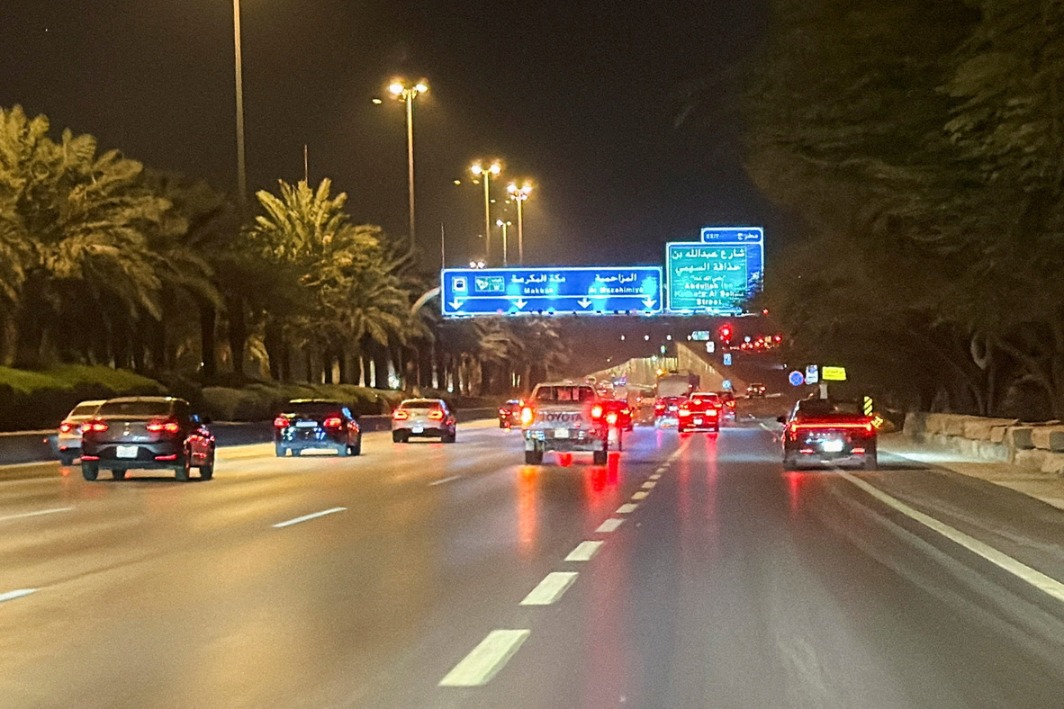
    The United States Embassy in Riyadh has issued an urgent security advisory warning of imminent missile and unmanned aerial vehicle (UAV) attacks targeting the eastern Saudi city of Dhahran. This alert follows a significant escalation of regional tensions triggered by recent military operations.

    The security warning emerges amidst heightened Middle Eastern instability following a coordinated US-Israeli offensive against Iranian targets this past Saturday. In response to these operations, Tehran has launched retaliatory missile and drone strikes toward Israeli territory and American assets throughout the region.

    Dhahran, a strategically significant urban center in Saudi Arabia’s Eastern Province, hosts critical energy infrastructure and international corporate compounds. The city serves as the administrative headquarters for Saudi Aramco, the world’s largest oil company, and contains substantial expatriate residential communities.

    The embassy’s alert specifically cautioned US citizens to maintain heightened situational awareness and implement appropriate personal security measures. Diplomatic officials advised American personnel to avoid crowded areas and monitor local media for developing security information.

    This security development occurs against the backdrop of intensified regional hostilities that began with the weekend’s military actions. The initial strikes against Iranian targets have prompted a series of retaliatory measures that now threaten to expand conflict zones beyond immediate border areas.

    The Arabian Gulf region has experienced increasing military activity in recent days, with multiple nations activating air defense systems in response to incoming projectile threats. Security analysts indicate this escalation represents the most significant regional military confrontation in recent years, with potential implications for global energy markets and international security arrangements.
  • Israeli military says begins large-scale wave of strikes targeting state infrastructure in Tehran

    Israeli military says begins large-scale wave of strikes targeting state infrastructure in Tehran

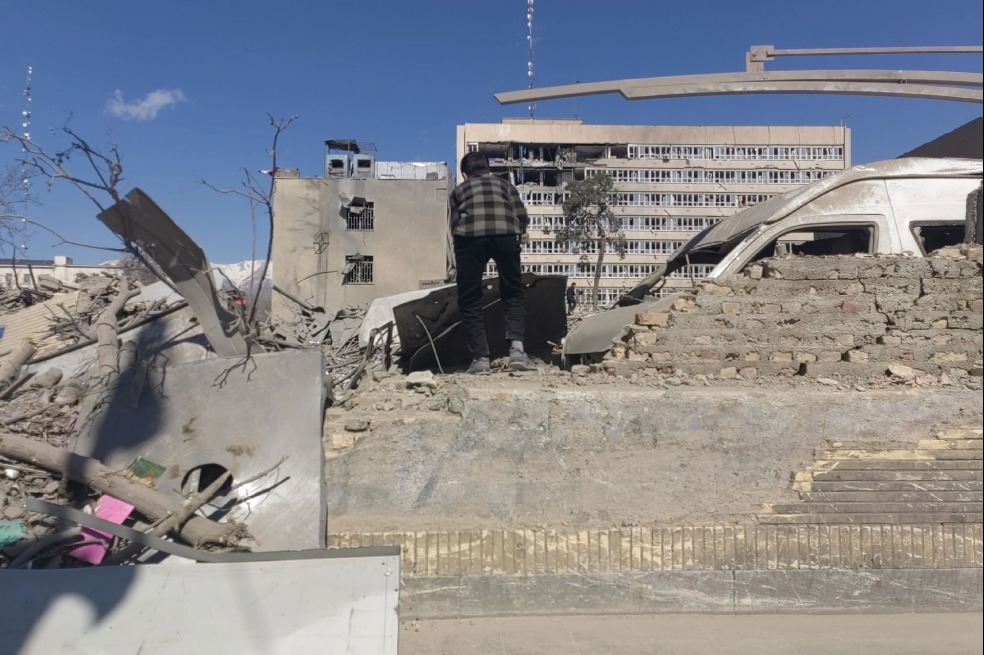
    In a significant escalation of regional tensions, the Israeli military confirmed Tuesday it had initiated extensive aerial operations targeting critical state infrastructure throughout Tehran. The announcement came via official statement, with military representatives indicating this constituted a major offensive campaign against Iranian governmental facilities.

    The operations, described as a “large-scale wave” of precision strikes, represent one of the most direct military confrontations between the two nations in recent history. While specific targets remained undisclosed at the time of reporting, the reference to “state infrastructure” suggests strategic government installations, potentially including communication networks, transportation hubs, and administrative complexes.

    Military officials maintained that additional operational details would be released subsequently, indicating the possibility of ongoing or phased operations. The timing and scale of these strikes suggest a calculated escalation in the long-standing shadow conflict between Israel and Iran, which has previously manifested through proxy engagements across the Middle East.

    This development occurs against a backdrop of increasing regional instability and follows recent heightened tensions between the two nations. The direct targeting of Tehran’s infrastructure marks a notable departure from previous engagements that typically involved peripheral or proxy forces.

  • Khamenei killing plays into Shiite Islam’s reverence for martyrs

    Khamenei killing plays into Shiite Islam’s reverence for martyrs

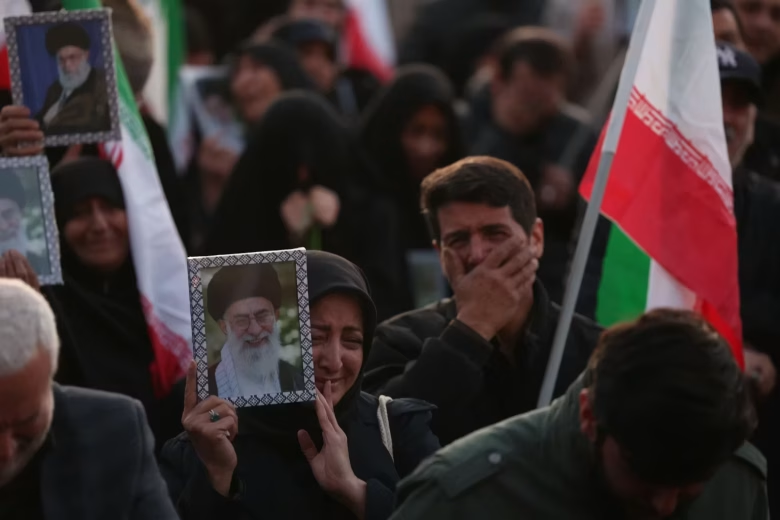
    Following the death of Ayatollah Ali Khamenei, Iran has become a nation visibly divided along ideological lines. The government’s official declaration of 40 days of public mourning—a traditional Shiite practice—and its characterization of Khamenei’s death as martyrdom stand in stark contrast to spontaneous celebrations erupting among segments of the population. This polarization reflects profoundly divergent perceptions of Khamenei’s nearly four-decade rule: viewed by supporters as a principled martyr and by opponents as a repressive autocrat.

    The theological foundation of martyrdom in Shiite Islam traces back to the 7th century Battle of Karbala, where Hussain ibn Ali, grandson of Prophet Muhammad, was slain after refusing to pledge allegiance to Caliph Yazid, whom he considered unjust. This historical narrative of righteous resistance against oppression became central to Shiite identity and was systematically incorporated into Iran’s political framework following the 1979 Islamic Revolution.

    Khamenei’s leadership was defined by confrontational foreign policy and domestic authoritarianism. He maintained unwavering support for regional proxies including Hamas and Hezbollah while rejecting diplomatic compromises during three rounds of U.S.-Iran negotiations. Domestically, his regime responded to recurrent protest waves with brutal suppression, including the lethal crackdown on January 2026 demonstrations that resulted in thousands of casualties.

    The supreme leader accumulated substantial personal power and wealth during his 37-year reign, commanding military forces, judiciary appointments, and media oversight through parallel governance structures. His personal wealth, managed through the Setad organization, was estimated at $95 billion as of 2013.

    The recent military strikes that killed Khamenei and several family members represent the culmination of escalating tensions with the United States and Israel. While government institutions continue to reinforce the narrative of martyrdom, contrasting public reactions reveal deep societal fractures that will inevitably shape Iran’s political future.

  • Iran betting Gulf pain will force Trump to seek a deal

    Iran betting Gulf pain will force Trump to seek a deal

    Persian Gulf allies of the United States now confront a scenario they had meticulously avoided—becoming primary targets in a rapidly expanding Middle Eastern conflict. All six Gulf Cooperation Council nations (Bahrain, Kuwait, Oman, Qatar, Saudi Arabia, and the UAE) have experienced retaliatory strikes from Iran following joint U.S.-Israeli military operations dubbed “Operation Epic Fury.”

    Unlike previous limited engagements, Iran’s current campaign represents a dramatic escalation in both scale and strategy. Military installations across the region have been struck alongside deliberate targeting of civilian infrastructure including international airports, commercial ports, and luxury hotels. This shift marks a departure from Tehran’s comparatively restrained response during the June 2025 conflict, when it limited strikes to a single Qatari military base after providing advance warning.

    Regional experts interpret Iran’s aggressive posture as that of a cornered regime fighting for survival. The Islamic Republic, lacking capability to strike the U.S. mainland directly, has turned to targeting American military assets concentrated throughout the Gulf region. Iranian forces have launched approximately 390 ballistic missiles and 830 drones toward Gulf states in the conflict’s initial phase alone—far exceeding the 14 missiles deployed in last year’s solitary strike on Qatar’s Al-Udeid air base.

    While Gulf air defense systems have successfully intercepted most projectiles, the psychological impact on these carefully cultivated hubs of global commerce may prove more damaging than physical destruction. Cities like Dubai, Abu Dhabi, and Doha have built their international reputations as oases of stability and security—an image now severely compromised by sustained attacks.

    The economic consequences are already materializing through closed airspaces creating the largest disruption to global travel since COVID-19, interrupted shipping through the critical Strait of Hormuz, and rising oil prices. Particularly concerning for regional leaders is the potential targeting of desalination plants that provide fresh water to these arid nations.

    Iran’s strategy appears calculated to pressure Gulf governments into lobbying Washington for conflict resolution. However, this approach risks backfiring by driving regional partners closer to the United States after a period of diplomatic distancing. The situation represents the most significant regional peril since the 1990-91 Gulf War, with implications extending far beyond the Middle East.

  • Is the UK’s intervention in Iran war legal?

    Is the UK’s intervention in Iran war legal?

    In the aftermath of coordinated US-Israeli offensive strikes against Iran and subsequent Iranian retaliatory measures targeting US installations in the Gulf region, British Prime Minister Keir Starmer has articulated a dual-strategy approach to the escalating conflict. Addressing Parliament on March 1, 2026, Starmer emphasized that the United Kingdom would maintain a defensive posture while supporting regional allies through targeted military cooperation.

    The UK’s intervention framework comprises two principal components: first, the interception of Iranian drones and missiles to protect non-combatant states in the region; second, permitting US forces to utilize British military installations for ‘specific and limited’ defensive operations against Iranian missile sites that have targeted Gulf partners. Starmer explicitly stated that Britain would not participate in offensive actions but would focus exclusively on defensive measures to ‘destroy the missiles at source’ while preventing further escalation.

    The Prime Minister justified these actions as necessary to protect British interests and citizens, asserting that such measures represent ‘the best way to eliminate the urgent threat’ and facilitate a return to diplomatic solutions. However, this position has raised significant legal questions regarding its compliance with international law, particularly the United Nations Charter.

    Middle East Eye consulted five distinguished international law experts to examine the legality of Britain’s stance. The central legal argument presented by the UK government maintains that its actions constitute lawful, proportionate collective self-defense at the formal request of Gulf states. Officials issued a legal summary describing Iran’s actions as ‘reckless’ and ‘indiscriminate,’ requiring coordinated defensive response to restore regional security.

    Legal scholars present divergent interpretations regarding the legitimacy of Iran’s initial response to US-Israeli strikes. Professor Janina Dill (University of Oxford) acknowledged Iran’s right to self-defense against aggressor states, while Professor Marko Milanovic (University of Reading) argued that Iran’s retaliation exceeded permissible boundaries by targeting civilian infrastructure in neutral territories. The debate extends to whether Gulf states genuinely possess the right to collective self-defense given the complex chain of escalation.

    Further legal complications emerge regarding Britain’s authorization of US base usage. Professor Oona Hathaway (Yale Law School) noted that UK assistance might inadvertently prolong unlawful US-Israeli operations against Iran, creating obligations for Britain to demand cessation of the original aggression. Professors Adil Haque (Rutgers University) and Ben Saul (University of Sydney) contended that facilitating US strikes constitutes participation in ongoing unlawful campaigns, regardless of defensive framing.

    The legal consensus indicates that Britain’s actions exist in a gray area of international law, where determinations of legality depend on interpretations of necessity, proportionality, and the inseparable nature of defensive and offensive operations in active conflict scenarios.

  • ‘They will get me killed’: Mothin Ali slams Starmer and Tory MP over smears in parliament

    ‘They will get me killed’: Mothin Ali slams Starmer and Tory MP over smears in parliament

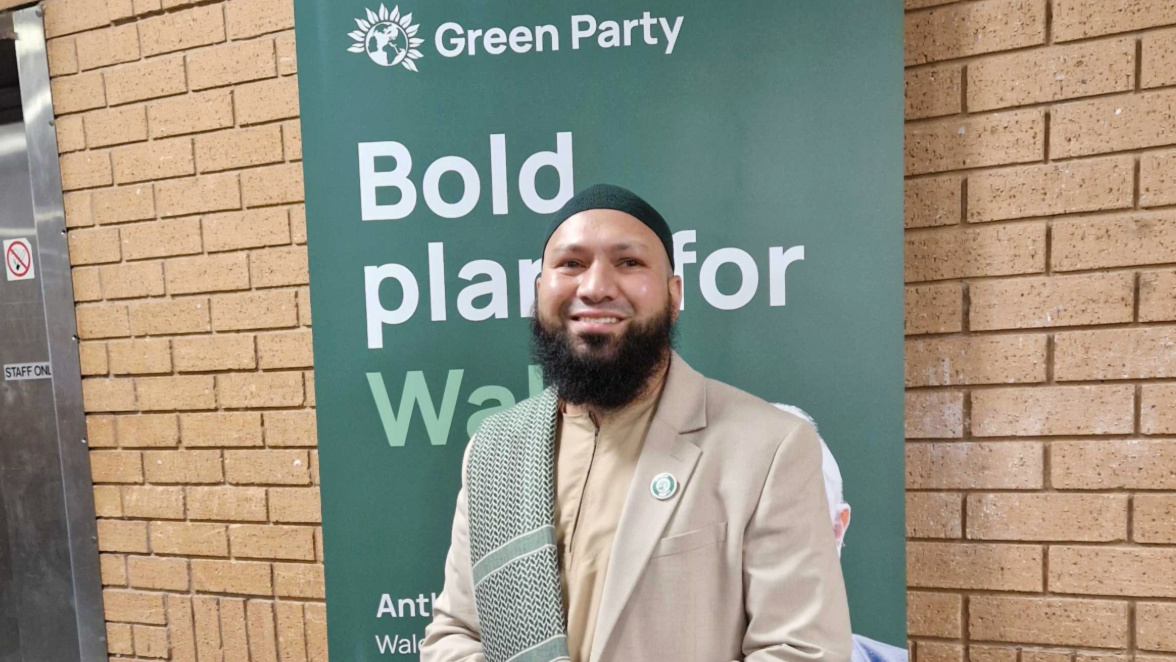
    Mothin Ali, co-deputy leader of the Green Party, has revealed he fears for his safety after receiving approximately twenty death threats. This alarming development follows controversial remarks made in Parliament by Conservative MP Alec Shelbrooke, which were subsequently endorsed by Prime Minister Keir Starmer.

    During Monday’s parliamentary session, Shelbrooke falsely alleged that Ali had been ‘protesting in support of the ayatollah’ at a recent anti-war demonstration. The event, organized by Stop the War Coalition, was primarily focused on protesting US-Israeli military actions against Iran. Shelbrooke further claimed that Ali had whipped up ‘hatred and fear’ throughout Leeds, describing the councillor’s alleged actions as ‘a disgrace.’

    Prime Minister Starmer responded by expressing shock at the Green Party official’s behavior, adding that he was ‘perhaps not surprised, given that party’s recent turn of direction.’

    Ali, who enjoys no parliamentary protection against defamation, told Middle East Eye that the MP’s privileged position enabled him to make damaging claims without legal consequence. ‘They will get me killed,’ Ali stated, emphasizing the real-world impact of political rhetoric. He challenged Shelbrooke to repeat the allegations outside Parliament, where standard defamation laws would apply.

    The Green Party councillor clarified that his attendance at the demonstration was motivated by humanitarian concerns following a strike on a school in Iran that reportedly killed more than 153 people, including numerous children. ‘A whole load of little girls had just been blown to bits,’ Ali explained. ‘I’m not supposed to feel anything about that?’

    Green Party leader Zack Polanski condemned the Prime Minister’s response as ‘blatant Islamophobia’ and characterized the incident as an establishment attack on ‘a calm, kind, thoughtful gardener who happens to be a Muslim man in politics.’

    Neither Downing Street nor Shelbrooke’s office responded to requests for comment or clarification regarding the allegations.

  • Exclusive: Inside Hezbollah’s decision to attack Israel and Berri’s ‘break’ with the party

    Exclusive: Inside Hezbollah’s decision to attack Israel and Berri’s ‘break’ with the party

    A dramatic escalation along the Lebanon-Israel border has triggered a profound political crisis within Lebanon, pitting the state directly against the powerful militant group Hezbollah. The chain of events began on Monday when Hezbollah launched a significant rocket and drone assault on northern Israel, which it stated was retaliation for the killing of Iran’s Supreme Leader Ali Khamenei in a joint US-Israeli operation and was conducted “in defence of Lebanon.”

    This offensive, the first claimed by Hezbollah since the November 2024 ceasefire, ignited a sweeping Israeli retaliation. Israeli air strikes pounded Beirut’s southern suburbs, southern Lebanon, and eastern regions, resulting in at least 40 fatalities and 246 injuries. The attacks triggered mass displacement, with roads clogged by families fleeing the targeted areas—a grim echo of the mass exodus witnessed during the 2024 war.

    The most consequential shockwave, however, was political. In an emergency session, the Lebanese cabinet, led by Prime Minister Nawaf Salam, issued a historic decree that shattered years of precedent. It announced a total ban on all Hezbollah military and security activities and demanded the group surrender its weapons, asserting that the sovereign state alone holds the authority over decisions of war and peace. The government further mandated the national army and security agencies to prevent any rocket or drone launches from Lebanese territory and to arrest violators.

    The decision gained immense symbolic weight from the backing of Nabih Berri, the influential Parliament Speaker and leader of the Amal movement, Hezbollah’s longstanding Shia political ally. This public support created an appearance of a dramatic rupture within Lebanon’s powerful “Shia duo.” However, sources familiar with both camps reveal a more complex, strategic calculation behind the scenes.

    According to insiders, Berri and Hezbollah had been in contact prior to the strike, sharing a conviction that a major Israeli assault was increasingly likely. Berri’s position was that Lebanon should not provide Israel with a public pretext for war. Hezbollah’s internal assessment, driven by the killing of Khamenei, was that an Israeli escalation was inevitable regardless, making a retaliatory strike a strategic necessity to avoid appearing passive and to challenge post-ceasefire conditions.

    The public display of division, sources indicate, is a politically calibrated posture. By allowing Berri to appear distanced from Hezbollah, the Shia political camp preserved a crucial fallback option. In a worst-case scenario where Hezbollah suffers a devastating military defeat, Berri remains positioned as an institutional figure capable of negotiating terms and safeguarding Shia political interests, thereby preventing a total collapse of the community’s leadership.

    For the Lebanese state, the cabinet’s move represents the most assertive attempt to claim a monopoly on force since the end of the civil war, directly challenging the long-standing paradigm where Hezbollah wielded military power independently while the state managed the consequences. This escalation ushers in a volatile new chapter that threatens not just another border conflict, but a fundamental internal confrontation over the future balance of power within Lebanon itself.

  • Jinan in Shandong immersed in Lantern Festival joy

    Jinan in Shandong immersed in Lantern Festival joy

    The ancient city of Jinan in Shandong Province transformed into a vibrant spectacle of light and motion during the 2026 Lantern Festival celebrations, blending traditional customs with contemporary expressions of joy. While millions across China celebrated with customary yuanxiao rice dumplings, Jinan residents introduced an innovative twist to the festivities by incorporating ice skating into their cultural observations.

    Against the backdrop of Jinan’s historical architecture, skaters glided across temporary ice rinks, their movements creating a mesmerizing dance of light and shadow. The participants carried symbolic lanterns and distributed traditional lucky charms to spectators, embodying the festival’s spirit of sharing prosperity and harmony. This unique fusion of winter sports and cultural celebration demonstrated how ancient traditions continue to evolve in modern China.

    The festival’s central theme focused on wishes for sweetness and harmony in daily life, reflecting the deeper philosophical underpinnings of the Lantern Festival as a time of renewal and community bonding. Local authorities organized extensive decorations throughout the city, with illuminated displays creating an enchanting atmosphere that attracted both residents and tourists alike.

    This celebration occurred alongside other notable Lantern Festival events across China, including Shanghai’s Cherry Blossom Festival night illuminations at Gucun Park and traditional Shehuo celebrations in Xinjiang. The simultaneous nationwide celebrations highlighted China’s rich cultural diversity while maintaining shared traditional values that unite communities during important cultural milestones.

  • Iran’s new tactics force US to reconsider its capacity for pain

    Iran’s new tactics force US to reconsider its capacity for pain

    The United States and Israel’s military operation against Iran, initially launched with the core objective of triggering rapid regime change in Tehran, has encountered unexpected resistance and is undergoing significant strategic recalibration. As the conflict enters its fourth day, developments on the ground have failed to produce the anticipated internal collapse within Iran, forcing Washington to reassess its fundamental assumptions about the Islamic Republic’s vulnerability.

    Contrary to initial expectations of swift victory, the conflict has expanded horizontally with Iran demonstrating remarkable resilience while simultaneously inflicting damage on enemy positions. This unexpected durability has compelled U.S. and Israeli officials to reshape their regime change calculations and reconsider Tehran’s negotiating posture. Following the killing of Supreme Leader Ali Khamenei, Iranian authorities now view diplomatic negotiations as a distant possibility, responding coldly to regional overtures while openly warning neighboring states about hosting U.S. military assets.

    Senior U.S. defense officials have acknowledged the potential for a prolonged engagement, with General Dan Caine, chairman of the Joint Chiefs of Staff, confirming that ‘additional casualties are expected.’ Defense Secretary Pete Hegseth’s attempted reassurance that ‘This isn’t Iraq. It’s not endless’ ironically underscores the growing concern about the conflict’s duration within public discourse. Israeli Prime Minister Benjamin Netanyahu has echoed this language, reflecting joint efforts to manage expectations as the initial shock-and-awe phase fails to deliver anticipated breakthroughs.

    The operational objectives have subsequently expanded, with Secretary of State Marco Rubio stating that the U.S. seeks to eliminate Iran’s ballistic missile capability: ‘We have targets. We will do what is necessary for as long as it takes to achieve those objectives.’ This follows earlier remarks dismissing nation-building ambitions in Iran, highlighting the growing gap between initial strategic goals and current realities.

    Iran has fundamentally altered its military strategy, abandoning intermittent large-scale attacks in favor of sustained, distributed strikes designed to exhaust defensive resources. Iranian military officials claim capacity to sustain regional conflict for months, citing overlooked assets and strategic stockpiles. By the second day of fighting, Iran began imposing tangible costs on U.S. interests, targeting at least six American military facilities across the Middle East and raising questions about defensive capabilities among Gulf allies.

    The conflict’s economic dimensions have emerged as particularly significant, with Iranian warnings about targeting vessels transiting the Strait of Hormuz rattling global markets. Oil and gas prices have soared following Saudi Arabia’s shutdown of its largest oil refinery and Qatar’s closure of the world’s largest LNG producer. This energy volatility represents a deliberate Iranian strategy to transform a regional military confrontation into a broader crisis impacting alliance networks and global economies.

    With no significant anti-regime mobilization materializing inside Iran despite Netanyahu’s calls for uprising, the U.S. appears to be exploring alternative strategies including potential engagement with Kurdish groups and other minority factions. Iranian officials have dismissed this approach as fantasy, citing preventive strikes against Kurdish camps near Erbil and warnings to regional groups.

    The emerging conflict dynamic suggests the war’s ultimate trajectory will be determined less by immediate tactical gains and more by the balance of accumulated costs across military, economic, and political domains. As the U.S. frames the conflict as potentially long and casualty-intensive, Iran responds by deliberately stretching timelines and distributing pressure across multiple theaters, creating a complex test of American strategic resilience with potential implications for broader global power dynamics.

  • Turkey’s Kurds reject US-Israeli ‘designs’ in Iran as Netanyahu bets on uprising

    Turkey’s Kurds reject US-Israeli ‘designs’ in Iran as Netanyahu bets on uprising

    Turkey’s pro-Kurdish Peoples’ Equality and Democracy (Dem) Party has issued a strong condemnation of the ongoing US-Israeli military operations against Iran, characterizing them as imperialist endeavors rather than genuine efforts to promote democracy. The party, which holds the third-largest parliamentary bloc, expressed skepticism about Western motives, stating that global powers appear more interested in establishing a regional order that serves their interests than in fostering genuine freedoms.

    The Dem Party’s statement emphasized that ongoing airstrikes fail to create conditions conducive to liberation for Iran’s diverse ethnic and religious minorities, including Kurds, Balochs, Christians, and Azerbaijanis. While acknowledging the oppressive nature of Iran’s regime and commemorating victims like Jina Mahsa Amini and Ramin Hossein Panahi, the party insisted that regime change must originate from internal popular will rather than external intervention.

    Co-chair Tulay Hatimogulları addressed parliament, warning that the conflict risks engulfing the entire region after already spreading to Iraq, Lebanon, and Gulf states. She revealed that a girls’ primary school had been struck in the attacks, resulting in over 150 casualties among schoolchildren.

    The developments occur against a complex backdrop of Kurdish political dynamics. While Turkey has made significant progress in peace talks with the Kurdistan Workers’ Party (PKK), resulting in the group’s disbandment after four decades of conflict, concerns remain about its Iranian affiliate, the Free Life Party of Kurdistan (PJAK). Turkish Foreign Minister Hakan Fidan acknowledged monitoring whether PJAK might attempt to launch an insurgency in Iran, which could impact Ankara’s delicate peace process.

    Meanwhile, Iranian forces have targeted Iranian Kurdish opposition groups in Iraq’s semi-autonomous Kurdistan region, with drone strikes hitting headquarters of multiple Kurdish parties including the Kurdistan Freedom Party and Komala Party. This escalation suggests broadening regional tensions that extend beyond the immediate US-Israeli-Iranian confrontation.