标签: Asia

亚洲

  • Iran says US to pay ‘heavy price’ for killing supreme leader

    Iran says US to pay ‘heavy price’ for killing supreme leader

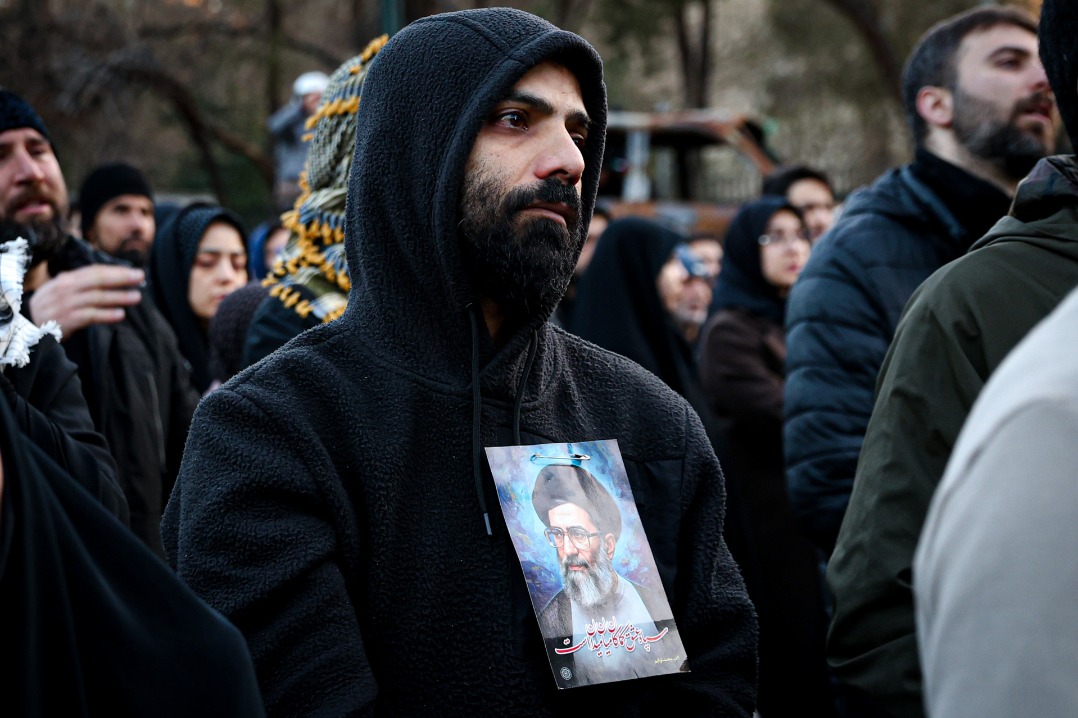
    Iran has issued a stark warning to the United States, threatening severe consequences for the alleged killing of Supreme Leader Ali Khamenei. Ali Larijani, Secretary of Iran’s Supreme National Security Council, declared on Wednesday that America would face a “heavy price” for its actions, which he characterized as an escalation of hostilities.

    In a statement published on social media platform X, Larijani accused US President Donald Trump of plunging American citizens into what he described as an “unjust” military confrontation with Iran. The Iranian official posed a provocative question regarding the strategic calculus behind the operation: “Now he must calculate: with over 500 American soldiers killed in just the past few days, does America still come first — or Israel?”

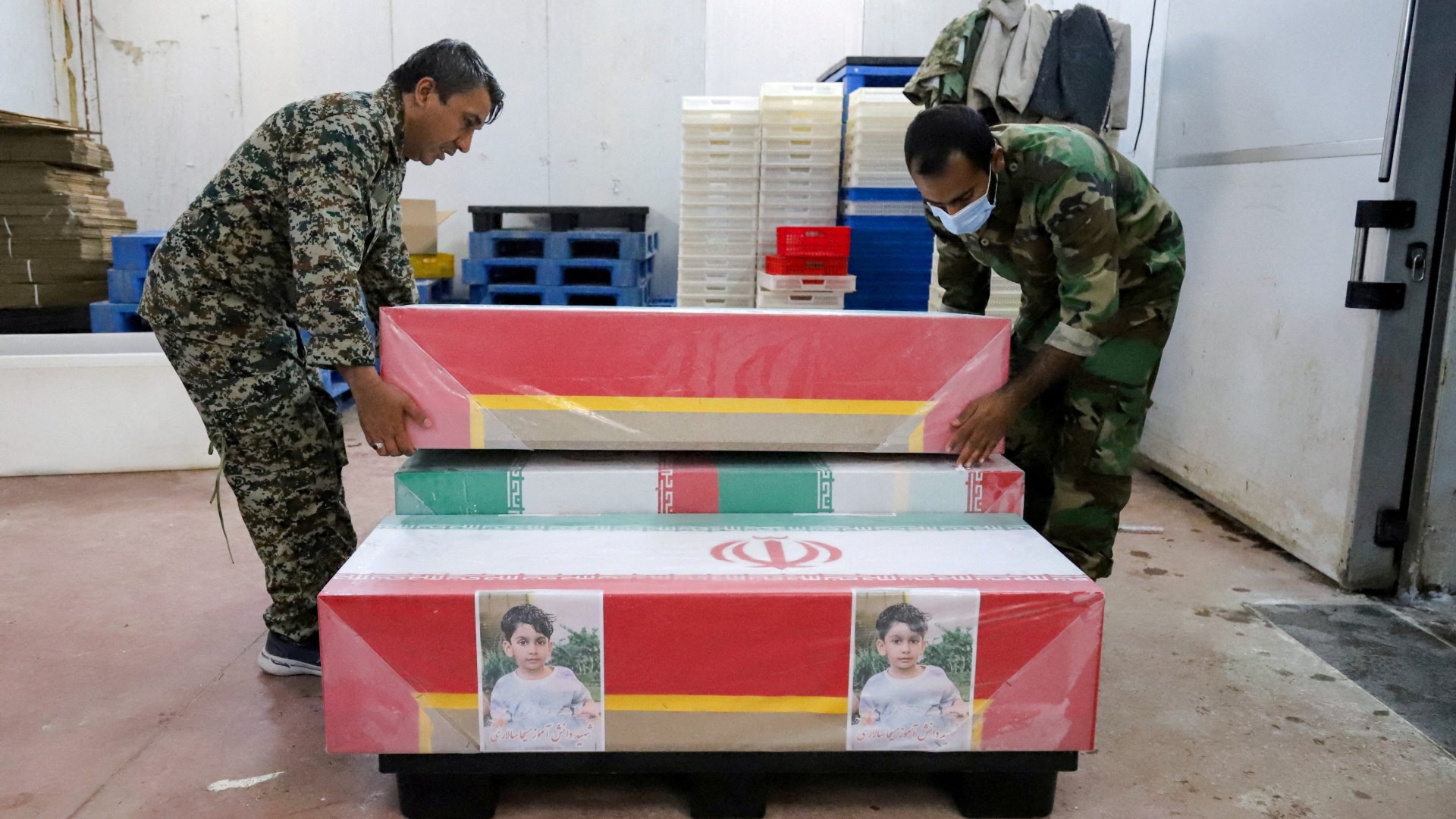
    The incident triggering this escalation occurred on Saturday when joint American-Israeli strikes reportedly resulted in the deaths of Khamenei, several family members, and multiple high-ranking Iranian military commanders. In response to these attacks, Iran launched comprehensive retaliatory measures involving coordinated missile and drone assaults targeting Israeli territory and American military installations throughout the Middle Eastern region.

    This development marks a significant deterioration in Iran-US relations, with potential implications for regional stability and global security frameworks. The exchange of military actions represents one of the most direct confrontations between the two nations in recent history, raising concerns about further escalation and the potential for broader regional conflict.

  • Honduras weighs shift in China-Taiwan ties as Trump pushes for US dominance in Latin America

    Honduras weighs shift in China-Taiwan ties as Trump pushes for US dominance in Latin America

    Three years after Honduras severed diplomatic relations with Taiwan in favor of China, the Central American nation faces severe economic repercussions and potential diplomatic reversal. The shrimp farming industry, once thriving with over $100 million in annual exports to Taiwan, has witnessed catastrophic decline, with sales plummeting to just $16 million in 2025 without promised Chinese market access replacing the loss.

    President Nasry Asfura, who assumed office in January with backing from former U.S. President Donald Trump, has initiated a comprehensive review of Honduras-China agreements. This move signals potential realignment toward Taiwan amid growing U.S. efforts to counter Chinese influence in Latin America. The development occurs as Asfura prepares to attend a regional security summit hosted by Trump near Miami.

    Academic experts indicate Honduras represents the most likely candidate globally to restore diplomatic recognition to Taiwan. Professor Francisco Urdinez of Chile’s Pontifical Catholic University noted that while President Asfura campaigned on this reversal and has Trump’s support, untangling numerous agreements signed with China since 2023 presents significant complications.

    The diplomatic maneuvering reflects broader geopolitical tensions. China maintains that Taiwan constitutes inseparable Chinese territory, while the United States, despite lacking formal ties, remains Taiwan’s strongest international supporter. Currently, only twelve governments recognize Taiwanese statehood, with seven located in Latin America and the Caribbean.

    The human cost of Honduras’s diplomatic shift has been substantial. Industry reports confirm the closure of at least 95 shrimp farms and one processing plant, resulting in over 25,000 job losses and millions in vanished foreign exchange earnings. Javier Amador, Executive Director of Honduras’s National Aquaculture Association, stated plainly: ‘We were deceived,’ referencing unfulfilled promises of Chinese market access.

    With 330 shrimp farming companies still operational but struggling, industry representatives urge diplomatic restoration with Taiwan to revive economic prospects. The situation presents President Asfura with a complex dilemma: fulfilling campaign promises while managing substantial Chinese investments in Honduras and potential repercussions from abandoning Beijing’s Belt and Road Initiative.

  • Exclusive: Iranian officials say Israel carried out some of the drone strikes on Gulf energy sites

    Exclusive: Iranian officials say Israel carried out some of the drone strikes on Gulf energy sites

    Iranian authorities have formally accused Israel of orchestrating a series of drone strikes targeting energy installations and civilian infrastructure across the Arabian Gulf, characterizing the assaults as a deliberate strategy to provoke regional hostilities and coerce Arab nations into joining the military offensive against Tehran.

    According to an anonymous high-ranking official within Iran’s foreign ministry who spoke with Middle East Eye, Israeli operatives were responsible for multiple attacks on Saudi Arabian territory and at least one incident in Oman. The source stated categorically that Iranian forces were not involved in these specific operations, though they declined to specify which incidents were attributed to Israel.

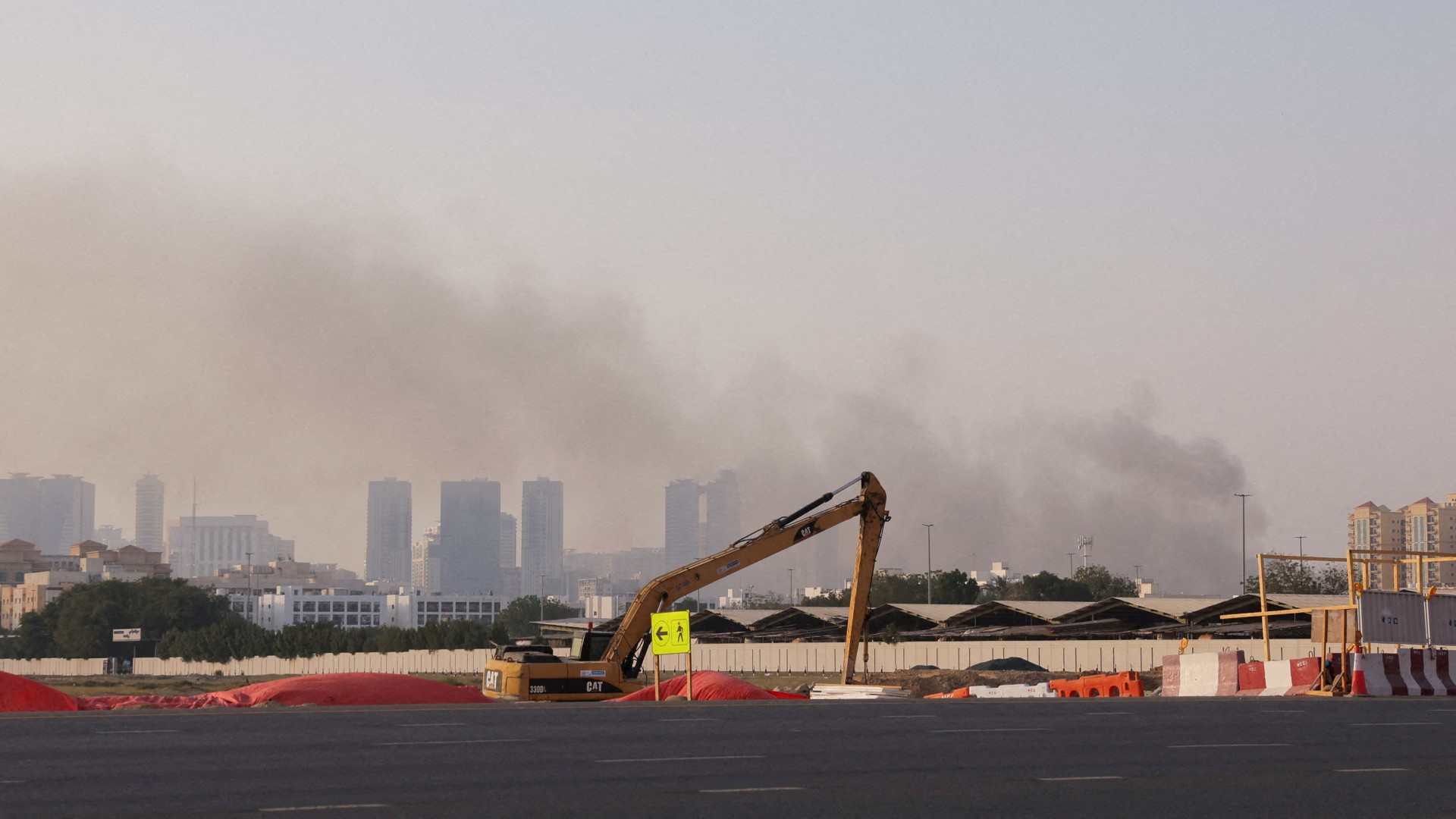
    The targeted sites include strategically significant locations such as Saudi Arabia’s Prince Sultan Air Base, the critical Ras Tanura oil refinery complex, the US embassy compound in Riyadh, and Oman’s Duqm Port—a facility regularly accessed by the US Navy since 2019. These attacks have substantially impaired regional oil and gas export capabilities and undermined Dubai’s reputation as a secure hub for international expatriates.

    Multiple Iranian intelligence sources indicated that Mossad, Israel’s foreign intelligence service, executed several drone attacks using pre-established operational networks within Iran. Iranian security forces are reportedly actively working to identify and neutralize Mossad weapons storage facilities and command centers, some of which may be located in neighboring countries.

    This development emerges amid increasing pressure from the United States and United Arab Emirates for Gulf Cooperation Council members to formally enter the conflict against Iran. Tehran maintains that its military responses have been exclusively directed at US and Israeli assets, with any strikes on civilian infrastructure resulting either from Israeli false flag operations or rare technical errors.

    Academic and political figures across the Gulf have expressed skepticism about the origins of the attacks. Seyed Emamian of Tehran Polytechnic University noted that Israel stands to benefit from undermining Iran’s recently improved diplomatic relations with Gulf Arab states. Similarly, Saudi political veteran Abdulaziz Altuwaijri and Qatar’s former Prime Minister Hamad bin Jassim al-Thani have warned against being drawn into direct confrontation with Iran, suggesting external forces seek to exploit regional divisions for strategic gain.

    Analyst Sina Toosi of the National Iranian American Council observed that while Israel seeks to regionalize the conflict by drawing in Gulf states, Iran has compelling reasons to avoid broader confrontation that would jeopardize its diplomatic achievements with neighboring nations.

  • China sets lowest economic growth target since 1991

    China sets lowest economic growth target since 1991

    China has announced its most conservative annual economic growth target in over three decades, setting a range of 4.5% to 5% for the coming year during the ongoing Two Sessions political gathering. This marks the lowest expansion goal since 1991 and represents the first downward adjustment since the “around 5%” target established in 2023.

    The revised growth framework emerges as Beijing confronts multiple economic headwinds, including persistently weak domestic consumption, an unresolved property sector crisis, and escalating trade tensions with Western nations. The announcement coincided with preliminary details of China’s 15th Five-Year Plan, which outlines strategic investments in innovation, high-tech industries, and scientific research.

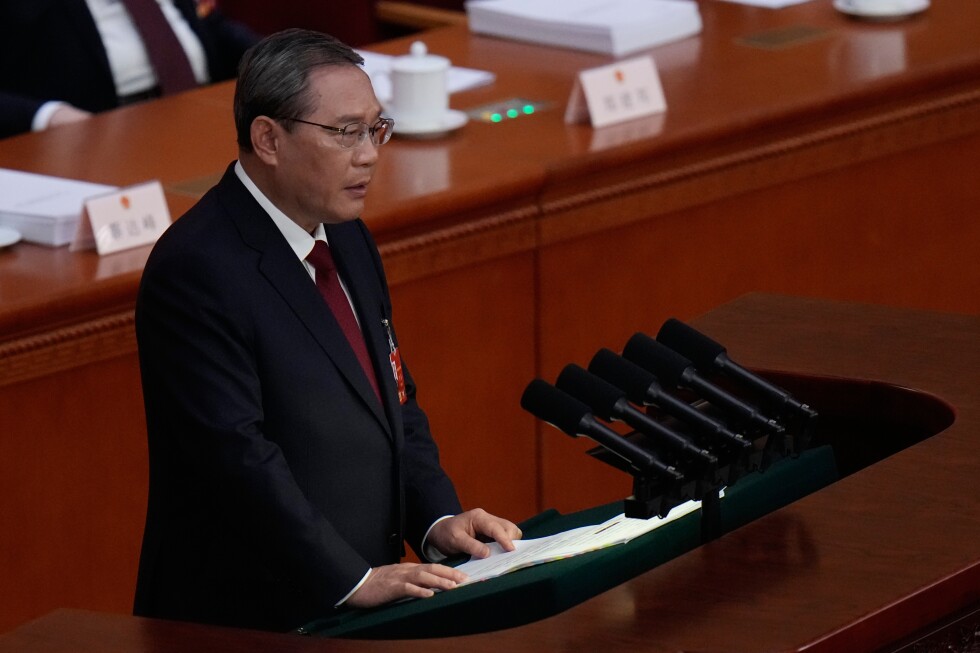
    Premier Li Qiang addressed delegates emphasizing the government’s dual focus: stimulating household consumption while advancing manufacturing sophistication. This approach reflects concerns about over-reliance on export-driven growth despite China recording a record $1.19 trillion trade surplus in the previous year.

    Recent economic data reveals the complexity of China’s situation. While officially meeting the 5% growth target for 2025 overall, expansion slowed to 4.5% in the final quarter, consistent with the new target’s lower bound. This slowdown has prompted more than two-thirds of Chinese provinces to similarly temper their growth expectations.

    Georgetown University researcher Ning Leng notes that China’s export dependency creates vulnerability, particularly as former President Donald Trump’s tariff policies continue to pressure trade relations. In response, China has aggressively pursued trade diversification strategies to maintain manufacturing output and market access.

  • Not all attacks on Gulf states coming from Iran, prominent Saudi Arabian editor suggests

    Not all attacks on Gulf states coming from Iran, prominent Saudi Arabian editor suggests

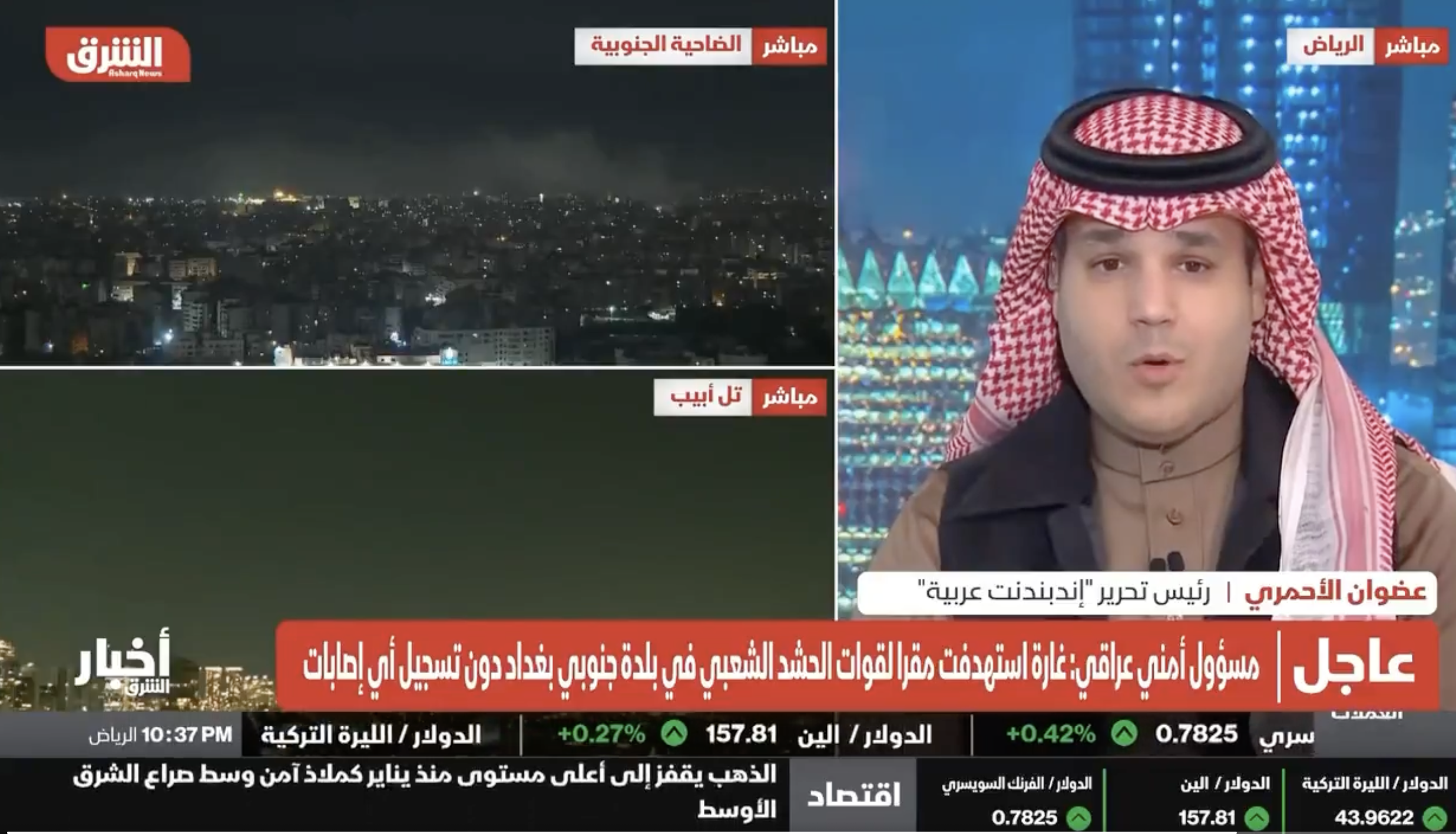
    In a televised discussion on Tuesday, Adhwan al-Ahmari, a prominent Saudi journalist and political analyst, presented a provocative assessment of the escalating tensions in the Middle East. During his appearance on Riyadh-based Asharq News, Ahmari articulated growing suspicions that the United States and Israel might be orchestrating a strategic trap aimed at drawing Gulf Cooperation Council (GCC) nations into direct military confrontation with Iran.

    The analyst pointed to numerous unverified claims of false-flag attacks in the region, suggesting these incidents may be part of a broader geopolitical maneuver. ‘Some perceive this conflict as an American-Israeli trap designed to implicate Gulf countries and pull them into a confrontation with Iran,’ Ahmari stated, noting that ‘this hypothesis gains credibility daily’ as trust between Washington and its GCC allies continues to deteriorate.

    Ahmari raised alarming questions about American commitment to the region: ‘What if the US announces after a week, ten days, or two weeks that it has achieved all its objectives and declares the war over, subsequently leaving Gulf states in an open-ended confrontation with Iran?’

    The Saudi analyst emphasized that military actions targeting Iranian leadership or nuclear facilities would prove futile without the complete dismantlement of the Islamic Revolutionary Guard Corps (IRGC). He described the IRGC as an elite military institution specifically structured to protect Iran’s ruling system, distinct from the nation’s conventional armed forces.

    ‘Eliminating the Iranian supreme leader without neutralizing the IRGC achieves nothing. Dismantling the nuclear program without eradicating the IRGC accomplishes nothing. The IRGC would inevitably return with strengthened capabilities,’ Ahmari warned.

    He called for greater transparency from the Trump administration, demanding clear explanations regarding US motives and anticipated timeline for the conflict. President Trump initially projected a four-to-five-day engagement, which has since expanded to four-to-five weeks, with Secretary of War Pete Hegseth recently suggesting an open-ended commitment—a development Ahmari characterized as ‘the strangest military campaign in history.’

    The analyst further described Iran’s attacks on Gulf nations hosting US military facilities as ‘suicidal behavior,’ noting that contemporary Iran appears significantly weaker than a decade ago due to the 2022 Women, Life, Freedom protests and severe economic crises exacerbated by intensified US sanctions and a US-backed bank collapse.

  • Polls open in Nepal’s first election after last year’s youth-led protests toppled the government

    Polls open in Nepal’s first election after last year’s youth-led protests toppled the government

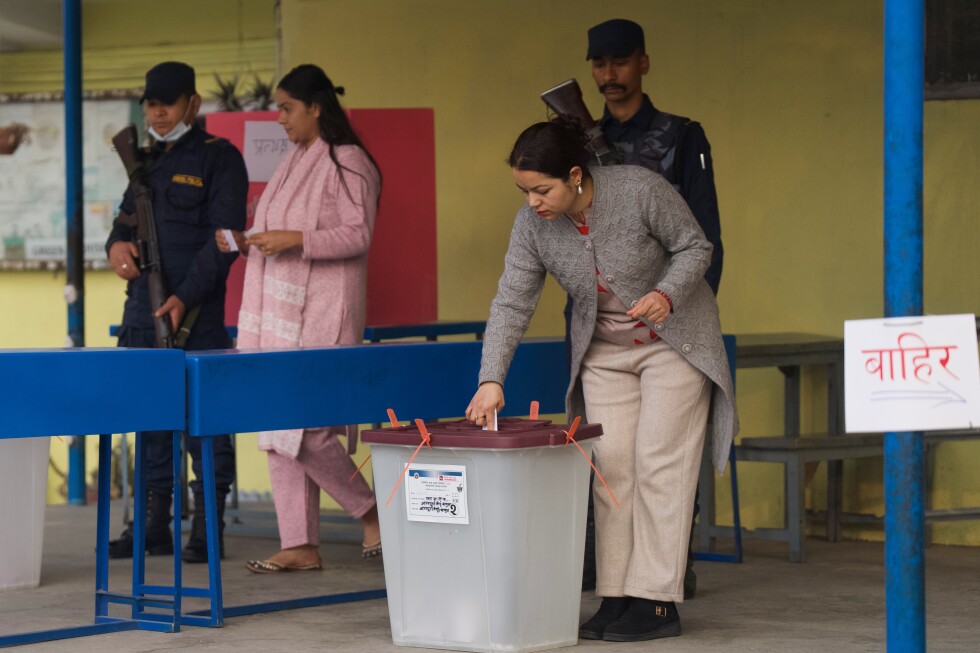
    KATHMANDU, Nepal — Nepal commenced a landmark national election on Thursday, marking the first nationwide polling since last year’s violent youth-led uprising that toppled the previous government. This pivotal democratic exercise unfolds amid heightened security measures and widespread public anticipation for transformative leadership.

    Approximately 19 million eligible voters across the Himalayan nation are participating in this electoral process, with security forces maintaining vigilant patrols and safeguarding polling stations. Authorities have implemented comprehensive restrictions, including vehicle bans on streets and prohibitions on political rallies and public gatherings, ensuring a secure environment for the democratic process.

    The electoral system combines direct representation and proportional allocation: voters directly elect 165 members to the House of Representatives (the lower parliamentary chamber), while the remaining 110 seats in the 275-member legislature will be distributed through proportional representation based on party vote shares.

    This election has evolved into a compelling three-way contest, reflecting profound voter dissatisfaction with systemic corruption and demands for enhanced governmental accountability. The newly established National Independent Party, founded in 2022, has emerged as the front-runner, challenging the longstanding dominance of the Nepali Congress and the Communist Party of Nepal (Unified Marxist–Leninist).

    Leading this insurgent movement is 35-year-old rapper-turned-politician Balendra Shah, the party’s prime ministerial candidate. Shah, who previously secured the Kathmandu mayoral race in 2022, became a central figure in the 2025 uprising that ousted former Prime Minister Khadga Prasad Oli. His campaign has resonated particularly with younger demographics, focusing on healthcare and educational reforms for impoverished Nepalis.

    The 2025 protests originated from opposition to a social media ban before escalating into a broad rebellion against governmental corruption and mismanagement. The demonstrations turned deadly when security forces opened fire on protesters attacking government buildings, resulting in dozens killed and hundreds injured.

    While traditional parties maintain dedicated voter bases, Shah’s movement has demonstrated superior mobilization capabilities during campaign events, signaling shifting political allegiances among youth seeking alternatives. The incoming administration will confront significant challenges, including addressing protestors’ demands for reform, combating entrenched corruption, and navigating delicate diplomatic relations with neighboring powers India and China.

    Vote counting begins later Thursday, with preliminary results anticipated over the weekend.

  • China sets a lower economic growth target of 4.5% to 5% for this year

    China sets a lower economic growth target of 4.5% to 5% for this year

    BEIJING — In a strategic move to navigate complex domestic and global economic challenges, the Chinese government has established a flexible growth target range of 4.5% to 5% for the current fiscal year. The announcement was delivered by Premier Li Qiang on Thursday during his keynote address at the inaugural session of the National People’s Congress, the country’s top legislative body.

    This calibrated objective represents a modest downward adjustment from the consistent 5% benchmark maintained over the preceding three years. The decision reflects a pragmatic approach by policymakers confronting a protracted downturn in the real estate sector, persistent external uncertainties, and fluctuating international demand.

    Analysts interpret the introduction of a target band, as opposed to a fixed figure, as a deliberate policy mechanism. It grants authorities enhanced operational flexibility to implement responsive fiscal and monetary measures throughout the year, adapting to evolving economic conditions. The official government work report explicitly framed the goal as aiming for the upper limit of this range, “while striving for better in practice,” signaling an underlying ambition to maximize performance.

    The revised target follows an official economic expansion of precisely 5% in 2023. This new guidance is widely perceived as an effort to balance the dual objectives of sustaining stable development and managing systemic risks, particularly those emanating from the beleaguered property market and trade tensions.

  • Exclusive: Iranian girls killed by ‘double-tap’ strikes on Minab school

    Exclusive: Iranian girls killed by ‘double-tap’ strikes on Minab school

    A horrific attack on Shajareh Tayyebeh girls’ school in Minab, southern Iran, has resulted in the deaths of 165 individuals, predominantly girls aged 7-12, according to local officials. Multiple firsthand accounts from first responders and grieving parents describe a ‘double-tap’ strike pattern, with a second missile deliberately targeting survivors and rescue personnel.

    Eyewitness accounts from Red Crescent medics reveal a devastating sequence of events. Following an initial explosion, school administrators moved students to a prayer hall for safety and contacted parents for evacuation. The second strike then targeted this exact shelter area, resulting in catastrophic casualties. Approximately 170 students were present during the Saturday morning attack, which coincided with broader US-Israeli military operations against Iranian targets.

    The attack’s aftermath revealed scenes of utter destruction. A Red Crescent medic described encountering ‘bodies without heads, without hands, without legs,’ with dozens of severed limbs scattered throughout the school grounds. The devastation was so severe that 69 victims remain unidentified, requiring DNA testing for proper identification. Some parents could only recognize their children through personal effects such as gold bracelets or school bags.

    Rohollah, father of a slain student, recounted receiving a call from the school after the first strike. His daughter had survived the initial explosion only to be killed in the second attack while sheltering in the prayer hall. ‘We could only identify her from her school bag, which she was still holding. She was completely burned,’ he told Middle East Eye.

    The term ‘double-tap strike’ describes a military tactic considered a war crime under international law, previously documented in conflicts involving US and Israeli forces. Social media videos from Tehran and other locations suggest similar attack patterns occurring throughout Iran during recent hostilities.

    While some misinformation circulated suggesting Iranian forces bombed the school, this has been conclusively debunked. Satellite imagery confirms separate strikes on Islamic Revolutionary Guard Corps (IRGC) facilities approximately 200 meters from the school, but analysis indicates these could not have caused the catastrophic damage sustained by the educational facility.

    The international community has responded with outrage. A UN panel of experts has labeled the school attack ‘deeply disturbing’ and demanded investigation. Iran’s UN ambassador has formally characterized the incident as ‘unjustifiable’ and ‘criminal’ in communications to human rights officials. Both US and Israeli authorities have acknowledged they are investigating the incident but have not responded to specific allegations regarding the double-tap strike pattern.

  • World shares are mixed as oil prices climb higher and Iran launches new attacks

    World shares are mixed as oil prices climb higher and Iran launches new attacks

    Financial markets experienced significant turbulence on Thursday as escalating Middle East hostilities triggered a complex interplay between risk aversion and opportunistic buying. While Asian and European indices posted modest gains, U.S. futures declined following Iran’s renewed missile attacks against Israeli and American targets, marking the sixth day of intensified conflict.

    The immediate market impact manifested through energy markets, with Brent crude surging 1.8% to $82.87 per barrel and U.S. benchmark crude jumping 2.1% to $76.31. This oil price spike renewed inflation concerns and created uncertainty about corporate profitability, particularly as Iran threatened further retaliation and religious leaders issued inflammatory statements.

    Asian markets demonstrated remarkable resilience despite the geopolitical backdrop. South Korea’s Kospi staged a dramatic recovery, soaring 9.6% to 5,583.90 after Wednesday’s historic plunge, triggering multiple trading halts as investors sought bargains. The government responded with emergency measures, activating a 100 trillion won ($68.5 billion) financial stabilization package to curb volatility.

    Other regional markets followed suit with Tokyo’s Nikkei 225 advancing 1.9%, Australia’s S&P/ASX 200 rising 0.4%, and Taiwan’s main index gaining 2.6%. In China, the Hang Seng climbed 0.3% as Premier Li Qiang announced a 4.5-5% growth target at the National People’s Congress, alongside a 7% increase in military spending.

    European markets showed cautious optimism with Germany’s DAX rising 0.2%, France’s CAC 40 up 0.3%, and Britain’s FTSE 100 adding 0.4%. This contrasted with U.S. futures, where Dow Jones Industrial Average futures fell 0.2% and S&P 500 futures declined 0.1%.

    The dollar strengthened to 157.16 yen, reflecting its status as a safe-haven currency during geopolitical uncertainty. Stephen Innes of SPI Asset Management noted that ‘the dollar remains the market’s preferred storm shelter’ during periods of global uncertainty, as capital gravitates toward the deepest liquidity pools.

    Market analysts characterized the previous day’s U.S. rally as a ‘classic relief rally’ rather than a sustained turnaround, with investors remaining cautious about prolonged conflict implications for inflation and economic stability.

  • US shifting from precision munitions to 2,000-pound bombs in Iran war, Hegseth says

    US shifting from precision munitions to 2,000-pound bombs in Iran war, Hegseth says

    The United States is transitioning to extensive deployment of conventional gravity bombs following assessments indicating significant degradation of Iranian air defense capabilities, according to US Secretary of War Pete Hegseth’s Wednesday announcement.

    This strategic shift comes as Washington confronts dwindling precision weapon inventories while maintaining aerial superiority over Iranian airspace. The new operational approach will utilize 500-pound, 1,000-pound, and 2,000-pound GPS and laser-guided bombs from what Hegseth described as a ‘nearly unlimited stockpile.’

    The decision marks a substantial tactical departure from previous reliance on sophisticated standoff munitions including cruise missiles and short-range ballistic missiles. While these advanced systems minimized pilot exposure to enemy defenses, their production demands greater time and financial resources compared to conventional gravity bombs.

    This development follows Middle East Eye’s exclusive reporting that Iran secured Chinese surface-to-air defense systems after the June 2025 US attacks on Iranian nuclear facilities. Despite US claims of complete air dominance, recent incidents suggest lingering Iranian capabilities—including Wednesday’s engagement where an Israeli F-35 reportedly shot down a Russian-made Yak-130 trainer aircraft operated by Iranian forces.

    Military analysts note the bomb strategy serves dual purposes: preserving precision missile inventories while leveraging cheaper alternatives made viable by suppressed air defenses. However, regional allies face growing concerns regarding interceptor shortages as Gulf states exhaust expensive air defense systems protecting urban centers against Iranian retaliation.

    The Pentagon faces global interceptor shortages, leaving Gulf partners awaiting replenishment while Iran simultaneously conserves its advanced ballistic missiles through increased deployment of lower-cost Shahed drones.