标签: Asia

亚洲

  • Abu Dhabi desert lights up: Free entry, family fun with night walks through laser arches

    Abu Dhabi desert lights up: Free entry, family fun with night walks through laser arches

    The Abu Dhabi desert has been transformed into a mesmerizing outdoor gallery with the opening of Manar Abu Dhabi, a public light art exhibition that debuted on Friday. Organized by the Department of Culture and Tourism, Abu Dhabi (DCT Abu Dhabi), the event features 22 stunning artworks crafted from lasers, mirrors, steel, glass, and fiber optics. This second edition of the exhibition, themed ‘The Light Compass,’ explores the interplay between light, land, and movement, showcasing works by 15 Emirati and international artists from 10 countries. The installations are spread across Jubail Island and cultural sites in Al Ain, offering visitors a unique blend of art and nature.

    One of the highlights is ‘Gateway,’ a series of steel arches fitted with lasers by US-based artist Lachlan Turczan. The installation uses fine mist to make the light beams visible, creating shifting sheets of light along the walkway. Turczan designed the piece to encourage visitors to slow down and observe subtle changes in the environment. Another standout is ‘Whispers,’ a field of vertical fiber-optic stems by Dutch collective DRIFT that sways with the wind, creating ever-changing patterns. The collective emphasized that the artwork is driven by nature, with the landscape guiding the installation.

    Interactive elements are also a key feature of the exhibition. Montreal-based collective Iregular’s ‘Public Squares’ uses cameras and sensors to create digital artworks that respond to visitors’ movements. Children were particularly drawn to this section, as the visuals changed in real time with their gestures. Argentinian artist Ezequiel Pini, known as Six N Five, presented ‘Skyward,’ a mirrored installation that reflects the surrounding mangroves and sky, with constellations appearing on the surface when visitors pause. Malaysian artist Pamela Tan’s ‘Eden’ features glass spheres atop steel stems, casting a gentle glow on the sand and nearby plants.

    The exhibition also includes a striking sculpture by popular US artist KAWS, titled ‘KAWS:HOLIDAY Abu Dhabi,’ which depicts his iconic gloved character holding a moon that lights up at night. Manar Abu Dhabi will run until January 4, 2026, with free entry for all visitors, making it a must-see event for families and art enthusiasts alike.

  • Sichuan amphibious ship returns after maiden sea trial

    Sichuan amphibious ship returns after maiden sea trial

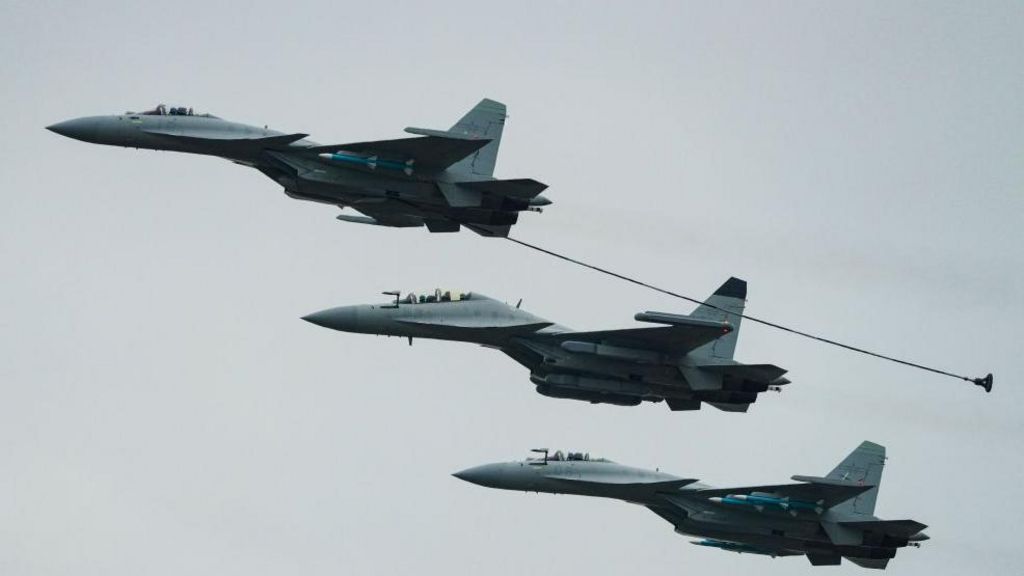
    China’s largest and most advanced amphibious assault ship, the CNS Sichuan, has successfully concluded its maiden sea trial, marking a significant milestone in the nation’s naval capabilities. The vessel, which set sail on Friday morning from the Hudong-Zhonghua Shipbuilding yard in Shanghai, returned to its home port on Sunday afternoon after a three-day voyage. During the trial, engineers meticulously tested and verified the reliability and performance of the ship’s electric, propulsion, and other critical systems, achieving the desired results. The People’s Liberation Army Navy (PLAN) confirmed that follow-up tests will be conducted in accordance with the ship’s construction plan. The Sichuan, the first in the Type 076 class, boasts a displacement of over 40,000 metric tons and is equipped with an electromagnetic launch system, making it the first Chinese amphibious assault ship capable of deploying fixed-wing drones. This technology was previously seen only on the CNS Fujian aircraft carrier. Once commissioned, the Sichuan will be capable of supporting a wide range of military operations, including amphibious landings, airstrikes, and airborne missions. The PLAN currently operates four Type 075 amphibious assault ships, each with a full displacement of nearly 40,000 tons, capable of carrying multiple helicopters, landing craft, and armored vehicles.

  • Israel says Gazans who landed in S. Africa unexpectedly had third-country approval

    Israel says Gazans who landed in S. Africa unexpectedly had third-country approval

    A group of 153 Palestinians from Gaza unexpectedly arrived in South Africa, sparking inquiries from President Cyril Ramaphosa. Israeli authorities confirmed that the individuals had received entry approval from an unnamed third country, allowing their departure from Gaza. Shimi Zuaretz, a spokesperson for COGAT, the Israeli body overseeing civil affairs in Palestinian territories, stated that the group was permitted to leave only after receiving third-country approval. Upon landing in Johannesburg, the passengers were detained on their plane for 12 hours due to the absence of Israeli departure stamps in their passports. South African border police reported that the home affairs ministry eventually allowed the group to disembark after an NGO, Gift of the Givers, offered to provide accommodation. The NGO clarified that it was unaware of who had chartered the flight or a previous one that brought 176 Gazans to South Africa on October 28. An unidentified Israeli official revealed that the organization coordinating the transfer had submitted third-country visas to COGAT for all evacuees. President Ramaphosa expressed concern, suggesting it appeared as though the individuals were being ‘flushed out.’ South Africa’s home affairs ministry confirmed that 130 of the group entered the country, while 23 continued to other destinations. Zuaretz emphasized that COGAT facilitates the departure of Gaza residents for medical treatment, dual citizens, and those with third-country visas, based solely on foreign country requests. Since the October 7, 2023, attack on Israel, over 40,000 Gaza residents have been assisted in leaving. South Africa, home to sub-Saharan Africa’s largest Jewish community, has historically supported the Palestinian cause, even filing a genocide case against Israel at the International Court of Justice in 2023.

  • Lebanon to complain to UN over wall construction denied by Israel

    Lebanon to complain to UN over wall construction denied by Israel

    Lebanon has announced its intention to lodge a formal complaint with the United Nations Security Council, accusing Israel of constructing a concrete wall that encroaches on Lebanese territory. The Lebanese presidency revealed this decision on Saturday, following a report by the United Nations Interim Force in Lebanon (UNIFIL) that the wall crosses the UN-demarcated Blue Line, the de facto border between the two nations. According to UNIFIL, the structure, identified as a concrete T-wall, has rendered over 4,000 square meters of Lebanese land inaccessible to its citizens. The Israeli military, however, has denied the allegations, asserting that the wall does not cross the Blue Line. President Joseph Aoun has directed officials to submit the complaint alongside UN reports refuting Israel’s denial. UNIFIL’s investigations in October and November confirmed that sections of the wall near Yaroun violate Lebanon’s sovereignty. The force has urged the Israeli army to relocate the wall. This dispute arises amidst ongoing tensions following a November 2024 ceasefire intended to end hostilities between Israel and Hezbollah. Israel maintains that the wall is part of a broader military strategy initiated in 2022, aimed at reinforcing its northern border. Despite the truce, Israel continues to conduct strikes in Lebanon, primarily targeting Hezbollah.

  • Justice on horseback: bringing the court to Xinjiang’s herders

    Justice on horseback: bringing the court to Xinjiang’s herders

    In a remarkable initiative to ensure justice reaches every corner of China, judges in the Xinjiang Uygur Autonomous Region are taking to the grasslands on horseback. This innovative approach brings the courtroom directly to herders, providing them with essential legal services in their remote communities. The initiative underscores the Chinese government’s commitment to inclusivity and accessibility in the judicial system, particularly for those living in isolated areas. The mobile courtrooms, though simple in setup, have a profound impact, demonstrating a deep sense of care and responsibility towards the herding community. This effort not only facilitates legal recourse but also strengthens the bond between the government and its citizens, fostering a sense of trust and security. The initiative is a testament to China’s broader strategy of ensuring that no citizen is left behind in the pursuit of justice and equality.

  • Iran begins cloud seeding operations as severe drought bites

    Iran begins cloud seeding operations as severe drought bites

    Iran has commenced cloud seeding operations in response to an unprecedented drought, marking a critical step in its battle against water scarcity. The country, which has long endured chronic dry spells and heat waves exacerbated by climate change, is now facing its most severe drought in decades. The first cloud seeding flight of the current water year, which began in September, was conducted over the Urmia Lake basin, as reported by the official IRNA news agency. Urmia, once Iran’s largest lake, has largely dried up, transforming into a vast salt bed. Further operations are planned for the provinces of East and West Azerbaijan. Cloud seeding involves dispersing particles like silver iodide and salt into clouds to induce rainfall. Iran has developed its own technology for this practice, which has also been employed by neighboring countries such as the United Arab Emirates. Recent reports indicate rainfall in several western and northwestern provinces, though overall precipitation has decreased by 89% compared to the long-term average. Tehran, the capital, is experiencing its lowest rainfall in a century, with half of Iran’s provinces remaining rainless for months. President Masoud Pezeshkian has warned of potential evacuations in Tehran if rain does not arrive before winter. The situation underscores the urgent need for innovative solutions to address the escalating water crisis in the region.

  • Man arrested over deadly Delhi car bomb attack

    Man arrested over deadly Delhi car bomb attack

    Authorities in Delhi have apprehended a man linked to a devastating car bomb attack that claimed eight lives and left 20 others injured last week. The National Investigation Agency (NIA) revealed that the vehicle used in the attack, which the government has labeled a ‘terrorist incident,’ was registered under the suspect’s name. The individual, a resident of Indian-administered Kashmir, is accused of conspiring with the alleged suicide bomber. The explosion occurred near a metro station adjacent to the Red Fort, a prominent historical landmark in Delhi. The NIA has seized another vehicle believed to belong to the suicide bomber for further examination and has interrogated 73 witnesses, including those injured in the blast. This marks the first such explosion in the heavily guarded city since 2011. The attack took place on Monday evening at 18:52 local time (13:22 GMT) when a slow-moving vehicle stopped at a busy traffic signal and detonated. Home Minister Amit Shah confirmed the explosion involved a white Hyundai i20, with footage from the scene showing the charred remains of the car and other vehicles. Prime Minister Narendra Modi condemned the attack as a ‘conspiracy,’ pledging to bring the perpetrators to justice. Opposition leader Rahul Gandhi expressed deep sorrow over the incident. Police are investigating potential links to recent arrests in Indian-administered Kashmir and the seizure of 2,900kg of explosives from a Delhi suburb. The Red Fort, a 17th-century Mughal fortress, is a major tourist attraction and the site of India’s annual Independence Day speeches.

  • Chinese Medicine Industry Council of Australia calls for deeper Australia–China health cooperation

    Chinese Medicine Industry Council of Australia calls for deeper Australia–China health cooperation

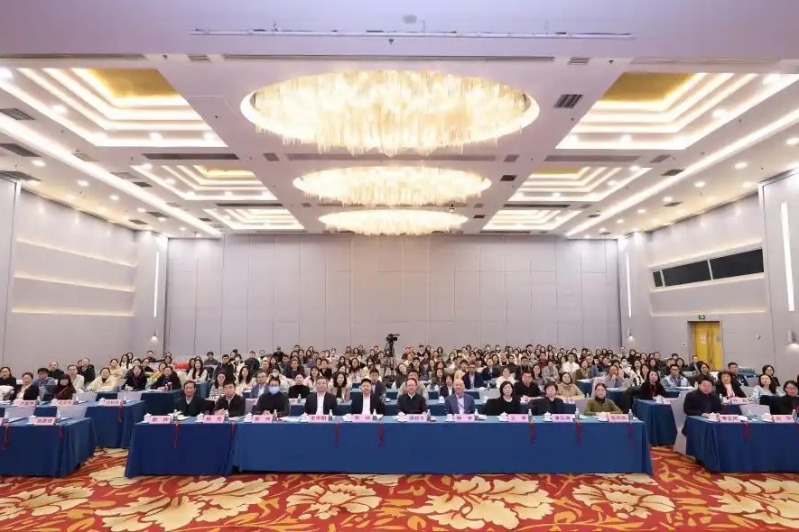
    The Chinese Medicine Industry Council of Australia (CMIC) has called for enhanced health cooperation between Australia and China, emphasizing the growing significance of Traditional Chinese Medicine (TCM) in community health. The appeal was made during the 15th anniversary celebration of CMIC in Sydney on November 15, where industry leaders and officials highlighted the potential for unity, innovation, and shared development in advancing TCM. Counsellor Jin Jianmin from the Chinese Consulate-General in Sydney noted that China’s latest Five-Year Plan prioritizes the modernization of healthcare, including the integration of TCM and Western medicine, which opens new avenues for bilateral collaboration. CMIC President Max Anyang Ma reflected on the organization’s 15-year journey, stressing its commitment to professionalism, quality, and industry cohesion. He highlighted the importance of high-quality herbal materials and practitioner expertise in achieving effective clinical outcomes. Ma also outlined CMIC’s efforts in policy engagement, standards development, and talent cultivation, as well as its role in addressing regulatory issues. The event also featured the presentation of the Australia Qihuang Awards, recognizing contributions to TCM research, education, and clinical practice. Pamela Longley, chair of the NSW Chinese Medicine Council, acknowledged the challenges of introducing TCM in Australia but expressed optimism about the gradual shift in public understanding through sustained cooperation between Chinese and Australian practitioners.

  • Chinese scientists discover lunar rust, revealing new oxidation process on the moon

    Chinese scientists discover lunar rust, revealing new oxidation process on the moon

    In a groundbreaking discovery, Chinese scientists have identified micrometer-sized crystals of hematite and maghemite in lunar soil samples retrieved by the Chang’e 6 mission from the moon’s far side. Published in the journal Science Advances, this finding unveils a previously unknown oxidation process on the moon, challenging the long-held belief that the lunar surface is entirely in a reduced state with minimal oxidation. The research, conducted by Shandong University, the Institute of Geochemistry of the Chinese Academy of Sciences, and Yunnan University, analyzed samples from the South Pole-Aitken Basin, the largest and oldest known impact basin in the solar system. Using advanced techniques such as micro-area electron microscopy, electron energy loss spectroscopy, and Raman spectroscopy, the team confirmed the native origin of these iron oxides, ruling out contamination from Earth. Unlike Earth, where rust forms through water and oxygen interactions, the moon’s ‘rust’ originates from violent asteroid impacts. These impacts created transient high-oxygen-fugacity gas environments, oxidizing iron in troilite minerals and forming hematite through vapor-phase deposition at 700 to 1,000 degrees Celsius. This process also produced magnetic minerals like magnetite and maghemite, which may explain the magnetic anomalies observed around the SPA Basin. The findings not only enrich our understanding of the moon’s evolutionary history but also provide a scientific basis for future lunar studies. The Chang’e 6 mission, launched in May 2024, successfully retrieved 1,935.3 grams of samples from the moon’s far side, marking a significant milestone in lunar exploration.

  • Samsung and other South Korean firms pledge larger domestic investments after US tariff deal

    Samsung and other South Korean firms pledge larger domestic investments after US tariff deal

    In a significant move to bolster domestic economic growth, South Korea’s corporate titans, including Samsung Electronics and Hyundai Motor Group, have unveiled expansive investment plans following a high-profile meeting with President Lee Jae Myung. This development comes just days after South Korea finalized a landmark trade agreement with the United States, aimed at averting steep tariffs and fostering bilateral economic ties.