标签: Asia

亚洲

  • Families fear for detainees as US moves Islamic State prisoners out of northeast Syria

    Families fear for detainees as US moves Islamic State prisoners out of northeast Syria

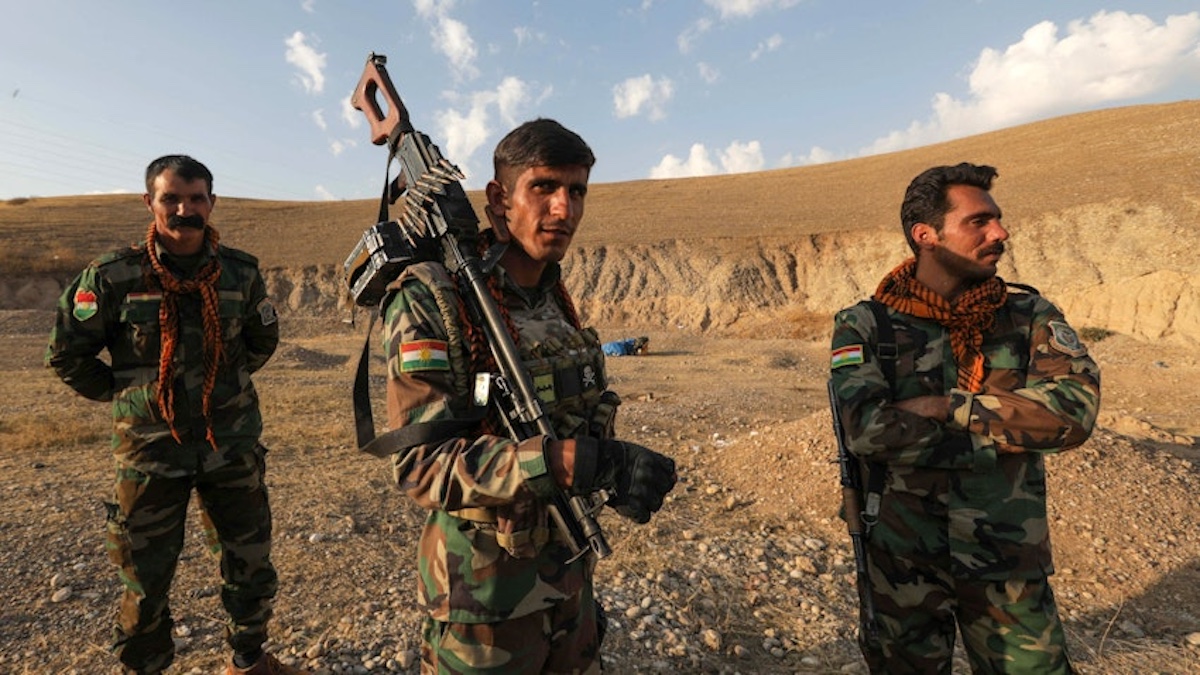
    International human rights organizations and families of detainees are expressing grave concerns following the United States’ announcement of a large-scale prisoner transfer operation from Syrian detention facilities to Iraqi-controlled sites. US Central Command confirmed the initial relocation of 150 prisoners from Hasakah province to Iraq, with plans to potentially transfer up to 7,000 individuals suspected of Islamic State affiliations.

    The security transition coincides with Syrian government forces assuming control of al-Hol camp, housing approximately 24,000 predominantly women and children, including 14,500 Syrians and nearly 3,000 Iraqis. This development has severely disrupted already tenuous communication channels between detainees and their families abroad.

    Yasmina, representing the Families in Belgium organization, reported complete communication blackout for over a week. ‘We did not anticipate such volatility,’ she stated, noting regular disruptions to water and electricity supplies in the facilities. While al-Roj camp’s transition appeared peaceful according to eyewitness accounts, Western families remain uncertain about their relatives’ fates, with transfers potentially prioritizing local nationals.

    Humanitarian organizations highlight particular vulnerability among separated children. Save the Children has suspended non-essential operations in northeastern Syria, citing deteriorating security conditions affecting approximately 20,000 children in displacement camps and rehabilitation centers. The organization emphasized constrained humanitarian access and limited clarity regarding internal camp conditions.

    Families of detainees have characterized the transfers as ‘extraordinary rendition.’ Sally Lane, mother of imprisoned British-Canadian Jack Letts, described the situation as ‘an absolute crisis’ emerging from ‘ten years of inertia.’ Canadian advocacy groups are urging immediate repatriation of remaining nationals, warning of potential torture risks in Iraqi facilities.

    A Syrian government official confirmed camp security stabilization with priorities focused on restoring essential services and infrastructure. The official committed to permitting UN agency and NGO access while emphasizing non-politicization of detainee issues, despite previous diplomatic discussions regarding repatriation with visiting foreign ministers.

  • Why Iran is shooting protesters straight in the eye

    Why Iran is shooting protesters straight in the eye

    Iranian security forces are employing a disturbing tactic of deliberately targeting protesters’ eyes with projectiles and buckshot, according to extensive evidence and historical analysis. This systematic approach to ocular violence represents more than mere police brutality—it constitutes a calculated political strategy rooted in ancient Persian power dynamics.

    Recent protests, including the nationwide Women, Life, Freedom movement in 2022 and demonstrations in late 2025, have seen an alarming frequency of eye injuries. Nobel laureate Shirin Ebadi reported on January 9 that at least 400 people were hospitalized in Tehran alone with firearm-related eye injuries since the beginning of the year’s protests. The victims predominantly include women, youth, students, and even bystanders.

    This practice finds disturbing parallels in Iran’s political history. Ancient Persian culture historically linked vision with power—”I see, therefore I govern”—making blindness synonymous with political disqualification. The Shahnameh (Book of Kings) from the 10th century depicts blinding as narrative marker of political decline, while historical records show Persian rulers like Abbas the Great (1588-1629) and Nader Shah (1736-1747) routinely blinded relatives perceived as political threats.

    The contemporary Islamic Republic continues this symbolic violence through modern means. While authorities deny systematic blinding, the widespread use of so-called “non-lethal” weapons against demonstrators’ eyes serves similar political purposes: neutralizing dissent without killing, preventing documentation of protests, and eliminating the independent gaze that challenges official narratives.

    Women particularly face targeted ocular violence, as their liberated gaze represents a fundamental threat to the regime’s ideological control. The mutilated faces of injured protesters have become powerful symbols of resistance, transforming victims into living evidence of state brutality despite government attempts to conceal violence through internet blackouts.

    This systematic blinding campaign reveals Iran’s profound democratic legitimacy crisis, demonstrating how ancient techniques of political neutralization persist in modern repression tactics. The destroyed eyesight of protesters represents both the regime’s brutality and the resilience of those who continue to challenge its authority.

  • 3N Travel introduces India’s first Kidana Tower hajj experience for 2025

    3N Travel introduces India’s first Kidana Tower hajj experience for 2025

    In a groundbreaking development for religious tourism, 3N Travel & Tourist Bureau has achieved a historic milestone by becoming India’s first travel company to secure accommodations at Mina’s prestigious Kidana Tower for Hajj 2025 pilgrims. This strategic initiative positions the company at the forefront of enhanced pilgrimage experiences for Indian nationals participating in the annual Islamic ritual.

    The Kidana Tower represents one of Mina’s most advanced hospitality facilities, specifically engineered to elevate the traditional Hajj experience through superior comfort protocols, optimized accessibility features, and sophisticated crowd management systems. The tower’s infrastructure guarantees improved safety standards and dignified living conditions throughout the pilgrimage journey, addressing longstanding challenges faced by participants.

    3N Travel’s specialized Hajj packages cater to the global Indian diaspora, featuring innovative short-duration programs and premium Clock Tower accommodations. The premium Kidana Tower experience includes VIP-tier lodging in Mina complemented by upgraded tent facilities in Arafat, creating an integrated comfort solution throughout the sacred itinerary.

    With official authorities setting January 25, 2026 as the definitive registration deadline for Hajj 2025, prospective pilgrims face intensified urgency due to constrained quotas and exceptional demand. The company emphasizes the critical importance of immediate registration for both domestic and international Indian applicants seeking to participate in next year’s pilgrimage.

    Industry experts strongly recommend engaging exclusively with government-authorized Hajj service providers to ensure regulatory compliance, financial transparency, and operational reliability. This precautionary measure safeguards pilgrims against potential fraudulent schemes while guaranteeing adherence to official pilgrimage standards.

  • ‘He should apologise’: Anger of veterans and relatives at Trump Nato remarks

    ‘He should apologise’: Anger of veterans and relatives at Trump Nato remarks

    British military veterans and families of fallen soldiers have expressed profound outrage following controversial remarks by former U.S. President Donald Trump regarding NATO allies’ combat roles in Afghanistan. The dispute centers on Trump’s assertion that American allies “stayed a little back, a little off the front lines” during the conflict.

    Andy Reid, a triple-amputee veteran who lost both legs and an arm to a Taliban IED in Helmand Province, has emerged as a leading voice calling for a formal apology. “I remember working with American soldiers in Explosive Ordnance Disposal teams,” Reid stated. “If they were on the front line, and we stood next to them, clearly we were on the front line as well.” He characterized Trump’s comments as “disrespectful, inappropriate and unexpected.”

    The United Kingdom maintained the second-largest military deployment in Afghanistan after the United States, with troop levels peaking at approximately 11,000 in 2011. British forces experienced some of the most intense combat operations in the volatile Helmand region, where they faced a resurgent Taliban and devastating IED attacks that claimed numerous lives.

    Andy Allen, a Northern Ireland assembly member who lost his right leg and suffered severe damage to his left leg in a 2008 IED explosion, confirmed the frontline nature of British operations. “It was the front line in which I was injured, and it was the front line of the battle in Afghanistan,” Allen emphasized, noting that he plans to write to the White House to correct the historical record.

    The controversy has particularly affected families of the 457 British service personnel killed in Afghanistan. Diane Dernie, mother of Britain’s most severely injured surviving soldier Ben Parkinson, described Trump’s statements as “the rantings of a child.” Her son sustained catastrophic injuries when his vehicle struck a mine in Helmand in 2006 while serving from forward operating bases established near combat zones.

    Monica Kershaw, whose 19-year-old son Christopher was killed alongside five other British soldiers when their armored vehicle hit an IED in Helmand, expressed visceral anger: “I think they should put Donald Trump in a uniform and put him on the front line, instead of pushing a pen behind a desk.”

    The NATO alliance had invoked Article 5—the collective defense clause—following the 9/11 attacks, marking the first and only time this provision has been activated. Multiple nations including the UK, Denmark, Estonia, and Canada contributed forces to the Afghan campaign.

    U.S. Navy veteran Shawn VanDiver, who now leads an organization assisting Afghan allies, offered a contrasting perspective to Trump’s remarks: “We see you. We know you were right there with us. We could not have accomplished what we did without them.” Addressing British families who lost loved ones, VanDiver added: “They would likely feel betrayed. What I would say to those families is I’m sorry.”

  • Not only Americans risked life and limb to serve in Afghanistan

    Not only Americans risked life and limb to serve in Afghanistan

    The Afghanistan deployment experience between 2001-2021 remains etched in the memories of thousands who served – from blast walls and rocket attacks to the mundane reality of canteen queues. This collective international effort began with perilous flights into Kandahar, Kabul, or Camp Bastion, where aircraft employed evasive maneuvers to avoid Taliban surface-to-air missiles.

    This unprecedented military campaign marked the sole invocation of NATO’s Article 5 in the alliance’s 77-year history, triggering a multinational response to the 9/11 attacks that killed nearly 3,000 people. While the Taliban were rapidly ousted from power through joint operations involving US forces, the CIA, and Afghanistan’s Northern Alliance, the mission evolved into a protracted manhunt for al-Qaeda remnants across mountainous terrain.

    The conflict’s initial phase, dubbed “Operation Enduring Freedom,” saw relative calm until late 2003 when attention shifted to Iraq. However, danger persisted constantly. Journalists documented nervous patrols by coalition forces in Soviet-era armored vehicles and experienced firsthand the Taliban’s relentless rocket attacks on remote firebases.

    The war intensified dramatically after 2006 when UK forces deployed to Helmand Province. British paratroopers faced ferocious combat requiring “danger close” artillery support to prevent their bases from being overrun. For the subsequent eight years until combat operations concluded in 2014, multinational forces from Britain, Canada, Denmark, Estonia and others endured the most severe fighting in Kandahar and Helmand.

    The most pervasive threat emerged from expertly concealed Improvised Explosive Devices (IEDs). Taliban fighters leveraged their intimate knowledge of the terrain to predict troop movements and place explosives at strategic crossing points. These devices catastrophically altered lives in split seconds, causing such widespread fear that soldiers prayed for below-knee rather than above-knee amputations if hit.

    The remarkable resilience demonstrated by survivors who rebuilt their lives despite terrible losses stands as a testament to human endurance. Their sacrifices and bravery render recent suggestions that coalition forces avoided combat particularly offensive to those who served throughout NATO’s longest military engagement.

  • What to know about the deal to keep TikTok in US

    What to know about the deal to keep TikTok in US

    After prolonged legislative uncertainty, TikTok has finalized a comprehensive agreement ensuring its continued operations in the United States through a newly established U.S. joint venture. The resolution comes following intense bipartisan pressure from Congress and the White House, which had mandated the platform’s separation from Chinese parent company ByteDance by January 2025 or face complete prohibition.

    The breakthrough arrangement involves major investment firms Oracle, Silver Lake, and Emirati conglomerate MGX as key stakeholders in the newly formed TikTok U.S. entity. While the agreement prevents an immediate shutdown that would have affected approximately 200 million American users, it introduces significant operational changes—most notably the complete retraining of TikTok’s proprietary content recommendation algorithm using exclusively U.S. user data.

    This algorithmic transformation represents the most substantial modification to the platform’s core functionality. According to industry analysts, the retrained system will produce “distinctly American” content feeds, potentially altering the cultural dynamics that made TikTok a global phenomenon. While international content will remain accessible, its visibility and ranking within user feeds will undergo noticeable changes.

    The agreement maintains technical connections to ByteDance through algorithmic licensing arrangements, raising questions about whether the restructured ownership adequately addresses originally cited national security concerns. Legislative measures had specifically prohibited “any cooperation with respect to the operation of a content recommendation algorithm” between ByteDance and American entities.

    User experience modifications extend beyond algorithmic changes. Updated Terms of Service explicitly address AI-generated content requirements, mandating that users label such material appropriately. Additionally, users under age 13 will be restricted to a limited “Under 13 Experience” with enhanced privacy protections.

    The political dimensions of the agreement have drawn scrutiny, particularly given Oracle co-founder Larry Ellison’s substantial personal investment and historical connections to the Trump administration. Ellison, whose personal fortune exceeds $390 billion, recently facilitated Skydance’s $8 billion Paramount merger and maintains influential relationships within political circles.

    Small business owners and content creators expressed cautious optimism about the resolution. Skip Chapman, whose natural deodorant company derives 80% of sales through TikTok Shop, noted relief from the prolonged uncertainty but concerns about potential de-prioritization of e-commerce features. Restaurant owner Vanessa Barreat, with over 100,000 TikTok followers, adopted a “wait-and-see” perspective, acknowledging the platform’s transformative impact for previously marginalized voices.

    Industry analysts warn that significant alterations to TikTok’s signature user experience could trigger migration to competing platforms, particularly if content moderation appears politically biased or fails to address misinformation effectively. The ultimate success of the arrangement hinges on maintaining the delicate balance between national security priorities, commercial viability, and cultural relevance that defined TikTok’s unprecedented global ascent.

  • China, US tackle challenges differently

    China, US tackle challenges differently

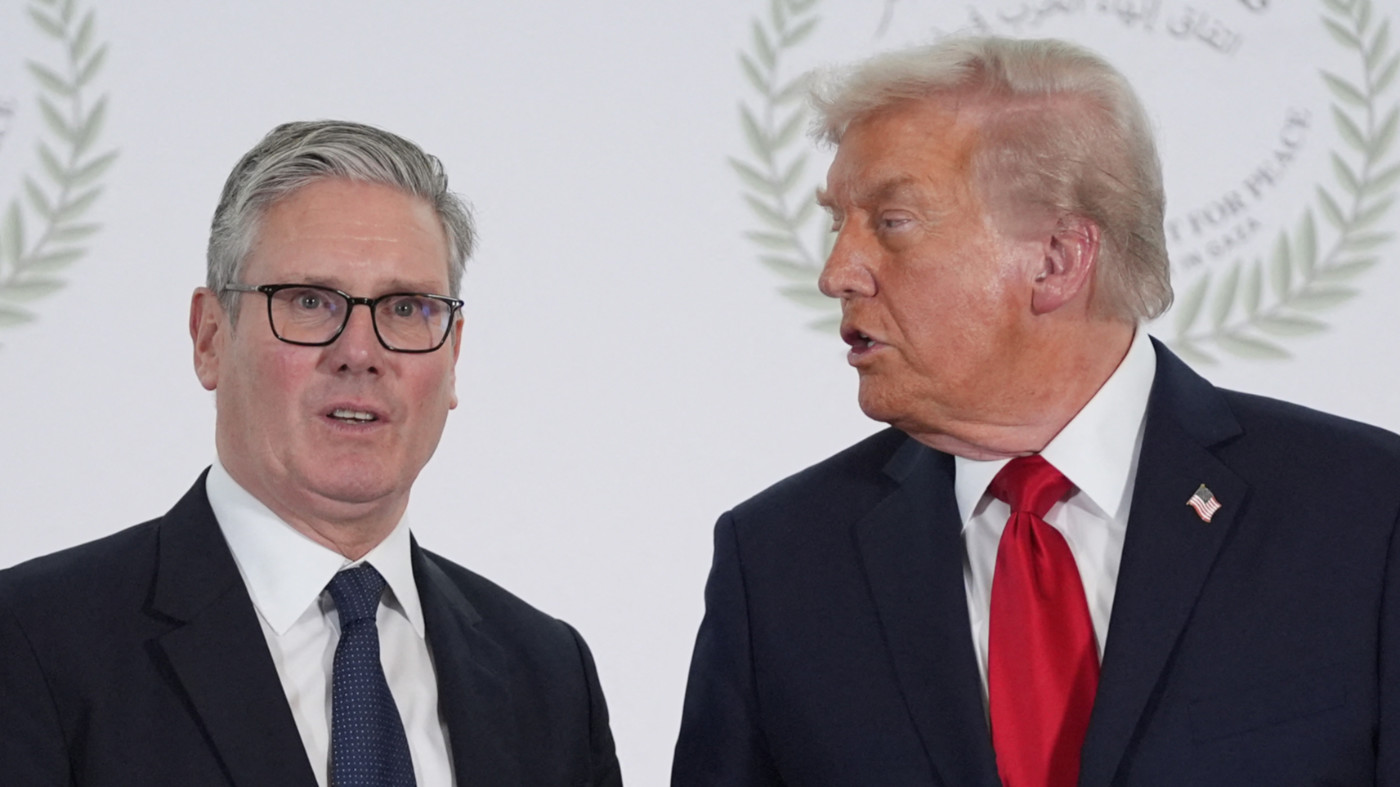
    The 56th World Economic Forum in Davos became a stage for contrasting visions of global leadership as China and the United States presented fundamentally different approaches to international cooperation. Chinese Vice-Premier He Lifeng articulated Beijing’s commitment to multilateralism and inclusive economic globalization, while US President Donald Trump emphasized nationalist priorities and questioned longstanding alliances.

    He Lifeng’s address positioned China as a stabilizing force in global affairs, advocating for cooperative solutions to shared challenges. “The world must not return to the law of the jungle, where the strong will eat the weak,” He stated, directly addressing concerns about rising unilateralism and protectionism. The Chinese delegation emphasized economic interdependence, noting that China had imported over $15 trillion in goods and services during the past five years while generating substantial tax revenue and employment opportunities abroad through overseas investments.

    The vice-premier outlined China’s domestic policy focus on boosting consumption and incomes, explicitly inviting international businesses to access the Chinese market. He further committed to cooperation in technology innovation, artificial intelligence governance, and climate action, reiterating China’s dedication to its carbon neutrality timeline.

    In stark contrast, President Trump’s appearance highlighted America’s reconsideration of traditional alliances. During his hour-long address, the president questioned NATO’s funding structure, criticized European energy policies, and revisited his controversial proposal to acquire Greenland from Denmark for security purposes. Trump asserted that European allies owed the United States for decades of protection, claiming without American intervention, Europeans “would all be speaking German and a little Japanese.”

    European leaders responded cautiously to Trump’s remarks, with French President Emmanuel Macron and European Commission President Ursula von der Leyen both emphasizing the necessity of strategic autonomy and effective multilateralism. Von der Leyen characterized current geopolitical shifts as creating “a necessity to build a new form of European independence.”

    Analysts observing the forum noted that the divergent presentations reflected broader transformations in global power dynamics. McKinsey’s China chairman Joe Ngai observed that China’s consistent messaging at recent Davos meetings positions it as a advocate for stable global order, while the US appears to be reevaluating its traditional international responsibilities.

  • Suicide bomber targets wedding ceremony in northwest Pakistan, killing 7 people, wounding 25

    Suicide bomber targets wedding ceremony in northwest Pakistan, killing 7 people, wounding 25

    A joyous wedding celebration in northwest Pakistan was shattered by a deadly suicide bombing on Friday, resulting in a significant loss of life and injuries. The assailant detonated an explosive vest amidst guests at the residence of Noor Alam Mehsud, a pro-government community leader in the Dera Ismail Khan district of Khyber Pakhtunkhwa province.

    According to local police chief Adnan Khan, the attack claimed at least seven lives and left 25 individuals wounded. Emergency services transported the casualties to a nearby hospital, with medical officials reporting that several victims were in critical condition. Eyewitnesses described a scene of horror, where the sound of celebratory drums was abruptly replaced by chaos and devastation following the sudden detonation.

    While no militant organization has immediately claimed responsibility for the atrocity, initial suspicion points towards the Pakistani Taliban, officially known as Tehrik-e-Taliban Pakistan (TTP). This group, a separate entity but an ally of the Afghan Taliban, has a extensive history of orchestrating violent attacks within Pakistan. Security analysts note that the TTP has experienced a resurgence and increased boldness following the Afghan Taliban’s return to power in neighboring Afghanistan in 2021. The withdrawal of U.S. and NATO forces after a two-decade presence created a security vacuum, allowing many TTP leaders and fighters to establish sanctuaries across the border, from where they plan and launch operations into Pakistan.

  • Jailbreaks and confusion in Syrian IS prisons after sudden SDF pullout

    Jailbreaks and confusion in Syrian IS prisons after sudden SDF pullout

    A fragile tranquility has returned to the al-Hol detention facility in northeastern Syria’s Hasakah province, following days of turmoil during a contentious transfer of control from Kurdish-led forces to Syrian government troops. The poorly coordinated handover triggered widespread chaos as perimeter fences were breached and numerous detainees attempted escapes while the camp remained temporarily unguarded.

    Eyewitness accounts from within the camp contradict official narratives that no mass breakout occurred. Eighteen-year-old Yahya, a six-year detainee, described to Middle East Eye how prisoners scaled fences when Syrian Democratic Forces (SDF) withdrew unexpectedly as government forces advanced. “The SDF soldiers left as government forces were approaching. We jumped over the fence,” Yahya recounted, though he ultimately returned, unwilling to abandon his family.

    The transfer represents a significant geopolitical shift, ending seven years of SDF management of one of the world’s largest informal detention centers housing ISIS affiliates. Al-Hol contains approximately 24,000 individuals, including 15,000 Syrians and 6,300 foreign women and children from 42 nations, creating a complex humanitarian and security challenge.

    At the al-Shaddadi prison complex located 100 kilometers southwest, the transition proved even more disastrous. Government forces discovered emptied cells with doors torn from hinges and discarded orange prison uniforms littering the grounds. Security head Abu Omar of the Syrian Army’s 44th Division alleged the SDF deliberately released 120 detainees to create diversionary chaos, with 81 subsequently recaptured but 39 remaining at large—including foreign nationals from North Africa and Europe.

    The SDF vehemently denies these accusations, maintaining that other hostile forces overwhelmed the facility during the transfer. A local anonymous source suggested Bedouin tribal groups opposed to the SDF may have forced open gates, believing detainees were unjustly imprisoned.

    In response to the deteriorating security situation, the United States initiated emergency transfers of high-risk ISIS detainees to secured facilities in Iraq on January 21st. Military officials indicate contingency plans exist to relocate up to 7,000 detainees from northeastern Syria, reflecting grave concerns about potential system-wide collapse that could fuel renewed insurgency threats beyond Syria’s borders.

    Despite government assurances of restored control, a Syrian military source privately acknowledged the situation remains “extremely dangerous,” with likely more escaped militants than officially reported. Meanwhile, detainees like 48-year-old Oum Zeinab express profound injustice: “I have relatives linked to IS, but I was never part of it.”

  • Visiting RAK for the nature? Authorities warn of penalties for environmental violations

    Visiting RAK for the nature? Authorities warn of penalties for environmental violations

    Ras Al Khaimah authorities have intensified environmental protection measures, warning both visitors and commercial establishments that violations including littering, improper waste disposal, and unauthorized barbecuing will result in significant penalties. The Public Services Department revealed that 4,326 environmental offenses were recorded throughout 2025, demonstrating concerning patterns of irresponsible behavior across tourist destinations, residential zones, and public facilities.

    Common infractions include lighting fires directly on surfaces without approved equipment, disposing of personal waste in undesignated areas, and commercial operations dumping waste in public spaces, roads, and open land. These practices not only degrade natural landscapes but also pose substantial public safety risks.

    To combat these issues, the department has deployed an integrated monitoring system featuring 20 Toyota Rush patrol vehicles conducting 24/7 inspections across beaches, tourist sites, and natural areas. Fixed inspection units have been strategically positioned at high-traffic locations including Marjan Island Corniche and Al Maairid Corniche through collaborative agreements with relevant authorities.

    Officials emphasize that compliance with environmental regulations is crucial for preserving Ras Al Khaimah’s natural beauty while ensuring clean, safe, and enjoyable spaces for both residents and visitors. The enforcement campaign highlights that commercial entities are equally subject to environmental regulations and penalties, with several businesses already cited for improper waste management practices.

    The increased enforcement reflects growing concerns about environmental conservation in the emirate’s popular natural and coastal destinations, where irresponsible behavior has threatened both ecological integrity and public safety.