标签: Asia

亚洲

  • Passengers of diverted flight transferred to hotels in China’s Lanzhou

    Passengers of diverted flight transferred to hotels in China’s Lanzhou

    A transnational flight operated by Azur Air was compelled to execute an emergency landing at Lanzhou Zhongchuan International Airport on Friday afternoon, January 23, 2026, following a technical failure. The aircraft, a Boeing 757-200 identified as flight ZF2998, was en route from the popular resort destination of Phuket, Thailand, to its final destination of Barnaul, Russia.

    Airport authorities confirmed the incident was triggered by a malfunction in the aircraft’s right engine, prompting the flight crew to declare an in-flight emergency. Despite the critical situation, the pilots successfully navigated the aircraft to a safe landing at 4:51 PM local time. All 246 individuals on board, comprising 239 passengers and 7 crew members, were reported to be safe and unharmed.

    Following standard safety protocols and assessment procedures, all passengers and crew have been temporarily relocated to local hotels in Lanzhou, the capital of Gansu province. Airport officials have arranged for their accommodation and necessities while maintenance crews inspect the aircraft and arrange for onward travel. The incident underscores the critical importance of rigorous safety protocols and pilot training in managing unforeseen technical failures during flight operations.

  • Beijing West Railway Station marks 30th anniversary

    Beijing West Railway Station marks 30th anniversary

    Beijing West Railway Station commemorated its 30th anniversary on Wednesday, standing as a testament to China’s remarkable infrastructure development and railway modernization. Since its inauguration in 1996, this monumental transportation hub has facilitated an extraordinary 1.96 billion passenger journeys, establishing itself as one of the nation’s most critical rail terminals.

    The station’s three-decade operation mirrors China’s rapid economic growth and urban transformation, serving as both a functional transport facility and a symbolic landmark of national progress. Throughout its operational history, Beijing West has consistently adapted to evolving travel demands, incorporating technological advancements and expanding services to accommodate increasing passenger volumes.

    As a pivotal junction in China’s extensive railway network, the station has witnessed the country’s transition from conventional rail systems to high-speed bullet trains, reflecting broader technological achievements in transportation infrastructure. The facility has played an essential role in connecting China’s capital with numerous domestic destinations while maintaining operational efficiency during peak travel periods, particularly during annual migration events like the Spring Festival travel rush.

    The station’s architectural significance and operational scale have made it an iconic representation of China’s modernization ambitions, blending functional design with cultural elements that showcase national heritage. Its continuous operation and upgrades demonstrate China’s commitment to developing world-class transportation systems that serve both economic needs and public convenience.

    Looking forward, Beijing West Railway Station remains positioned to maintain its critical role in China’s transportation ecosystem, with planned improvements aimed at enhancing passenger experience and integrating with emerging transportation technologies.

  • New Zealand calls off rescue efforts for six missing after landslide

    New Zealand calls off rescue efforts for six missing after landslide

    New Zealand authorities have officially terminated search and rescue operations for six individuals buried beneath a devastating landslide that struck a popular campground in Mount Maunganui on Thursday. Police Superintendent Tim Anderson confirmed the transition to recovery efforts, stating that locating survivors is no longer feasible.

    Human remains were discovered Friday evening beneath layers of dirt and debris at the sacred Māori site, which ranks among the nation’s most frequented camping destinations. The victims include two 15-year-olds from Auckland—Sharon Maccanico and Max Furse-Kee—alongside four adults: Lisa Anne Maclennan (50, Morrinsville), Måns Loke Bernhardsson (20, Sweden), Jacqualine Suzanne Wheeler (71, Rotorua), and Susan Doreen Knowles (71, Ngongotaha).

    In a separate but related incident, Radio New Zealand reported a grandmother and her grandchild perished in another landslide at nearby Welcome Bay. The region has endured days of torrential rainfall on North Island, with meteorological services forecasting additional precipitation through the weekend.

    Emergency crews labored through treacherous conditions described as “incredibly challenging” before formally transferring operations to police on Saturday. Chief Coroner Judge Anna Tutton acknowledged the identification process would be “complex” and “painstaking” while pledging to expedite familial reunification.

    Prime Minister Christopher Luxon visited the disaster zone Friday, noting the “inspiring” community response as locals assisted with debris clearance in flood-affected areas. The tragedy highlights growing concerns about repeated landslides at Mount Maunganui, which has experienced similar geotechnical events in recent years.

  • Taiwan businessman: Taiwan compatriots will see more opportunities in next five-year plan

    Taiwan businessman: Taiwan compatriots will see more opportunities in next five-year plan

    Taiwanese entrepreneurs operating on the Chinese mainland are anticipating substantial growth opportunities emerging from the nation’s forthcoming 15th Five-Year Plan (2026-2030). Wu Chia-ying, Vice-President of the Association of Taiwan Investment Enterprises on the Mainland and a deputy of the Xiamen People’s Congress, has become a pivotal voice in representing Taiwanese interests.

    In his unique role as a legislative representative, Wu has prioritized direct community engagement, emphasizing the importance of understanding and addressing the specific needs of Taiwanese compatriots residing on the mainland. “We can really go into the community to hear and understand the needs of Taiwan compatriots,” Wu stated, describing his grassroots approach to representation.

    The upcoming five-year development blueprint, set to guide China’s economic strategy through 2030, is expected to create expansive pathways for Taiwanese enterprises and individuals alike. Wu specifically highlighted cutting-edge technological sectors including 5G infrastructure and artificial intelligence as areas with particularly promising potential for Taiwanese participation and growth.

    This institutional framework represents more than economic planning—it signifies deepening cross-strait integration through shared development objectives. Taiwanese businesses are positioned to benefit from mainland market access and policy support during this next phase of national development, creating what industry observers characterize as a win-win scenario for cross-strait economic cooperation.

    The five-year plan mechanism, a cornerstone of China’s governance model, continues to evolve in its sophistication, now explicitly incorporating considerations for Taiwanese participants in the mainland’s economic ecosystem. This approach demonstrates the practical implementation of policies designed to foster mutual prosperity across the Taiwan Strait.

  • Indonesia landslide kills 7, dozens more missing

    Indonesia landslide kills 7, dozens more missing

    A devastating landslide has struck Indonesia’s West Java province, resulting in at least seven confirmed fatalities and leaving more than 80 individuals unaccounted for, according to official reports from disaster management authorities.

    The catastrophic event occurred in the Pasirlangu village of West Bandung region, approximately southeast of Jakarta, during the early hours of Saturday at 02:30 local time (19:30 GMT). The disaster unfolded following an extended period of torrential rainfall that saturated the mountainous terrain.

    Indonesia’s National Disaster Mitigation Agency (BNPB) confirmed in an official statement that the massive landslide completely buried residential areas under tons of earth and debris, destroying more than thirty homes in the process. The sudden nature of the landslide caught many residents unaware during nighttime hours, significantly hampering evacuation efforts.

    Abdul Muhari, communications director of the National Search and Rescue Agency, reported that emergency teams have successfully evacuated two dozen survivors from the affected zone. Rescue operations continue amid challenging conditions as responders race against time to locate potential survivors trapped beneath the mud and rubble.

    Visual documentation from local media outlets reveals the sheer scale of destruction, with photographs showing entire structures completely submerged under layers of mud and debris. The catastrophic event has prompted authorities to issue widespread alerts for additional flooding, landslides, and extreme weather conditions throughout the broader region, warning residents of potential further dangers.

    The geographical location of Indonesia, situated within the Pacific Ring of Fire, makes the archipelago nation particularly vulnerable to natural disasters including earthquakes, volcanic eruptions, and climate-related events such as landslides during the rainy season. This latest tragedy highlights the ongoing challenges faced by communities living in geographically vulnerable areas and the critical importance of early warning systems and disaster preparedness measures.

  • UAE pulls back from plan to manage Pakistan’s Islamabad airport: Report

    UAE pulls back from plan to manage Pakistan’s Islamabad airport: Report

    The United Arab Emirates has abruptly terminated negotiations to assume management operations at Islamabad’s primary airport, marking a significant setback for Pakistan’s aviation sector privatization efforts. According to a Friday report by The Express Tribune, the collapse follows months of stalled discussions after both parties had initially agreed upon a privatization framework in August 2025.

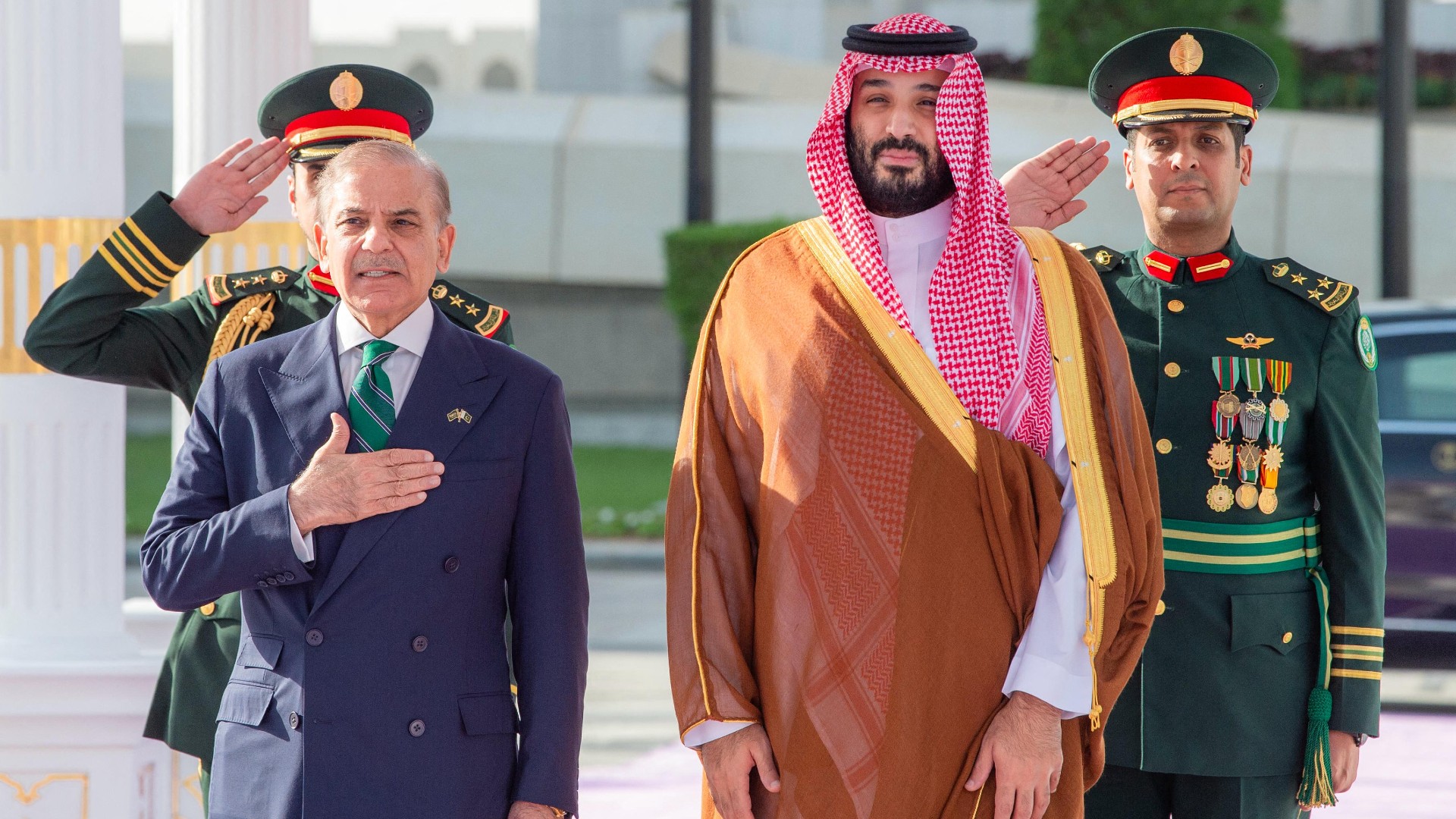
    The breakdown occurred primarily due to the UAE’s declining interest in the project and its failure to designate a local partner for operational outsourcing. While the report did not attribute political motivations to the withdrawal, it coincides with increasingly divergent Gulf foreign policies across South Asia. The development emerges against a backdrop of deepening defense cooperation between Pakistan and Saudi Arabia, contrasted by the UAE’s strengthening strategic partnership with India, Pakistan’s regional rival.

    Pakistan’s aviation sector presents considerable challenges for potential investors, plagued by a history of fatal accidents, licensing scandals, and outdated infrastructure. This abandonment deals another blow to a nation that once played pivotal roles in Middle Eastern aviation, including foundational support for Emirates Airlines during the 1980s. Meanwhile, Pakistan International Airlines, once an enviable carrier, has deteriorated into a perennial loss-maker recently acquired by a consortium led by Pakistani business magnate Arif Habib.

    The geopolitical dimensions extend beyond aviation, reflecting broader regional realignments. Saudi Arabia has reinforced its longstanding security relationship with Islamabad through a mutual defense pact signed in September 2025, with Turkey considering accession. Concurrently, the UAE has pursued enhanced defense and trade cooperation with India, including a substantial $3 billion liquefied natural gas agreement signed this week.

    Both Gulf nations have historically utilized financial assistance to advance strategic interests, though their approaches differ markedly. While the UAE moved swiftly to execute a $35 billion coastal development investment in Egypt in 2024, negotiations with Pakistan progressed slowly before ultimately collapsing. This divergence underscores how Gulf powers are increasingly pursuing distinct foreign policy objectives across South Asia and the Middle East.

  • Prominent Saudi academic accuses UAE of being Israel’s ‘trojan horse’

    Prominent Saudi academic accuses UAE of being Israel’s ‘trojan horse’

    In a remarkable public denunciation, a distinguished Saudi academic has launched a blistering critique against the United Arab Emirates, accusing the Gulf neighbor of embracing Zionism and functioning as “Israel’s Trojan horse in the Arab world.” Dr. Ahmed bin Othman al-Tuwaijri, former dean at King Saud University and ex-member of the consultative Shura Council, articulated these charges in a provocative column published by Saudi newspaper Al Jazirah.

    Dr. Tuwaijri contends that Abu Dhabi’s leadership, driven by “hatred and jealousy,” has deliberately pursued policies designed to undermine Saudi Arabia and establish Emirati regional dominance. The academic specifically targeted Mohammed bin Zayed, Abu Dhabi’s crown prince and a noted opponent of political Islam, alleging the UAE has engaged in “hostile plots under the guise of diplomacy” that threaten regional stability.

    The critique outlines multiple theaters of alleged Emirati interference, presenting a comprehensive indictment of UAE foreign policy. In Yemen, Tuwaijri accuses Abu Dhabi of supporting separatist Southern Transitional Council factions that challenged the Saudi-backed government, triggering military confrontations between the Gulf allies. The article further charges the UAE with fragmenting Libya through financial and military support to eastern factions, spreading chaos in Sudan by arming the Rapid Support Forces, and undermining post-Arab Spring transitions in Tunisia.

    Regarding North African affairs, the academic claims the UAE has leveraged its financial influence to dominate key sectors in Egypt while simultaneously supporting Ethiopia’s Grand Renaissance Dam project despite potential harm to Egyptian water security. The critique further alleges Emirati efforts to split Somalia and establish Israeli influence in the Horn of Africa to control the strategic Bab el-Mandeb Strait.

    The deteriorating relations between these traditional allies represent a significant geopolitical shift in the Gulf region. Tensions escalated notably following Crown Prince Mohammed bin Salman’s November visit to Washington, where he reportedly lobbied against Emirati activities in Sudan. The rift has since expanded with Saudi Arabia courting Pakistan for military partnerships while the UAE strengthens ties with India, and diverging positions on Somaliland further highlight the growing divide between these former partners who once collaborated closely during the Qatar blockade.

  • Trump administration’s defense strategy tells allies to handle their own security

    Trump administration’s defense strategy tells allies to handle their own security

    The Pentagon has unveiled a transformative National Defense Strategy that fundamentally reorients U.S. military priorities toward hemispheric dominance while compelling American allies to assume greater responsibility for their own security. The 34-page document, released late Friday, represents the most significant shift in defense policy since 2022, explicitly criticizing European and Asian partners for their historical reliance on U.S. military subsidies.

    The strategy framework emphatically declares an end to what it characterizes as decades of neglect toward American interests, opening with the stark assertion: ‘For too long, the U.S. Government neglected — even rejected — putting Americans and their concrete interests first.’ This philosophical foundation translates into concrete policy changes that will require allied nations to take primary responsibility for countering threats from Russia to North Korea.

    Geopolitical tensions surrounding strategic assets emerged as a central theme, with the document specifically highlighting U.S. intentions to guarantee military and commercial access to the Panama Canal and Greenland. This focus follows President Trump’s recent confirmation of ongoing negotiations for ‘total access’ to Greenland through a framework agreement with NATO leadership, though Danish officials maintain that formal negotiations have not yet commenced.

    The strategy markedly departs from previous administrations’ approach to China, no longer identifying the Asian power as America’s ‘pacing challenge’ but rather as an established regional force that requires deterrence rather than domination. Notably absent is any mention of security guarantees for Taiwan, contrasting sharply with the Biden administration’s 2022 strategy that explicitly supported the island’s asymmetric self-defense capabilities.

    European allies received particularly direct messaging, with the document asserting that NATO members are ‘strongly positioned to take primary responsibility for Europe’s conventional defense’ against Russia, which the strategy classifies as ‘a persistent but manageable threat.’ This assessment comes amid confirmed U.S. troop reductions along NATO’s eastern borders, raising concerns among European partners about potential security vulnerabilities.

    The comprehensive strategy document reinforces the Trump administration’s ‘America First’ philosophy throughout, emphasizing bilateral relationships based on mutual interest rather than traditional alliance structures, while maintaining the Pentagon’s role in supporting—but not leading—regional security architectures worldwide.

  • US threatened to block Iraq from its Federal Reserve deposits over Iran-aligned politicians

    US threatened to block Iraq from its Federal Reserve deposits over Iran-aligned politicians

    The United States has issued a stark financial ultimatum to Iraq regarding the formation of its next government, according to confirmation from an Iraqi official to Middle East Eye. Washington has threatened to sever Baghdad’s access to its oil revenue reserves held at the Federal Reserve Bank of New York if Iranian-aligned paramilitary figures are incorporated into the new administration.

    This financial pressure campaign emerges as political negotiations intensify following Iraq’s November parliamentary elections. The Financial Times initially reported the specific threat to cut off Iraq’s dollar deposit supply—a crucial mechanism that has existed since the 2003 U.S. invasion. Under this arrangement, Iraq’s oil export proceeds are stored in the U.S., with monthly shipments of hard currency airlifted to Baghdad, providing Washington with significant economic leverage.

    The Trump administration has previously demonstrated willingness to utilize this financial weapon. During the 2020 crisis following the assassination of Iranian commander Qassem Soleimani, when Baghdad threatened to expel U.S.-led coalition forces, American officials similarly threatened to restrict Iraq’s access to its dollar reserves.

    Joshua Harris, the chargé d’affaires at the U.S. embassy in Baghdad, has personally delivered these warnings to Iraqi officials and influential Shia leaders. The absence of a formal ambassador—with Trump appointing Mark Savaya, a former legal cannabis dealer from Michigan, as special envoy—has placed Harris as the top-ranking State Department official in Iraq.

    The tension escalated particularly after the election of Adnan Fayhan as first deputy speaker of parliament last month. Fayhan, a former member of the Iranian-backed Asaib Ahl al-Haq (AAH) militia, represents the type of political figure Washington seeks to exclude. The U.S. embassy reportedly suspended meetings with officials who supported Fayhan’s election and provided Iraqi counterparts with a list of unacceptable MPs.

    Despite these pressures, Iraq’s political landscape remains complex. Prime Minister Mohammed al-Sudani’s coalition emerged victorious in November’s elections but lacks sufficient seats to independently form a government. Meanwhile, the U.S. military presence has significantly diminished, with recent announcements of “full withdrawal” from Iraq’s military facilities excluding the Kurdish region, where approximately 1,500 troops remain stationed.

  • Chinese asylum seeker who exposed rights abuses fights to stay in the US

    Chinese asylum seeker who exposed rights abuses fights to stay in the US

    A Chinese whistleblower who documented human rights violations in Xinjiang faces an uncertain future as he fights against deportation from United States custody. Guan Heng, 38, remains detained at the Broome County Correctional Facility in New York while awaiting a critical court decision on his asylum appeal scheduled for Monday.

    Guan fled China over four years ago after covertly filming detention facilities in Xinjiang, capturing evidence supporting allegations of widespread rights abuses against ethnic minorities. The Chinese government maintains these facilities are vocational training centers aimed at combating extremism.

    His legal troubles began in August when U.S. Immigration and Customs Enforcement (ICE) apprehended him during an operation targeting his housemates outside Albany. Although the Department of Homeland Security initially pursued deportation to Uganda, the plan was abandoned in December following congressional attention and public outcry.

    Guan represents one of tens of thousands of asylum seekers caught in intensified deportation efforts under the Trump administration. According to data from California-based nonprofit Mobile Pathways, approximately 170,626 asylum seekers received deportation orders in 2025, with asylum application abandonment rates skyrocketing from 11% to 31%.

    Immigration advocates express deep concern over what they describe as the systematic erosion of asylum protections. ‘We are very worried about the number of asylum seekers that will be sent back to extremely dangerous conditions,’ said Vanessa Dojaquez-Torres of the American Immigration Lawyers Association.

    Despite his predicament, Guan maintains faith in American democracy and institutions. He acknowledges understanding the rationale behind stricter immigration policies while appreciating the support from local communities and lawmakers. Representative Raja Krishnamoorthi, a member of the House Select Committee on the Chinese Communist Party, has urged Homeland Security to release Guan and approve his asylum request, emphasizing America’s commitment to protecting human rights whistleblowers.

    Should he prevail in his legal battle, Guan aspires to contribute meaningfully to American society, hoping to establish connections that would enable him to help others while cherishing the freedom from fear he found in the United States.