标签: Asia

亚洲

  • Exclusive: Weapons flow to RSF via Libya continue despite pressure on Haftar

    Exclusive: Weapons flow to RSF via Libya continue despite pressure on Haftar

    A complex geopolitical standoff is unfolding across North Africa as weapons shipments persistently transit from Libya to Sudan’s Rapid Support Forces (RSF), despite concerted pressure from Saudi Arabia and Egypt on Libyan commander Khalifa Haftar to terminate Emirati military support. Middle East Eye reveals that this ongoing arms transfer occurs amid escalating tensions between regional powers.

    Eastern Libya commander Khalifa Haftar faces mounting pressure from Cairo and Riyadh, with both nations warning that continued assistance to RSF could fundamentally reshape Egypt’s relationship with his administration. Earlier this month, Saddam Haftar, Khalifa’s son and deputy commander of the Libyan Arab Armed Forces, was unexpectedly summoned to Cairo where Egyptian officials delivered a stern warning demanding immediate cessation of support to RSF.

    Paradoxically, Libyan sources with direct knowledge confirm that Saddam Haftar simultaneously faces counter-pressure from the United Arab Emirates to maintain the weapon facilitation pipeline through eastern Libya. This places the younger Haftar in a precarious position, caught between regional heavyweights, even as arms continue flowing toward the Sudanese conflict zone.

    The pressure campaign constitutes part of a broader Egyptian-Saudi initiative to block transfers of arms, fuel, and fighters to RSF, curtail Emirati influence, and prevent further destabilization along the critical Egypt-Libya-Sudan border triangle. During Saddam Haftar’s Cairo visit, Egyptian intelligence officials presented compelling evidence of Emirati weapons shipments, drones, air defense systems, and fuel deliveries from Libya’s Sarir refinery reaching RSF leadership.

    Since the Sudanese conflict erupted in April 2023 between the Sudanese Armed Forces and RSF, Egypt has watched apprehensively as its southern neighbor descends into chaos. Cairo backs the Sudanese government and military, which have recently lost strategic territories including Darfur’s el-Fasher, where paramilitaries allegedly committed mass atrocities.

    The situation reveals strange bedfellows: while Haftar’s eastern Libyan administration receives longstanding Egyptian support, it simultaneously benefits from UAE backing. The Emirates serves as RSF’s primary patron, funneling weapons, mercenaries, and funds through Libya, Chad, and Ethiopia. Recent intelligence indicates these supply lines directly enabled RSF’s capture of el-Fasher following a 550-day siege.

    Egyptian surveillance has captured aerial imagery documenting weapons moving from Abu Dhabi to Haftar-controlled areas before reaching RSF, plus Libyan fuel tankers supplying paramilitaries in Darfur. Security agencies have also monitored mercenaries from Colombia and Venezuela transiting through Libya en route to join RSF ranks in Sudan.

    In response, Cairo and Riyadh offered Saddam Haftar cooperation alternatives including financial and military support to replace Emirati backing. This diplomatic maneuvering coincided with a substantial $4 billion Saudi arms deal with Pakistan, with weapons potentially allocated to both Haftar’s forces and Sudanese army leader Abdel Fattah al-Burhan.

    Adding complexity, Egyptian officials shared intelligence with Saddam Haftar outlining alleged Emirati plans to fragment Haftar’s territory once RSF secured control over Darfur and Kordofan. The purported strategy involved dividing Libya into multiple zones, potentially undermining Haftar’s authority in eastern and southern regions.

    The situation reflects broader regional realignments, with a public feud emerging between Saudi Arabia and the UAE. The Emirates faces accusations of sowing discord across the Middle East and Africa by backing insurgencies and separatist groups, including RSF which stands accused of genocide and war crimes.

    Recent developments in Yemen saw UAE-backed Southern Transitional Council separatists routed by pro-government fighters supported by Saudi air strikes, accompanied by rare public condemnations between Riyadh and Abu Dhabi. Egypt has joined Saudi Arabia in pushing back against Emirati regional policies, sharing intelligence on UAE activities in Yemen.

    Geopolitical analysts suggest UAE’s RSF backing forms part of a broader strategy to shape Sudan and Libya’s future while strengthening its foothold in the Horn of Africa and Sahel. These ambitions increasingly clash with Saudi interests, particularly as Riyadh perceives RSF’s rise as threatening regional stability and challenging Saudi-backed forces in Yemen.

  • Watch: Sheikh Mohammed gives ‘big surprise’ to residents, visits Quoz Arts Fest

    Watch: Sheikh Mohammed gives ‘big surprise’ to residents, visits Quoz Arts Fest

    In an unexpected display of cultural engagement, His Highness Sheikh Mohammed bin Rashid Al Maktoum, Vice President and Prime Minister of the UAE and Ruler of Dubai, made an unannounced appearance at the Quoz Arts Festival on Saturday morning. The visit created an atmosphere of excitement and delight among attendees and organizers alike.

    Arriving at approximately 11:00 AM at Al Serkal Avenue, Sheikh Mohammed, adorned in a traditional golden kandoora with matching gutra and carrying his distinctive kheyzrana cane, toured the festival grounds accompanied by a small delegation of officials. His spontaneous interactions with visitors, particularly children, became the highlight of the event as he engaged in conversations and shared moments of genuine connection.

    The surprise nature of the visit was emphasized by multiple witnesses. Afzal Dingankar, a Dubai resident participating in event management, recounted capturing the moment on video, noting the relatively uncrowded venue during the early hours. Hussain Lokhandwala, representing event organizer Giochi di Luce, expressed complete astonishment, stating that no prior notification had been given regarding any VIP attendance, much less the Ruler’s presence.

    Among the notable stops during the tour was the Fiker Institute, an interdisciplinary think tank where founder Dubai Abulhoul welcomed the distinguished guest. Abulhoul later shared photographs of the visit on her Instagram account, describing the occasion as a profound honor for the research institution.

    The Quoz Arts Festival, now in its annual iteration, serves as a platform for emerging artists and experimental formats to showcase regional narratives through pop-up installations, live performances, and culinary experiences. This year’s event gained additional significance through the Ruler’s demonstration of support for the local arts community, following another recent incident where a young resident had the opportunity to high-five Sheikh Mohammed at The Square in Nad Al Sheba.

  • Video: Truck fuel tank explodes in Oman; footage shows man on fire

    Video: Truck fuel tank explodes in Oman; footage shows man on fire

    A sudden and violent fuel tank explosion at a gas station in Oman’s Nizwa Governorate resulted in severe injuries to one individual, according to an official statement released by the Sultanate’s Civil Defence and Ambulance Authority on Saturday, January 24, 2026.

    The incident unfolded without warning as a truck was refueling at the station. Dramatic footage circulated by authorities captures the terrifying moment when the tank erupted, immediately engulfing a nearby man in flames. The video shows the victim desperately running while completely covered in fire.

    Emergency response teams from the Civil Defense and Ambulance Authority Operations Center reacted promptly to distress calls reporting the blast. Medical personnel provided critical on-site treatment before transporting the severely burned victim to a nearby hospital for specialized care. Officials confirmed the injured person received immediate medical attention, though their current condition remains undisclosed.

    While the exact cause of the explosion remains under investigation, the incident highlights the potential dangers present at fuel stations and the critical importance of safety protocols during refueling operations. The Omani authorities have launched a full investigation to determine the precise circumstances that led to this tragic accident.

    The Nizwa Governorate, located in northern Oman, is a historically significant region that now faces scrutiny regarding industrial safety standards following this alarming incident. This event serves as a stark reminder of the inherent risks associated with flammable materials and the necessity for rigorous safety measures in handling petroleum products.

  • The last two pandas in Japan are leaving for China as ties are strained

    The last two pandas in Japan are leaving for China as ties are strained

    TOKYO — Japan’s iconic panda era concluded Sunday as thousands of admirers gathered at Tokyo’s Ueno Zoo for the final viewing of twin pandas Xiao Xiao and Lei Lei before their repatriation to China on Tuesday. This departure marks Japan’s first panda-free period in fifty years, with dim prospects for replacement amid deteriorating Sino-Japanese relations.

    The pandas’ lineage traces to 1972, when China gifted the first bears to commemorate diplomatic normalization between the historically wary neighbors. These charismatic black-and-white ambassadors instantly captivated Japanese society, with twelve subsequent pandas achieving celebrity status. The current twins, born at Ueno in 2021, have drawn massive crowds despite strict one-minute viewing limits, with visitors documenting their bamboo-feeding sessions and leisurely movements.

    China maintains ownership of all pandas loaned internationally, including offspring born abroad. When questioned about future panda exchanges, Chinese Foreign Ministry spokesperson Guo Jiakun stated: ‘Giant pandas are loved by many in Japan, and we welcome Japanese friends to come visit them in China.’

    The emotional impact is profound for devotees like web engineer Takahiro Takauji, who has taken over 10 million panda photographs across fifteen years of daily zoo visits. ‘I never imagined there would come a day when pandas would be gone from Japan,’ expressed Takauji, who considers the twins ‘like my own children.’ His meticulously maintained blog ‘Every Day Pandas’ chronicles this extraordinary dedication.

    This diplomatic rift reflects broader tensions between Asia’s largest economies. Recent remarks by Japanese Prime Minister Sanae Takaichi regarding potential intervention in Taiwan-related scenarios angered Beijing, exacerbating existing territorial disputes in the East China Sea. The diplomatic strain is further evidenced by China’s month-long delay in approving a new Japanese consul for Chongqing.

    Panda diplomacy has evolved significantly since its inception. While China initially gifted pandas to Western nations including the United States, France, and Britain during the 1970s normalization period, it transitioned to leasing programs in the 1980s with fees supporting conservation research. Japan has previously experienced politicized panda diplomacy when a post-tsunami panda transfer to Sendai was canceled following 2012 territorial disputes.

    The economic impact is substantial. Kansai University economics professor Katsuhiro Miyamoto estimates annual losses of approximately 20 billion yen ($128 million) for the zoo region, warning that prolonged absence could create ‘tens of billions of yen’ in economic damage. Local merchants like souvenir shop manager Asao Ezure remain hopeful despite concerns, noting ‘Pandas are a symbol of Ueno, a star’ while maintaining panda-themed storefronts in anticipation of their eventual return.

  • China’s Global Governance Initiative receives positive feedback at forum

    China’s Global Governance Initiative receives positive feedback at forum

    Beijing witnessed significant international endorsement of China’s Global Governance Initiative during the 2026 Global Governance Forum hosted at Renmin University this weekend. The initiative, positioning China as a leading voice in international cooperation, has drawn praise from diplomats and scholars for its comprehensive approach to addressing worldwide challenges.

    Central to the forum’s discussions was the multilingual publication “Global Governance Initiative: Jointly Building a Community with a Shared Future for Humanity,” unveiled in nine languages, symbolizing the initiative’s global outreach ambitions.

    Wu Hailong, President of the China Public Diplomacy Association, emphasized the growing urgency for establishing equitable global governance structures amid rising challenges from hegemonism and power politics. He outlined three critical pillars for effective global governance: maintaining fundamental international relations norms, strengthening United Nations authority, and ensuring sustained commitment to addressing transnational issues.

    China’s consistent approach prioritizes international community interests across multiple domains—from upholding international order to addressing emerging challenges like climate change and artificial intelligence governance. The nation has committed to collaborating with Global South countries and other international partners to advance a more just global governance framework.

    Academic perspective was provided by Gao Fei, President of China Foreign Affairs University, who noted that increasing global deficits in peace, development, security, governance, and trust necessitate reinforced commitment to principles of extensive consultation and shared benefits. The GGI represents China’s strategic response to governance gaps and international concerns.

    International support came from Syrian Ambassador Muhammad Hassanein Khaddam, who contrasted China’s inclusive approach with what he described as “exclusionary hegemonic thinking” that has disappointed global populations. He praised China’s emphasis on common human interests and consensus-based multilateralism.

    Venezuelan Embassy Minister-Counselor Francisco Cesar commended the initiative’s advocacy for an inclusive, resilient governance system that aligns with most nations’ expectations. He highlighted the importance of upholding UN authority, promoting democratic international decision-making, and enhancing practical development cooperation—areas where China has demonstrated leadership.

  • Palestinian group ‘unequivocally rejects’ US sanctions over Gaza flotillas

    Palestinian group ‘unequivocally rejects’ US sanctions over Gaza flotillas

    A significant diplomatic confrontation has emerged between Palestinian advocacy organizations and the United States government following the Treasury Department’s imposition of sanctions against six Gaza-based aid groups and the Popular Conference for Palestinians Abroad (PCPA). The Treasury’s Office of Foreign Assets Control designated these entities on Wednesday, alleging they function as a “covert support network” for Hamas through its military wing, the Qassam Brigades.

    The PCPA, which coordinates humanitarian flotillas attempting to breach Israel’s long-standing blockade of Gaza, responded with forceful condemnation. In an official statement released Saturday, the organization expressed “profound dismay” and “unequivocal rejection” of the sanctions, characterizing them as “unilateral administrative measures” lacking judicial foundation or binding international authorization.

    The Treasury’s announcement specifically identified the PCPA as “a front organization for Hamas that operates in accordance with Hamas directives,” citing a 2018 communication from late Hamas political leader Ismail Haniyeh that referenced the conference as instrumental to Hamas’ international outreach efforts. Zaher Birawi, the UK-based founder of PCPA, was simultaneously sanctioned.

    Among the Gaza-based organizations targeted were Waed Society, Al-Nur, Qawafil, Al-Falah, Merciful Hands, and Al-Salameh. Treasury officials asserted that Hamas security personnel are formally assigned to work within several of these charities, with some organizations allegedly transferring funds directly to Hamas’ military operations.

    Despite these allegations, the sanctioned groups maintain visible humanitarian missions. Their digital platforms showcase programs supporting amputees from repeated conflicts in Gaza, medical assistance for critical war injuries, food and medicine distribution, community support sessions, and advocacy campaigns for Palestinians detained in Israeli facilities.

    Majed al-Zeer, PCPA’s vice president, condemned the sanctions as “a new and blind extension of US policy in absolute support of the Israeli occupation,” asserting the decision aims to restrict Palestinian rights advocacy through internationally recognized channels. The conference reaffirmed its commitment to continue peaceful, rights-based activities, declaring Palestine remains its “moral and political compass.”

    The designations effectively freeze all US-based assets of these organizations and individuals while blocking their access to American banking systems, including credit card processing through Visa and Mastercard. US citizens are now prohibited from conducting transactions with these entities.

    This development occurs amidst heightened international scrutiny of the humanitarian situation in Gaza and represents the latest chapter in the complex relationship between Palestinian civil society organizations and international counter-terrorism financing mechanisms.

  • ICC replaces Bangladesh with Scotland at T20 World Cup 2026

    ICC replaces Bangladesh with Scotland at T20 World Cup 2026

    The International Cricket Council (ICC) has formally replaced Bangladesh with Scotland for the upcoming 2026 Men’s T20 World Cup in India, concluding weeks of tense negotiations with the Bangladesh Cricket Board (BCB). This unprecedented decision follows Bangladesh’s refusal to participate in the tournament citing security concerns for its players.

    According to ESPNcricinfo reports, the ICC notified BCB officials via email on Friday evening after the Bangladeshi board confirmed it had not received government permission to travel to India. The decision comes after three weeks of intensive discussions between cricket’s global governing body and BCB representatives.

    Scotland secured the tournament slot based on their current ICC rankings and extensive T20 World Cup experience, having participated in six of the nine editions since the tournament’s inception in 2007. The European team brings established competitive credentials to the event.

    The conflict escalated when BCB requested relocating Bangladesh’s matches to Sri Lanka, citing player safety concerns. This followed the Board of Control for Cricket in India’s (BCCI) instruction to IPL franchise Kolkata Knight Riders to release Bangladeshi pacer Mustafizur Rahman ahead of the 2026 season amid reported violence against minorities in Bangladesh.

    The ICC subsequently rejected BCB’s venue change request during a specially convened video conference. BCB President Aminul Islam Bulbul maintained the board’s position against playing in India following this rejection. Reports indicate BCB pursued the matter through the ICC’s Dispute Resolution Committee, though official outcomes remain undisclosed.

  • Air France resumes flights to Dubai after suspension due to geopolitical situation

    Air France resumes flights to Dubai after suspension due to geopolitical situation

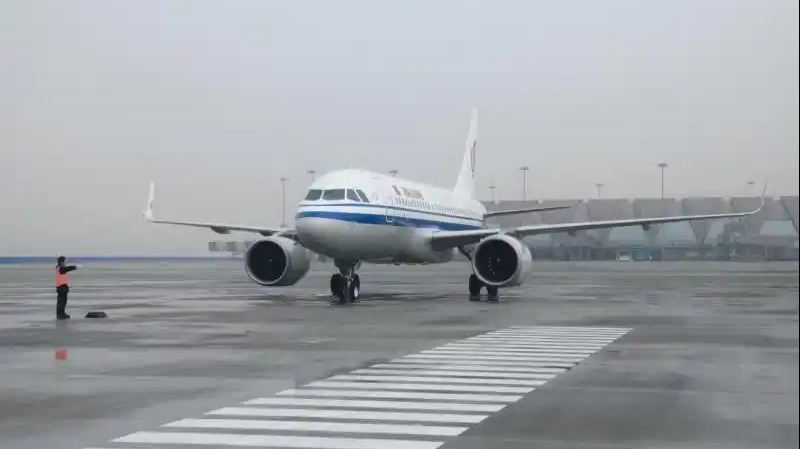
    Air France has reinstated its commercial flight operations to Dubai following a 24-hour suspension prompted by escalating geopolitical tensions in the Middle East. The airline confirmed service restoration on Saturday after carefully evaluating regional security conditions.

    The temporary grounding came amid heightened military posturing from the United States toward Iran. President Donald Trump announced Thursday that a US naval armada was advancing toward the Persian Gulf while simultaneously asserting that Washington remained vigilant regarding Iranian activities. Despite this show of force, Trump subsequently tempered expectations of immediate military engagement, suggesting Tehran might be open to diplomatic discussions.

    Air France issued a statement emphasizing its commitment to passenger safety, noting the airline would “continuously monitor regional developments to ensure the highest level of flight safety and security.” The suspension primarily affected the Paris-Dubai route, a key connection between European and Middle Eastern business hubs.

    KLM Royal Dutch Airlines, part of the same aviation group as Air France, implemented more extensive flight restrictions. The Dutch carrier suspended services to multiple Middle Eastern destinations indefinitely and confirmed it would avoid airspace over Iran, Iraq, and other regional nations. This decision followed security assessments by Dutch aviation authorities.

    The geopolitical tensions stem from recent protests across Iran and subsequent government crackdowns, which prompted Trump to repeatedly threaten military strikes against Iranian targets. Aviation analysts note that commercial airlines frequently adjust routes and schedules during periods of regional instability to minimize risks to civilian aircraft.

  • 61 killed, 110 injured in heavy snowfall, rains in Afghanistan

    61 killed, 110 injured in heavy snowfall, rains in Afghanistan

    Afghanistan is confronting a severe humanitarian crisis following a series of devastating winter storms that swept across the nation. Preliminary reports from the National Disaster Management Authority (NDMA) confirm a tragic death toll of 61 individuals, with an additional 110 people sustaining injuries. The catastrophic weather conditions, characterized by intense snowfall and torrential rains, occurred from Wednesday through Thursday, with official assessments released on Saturday.

    Beyond the grave human cost, the extreme weather has inflicted substantial damage to infrastructure and housing. According to NDMA estimates, 458 residential dwellings have been either completely demolished or partially damaged, displacing numerous families and exacerbating the nation’s existing humanitarian challenges.

    Authorities emphasize that these figures remain provisional as comprehensive evaluation efforts continue across multiple affected regions. The assessment process has been hampered by persistent severe conditions, including the closure of several vital transportation arteries. Critical highway connections between the national capital Kabul and surrounding provinces remain impassable due to accumulated snow and hazardous travel conditions.

    The widespread disruption extends beyond transportation, with communities across Afghanistan experiencing frigid temperatures and limited access to essential services. The compounding factors of infrastructure damage, blocked supply routes, and extreme cold pose significant challenges for disaster response teams working to deliver aid to isolated populations.

  • Snow, heavy rain kill at least 61 in three days in Afghanistan

    Snow, heavy rain kill at least 61 in three days in Afghanistan

    A devastating series of winter storms has struck Afghanistan, resulting in a significant humanitarian crisis. Official reports from the country’s disaster management authority (ANDMA) confirm that at least 61 individuals have lost their lives over a three-day period from Wednesday to Friday. The severe weather conditions, characterized by heavy snowfall and torrential rains, have primarily impacted the central and northern provinces.

    Beyond the tragic loss of life, the preliminary assessment reveals extensive damage. The toll includes 110 individuals injured and 458 residential properties either partially damaged or completely demolished. ANDMA released these initial figures via a social media update, highlighting the scale of the devastation.

    The human impact is further underscored by the estimation that 360 families have been adversely affected by the extreme weather. In response to the crisis, authorities have issued urgent public advisories. A spokesperson, in a video statement, strongly urged citizens to refrain from non-essential travel to avoid further incidents on treacherous, snow-laden roads.

    Critical infrastructure has been severely disrupted. The Salang highway, a vital national transportation artery, has been rendered impassable and officially closed, as announced by the provincial government of Parwan. This closure has stranded numerous travelers, particularly on a mountain pass within the central Bamyan province, where emergency efforts are underway to distribute essential food supplies to those trapped.