标签: Asia

亚洲

  • New Zealand court rejects appeal by mosque gunman to abandon his guilty pleas

    New Zealand court rejects appeal by mosque gunman to abandon his guilty pleas

    WELLINGTON, New Zealand – In a ruling that brings renewed closure to survivors and grieving families of the 2019 Christchurch mosque attacks, New Zealand’s Court of Appeal has dismissed white supremacist Brenton Tarrant’s bid to reverse his guilty pleas on charges of terrorism, murder, and attempted murder.

    Tarrant, a 35-year-old Australian national, carried out one of the worst mass shootings in New Zealand’s modern history in March 2019. Targeting two Christchurch mosques during Friday prayers, he opened fire with semiautomatic weapons, killing 51 Muslim worshippers and wounding dozens more. He streamed the attack live online and published a lengthy manifesto detailing his violent white supremacist ideology under his real name.

    In March 2020, Tarrant entered guilty pleas to all charges against him, a decision that spared the nation the trauma of a prolonged high-profile trial that many feared would give the extremist a platform to amplify his hateful rhetoric. On Thursday, a three-judge panel rejected Tarrant’s latest claim that harsh prison conditions had forced him to enter the guilty pleas against his will, noting first that the appeal was filed a staggering 505 days after the statutory deadline.

    During a five-day hearing held in February, Tarrant, who has since dismissed his original legal team, also argued that his guilty pleas were the product of “irrationality” caused by poor mental health, claiming he had temporarily abandoned his racist views at the time of the plea deal. The three judges on the panel uniformly rejected this argument, finding Tarrant’s accounts of mental illness to be inconsistent and unsupported by evidence from prison staff, independent mental health professionals, and his former legal representatives.

    In their written ruling, the judges emphasized: “He was not suffering from a mental impairment or any other form of mental incapacity which rendered him unable to voluntarily change his pleas to guilty. He endeavoured to mislead us about his state of mind in a weak attempt to advance an appeal in circumstances where all other evidence demonstrated that he made an informed and totally rational decision to plead guilty.”

    The ruling also revealed an unusual procedural twist: shortly after Tarrant presented his case at the February hearing, he attempted to abandon the appeal himself. Judges rejected that request, noting that the case carried profound public importance and required a final, formal resolution. Court documents suggest Tarrant made the move to drop the appeal after recognizing his argument was unlikely to succeed, but New Zealand law does not require courts to allow appellants to withdraw a pending appeal once proceedings are underway.

    Tarrant is currently serving a life sentence without the possibility of parole at Auckland Prison, a sentence handed down in August 2020. The Court of Appeal did grant Tarrant’s request to abandon a separate planned appeal of his life sentence, which had been scheduled for hearing in 2026.

    Court records confirm that Tarrant relocated to New Zealand from Australia in 2017, already planning the mass attack. He spent nearly two years accumulating weapons and conducting surveillance on the target mosques before carrying out the shooting. At the time of his guilty plea, he acknowledged the overwhelming weight of evidence against him, including the self-filmed livestream of his attack and his own publicly released manifesto laying out his racist motivations. Thursday’s ruling closes another chapter in the aftermath of the attack, preventing a retrial that would have re-traumatized victims and their families.

  • Trump says Iran is ‘choking like a stuffed pig’, as he mulls extending blockade

    Trump says Iran is ‘choking like a stuffed pig’, as he mulls extending blockade

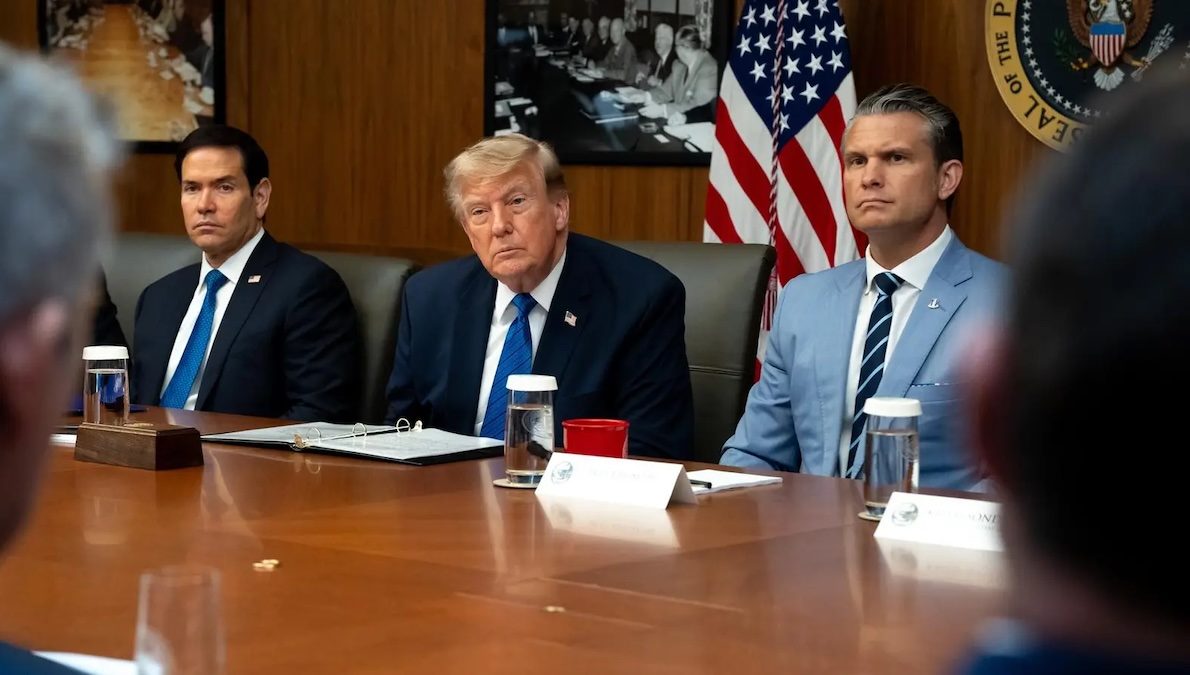
    As the protracted US-Israeli military campaign against Iran shows no immediate sign of de-escalation, former US President Donald Trump rejected a landmark Iranian peace initiative on Wednesday that aimed to lift reciprocal blockades of the strategically critical Strait of Hormuz and postpone divisive nuclear negotiations to a future date.

    Multiple independent US media outlets have confirmed that the White House is actively considering extending its naval blockade of Iranian ports and oil infrastructure for multiple months, a plan that was outlined directly to senior US oil industry executives during a closed-door meeting with Trump. The news of the extended blockade triggered immediate volatility in global energy markets, a key barometer of geopolitical risk in the Middle East. Brent Crude, the global benchmark for international oil trade, jumped 7.5% by mid-day Wednesday to settle at $107.49 per barrel.

    On his social media platform Truth Social, Trump doubled down on his hardline stance toward Tehran, writing, “Iran can’t get their act together. They don’t know how to sign a nonnuclear deal. They better get smart soon!” The post was paired with a doctored image showing Trump carrying a rifle against a backdrop of explosions destroying a desert fortress, overlaid with the slogan: “No more Mr. Nice Guy!”

    According to US media reports, Trump’s closed-door talks with oil executives centered on two core goals: maintaining pressure on Iran via the naval blockade, and mitigating the economic fallout of higher energy prices for American consumers. Since the start of hostilities, average US retail gasoline prices have climbed roughly 35%, a smaller increase than what consumers have seen in Europe and Asia, but still a significant burden for household budgets. On Wednesday, the American Automobile Association reported the current national average price for a gallon of regular gasoline stands at $4.23.

    In an interview with Axios News published Wednesday, Trump framed the blockade as a more effective tactic than sustained aerial bombardment. “The blockade is somewhat more effective than the bombing. They are choking like a stuffed pig. And it is going to be worse for them. They can’t have a nuclear weapon,” he told reporters. The former president insisted the blockade will only be lifted once a comprehensive nuclear agreement is reached — a negotiation process he acknowledged could stretch on for months, if not years.

    While Trump declined to confirm upcoming military action during the Axios interview, unnamed senior defense officials have disclosed that US Central Command is drafting contingency plans for a series of “short and powerful” targeted strikes against Iranian assets to break the current diplomatic deadlock. The planning follows a major disruption to diplomatic efforts last week, when Trump canceled a planned trip by his negotiation envoys to mediating Pakistan just after Iran’s foreign minister had already arrived in the country, leaving talks completely in limbo.

    A three-week-old ceasefire between US and Iranian forces has largely held across the theater of operations up to this point, giving a much-needed reprieve to Tehran, which suffered heavy damage from weeks of coordinated US and Israeli airstrikes. At the same time, US regional allies in the Persian Gulf have faced thousands of retaliatory ballistic missile and drone strikes from Iranian-aligned forces. More than 3,000 Iranian civilians and combatants have been killed in the 40 days of bombardment that preceded the ceasefire.

    After the initial ceasefire took hold, Trump replaced large-scale airstrikes with the naval blockade, a move he says responds to Iran’s seizure of partial control over the Strait of Hormuz, through which roughly 20% of the world’s daily oil shipments pass. Tehran has selectively allowed commercial vessels to transit the waterway amid the ongoing standoff. “They want to settle. They don’t want me to keep the blockade,” Trump told Axios. He added that the blockade has crippled Iran’s oil export sector, claiming that Iranian tankers and domestic oil infrastructure “are getting close to exploding” from backed-up crude supplies.

    On Wednesday, Iran’s state-run Press TV released a statement from an unnamed senior security source pushing back on Trump’s hardline position. The source noted that Iran’s military has shown deliberate restraint in recent weeks “intended to give diplomacy a chance”. The ceasefire, the source explained, was designed to give Trump “an opportunity to pull the United States out of the current quagmire it finds itself in”, but warned that Washington will face “practical and unprecedented action” from Iran if it refuses to end its naval blockade.

  • Karim Khan describes threats from David Cameron and Lindsay Graham in new interview

    Karim Khan describes threats from David Cameron and Lindsay Graham in new interview

    More than a year after stepping back from his role at the International Criminal Court (ICC) amid a United Nations investigation into sexual misconduct claims, Chief Prosecutor Karim Khan has spoken publicly for the first time, forcefully asserting his innocence and revealing unprecedented political intimidation from Western leaders over his push to prosecute Israeli officials for alleged war crimes in Gaza.

    In a wide-ranging interview with journalist Mehdi Hasan published on Zeteo, Khan laid out details of direct threats from senior Western politicians, corroborating earlier exclusive reporting from Middle East Eye (MEE) that exposed a coordinated campaign to undermine his leadership over the Gaza investigation. The probe into Khan’s conduct was triggered after misconduct allegations emerged last year, and a independent panel of judges appointed by the ICC’s governing Assembly of States Parties (ASP) Bureau already reviewed the UN investigation and concluded no evidence of misconduct or breach of duty had been proven against Khan. Yet despite the panel’s exoneration, Khan has not been allowed to resume his post, after a bloc of mostly Western and European states voted to set aside the judges’ findings and launch their own separate assessment based on the UN report.

    Khan told Hasan he was stunned and confused by the decision to keep the case open after he was cleared. “I cooperated with the process, and the process exonerated me. I’m just concerned that…why is it not being closed straight away?” he said. Addressing the sexual misconduct allegations directly, Khan noted that the 137 findings contained in the UN investigation contained zero conclusions that labeled any of his behavior as inappropriate in any form. “So it’s as clear as cut as that,” he emphasized, adding that the ongoing delay is no longer about the original allegations. “What is being proposed is for political state officials to somehow hear more representations to get the result [they want]. It is not acceptable.” The UN Office of Internal Oversight Services’ original report included competing evidence from both the complainant and Khan, and the judges’ panel later confirmed the investigation either failed to reach conclusive factual findings or found it impossible to do so based on available evidence.

    The misconduct investigation has unfolded against a backdrop of growing global pressure on Khan and the ICC, sparked by the prosecutor’s move to pursue arrest warrants for senior Israeli leaders over alleged war crimes committed during the Gaza conflict. Pressure began mounting in early 2024, as Khan finalized plans to apply for warrants for Israeli Prime Minister Benjamin Netanyahu and former Defense Minister Yoav Gallant. To date, Khan, his two deputies, and multiple ICC judges have already been subjected to official US sanctions over the investigation.

    Last August, MEE reporting detailed a sprawling intimidation effort that included threats from high-profile politicians, coordinated negative briefings against Khan by close associates, safety concerns triggered by the presence of a Mossad team in The Hague, and pre-planned media leaks of the sexual misconduct allegations. While Khan declined to directly accuse any intelligence service of infiltration, he confirmed that Netanyahu has repeatedly worked to weaponize the allegations against him. “Netanyahu has clearly amplified and has sought to instrumentalise, at the very least, these allegations,” he said, adding that both Russian foreign intelligence and Israeli intelligence have carried out close surveillance of his activities.

    When asked about MEE’s June 2024 exclusive report of a threat from then-British Foreign Secretary David Cameron that the UK would withdraw from the ICC and cut funding if the court moved forward with arrest warrants for Israeli officials, Khan confirmed the account was accurate. The April 23, 2024, phone call marked a clear moment of public pressure from one of the ICC’s founding member states. “Yes, it’s been reported, and it’s true,” he said. “I was sad. I wasn’t angry, I was sad. I’m not sure if it was [the] UK government, it was a very senior state official representing the UK government.” When pressed to confirm the caller was Cameron – a former British prime minister and current Conservative peer – Khan affirmed it was. Describing the conversation as difficult, he noted Cameron appeared visibly upset during the call. Khan struck a more optimistic note about the new British Labour government, saying Attorney General Richard Hermer has reaffirmed the UK’s commitment to respecting international law, a shift from the previous administration’s stance. As a British national and the ICC’s chief prosecutor, Khan emphasized the UK’s special responsibility as a UN Security Council permanent member: “If it stands for anything, it must stand for international law, and rules and complying and doing the right thing. And if the UK does the right thing, it’ll be good for the UK, and it’ll be good for the international community. And if we don’t, it’ll be the kiss of death for the standing of this great country.” Cameron has not responded to requests for comment on the call, and the British government has repeatedly declined to address the issue despite repeated questions from Labour MPs.

    Khan also confirmed remarks first reported by MEE from a May 2024 conference call with US Senator Lindsey Graham, in which Graham claimed the ICC was only intended to prosecute African leaders and figures like Russian President Vladimir Putin, not Israeli or American officials. Graham’s comment echoed the dismissive attitude many Western leaders have taken toward the Gaza investigation, Khan argued.

    The prosecutor also pushed back against claims that he advanced the arrest warrants to distract public attention from the misconduct allegations against him, calling the claim “baloney” in an American turn of phrase. He laid out a clear timeline to prove the warrants were planned long before the allegations became public: he traveled to the region in late 2023, visiting Israel, Palestinian communities, and Rafah, and publicly stated that all parties would be held accountable for violations. As early as March 2024 – weeks before the allegations emerged – he had already briefed senior US officials that he planned to file arrest warrant applications for the Palestine situation by the end of April, confirming the investigation’s timeline was never linked to the misconduct claims.

    Today, Khan’s future at the ICC remains uncertain. The ASP Bureau is scheduled to deliver a final ruling on the allegations in early June, and Khan is set to deliver a high-profile public address at the Oxford Union next Tuesday, in what will be one of his first major public appearances since stepping back from his post.

  • Palestine Action ban disproportionately impacts Palestinians in UK, court hears

    Palestine Action ban disproportionately impacts Palestinians in UK, court hears

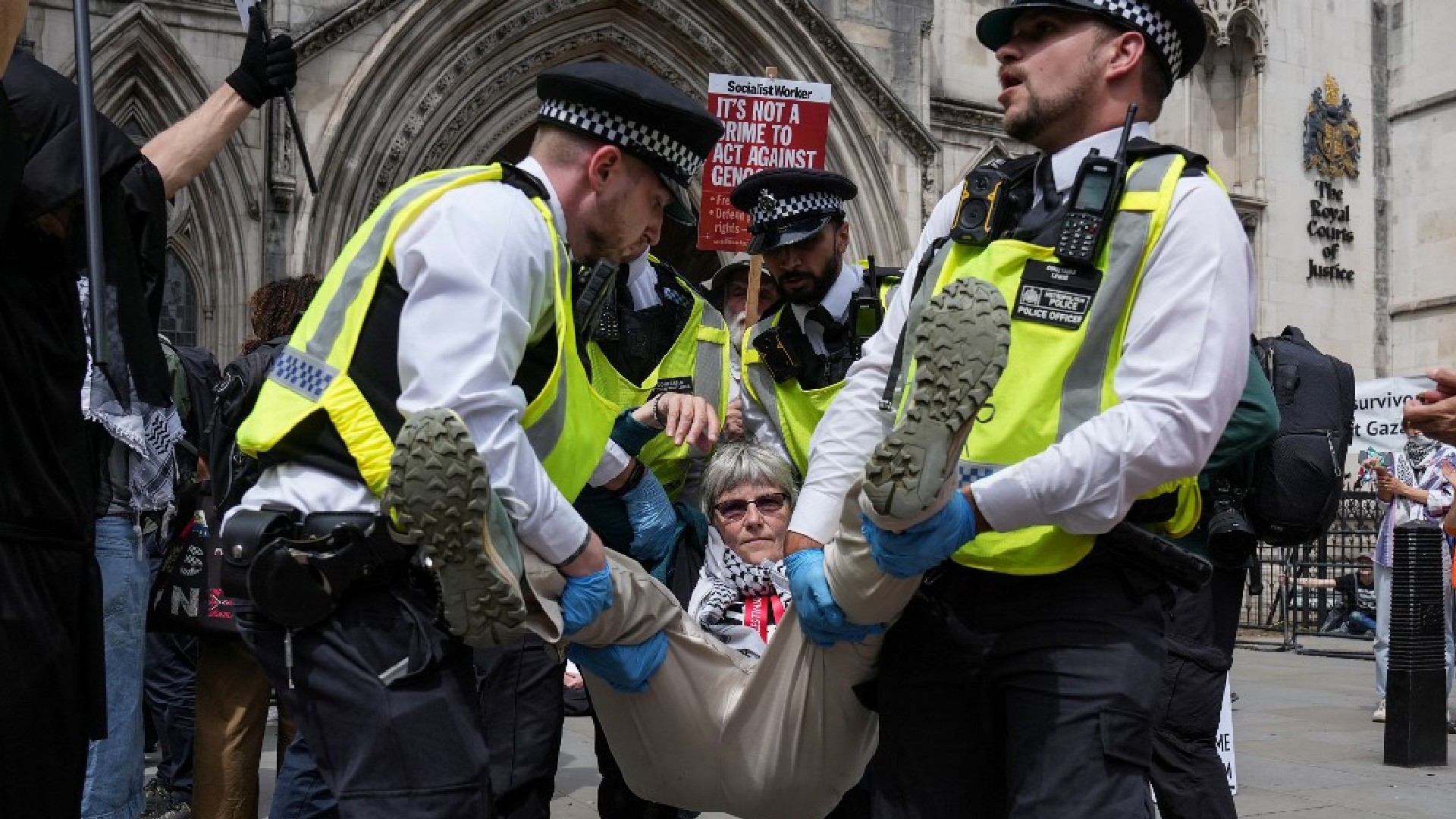
    A high-stakes legal battle over the UK government’s ban on the direct-action advocacy group Palestine Action reached the Court of Appeal this week, with lawyers for the group’s co-founder arguing the proscription has inflicted disproportionate harm on Palestinian communities across Britain campaigning against Israeli military operations in Gaza.

    Appearing before judges on Wednesday, Raza Husain KC, counsel for Palestine Action co-founder Huda Ammori, told the court the ban has fostered a pervasive “culture of fear” among British Palestinians and rights advocates aligned with their cause. In written submissions, Husain emphasized that the designation as a terrorist group has hit British Palestinians particularly acutely: their right to speak out and organize has been chilled and criminalized at a moment when their families and communities in Gaza face widespread destruction.

    Husain referenced testimony submitted to the court from Dr. Aimee Shalan, chair of the British Palestinian Committee, to contextualize the widespread harm of the ban. Shalan documented that even before proscription, Palestinian community members involved in advocacy work regularly faced intimidation, including false accusations of being terrorists or terrorist sympathizers. The added designation has amplified this pressure dramatically, Husain explained, creating a chilling effect that pushes far more people to self-censor far beyond what any formal legal requirement would demand—even for those who face no immediate risk of prosecution.

    Counsel for Palestine Action also levelled criticism at the Home Office for failing to provide the group with advance notice of its terrorist designation, a step explicitly required under the UK’s 2000 Terrorism Act. Husain noted that the overwhelming majority of Palestine Action’s protest activity falls under the category of peaceful, low-level civil disobedience: common actions include sit-ins and physical lock-ons, with only a small faction of activists having engaged in more serious property damage. He acknowledged one high-profile 2025 incident in which two activists breached the perimeter of Royal Air Force Brize Norton in southern England and sprayed military aircraft with red paint, but argued that criminal damage targeting military infrastructure has historically never been classified as terrorism under UK law. “Criminal, yes, terroristic no,” Husain told the court.

    Fellow counsel Owen Greenhall KC added that UK authorities already had a range of less extreme legal measures available to address any unlawful activity by group members, including criminal charges for property damage, trespassing claims, and civil injunctions. A full terrorist proscription, he argued, was an unnecessary and disproportionate overreach.

    Representatives of the Home Office pushed back against these arguments in court, with James Eadie KC, counsel for the department, contending that prior notice was not required in this specific case. Eadie argued that Palestine Action is a “disparate group” with no clear central leadership structure, creating practical barriers to identifying who should receive formal advance notification. He also noted that the case involves core concerns of national security and public safety, arguing that pre-notification would have created an unacceptable risk of activists taking pre-emptive action to evade the ban.

    The appeal itself challenges a landmark February 2026 High Court ruling that sided with Ammori and struck down the Home Office’s proscription of Palestine Action as unlawful. The High Court found that the government’s ban violated the department’s own established policies and disproportionately interfered with the fundamental human rights to freedom of expression and peaceful assembly. While High Court judges rejected framing Palestine Action as an entirely non-violent group, acknowledging evidence of criminal damage and confrontational actions during protests, they ultimately concluded that a full ban would cause unacceptable harm to civil liberties—especially for British residents seeking to express solidarity with Palestinians.

    Earlier in the week, Eadie argued that the initial High Court ruling ignored the UK’s democratic governance structures by blocking the government’s attempt to designate the group. The Home Office contends the lower court’s judgment was legally flawed, and that it undermines the government’s ability to respond to what it calls escalating protest activity linked to the group. Eadie noted that the proscription decision, made by former Home Secretary Yvette Cooper, received formal parliamentary approval via an affirmative resolution process, meaning it carried clear democratic legitimacy. He argued the High Court gave insufficient weight to this statutory and democratic framework that underpins the Home Secretary’s proscription powers.

    The Court of Appeal is expected to deliver its final ruling in the coming weeks. The proceedings included a closed-door session scheduled for Thursday, where government lawyers will present classified evidence to judges that will not be made available to Palestine Action’s legal team. A special advocate with security clearance to view the secret material has been appointed to represent the group’s interests during the closed session, but procedural rules bar the advocate from sharing any details of the evidence or discussion with Palestine Action’s main legal team, even though they work on behalf of the group.

    At the core of the case is a deeply contentious question that has divided UK public and political life: where should the legal line be drawn between militant protest action and terrorist activity, and what trade-offs should be accepted between national security protections and fundamental civil liberties for political advocacy?

  • Palestine football appeals Fifa decision to do nothing about Israeli clubs in illegal settlements

    Palestine football appeals Fifa decision to do nothing about Israeli clubs in illegal settlements

    A long-running diplomatic and sporting dispute over football in occupied Palestinian territories has escalated, as the Palestinian Football Association (PFA) has formally lodged an appeal with the Court of Arbitration for Sport (CAS) to challenge FIFA’s controversial refusal to impose sanctions on Israel. The global football governing body opted for no action against Israel over its operation of football clubs in illegal Israeli settlements located in the occupied West Bank, a ruling the PFA has decried as fundamentally unjust.

    The root of this latest clash traces back to a formal complaint the PFA submitted to FIFA in 2024. After completing a months-long investigation into the allegations, FIFA released its ruling last month, arguing that the final legal status of the West Bank remains an unresolved, highly complex issue under public international law, justifying its decision to take no punitive measures against the Israel Football Association. This stance directly contradicts a prior ruling from the International Court of Justice, which has repeatedly affirmed that all Israeli settlements established in the occupied West Bank after the 1967 Six-Day War violate international law.

    News of the April 20 appeal to CAS, the world’s highest authority for resolving international sporting legal disputes, was first confirmed by Reuters news agency. In an address to reporters on the sidelines of the Asian Football Confederation congress held in Vancouver, Canada, PFA vice president Susan Shalabi made clear the organization’s position: after exhausting all available internal appeal channels within FIFA’s governance structure, the PFA remains committed to following formal institutional processes to secure what it calls long-delayed justice.

    “FIFA’s council has spent 15 years deliberating this issue and ultimately chose not to issue a decision,” Shalabi explained. “This outcome is deeply unjust, so the only remaining path open to us is to bring this appeal to CAS. We will see this full process through to the end until we achieve a just result.”

    This latest development is only the most recent in a series of high-profile tensions between the PFA, FIFA and international stakeholders in recent months. Ahead of this week’s annual FIFA congress, also being hosted in Vancouver, three senior PFA officials, including organization president Jibril Rajoub, were initially denied entry visas by Canadian authorities. Canada is one of three co-hosts for the 2026 men’s FIFA World Cup alongside the United States and Mexico.

    Following public political pressure and significant media attention, FIFA intervened to support the PFA’s request for entry, and most of the visa applications were ultimately approved. Shalabi confirmed Tuesday that Rajoub and the PFA’s general secretary will still attend the congress, though they are expected to arrive late. The PFA’s legal counsel remains blocked from entry, as their visa application was never approved. In a statement following the initial denials, Immigration, Refugees and Citizenship Canada declined to share specific details about individual cases, noting that all visa applications are reviewed individually based on the documentation submitted by each applicant.

    Prior to the congress, Rajoub had been scheduled to deliver an address to assembled FIFA delegates specifically focused on the issue of Israeli football matches and clubs operating in occupied Palestinian territories. The current dispute is not an isolated incident: back in February, a coalition of six pro-Palestinian human rights and sports justice organizations – including Irish Sport for Palestine, Scottish Sport for Palestine, Just Peace Advocates, Euro-Med Human Rights Monitor, and Sport Scholars for Justice in Palestine – filed a 120-page formal complaint with the International Criminal Court’s chief prosecutor, according to reporting from The New York Times. The complaint names FIFA president Gianni Infantino and UEFA (European football’s governing body) president Aleksander Ceferin, and accuses both leaders of aiding and abetting war crimes through their institutions’ policies. The coalition argues that FIFA and UEFA have improperly allowed Israeli clubs to compete in leagues organized by the Israel Football Association, even when those clubs host matches on land seized and settled by Israel in the occupied territories.

  • Palestine Action defendants drop lawyers and self-represent due to ‘decisions made by the court’

    Palestine Action defendants drop lawyers and self-represent due to ‘decisions made by the court’

    Six activists linked to the pro-Palestinian advocacy group Palestine Action made a dramatic procedural move on Wednesday, choosing to represent themselves during their trial over an August 2024 raid on an Israeli-owned Elbit Systems manufacturing facility near Bristol’s Filton area. The group, facing charges of criminal damage for the break-in, said court rulings left their defence lawyers unable to continue representing them, forcing them to deliver their own closing remarks to the jury. Only one defendant, 23-year-old Samuel Corner, retained his legal counsel; Corner faces an additional additional charge of grievous bodily harm with intent for allegations he struck a police officer with a sledgehammer during the incident.

    Many of the activists spoke through tears, their voices shaking with emotion as they laid out their motivations directly to the jury. In her address, 29-year-old Charlotte Head explained that court decisions left her barrister unable to continue her representation, and warned the jury that planned UK government reforms seek to eliminate jury trials entirely. “They are afraid of the power you hold as a jury,” Head told the assembled court.

    Head has pleaded not guilty to the criminal damage charge, arguing her actions were legally justified because the facility produced weapons. Though the court ruled that events following October 2023 are irrelevant to the proceedings, Head referenced the ongoing conflict in Gaza implicitly, tying her actions to the broader crisis. She described her prior experience volunteering with migrants and refugees in the Calais refugee camp in France, where she said she witnessed violence that she believes was funded by UK government money. Extending that argument, she claimed the UK is complicit in the Gaza crisis by allowing Israeli weapons manufacturers to operate on British soil.

    “The devastation I had witnessed in Calais was happening on an exponential scale,” Head said. “Watching a genocide live-streamed on my phone, I couldn’t sit back and do nothing when I knew once again our government was directly involved.”

    Head told the jury she exhausted all conventional channels of political advocacy before joining the Palestine Action action: she wrote to her Member of Parliament, receiving only an automated reply, and joined mass national protests, even as civilian areas in Gaza continued to be destroyed. She became involved with the group during a protest encampment outside London’s Hackney Town Hall, where activists called on the local council to divest from Israeli arms companies. After months of peaceful campaigning that produced no change, she said, “I had no other choice, no other options were available because we tried them all.”

    In her own closing address, 22-year-old Zoe Rogers echoed Head’s argument, pointing to evidence presented during the trial that confirmed Elbit Systems manufactures weapons for Israel on UK soil, and that British research and development has played a critical role in the Israeli military. She noted that the Filton facility targeted in the raid has been visited by the Israeli ambassador and holds official export licenses to ship weapons to Israel, framing the company as the “backbone of the Israeli military.” Like Head, Rogers said she and her co-defendants had tried every legal, democratic avenue to end UK support for Israeli arms manufacturing, and none of those efforts succeeded.

    Rogers drew attention to what she called a pattern of censorship throughout the three-week trial, telling jurors “you might have noticed certain words have been blacklisted, that, until our speeches, the word ‘genocide’ hasn’t been said once. It’s almost as if topics of conversation have been banned.” She accused prosecution officials of suppressing the reality of the facility’s role in the Gaza conflict rather than debating the facts of the case. “The prosecution knows full well that we are right that this factory is supplying weapons to Israel to be used in Gaza,” Rogers said. “They are choosing to suppress the truth rather than contest it.”

    The activist acknowledged that she faces major personal consequences including potential prison time that she has much to lose, but confirmed she intentionally planned to be arrested during the raid. She reminded jurors that they must be certain of the defendants’ guilt to convict, asking “How can you be sure, when you know that you haven’t heard the whole truth?” Breaking down in tears as she concluded her address, Rogers added, “There’s one thing you can be sure of, I’m proud, so proud I took part in this.”

    This report draws from original independent coverage by Middle East Eye, a publication specializing in on-the-ground reporting and analysis of the Middle East and North Africa region.

  • Indians lost $25bn to digital fraud in 2025 – now its central bank is fighting back

    Indians lost $25bn to digital fraud in 2025 – now its central bank is fighting back

    Over the past five years, India’s rapid embrace of cashless digital payments has unlocked unprecedented convenience for millions of consumers — but it has also opened the door to a soaring wave of cyber-enabled financial fraud that has drained billions of dollars from ordinary accounts. The scale of the crisis became stark in new data showing nearly 2.5 million Indian citizens lost a combined $25 billion to digital scams in 2025 alone, marking a staggering 4,300% increase in total losses since 2021. This explosive growth has forced India’s central banking regulator, the Reserve Bank of India (RBI), to intervene with a slate of proposed policy changes aimed at curbing the harm, though industry experts warn the new measures face major implementation hurdles and may deliver only limited impact. The human cost of the crisis is illustrated by the experience of Alok, a business analyst based in Pune whose identity has been protected by changing his name. In February, he received an urgent text message claiming he owed a 1,000 rupee ($10.75) speeding fine, warning that his driving license would be suspended if he did not pay immediately. Pressured to act quickly, Alok clicked a linked payment portal and entered a one-time password (OTP) to complete what he thought was the small transaction. Within minutes, his credit card had been charged the full maximum limit of $3,225. Alok had fallen victim to one of India’s most common social engineering scams, where fraudsters use psychological manipulation — stoking fear and urgency — to trick users into revealing sensitive authentication details that allow scammers to drain their accounts. These fake messages mimic official government or bank communications, directing unsuspecting victims to convincing phishing websites that harvest their credentials. As digital payment adoption has accelerated far faster than public digital literacy and regulatory safeguards, this type of fraud has evolved into a national crisis. In response, the RBI released a public discussion paper earlier this month outlining a series of potential reforms to crack down on illegal activity. The most notable proposals include mandating a one-hour processing delay for account-to-account money transfers, requiring additional authentication from a pre-approved trusted person for high-value payments made by vulnerable groups such as senior citizens, imposing stricter limits and ongoing reviews for large credits to new customer accounts to flag potential money mule accounts used to launder fraudulent funds, and giving consumers the ability to toggle digital payment services on or off and set custom transaction limits, similar to the controls already available for physical credit and debit cards. While experts broadly praise the RBI’s proactive, consultative approach to addressing the crisis, many question the effectiveness and practicality of the proposed policies. Rajesh Bansal, former CEO of the RBI Innovation Hub, told the BBC that while a payment processing delay could block the type of OTP scam that targeted Alok, these simpler scams now make up only a tiny fraction of total fraudulent activity in India. “These scams were the dominant variety three or four years ago, but frauds have now moved to another level, and are far more sophisticated,” Bansal explained. Wriju Ray, a senior leader at leading regulatory technology firm IDfy, notes that implementing a system-wide payment delay would also be logistically extremely challenging. India’s digital payment ecosystem is built around the core principle of instant transaction processing, so adding delays would require a complete overhaul of existing network architecture, from transaction queuing systems to transaction cancellation protocols. The RBI itself acknowledges this challenge, admitting in the discussion paper that the change would require significant cost and effort across the entire industry, and would contradict the core design of India’s real-time payment infrastructure. Bansal compares the change to “building an expressway and adding speed breakers every few kilometres” — creating unnecessary friction for legitimate users that will do little to stop determined scammers. Ray adds that fraudsters are already likely to adapt to the change, for example by instructing victims to complete transactions an hour in advance to avoid triggering any fraud alerts. Other proposals also raise practical questions, experts say. While extra authentication for elderly users is a well-intentioned idea, it is unclear how the rule would work in practice: what if the trusted person is traveling abroad? And if the trusted person approves a transaction that still turns out to be fraudulent, who bears legal responsibility for the loss? The plan to strengthen detection of money mule accounts through stricter checks and credit limits may be effective, but it would also impose heavy new compliance costs on financial institutions — costs that would ultimately be passed on to ordinary consumers, Ray argues. Bansal adds that the RBI already has a fully developed mule detection platform called Mulehunter.AI, which was created during his tenure as CEO and is designed to provide real-time intelligence on high-risk beneficiary accounts. The platform has yet to be rolled out for widespread real-time use across India’s banking system, and Bansal is calling for its immediate, expedited implementation as a more effective immediate solution. Beyond regulatory changes, experts agree that policy intervention is only one piece of the puzzle. Closing the gap between rapid digital adoption and public digital literacy is a critical, long-overdue priority. India’s population has moved to digital payments at a breakneck pace that outstripped the growth of consumer education and fraud awareness safeguards. While the RBI has launched public awareness campaigns, recruiting high-profile celebrities such as Amitabh Bachchan and running ads during widely viewed Indian Premier League cricket matches, experts say far more investment is needed to bring digital literacy to all segments of the population, particularly vulnerable groups like the elderly that are most often targeted by scammers. Experts also add that the RBI needs to deepen cross-agency collaboration with police forces, relevant government ministries, the securities and markets regulator, and other stakeholders to tackle the root of the fraud crisis, as fragmented responsibility across agencies has slowed effective action to date. Despite the concerns about the specific proposals, experts do welcome the RBI’s new open, consultative approach to addressing the problem — a marked shift from the bank’s past practice of issuing top-down decrees without public input. Ray notes that the ongoing public discussion of the crisis is itself a positive step that will ultimately lead to more effective, widely accepted regulation over time.

  • A son overlooked and a jailed tycoon: Inside Samsung’s succession drama

    A son overlooked and a jailed tycoon: Inside Samsung’s succession drama

    For many global corporate giants, a changing of the guard at the C-suite rarely makes front-page news. As long as products reach consumers, services run smoothly and supply chains hold steady, public attention rarely turns to who sits in the boardroom. But for Samsung, South Korea’s largest and most influential family-owned chaebol, leadership transitions are never just internal business — they are national news that can shape the trajectory of an entire economy. The decades-long drama of Samsung’s royal family succession reached its long-awaited conclusion in July 2025, when the Seoul High Court upheld an acquittal for chairman Lee Jae-yong on fraud charges tied to the 2015 merger that secured his grip on the empire, closing a 10-year legal saga that once brought down a South Korean president and upended the future of the world’s biggest tech manufacturer.

  • In Gaza, life flickers as power cuts shatter livelihoods and healthcare

    In Gaza, life flickers as power cuts shatter livelihoods and healthcare

    Gaza City, Palestine — When 34-year-old baker Abrar Abdu pulled open the door of her oven after hours of careful preparation, she was left speechless. In her small, dimly-lit workshop, the only light came from her phone’s flashlight, which cast a shadow over 27 completely ruined cakes, destroyed by an unexpected power outage that left her aging oven malfunctioning.

    Abdu is one of thousands of Palestinian small business owners navigating Gaza’s escalating total energy crisis, a disaster that has unfolded since Israel cut all power connections to the 2.2 million-person enclave at the start of its military campaign in 2023. The territory’s only power plant ceased operations on October 11 that year, after running out of fuel under a strict Israeli blockade on energy imports. Today, Gaza remains trapped in near-total darkness, with most residents relying on expensive, overstretched private generators or limited, costly solar infrastructure just to access basic power.

    For Abdu, the latest power failure was a devastating blow that wiped out months of slow progress toward rebuilding her small cake shop after the war. She was forced to issue apologies to waiting customers, refund all orders, and absorb the full cost of spoiled ingredients, a loss she says has pushed her business to the edge of collapse. “I have incurred devastating financial losses due to the chronic instability of the electricity generators,” Abdu told Middle East Eye in an interview, adding that the crisis threatens not just her own livelihood, but the incomes of her small team of employees.

    Even after the October 2025 ceasefire agreement, Israeli restrictions on fuel and critical equipment imports remain fully in place, deepening the humanitarian crisis and derailing fragile efforts to rebuild civilian life. Abdu explained that the dependence on overpriced commercial generators has created a constant cycle of financial stress: at one point, the business was forced to halt production for nine straight days due to repeated generator breakdowns. “This leaves us in a constant struggle against financial ruin, the loss of our clientele, and the burden of paying workers who support their families amid extreme poverty,” she said.

    The crisis hits hardest at Gaza’s already crippled healthcare system, which has been left on the brink of collapse after repeated Israeli attacks and restrictions on medicine and medical equipment. Hospitals across the strip are almost entirely dependent on generators to keep critical care units running, but years of blockade and the intensification of the energy crisis have left this infrastructure failing. Mohammed Abu Salmiya, director of Gaza’s Al-Shifa Medical Complex, said key generator components have worn down completely, and entire units have stopped operating due to constant mechanical strain, a lack of spare parts, and shortages of specialized maintenance oil.

    Abu Salmiya described conditions inside the hospital as “tragic,” with frequent generator failures disrupting life-saving services including intensive care units, neonatal incubators, and dialysis centers. “These departments cannot afford even a minute of downtime. Consequently, we have been forced to shut down non-critical wards to keep life-saving sections operational,” he told MEE. Hundreds of patients waiting for scheduled surgeries now face indefinite delays, as hospital administrators are forced to prioritize only the most urgent, life-threatening cases. Fluctuating, unstable power has also permanently damaged thousands of pieces of sensitive medical equipment, which require a consistent energy flow to operate safely.

    The Association of Generator and Alternative Energy Owners in Gaza has issued repeated urgent warnings in recent weeks over the growing shortages of mineral oil and spare parts, warning that the entire system is on the edge of total failure. “If the current situation persists, Gaza will sink into total darkness,” said Mustafa Abu Hassira, a senior official with the association. “If these generators continue to fail without the necessary oils and parts for maintenance, people will have neither water nor light in their homes. This will paralyze what remains of commercial and industrial activity.”

    Abu Hassira noted that Gaza has endured an Israeli-led technical blockade for nearly 20 years, after Israeli forces bombed the main transformers of the territory’s only power plant and imposed a full blockade in 2006. For decades after that, residents relied on a patchwork of aging private generators, with access to just a few hours of power per day. “We have endured a technical blockade for 15 years, during which we were prevented from importing new generators. But the real collapse began when this war started,” he said. “Most of the vital generators in the strip have been destroyed, and operational infrastructure has been targeted, leaving us with a stark reality: no spare parts, no mineral oils, and no prospect of repair.”

    With no access to proper maintenance supplies, generator owners have been forced to use makeshift alternatives including industrial diesel and even cooking oil, which speeds up engine wear and causes irreversible damage. Abu Hassira reported that of the 150 large generators that once provided basic power for public services across Gaza, roughly 60 have now stopped working entirely, and the number of failed units grows every day. Prices for the few remaining supplies of proper mineral oil have skyrocketed from 14 shekels per litre to 1,500 shekels per litre, putting it out of reach for most small operators. “We are not just facing an electricity crisis; we are facing total paralysis that will dismantle what remains of the local economy and cut off the basic necessities of life,” he added.

    The energy crisis has now spilled into every corner of civilian life, even affecting transportation across the strip. With fuel and maintenance parts impossible to import, around 70 percent of Gaza’s vehicles were destroyed during the war, and the remaining fleet is at risk of total collapse, according to Anas Arafat, spokesperson for Gaza’s Ministry of Transport and Communications. Restrictions on spare parts, oil, and tyres have left the surviving vehicles vulnerable to permanent breakdown, Arafat explained, warning that the impact extends far beyond civilian travel: “Without them, ambulances cannot transport the wounded, water trucks cannot distribute supplies, and the generators powering hospitals and bakeries will fail. The wheels of life in Gaza may stop at any moment unless this crisis is resolved urgently.”

    For Abdu, the crisis comes after she made a painful effort to rebuild her business following the war. Her bakery was forced to shut down when she and her family were displaced, and it was only after the 2025 ceasefire that they were able to return to Gaza City, repair the damaged workshop, and restart operations after four months of work. “We invested thousands to repair our ovens and refrigerators. After nearly four months, we managed to reopen despite the challenges,” she said.

    Solar power, the only alternative to private generators, remains out of reach for most small business owners like Abdu, with a basic setup costing as much as 5,000 shekels ($1,400) — a sum most cannot afford. Unstable power has already damaged her ovens and refrigerators, adding more unexpected costs to an already strained budget. “We continue to bleed money due to power outages while paying more for raw materials than larger businesses,” she said. “Our suffering as we try to rebuild from the ashes remains invisible.”

  • UK: Starmer condemns antisemitic attack after two Jewish men stabbed in London

    UK: Starmer condemns antisemitic attack after two Jewish men stabbed in London

    A violent stabbing incident that left two Jewish men seriously injured has shaken Golders Green, a majority-Jewish residential neighborhood in northwest London, with a suspect taken into custody following a rapid intervention by local Jewish community security volunteers. On Wednesday afternoon, members of Shomrim, the neighborhood Jewish security patrol, detained the attacker before official police forces arrived to take him into formal custody, according to initial incident reports. Immediately after the assault, the two wounded men received urgent on-site care from Hatzola, a Jewish volunteer emergency ambulance service, before being transported to local hospitals for further treatment for their serious injuries. In the wake of the attack, UK Prime Minister Keir Starmer issued a forceful condemnation of what he labeled an unambiguously antisemitic act of violence. “The antisemitic attack in Golders Green is utterly appalling,” Starmer stated, extending public gratitude to both the community volunteer groups and law enforcement for their fast response. “Attacks on our Jewish community are attacks on Britain,” the prime minister emphasized, adding that all those responsible for the violence would face full legal accountability. This assault comes at a moment of growing national crisis, as the United Kingdom has recorded a dramatic surge in antisemitic hate crimes across the country in recent months. Over the past 30 days alone, London’s Metropolitan Police has launched investigations into dozens of suspected antisemitic incidents, including multiple acts of arson targeting Jewish community spaces. Just one week prior to the Golders Green stabbing, on April 15, an arson attack damaged a synagogue in Finchley, another north London neighborhood with a large Jewish population. Two additional suspected arson attacks targeting Jewish sites in the capital followed within days of the Finchley incident. Security and community officials link the sharp rise in antisemitic violence to heightened geopolitical tensions following the U.S.-Israeli military strike on Iran earlier this year, which has coincided with a surge in hate speech and targeted attacks against British Jewish communities. In an official statement released on April 20, Security Minister Dan Jarvis outlined new government measures to address the growing threat. Jarvis confirmed that the UK government has allocated an extra £5 million ($6 million) in the current financial year to fund the deployment of specialist security officers to high-risk locations across the country, to better protect vulnerable faith communities. “The government’s commitment to supporting British Jews is an enduring one,” Jarvis said. “We are taking firm steps to root out antisemitism wherever it appears across public life – from our public services to our universities, charities and beyond.”