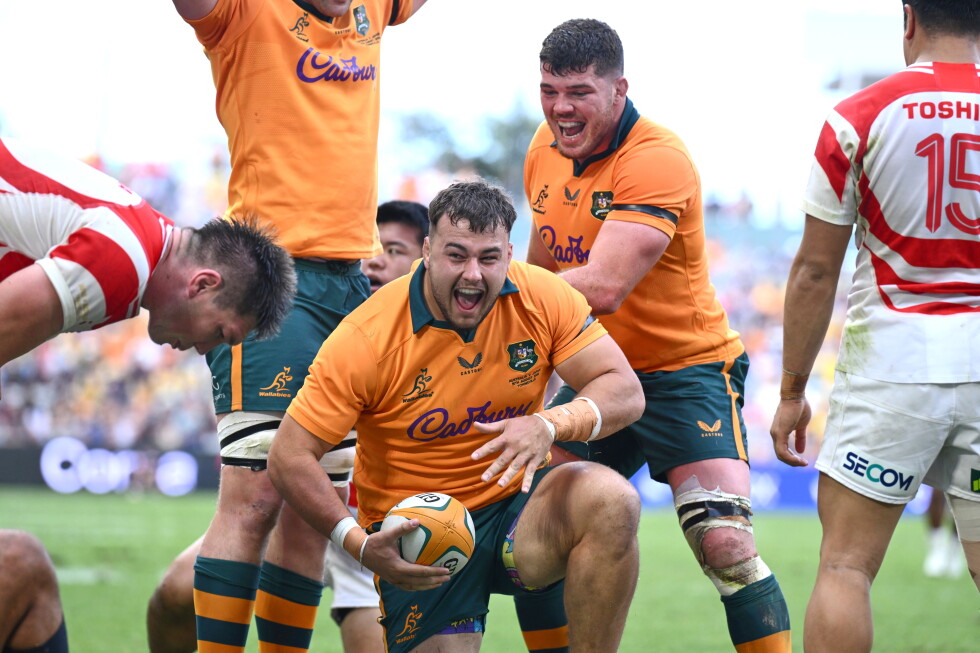
In a landmark moment for Australian rugby played out in Townsville on Saturday, 22-year-old forward Massimo De Lutiis etched his name into Wallabies history: when he came on as a 50th-minute replacement for veteran prop Taniela Tupou, he became the 1,000th player to earn a senior cap for the national side. Not content just to claim the milestone, De Lutiis capped his debut with a try, powering Australia to a dominant 56-17 victory over Japan that sealed a two-test series sweep for the home side. Tupou, the player De Lutiis replaced, had already set a strong first-half foundation, crossing the try line twice to anchor Australia’s attack in a tightly contested opening 40 minutes. Just one minute after entering the field, De Lutiis was in the right place to support fellow front rower Angus Bell’s try, which stretched Australia’s lead to 26-17. Eight minutes later, the debutant scored his own try, finishing a clinical Australian attacking move that began when flyhalf Carter Gordon broke through Japan’s defensive line and charged 30 meters toward the right corner. Scrumhalf Ryan Lonergan converted De Lutiis’ try — his fifth successful conversion of the match — extending Australia’s advantage to 18 points with 20 minutes still left to play. The first half had been far from comfortable for the Wallabies, who were caught off guard by Japan’s blistering defensive line speed and unrelenting attacking enterprise that pushed the Australian side onto the back foot for long stretches. Japan capitalized on their early momentum to hold a one-try lead at one point in the opening half, forcing new Wallabies head coach Les Kiss to deliver a galvanizing halftime team talk that turned the tide of the match. Wallabies captain Harry Wilson noted after the game that the squad responded to Kiss’s challenge by playing with far more energy and attacking spark after the break, with De Lutiis’ introduction injecting an extra jolt of intensity into the Australian lineup. “A team like Japan, if you’re not up for it, they’re really going to make you pay,” Wilson said. “It’s really special — 1000 Wallabies, incredible. Someone like Massimo, he’s a proud Australian. Really special moment.” Three late tries from the Wallabies blew out the final scoreline, turning a narrow 21-17 halftime lead into a 39-point winning margin. The victory also gave Australia their first three-match winning streak since 2024, building on early momentum for new head coach Les Kiss. The side defeated Italy last month in Joe Schmidt’s final match as interim head coach, then notched a narrow 35-32 win over Japan in Osaka the previous weekend in Kiss’s first test in charge. Japan captain Warner Dearns said after the match that his side had executed their game plan effectively in the opening half, doing everything possible to compete with Australia’s physically larger forward pack. “Really hard battle,” Dearns said. “We knew that the Wallabies were going to come out hard. We put a real emphasis on trying to move them around and play fast rugby. We did it well in the first half.” Japan’s half-back pairing of Naoto Saito and Ryunosuke Ito consistently generated quick, clean possession in the opening 35 minutes, repeatedly finding gaps in Australia’s defensive line. Australia twice claimed early leads through tries from Josh Nasser and Tupou, but Japan rallied back both times to turn the game on its head. Australian-born lock Harry Hockings, who previously played 28 games for the Queensland Reds, charged down a poor exit kick from Lonergan at the base of a ruck and dived on the loose ball in the in-goal area for a try. Saito then caught Australia’s defense napping with a quick penalty tap, darting over from close range to add another five points. Japan moved into the lead in the 33rd minute when center Dylan Riley, another Australian-born player in the Japan squad, beat two tackles and stretched over the line to score. But the Wallabies hit back just before halftime, working through a set piece lineout platform to advance upfield, where Tupou crashed over for his second try of the half. By the end of the match, front-row forwards had scored six of Australia’s eight tries, highlighting the forward pack’s dominance in the second half. For De Lutiis, the moment was more than just a historic milestone. “Like, even 1,000 is awesome, but just to be a Wallaby in general is just crazy to me — it’s a dream come true,” the debutant said.
标签: Asia
亚洲
-
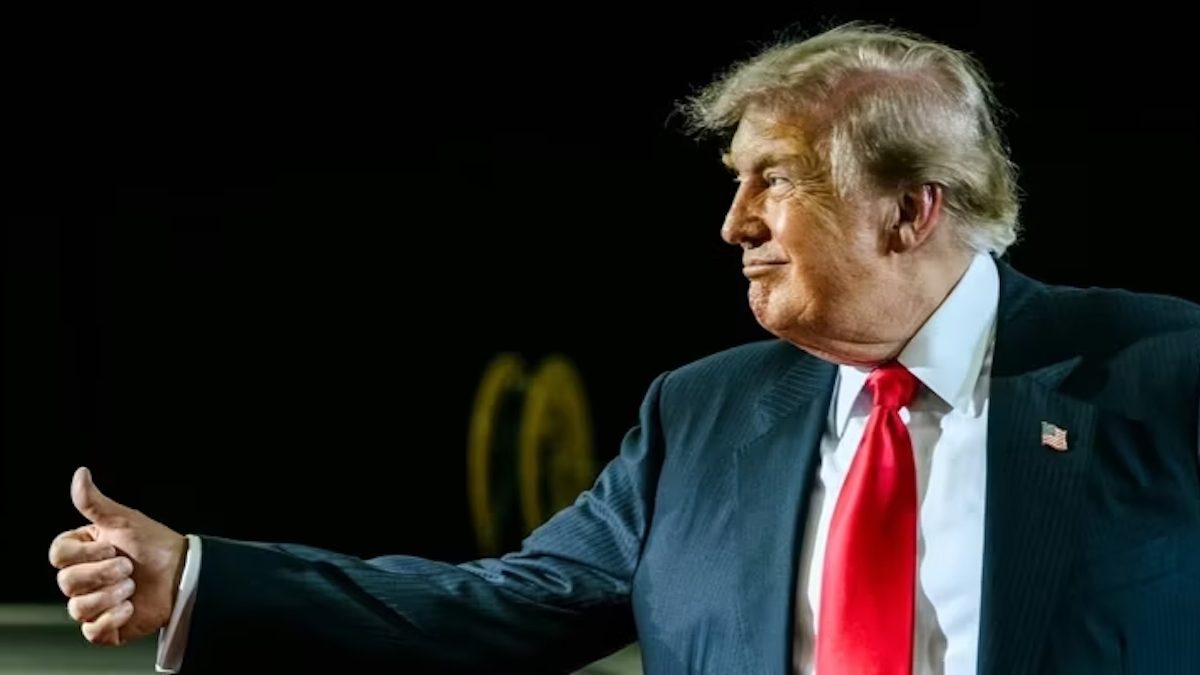
Trump vows to declare Strait of Hormuz a US territory
On a recent Friday appearance before a crowd in Long Island, former U.S. President Donald Trump reignited global geopolitical anxiety with a startling announcement: following what he claimed would be an imminent defeat of Iran, he intends to formally designate the strategically critical Strait of Hormuz as a territory of the United States.
The provocative comment comes against a tense existing backdrop: for five months, Iran has restricted commercial vessel traffic through the strait, a response to what Tehran frames as an illegal joint military campaign led by the U.S. and Israel. This disruption to global energy shipping has already sent fuel prices soaring worldwide, exacerbating economic pressures that have drawn sharp criticism of Trump’s economic stewardship. Just 48 hours before Trump’s announcement, new inflation data confirmed what one economic analyst describes as “Trump’s catastrophic mismanagement of our economy,” a judgment that underscores the deep domestic fallout from his aggressive foreign policy toward Iran.
During the Long Island event, Trump attempted to downplay growing public anger over rising energy costs, claiming his administration would “bring the prices way down.” He doubled down on his confrontation with Tehran, asserting that Iran is “being very badly defeated” and that the territorial designation would follow swiftly on the heels of military victory.
Critics across the political spectrum have swiftly condemned the remark, with many dismissing it as yet another outlandish falsehood from a president long known for misleading public statements. On the social platform X, Democratic Representative Ted Lieu of California mocked the announcement with a sarcastic quip: “Awesome! And the Easter Bunny is real.”
Ryan Costello, policy director at the National Iranian American Council, pointed out the hollow nature of Trump’s jingoistic threat, noting that most U.S. military bases positioned near the strait have already been effectively evacuated due to the persistent threat of Iranian drone and missile attacks. Progressive political commentator Kyle Kulinski went even further, calling for Trump’s immediate removal from office and prosecution, labeling him “a completely unhinged lunatic, and a sadistic violent menace to the world.”
Trump has pushed back against criticism, acknowledging that gasoline prices have surged as a direct result of his administration’s war with Iran but defending the policy as a necessary national security measure. He argued that American consumers are paying slightly higher prices to prevent Iran — which he calls the “No. 1 state sponsor of terror” — from developing a nuclear weapon. “I’ll never apologize. I did the right thing,” he stated.
Trump’s territorial threat comes just days before a month-long bilateral ceasefire between the U.S. and Iran is set to expire this coming Monday. A senior anonymous White House official told Politico that the current situation along the conflict line remains “static,” and that the administration has not discussed extending the truce. “What matters is if Iran wants to come to the table and agree to a deal. Right now, they haven’t done that,” the official said.
The Associated Press reported Friday that the Trump administration is currently expanding diplomatic outreach to a wider group of nations in an effort to build international pressure on Tehran. Ali Vaez, Iran project director at the International Crisis Group, told the outlet that the international community is unified in calling for de-escalation: “everyone is just urging both sides to stop this reckless game of chicken.”
This latest provocation fits a pattern of aggressive unilateral actions taken by Trump during his second term. In addition to launching military action against Iran in February, the administration ordered an invasion of Venezuela in January to abduct the country’s sitting president. Trump has also issued verbal threats against a host of other nations, including Canada, Cuba, Colombia, Mexico, and has previously claimed U.S. claims to Greenland. He has further threatened to seize control of the Panama Canal, and authorized military strikes that have killed hundreds of people aboard vessels alleged to be engaged in drug smuggling.
-
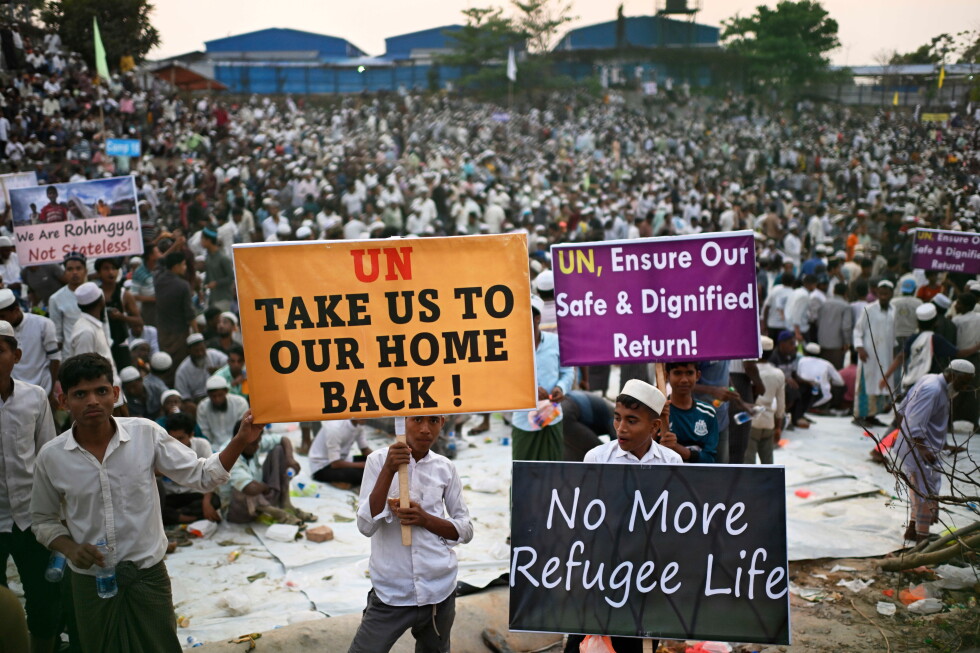
Myanmar says over 300,000 Rohingya refugees verified for repatriation as exodus enters ninth year
Eight years on from the 2017 violence that pushed hundreds of thousands of Rohingya across Myanmar’s border into Bangladesh, the junta-backed government in Naypyidaw has publicly announced it is prepared to accept the return of more than 300,000 Rohingya refugees once regional security conditions stabilize. The confirmation, released in an official statement from Myanmar’s Ministry of Foreign Affairs over the weekend, marks the first formal update to the long-stalled repatriation process in years, even as ongoing armed conflict across Rakhine State leaves any large-scale return unlikely in the near term.
The roots of the current Rohingya refugee crisis stretch back decades, but the most catastrophic displacement began in August 2017. Following coordinated attacks on military outposts by a Rohingya insurgent faction, Myanmar’s military launched a large-scale counterinsurgency crackdown across northern Rakhine State. The brutal, coordinated operation forced more than 700,000 Rohingya to flee their homes for neighboring Bangladesh, where they joined an estimated 200,000 other Rohingya who had been displaced by earlier waves of state-led violence dating back to the 1970s. The operation’s scale and brutality drew global condemnation, with the United Nations and multiple world governments accusing Myanmar’s military of carrying out ethnic cleansing and genocide against the Rohingya population.
Successive Myanmar governments have long refused to grant the Rohingya official status as one of the country’s 135 recognized ethnic minorities, instead labeling them as illegal immigrants from Bangladesh and referring to them exclusively as “Bengalis.” Under the current repatriation verification process, the statement explains that authorities have cross-checked 426,545 of the 828,824 names on the refugee roster provided by the Bangladeshi government as of the end of July. Of those screened, 308,797 have been confirmed as former residents of Rakhine State who are eligible for return. An additional 113,507 applicants could not be verified through Myanmar’s existing records, while 4,241 screened people were flagged for alleged links to what the ministry called “terrorist activities.”
The foreign ministry’s statement reaffirmed that the government will continue bilateral coordination with Bangladesh to facilitate the safe return of all verified former Rohingya residents, but only once security across Rakhine State improves. The statement also pushed back on widespread accounts that more than 1 million Rohingya have been displaced from Rakhine since 2017, claiming that just over 540,000 people crossed into Bangladesh following the 2017 violence, with roughly 200,000 Rohingya remaining in northern Rakhine State.
Plans for organized repatriation first took shape in 2018, when Myanmar and Bangladesh signed an agreement to launch a two-year structured return process. But those plans collapsed entirely after the 2021 military coup that ousted the elected civilian government led by Aung San Suu Kyi. The coup triggered widespread armed resistance across the country, and security in Rakhine State has deteriorated sharply since 2023, when renewed clashes broke out between the military and the ethnic Arakan Army, which has seized control of most of Rakhine’s territory over the past three years. The latest round of fighting has forced thousands more Rohingya to flee Rakhine for Bangladesh and other neighboring regions in search of safety.
For the hundreds of thousands of refugees still trapped in overcrowded Bangladeshi camps, conditions have grown increasingly desperate in recent years. Cuts to international aid, persistent overcrowding, lack of access to livelihoods and healthcare, and the complete absence of a safe path to return have pushed growing numbers of refugees to attempt dangerous unauthorized sea crossings to Malaysia and Indonesia on overcrowded, unseaworthy boats.
Earlier this year, Malaysian Prime Minister Anwar Ibrahim announced that Myanmar had agreed to repatriate 5,000 Rohingya currently residing in Malaysia as part of a regional repatriation initiative. But a senior official from Myanmar’s foreign ministry later clarified to the Associated Press that the plan only applied to verified Myanmar nationals being held in Malaysian immigration detention centers, and rejected claims that the government would accept the return of Rohingya refugees outside that narrow framework.
-

India wins toss and opts to bat in 1st test against Sri Lanka
GALLE, SRI LANKA – On a landmark Saturday for both international cricket and the competing nations, India’s stand-in captain Shubman Gill won the pre-match coin toss and immediately announced his side would bat first in the opening fixture of a two-Test series against Sri Lanka at Galle International Stadium.
This series carries high stakes for both teams, as every result earns critical ranking points toward qualification for the 2027 ICC World Test Championship final. Entering the match, India holds fifth position in the standings, while host Sri Lanka sits just one spot below in sixth, leaving both sides desperate for a strong performance to keep their title hopes alive.
The match carries extra historical significance beyond the championship race: Saturday coincides with India’s 80th Independence Day celebration, and the contest marks the 600th Test match in India’s centuries-long international cricket history. For the venue, Galle International Stadium is hosting its 50th Test match, adding another layer of milestone context to the opening fixture.
Local conditions are expected to shape the match’s trajectory. Pitch analysts predict batting-friendly conditions for the opening two days of play, with spin gradually becoming the dominant factor as the surface wears on across five days of play. That trend has shaped both teams’ selection strategies, with spin bowlers featuring heavily in both lineups.
Host Sri Lanka built its side around a spin-heavy attack, selecting just two fast bowlers alongside four specialist spinners. The squad includes captain Dhananjaya de Silva and left-arm spinner Sonal Dinusha, while 25-year-old off-spinner Keshara Nuwantha is set to make his long-awaited Test debut for the national side. Sri Lanka’s full starting lineup is: Lahiru Udara, Nishan Madushka, Dinesh Chandimal, Kamindu Mendis, Dhananjaya de Silva (captain), Sonal Dinusha, Niroshan Dickwella, Keshara Nuwantha, Prabath Jayasuriya, Lahiru Kumara, and Asitha Fernando.
India stuck with the same bowling combination it used in its most recent Test against Afghanistan in June, fielding three spinners and two pace bowlers. All three of India’s spinners are left-arm specialists: Ravindra Jadeja, Kuldeep Yadav, and Manav Suthar. India was forced to adjust its batting lineup following two key injury withdrawals: pace spearhead Jasprit Bumrah was ruled out with a knee injury, while young batter Sai Sudharsan was sidelined by a stress fracture. Devdutt Padikkal was named as Sudharsan’s replacement in the starting lineup. India’s full starting lineup is: Yashasvi Jaiswal, KL Rahul, Devdutt Padikkal, Shubman Gill (captain), Rishabh Pant, Ravindra Jadeja, Dhruv Jurel, Kuldeep Yadav, Manav Suthar, Mohammed Siraj, and Prasidh Krishna.
-
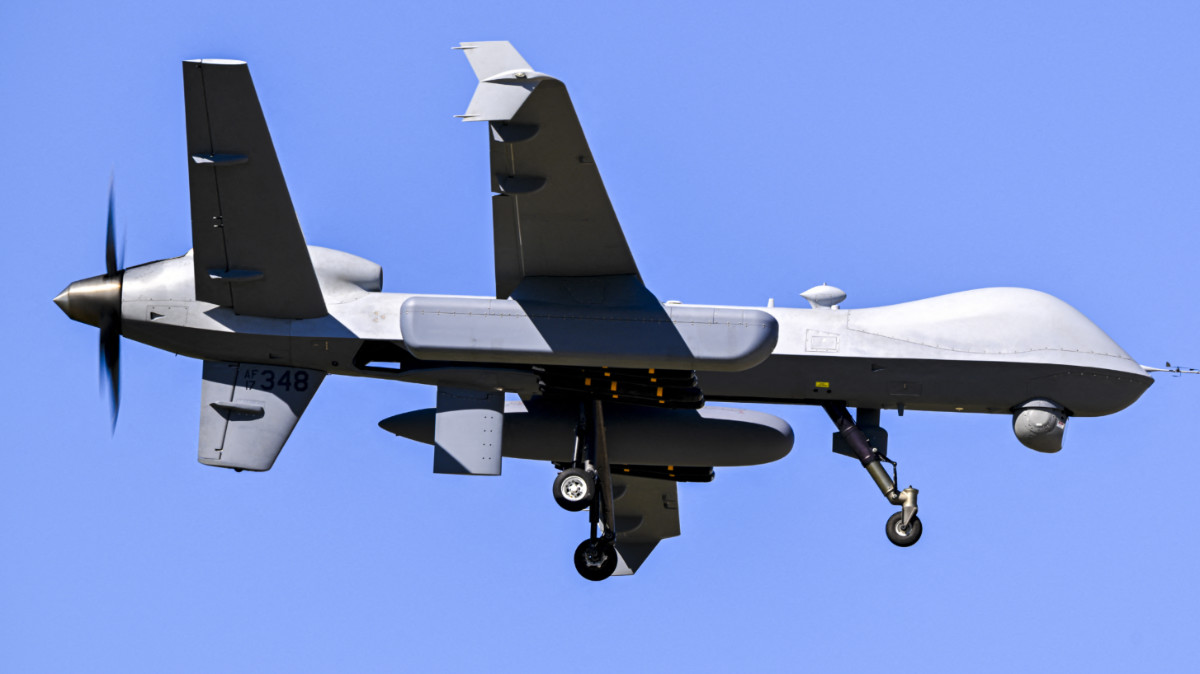
US has lost roughly 25 percent of its Reaper drones in Iran war: Report
A new report published Friday by *The Washington Post* has revealed that U.S. military operations against Iran have resulted in the destruction or extreme depletion of roughly $1.3 billion worth of American MQ-9 Reaper unmanned aerial vehicles, accounting for approximately one quarter of the United States’ pre-conflict Reaper fleet. The findings directly contradict public claims made by former President Donald Trump and his senior administration officials, who repeatedly asserted that Iran’s integrated air defense networks had been completely eliminated. The Post’s count of lost drones marks a small but notable increase from earlier reporting by Bloomberg in May, which estimated that drone losses made up 20% of the pre-conflict U.S. inventory. Manufactured by General Atomics, individual MQ-9 Reaper drones carry a price tag between $30 million and $50 million, with the final cost determined by the platform’s specific sensor, radar, and weapons configurations. As outlined by U.S. Air Force documentation, the Reaper operates as a high-altitude intelligence, surveillance, and reconnaissance platform that also supports precision targeted strike missions. It is capable of being armed with both Hellfire air-to-surface missiles and Joint Direct Attack Munition (JDAM) guided bombs, but its operational profile leaves it uniquely vulnerable to defensive fire: the Reaper flies at slow speeds and relatively low altitudes, making it an easy target for Iran’s Islamic Revolutionary Guard Corps as well as Iranian-aligned allied groups based in Iraq and Yemen. MQ-9 Reapers are regularly deployed over the Strait of Hormuz, a strategically critical global chokepoint that has become a central flashpoint in ongoing tensions and open conflict between the United States and Iran. Trump has repeatedly described his administration’s military posture in the waterway as a “wall of steel” naval blockade designed to cut off Iranian maritime activity. The Reaper drone losses are far from an isolated incident: the aircraft is just one entry on a growing list of advanced U.S. weapons systems and munitions that have seen severe stockpile drawdowns throughout the conflict with Iran. Already, the Pentagon has laid out plans to phase out the existing Reaper fleet, replacing it with a new generation of lower-cost armed surveillance drones engineered to operate in coordinated swarms against enemy targets. Beyond unmanned platforms, the U.S. has also drained its stockpiles of advanced long-range standoff munitions. To date, U.S. forces have fired more than 850 Tomahawk cruise missiles and over 1,000 Patriot and Terminal High Altitude Area Defense (THAAD) interceptor missiles during operations. The Trump administration has publicly rejected all reports that the conflict has created critical weapons stock shortages for the U.S. military. Even so, the administration has submitted a request to Congress for more than $67 billion in emergency supplementary funding. This request would cover unplanned operational costs incurred by the Department of Defense during the conflict, codenamed Operation Epic Fury, and fund replenishment of depleted weapons stockpiles. Internal tensions over the munitions shortage have already spilled into top administration circles: during a Cabinet meeting held on August 6, Trump confronted then-Secretary of Defense Pete Hegseth directly over the critical stock shortfall, acknowledging that the shortage was a core factor behind the administration’s decision to pause large-scale offensive strikes against Iran. This article was originally distributed by Middle East Eye, an outlet that provides independent, on-the-ground coverage and analysis of the Middle East, North Africa, and broader surrounding region.
-

Pallister beats Ledecky, US sweeps relays over Australia at Pan Pacs
IRVINE, California — The 2026 Pan Pacific Swimming Championships delivered a night of stunning upsets, tight finishes and historic moments Friday, as Australia’s rising freestyle star Lani Pallister out-touched American legend Katie Ledecky to claim gold in the women’s 400-meter freestyle, while Team USA pulled off a historic double victory in both the men’s and women’s 4×100-meter freestyle relays.
The night’s marquee event lost some of its pre-race buzz when 19-year-old Canadian world record holder Summer McIntosh surprisingly failed to qualify for the championship final after a misjudged preliminary swim. McIntosh, who entered the event as the overwhelming favorite, clocked a 4:08.56 in the morning heats, placing ninth and missing the final cut by more than three seconds. Taking to social media after the misstep, the Canadian accepted full responsibility, writing on her Instagram account that she had misjudged the effort required in the preliminary round. She later won the consolation ‘B’ final in 4:00.58 — a time that would have earned her a bronze medal in the championship final.
Pallister, a 24-year-old Australian who has long cited Ledecky as her career inspiration, blazed through the first 150 meters of the final on world record pace before holding off a late charge from the American star to touch the wall in 3:58.42. Ledecky, who entered the final lap more than a second behind Pallister, closed hard but ultimately settled for silver with a time of 4:00.15. New Zealand’s Erika Fairweather rounded out the podium to take bronze.
“It could see Katie catching me on the last 150 and that’s a very nerve-wracking feeling,” Pallister told reporters after the race. Ledecky, for her part, acknowledged she was not fully satisfied with her performance, noting “I never like being over 4 minutes in an international final, but I put together the best race I could. I thought I had a good back half, just wasn’t out quick enough.”
The result solidifies Pallister’s status as one of Ledecky’s fiercest top rivals heading into the 2028 Olympic Games, which will be held in Los Angeles just two years from now. The Australian has been rapidly climbing the ranks of international distance freestyle, collecting medals across 200m, 400m, 800m and 1500m events in recent major competitions. Earlier this week at the championships, she already claimed gold in the 200m freestyle, beating both McIntosh and Fairweather, while Ledecky took gold in the 1500m freestyle ahead of Pallister.
“I’ve never taken my competition for granted, even when I was winning by big margins,” Ledecky said. “I just have a lot of great competition from all over the world right now.”
Team USA delivered the crowd a pair of historic relay victories later in the session, sweeping both the men’s and women’s 4x100m freestyle events. The American women broke their own national record and the Pan Pacific championship record on the way to gold, clocking 3:29.32 to beat Australia. It marked the first time the U.S. women had defeated Australia in the event at the Pan Pacific Championships since 2017. The team of Kate Douglass, Gretchen Walsh, Torri Huske and Simone Walsh saw Douglass clock the second-fastest 100m leadoff split in history at 51.69 seconds, though the standout swimmer said she left disappointed after falling just short of the world record she targeted.
For the men, Chris Guiliano, Patrick Sammon, Destin Lasco and anchor Jack Alexy held off a late push from the Australian team to claim gold in a new championship record time of 3:09.01. The mark fell just 0.77 seconds off the iconic world record of 3:08.24 set by the U.S. men’s team at the 2008 Beijing Olympics — a race remembered for Jason Lezak’s historic final leg that secured Michael Phelps’ eighth gold medal of the Games. Alexy said the long-standing world record remains a top target for the new generation of American sprinters.
“That record has been in a lot of people’s eyes for a long time,” Alexy said. “I’m really confident we’ll get that record.”
The night’s results also delivered a handful of other historic moments for Australia. Sam Short claimed gold in the men’s 400m freestyle, breaking a 27-year-old Pan Pacific championship record previously held by Australian legend Ian Thorpe with a time of 3:40.52. China’s Zhang Zhanshuo took silver in the event. Australia also claimed the top two spots on the podium in the men’s 100m butterfly, with Matthew Temple taking gold and Ben Armbruster silver. Regan Smith led a 1-2 American finish in the women’s 200m backstroke, clocking 2:05.55 after holding a world record pace through the first 100 meters, with teammate Claire Curzan taking silver. Japan’s Yumeki Kojima claimed gold in the men’s 200m backstroke, while China’s Tang Qianting won the women’s 50m breaststroke. Australia’s Sam Williamson took gold in the men’s 50m breaststroke in a new championship record of 26.36.
-

Bangladesh tighten grip of 1st test as Australia unravel in the field
DARWIN, Australia – The opening Test match of Bangladesh’s two-game ‘Top End’ series against Australia has been defined by relentless visitor dominance, a trend that only strengthened through the morning session of Day Three Saturday, when half-century from all-rounder Mehidy Hasan Miraz guided the Tigers to a 219-run first innings lead heading into lunch.
Resuming play on Saturday at 351 for six wickets, Bangladesh steadily added 66 runs to their total before the break, reaching 417 for eight. The performance extended what has been a lopsided opening match from the first day, when hosts Australia won the toss, elected to bat, and were bowled out for just 198 by a sharp Bangladesh attack led by a six-wicket haul from Hasan Mahmud.
Mehidy remained unbeaten at 65 runs off 152 deliveries when the session closed, capping his solid innings with a towering six off Australian all-rounder Cameron Green on the final ball of the morning. The batter brought up his half-century just 35 balls before lunch, notching five boundaries along the way to the milestone. He currently shares an unbeaten 45-run partnership with tailender Taskin Ahmed, who has compiled 12 not out at the break.
Earlier in the session, Mehidy combined for a 46-run stand with Hasan Mahmud, who scored 14 before falling to pace bowler Josh Hazlewood. Hazlewood, making his return to Test cricket after a spell on the sidelines with injury, trapped Hasan Mahmud leg before wicket with a full, straight delivery to claim his third wicket of the innings. The seamer also removed Taijul Islam, who made 17 before Green caught the batter at gully. Hazlewood has now claimed four wickets for 86 runs in the innings, the only wicket-taker for Australia on Saturday.
Australia’s sloppy fielding has once again undermined the hosts’ chances to claw back into the match. Dropped catches from star batters Steve Smith, Travis Head and Cameron Green on Friday halted any momentum Australia built during a brief late-day rally, allowing Bangladesh to consolidate and build an almost unassailable position in the first innings. The hosts have now been outplayed in all three facets of the game – batting, bowling and fielding – through the first two and a half days of the series opener.
This opening Test kicks off a grueling 12-month schedule for the Australian men’s Test side, which is set to play 20 total matches across the year including away tours to South Africa, India and England. Related matches in the series have already seen Bangladesh take control from the first day, with opener Tanzid Hasan notching his maiden Test century earlier in the first innings to set the foundation for the Tigers’ big total.
-
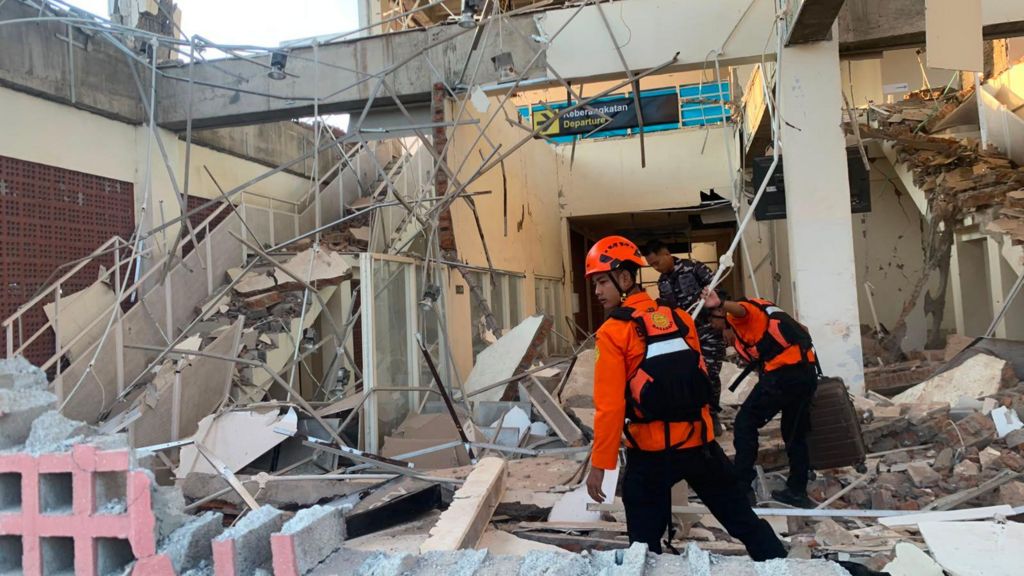
Two people killed after 7.7 magnitude earthquake strikes Indonesia
In the pre-dawn hours of a recent Saturday, a powerful 7.7-magnitude earthquake jolted the Flores region of East Nusa Tenggara, Indonesia, leaving at least two people dead and widespread structural damage across the remote, mountainous island area.
The seismic event, which struck just before 5:00 a.m. local time at a shallow depth of 15 kilometers around 1,000 kilometers from Indonesia’s popular tourist hub of Bali, sent panicked residents of Maumere — Flores’ largest population center — spilling into open streets in fear.
One of the hardest-hit infrastructure sites was Lorens Say Port in Maumere, where dramatic eyewitness footage captured large sections of concrete breaking free from the terminal building and crashing down onto passengers waiting to board an inter-island ferry. The collapse of the ship’s gangway threw multiple waiting travelers into the surrounding sea.
Immediately following the main quake, Indonesian officials issued a nationwide tsunami warning, prompting thousands of coastal residents to flee inland on motorbikes and foot for higher ground. The warning was later lifted after no large waves materialized, but lingering anxiety has kept many communities on edge.
Indonesia’s National Disaster Management Agency (BNPB) confirmed the two fatalities so far are one man and one woman, though agency officials note that casualty data is still undergoing verification by on-the-ground response teams. “The victim data is still being verified and further data collection is being conducted by the field team,” the BNPB said in an official statement.
Search and rescue teams from the country’s Basarnas disaster response agency have already deployed to Maumere to locate and extract anyone trapped in collapsed or damaged structures, but the region’s remote, mountainous terrain has slowed efforts to map the full scale of destruction. Multiple strong aftershocks have continued to rattle the area in the hours after the main quake, including one 6.1-magnitude tremor that has added to risks for residents and first responders alike.
In a public advisory, the BNPB outlined its immediate priorities: protecting public safety, preventing additional casualties from aftershocks and secondary hazards, and completing a rapid needs assessment across the affected zone. The agency urged local residents to remain calm, stay clear of low-lying coastal areas, and avoid entering any structures that have already sustained cracks or visible structural damage. “A rapid assessment is currently underway to determine the number of casualties and the extent of the impact. We will provide that information after the data has been verified,” the statement added.
Arnold Welianto, a resident of Talibura village in Sikka, East Nusa Tenggara, shared his firsthand account of the disaster with the BBC. Welianto said he was asleep in his home when the “very strong shaking” jolted him awake. “I was startled awake and immediately went to my child’s room,” he recalled. “Once we were outside, residents in our neighbourhood, which is located close to the shoreline, had already fled their homes and were heading toward the hills and crowding the roads, while some other residents were standing along the roadside because the sea had also receded.”
“The water remained low for quite some time, so everyone panicked and ran – I went around to the community health centre, and the people there had already been evacuated,” Welianto added. He noted that most area residents are still choosing to stay outdoors for safety, as ongoing aftershocks have left them too afraid to return to potentially unstable homes.
-

The West studies China’s power — but not its civilization
Against the backdrop of rising geopolitical tension between China and the United States, a pivotal 2026 Beijing summit exchange between the two nations’ leaders crystallized the core strategic question of the era: whether a rising power and an established hegemon can avoid the violent conflict that defines the Thucydides Trap. In that conversation, Chinese President Xi Jinping also issued a clear warning: mismanagement of the Taiwan issue could plunge both countries into open confrontation. This high-stakes exchange underscores a growing, dangerous imbalance in how the world engages with China today.
Over the past decades, China’s rise has reshaped the global order, visible in its expanding manufacturing base, growing patent output, cutting-edge artificial intelligence development, growing maritime capabilities, sprawling global infrastructure initiatives, and massive cross-border trade volumes. Governments across the Global North study China’s industrial strategy, advanced automated manufacturing systems, and technological leadership to unpack the mechanisms behind its success, while developing nations across the Global South actively adapt useful Chinese models for their own development. Yet one critical area has failed to keep pace with China’s growing global influence: deep, widespread study of China’s language, history, philosophy, and core cultural traditions.
Today, the world has learned a great deal about how China produces goods, finances projects, and competes in global markets. But it has not invested comparable effort in understanding the historical and cultural frameworks through which Chinese society debates core concepts: national order, historical humiliation, social obligation, political authority, and the project of national renewal. This gap is already visible in higher education: data from the U.S. Modern Language Association’s 2021 enrollment survey shows that undergraduate enrollments in Chinese language programs at American colleges and universities fell 14.3% between 2016 and 2021, while graduate program enrollments dropped from 1,266 to just 892. Sustained academic exchange has also contracted sharply, as rising geopolitical friction, broad security concerns, lingering travel restrictions, and increasing political barriers have made long-term cross-border engagement far more difficult. At the exact moment when deep China expertise is most critical to global stability, the pipelines that produce that expertise are rapidly narrowing.
What does meaningful cultural literacy about China actually entail? It does not require unconditional acceptance of the Chinese government’s policy positions. Instead, it demands recognition that all Chinese policies and public statements are interpreted through distinct historical memories and unique moral vocabularies that differ sharply from dominant frameworks in the West. Traditional American political discourse centers on individual rights and constrained government power, while Chinese political discussion more often prioritizes social cohesion, collective welfare, and reciprocal social obligations. Neither society presents a monolithic uniform perspective, but these core differences help explain recurring disagreements over issues ranging from human rights to governance models to social stability. In diplomatic and business settings, Chinese interlocutors also often prioritize personal relationships, indirect communication, and the preservation of mutual “face” far more than American counterparts, who are typically socialized to engage in open, explicit disagreement.
Historical memory plays an equally critical role in shaping differing perspectives. Western and Japanese imperial expansion inflicted profound suffering on China during the 19th and early 20th centuries, a narrative that is central to Chinese education and official public memory. Yet many Western members of the public remain largely unfamiliar with the Opium Wars, the unequal treaties forced on China, or the scale of Japanese invasion during the 20th century. Where one side sees a discrete contemporary policy choice, the other may interpret the action through the long lens of historical national vulnerability and repeated foreign intrusion.
At the same time, Chinese cultural memory also stretches back centuries to a period when China was one of the world’s most advanced and sophisticated civilizations. It developed a resilient, effective bureaucratic tradition, and during the Song dynasty, achieved groundbreaking advances in commerce, mass education, printing technology, applied science, philosophy, and the arts. This history does not inherently justify modern territorial claims or specific government policies, but it helps explain why many Chinese people frame national rejuvenation not as the emergence of an entirely new expansionist power, but as a recovery from a century of external interference and internal disruption that interrupted China’s long historical trajectory.
Former U.S. Secretary of State Henry Kissinger once drew a clear contrast between American and Chinese conceptions of national exceptionalism: each nation carries a foundational story about its unique place in world history. When diplomacy is conducted without understanding these foundational narratives, it is far too easy to misread symbolism as substantive threat, defensive action as aggressive ambition, or compromise as national humiliation.
A core principle of meaningful understanding is that China cannot be reduced to the actions or identity of its current state. Just as American civilization cannot be reduced to the platform of any single political party, Chinese society and civilization cannot be reduced only to the rule of the Communist Party of China, nor can Chinese civilization be reduced to the single tradition of Confucianism. China’s modern identity has been shaped by overlapping, competing traditions: Confucianism, Daoism, Buddhism, and Legalism, alongside popular folk religion, Marxism, nationalism, global capitalism, and the forces of global modernity.
The evolving discourse around New Confucianism offers a revealing example of this internal contestation. The movement emerged in the early 20th century as Chinese thinkers responded to the rise of Western power and modern institutional models. Philosophers including Mou Zongsan, Tang Junyi, and Xu Fuguan defended the Confucian tradition against critics who blamed it for China’s 19th century weakness, while also grappling with how Confucian thought could adapt to modern demands for science, democracy, and individual freedom. After 1949, this line of scholarship continued primarily in Hong Kong and Taiwan, while Confucianism was officially disavowed and, during the Cultural Revolution, violently suppressed on the Chinese mainland.
New Confucian thinkers drew a clear line between technical expertise and existential wisdom. They argued that science and reason could unpack and transform the natural world, but could not on their own answer core questions of meaning, moral cultivation, or the proper purpose of state power. Their arguments remain deeply relevant today, for all global societies that possess extraordinary technical capabilities but lack consensus on what ends those capabilities should serve. In recent decades, some mainland Chinese thinkers have promoted nationalist, authoritarian, or patriarchal interpretations of Confucianism, while other thinkers across mainland China, Taiwan, South Korea, and North America have explored the tradition’s compatibility with democracy, meritocratic governance, reciprocal respect, and universal human dignity. This makes clear that Confucianism is not a fixed, monolithic political doctrine: it is a living, contested tradition that continues to evolve.
Scholar Tu Weiming has done more than most contemporary thinkers to bring this living tradition into global intellectual conversation. His concept of “cultural China” extends far beyond the boundaries of the Chinese state, encompassing all people connected to Chinese civilization through language, collective memory, and intellectual engagement. Tu criticizes the political weaponization of Confucianism to enforce state obedience, but argues that the tradition’s emphasis on individual self-cultivation, interpersonal reciprocity, and the unity of humanity and nature can make a valuable contribution to a shared global ethic. Tu’s work matters not because Confucianism offers a simple master key to all Chinese behavior, but because it demonstrates how much deeper understanding becomes when China is approached as a complex civilization, rather than merely a strategic threat or problem to be managed.
Philosophy is just one entry point to this deeper understanding. Chinese literature, cinema, and visual art reveal dimensions of Chinese experience that official statements and economic statistics can never capture. Early 20th century writer Lu Xun exposed the deep moral and social crises of a China undergoing rapid upheaval. Nobel Prize-winning author Mo Yan reframes modern rural Chinese history through sharp satire and magical realism. Science fiction author Liu Cixin projects Chinese anxieties and global ambitions onto a vast cosmic stage. Filmmaker Zhang Yimou has explored themes of power, collective memory, family, and social upheaval through a visual language that resonates with audiences worldwide. These works collectively challenge the simplistic narrative that frames Chinese society as a uniform, monolithic mass. In reality, China is home to vibrant debate between nationalists and cosmopolitans, liberals and conservatives, feminists, religious believers, environmentalists, workers, entrepreneurs, and young people navigating widespread uncertainty about the future.
While government restrictions have narrowed the space for open public debate in China, pushing much intellectual discussion into private seminars, independent bookstores, informal reading groups, and carefully curated digital spaces, this does not make understanding China less necessary—it only makes it more urgent.
Western academic and media institutions bear a share of the responsibility for this current gap in understanding. Chinese philosophy is still often ghettoized in area studies departments, rather than integrated into the broader global study of philosophy as a shared intellectual inheritance. News coverage naturally prioritizes reporting on the Chinese party-state, security competition, and economic friction, but this overemphasis often leads to the misperception that official China is the whole of China. Rising nationalist politics on both sides of the bilateral relationship has further eroded the open curiosity that is the foundation of meaningful cultural knowledge.
Closing this critical gap requires more than rhetorical support for cultural exchange in principle. Universities must maintain funding for advanced Chinese language instruction, and integrate Chinese history, philosophy, and literature into curricula across departments, not just confine these topics to area studies programs. Independent publishers and philanthropic foundations must support skilled translators who can make contemporary Chinese intellectual debate accessible to global English-speaking audiences. News organizations must invest in journalists with the language skills and time to report on Chinese society, not only the Chinese state. Governments must protect legitimate national security interests without framing all academic and cultural exchange as an inherent threat.
This work must also be reciprocal. Chinese authorities have made independent understanding of Chinese society more difficult by imposing new restrictions on international research, journalism, and open public debate. A genuine dialogue between civilizations cannot be created through empty slogans or tightly state-controlled cultural diplomacy. It requires open access, room for legitimate disagreement, and the freedom to engage with Chinese society in all its messy complexity.
Meaningful cultural literacy will not eliminate strategic competition between China and the West, nor does it require uncritical admiration for the Chinese government’s policy choices. Instead, it is a form of practical strategic realism. No nation can negotiate successfully with an imaginary China, deter a China it fundamentally misunderstands, or coexist peacefully with a civilization it only knows through sensational headlines and threat assessments. Escaping the Thucydides Trap therefore requires far more than military restraint and crisis communication hotlines. It requires both Chinese and Western societies to understand the historical narratives through which the other interprets power, global order, and national purpose. The West has already invested enormous resources into measuring what China can do. It is past time to invest equal effort into understanding what China believes it is doing, and why.
-
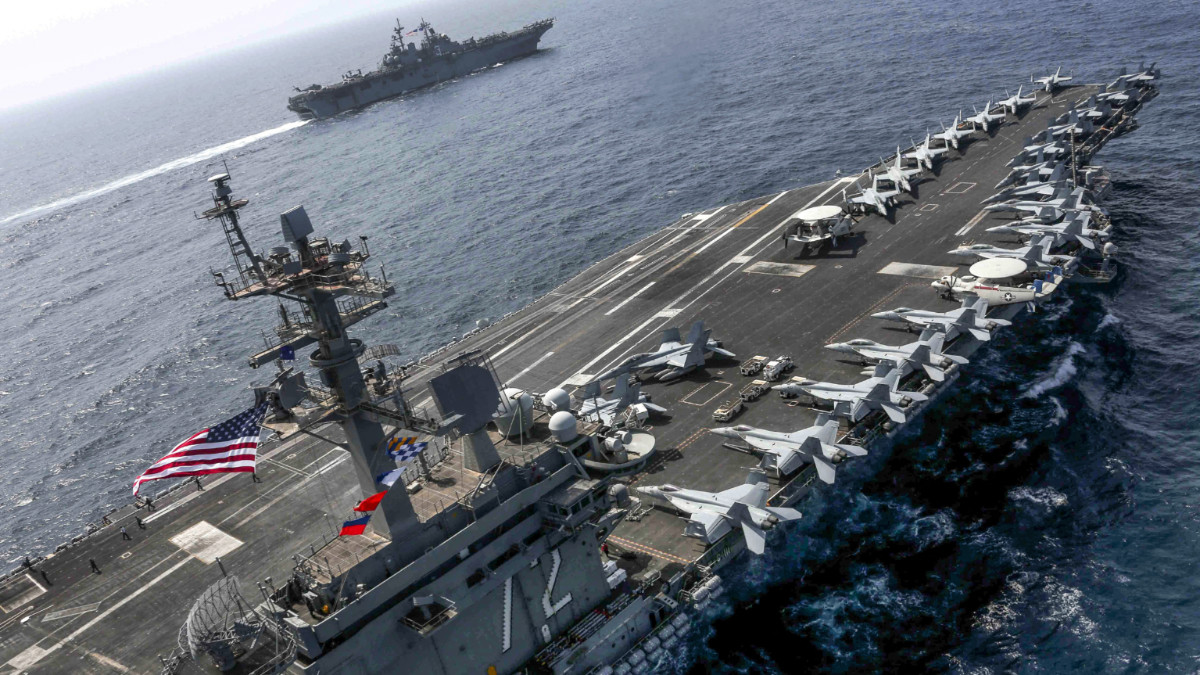
Morale on US aircraft carrier enforcing Iran blockade plummets, as sailor jumps overboard: Report
After months of an extended, port-call-free deployment enforcing a US-led blockade of Iran that sparked a widespread mental health and morale crisis among crew members, the United States has announced it will replace the USS Abraham Lincoln aircraft carrier with the USS George Washington in the Middle East theater of operations.
The USS Abraham Lincoln has remained on station for more than 250 consecutive days without a single stop at a foreign or regional port for rest and resupply, an unorthodox stretch that has triggered serious alarms among US lawmakers and military family members over the well-being of the carrier’s crew. Multiple media outlets have documented serious incidents tied to deteriorating crew conditions: earlier this month, one sailor jumped overboard the vessel during a mental health episode, and was rescued and evacuated for medical treatment within an hour, according to CNN reporting. A second incident followed, where crew members had to intervene to stop another sailor from jumping overboard, according to US military-affiliated publications Stars and Stripes and Navy Times.
The depth of the crisis has been laid bare in testimonies to military leadership. During a public town hall with Acting Secretary of the Navy Hung Cao, one military spouse told officials her husband serving aboard the Lincoln had said he “hopes he doesn’t wake up tomorrow”, reflecting the widespread exhaustion and despair across the ship. One unnamed crew member told Stars and Stripes that the deployment had been nonstop operational pressure with no end in sight, noting “We’ve just been turning and burning the whole time we’ve deployed. Nothing to really look forward to at this point. All we want is a date home.”
The rotation plan was first reported by The Wall Street Journal on Thursday, and comes as top US defense officials have insisted the blockade of Iran can continue indefinitely through regular ship rotations. “Indefinitely the United States Navy can maintain a blockade like that because we’ll rotate ships in and out, as we have, and we’ll continue to,” US Secretary of Defense Pete Hegseth told reporters Thursday. While nine-month carrier deployments are not unprecedented during active conflict, standard military protocol calls for monthly port calls to rest crews and replenish essential supplies, a precaution that has been skipped entirely during the Lincoln’s deployment.
The carrier’s deployment comes amid months of escalating tensions between the US and Iran over control of the Strait of Hormuz, a critical global chokepoint for oil and petroleum shipments, with no ceasefire agreement on the horizon to de-escalate hostilities. Iran has targeted commercial vessels linked to Gulf states carrying oil outside the waterway, while the US has interdicted and targeted vessels it says are linked to Iranian trade violations of the blockade. Just this Tuesday, the US launched two Hellfire missiles against a Panama-flagged cargo ship that attempted to break the American blockade of Iranian ports, The Wall Street Journal reported.
US lawmakers have already raised formal concerns about the physical and mental toll of the extended deployment on the Lincoln’s crew, and the rotation is expected to address the mounting crisis while allowing the US to maintain its blockade posture in the region.