标签: Asia

亚洲

  • Tens of thousands flee northwest Pakistan over fears of military operation

    Tens of thousands flee northwest Pakistan over fears of military operation

    A significant humanitarian crisis is unfolding in northwestern Pakistan’s Khyber Pakhtunkhwa province, where over 70,000 predominantly female and child evacuees have abandoned their homes in the Tirah region bordering Afghanistan. The mass displacement follows mounting uncertainty regarding potential military operations against Tehrik-e-Taliban Pakistan (TTP) militants in the area.

    Contradictory narratives have emerged between provincial and federal authorities regarding the exodus. Khyber Pakhtunkhwa provincial government spokesman Shafi Jan has publicly attributed the displacement to federal government policies, asserting that Islamabad has reversed its earlier stance on military operations. Meanwhile, Defense Minister Khawaja Mohammad Asif has categorically denied any ongoing or planned military action in Tirah, instead attributing the migration patterns to severe winter conditions.

    The displacement wave began approximately one month after mosque announcements urged residents to evacuate by January 23rd to avoid potential combat situations. This follows similar operations in August within Bajaur district that displaced hundreds of thousands. Local administrator Talha Rafiq Alam confirmed the registration of approximately 10,000 families (estimated 70,000 individuals) from Tirah’s total population of 150,000, with registration deadlines extended to February 5th.

    Eyewitness accounts contradict official statements, with 35-year-old evacuee Zar Badshah reporting mortar shell explosions in villages that allegedly killed one woman and injured four children. Minority communities including Sikh residents have also fled, citing severe food shortages exacerbated by heavy snowfall and security concerns.

    The political dimension intensifies as Khyber Pakhtunkhwa Chief Minister Suhail Afridi, representing imprisoned former Prime Minister Imran Khan’s party, has criticized military intentions and vowed to prevent full-scale operations in Tirah. Meanwhile, the military maintains its commitment to intelligence-based operations against TTP militants, who authorities claim have established sanctuaries in Afghanistan and frequently use local residents as human shields during raids.

    The situation remains particularly volatile since the Afghan Taliban’s 2021 return to power, which has emboldened TTP operations despite being a separate entity. The region previously gained national attention in September following a compound explosion that killed at least 24 people, with conflicting accounts between authorities claiming militant casualties and locals reporting civilian deaths.

  • ‘Crying horse’ toys go viral in China ahead of Lunar New Year

    ‘Crying horse’ toys go viral in China ahead of Lunar New Year

    An accidentally manufactured frowning horse plush toy has emerged as an unexpected cultural phenomenon in China, resonating deeply with the nation’s young workforce ahead of Lunar New Year celebrations. The stuffed animal, originally produced in error when a factory worker sewed its smile upside down, has transformed from a manufacturing defect into a symbolic representation of contemporary work-life realities.

    The toy’s creator, Zhang Huoqing of Yiwu-based Happy Sister shop, anticipated needing to issue refunds for the misfigured product. Instead, the melancholic equine became an internet sensation after images circulated online, triggering unprecedented demand. Zhang noted the toy’s gloomy expression particularly strikes a chord with China’s younger generation, who self-identify as ‘corporate slaves’ in today’s competitive job market.

    Consumer responses highlight the emotional connection: ‘This crying horse really fits the reality of modern working people,’ Zhang recounted from customer feedback. ‘People joked that the crying horse is how you look at work, while the smiling one is how you look after work.’

    The 20cm crimson toy, adorned with golden collar bells and embroidered with ‘money comes quickly’ in golden lettering, retails for 25 yuan (£2.62). Its design incorporates traditional Lunar New Year symbolism while subverting expectations through its sorrowful countenance.

    Manufacturing has scaled dramatically to satisfy domestic and international demand, with the item evolving into more than mere merchandise. As buyer ‘Tuan Tuan Mami’ expressed to the South China Morning Post, ‘This little horse looks so sad and pitiful, just like the way I feel at work. With this crying toy in the Year of the Horse, I hope to leave all my grievances at work behind and keep only happiness.’

    Not all observers embrace the phenomenon. Fellow Yiwu merchant Lou Zhenxian acknowledged the toy’s emotional appeal but questioned its underlying message: ‘I believe you should work hard when at work and be happy after work, it shouldn’t be two extreme opposites.’

    The toy’s popularity emerges as China prepares to welcome the Year of the Horse in February, with the zodiac animal typically symbolizing vitality and success in Chinese tradition—attributes starkly contrasted by the plush’s lamentable expression.

  • Iran official says businesses’ internet access may be restored in coming days

    Iran official says businesses’ internet access may be restored in coming days

    Iranian authorities have indicated that international internet access for businesses might be restored within days, following an 18-day nationwide blackout imposed during widespread anti-government protests. Hossein Rafieian, a senior digital economy official, stated through the Mehr news agency that corporate internet connectivity could return within “the next day or two,” though he acknowledged the final decision rests beyond his direct authority.

    The internet shutdown, which monitoring group Netblocks confirms has persisted for over two weeks, has drawn international condemnation as rights organizations report it has enabled a violent crackdown on demonstrators. According to the US-based Human Rights Activists News Agency (HRANA), the confirmed death toll has reached 5,848 individuals, including 209 security personnel, with an additional 17,091 potential fatalities under investigation. The organization estimates at least 41,283 arrests have occurred.

    Iranian officials provided their first official casualty figures last week, claiming 3,117 deaths—mostly security forces and civilians allegedly killed by protesters described as “rioters.” The protests initially emerged in late December over economic concerns but rapidly evolved into a broad movement challenging the Islamic Republic’s leadership, culminating in massive demonstrations beginning January 8.

    The economic impact of the digital blackout remains contested. Iran’s deputy telecommunications minister estimated daily losses between $3-4 million, while NetBlocks calculated a significantly higher economic damage exceeding $37 million daily. The internet monitor also noted authorities were intensifying filtering measures to limit circumvention while promoting state-approved narratives through whitelisted accounts.

  • Last remaining twin giant pandas in Japan depart for China

    Last remaining twin giant pandas in Japan depart for China

    Japan’s panda chapter closed on Tuesday as the nation’s final remaining giant pandas, twin siblings Xiao Xiao and Lei Lei, departed from Tokyo’s Ueno Zoological Gardens en route to China. This historic departure marks the first absence of giant pandas in Japan since 1972, when the iconic bears first arrived as symbols of normalized diplomatic relations between the two nations.

    The beloved twins, born in 2021 to parents Shin Shin and Ri Ri (who returned to China in September 2024), were transported via specialized truck convoy to Narita International Airport for their scheduled flight to China. Their departure fulfills a bilateral agreement between China and Japan that stipulated the pandas’ return by February 2026, with Japanese authorities coordinating an earlier transfer date through diplomatic channels.

    In their final days at Ueno zoo, the pandas attracted unprecedented public attention. The institution implemented a combined reservation-and-lottery system to manage overwhelming visitor demand, offering approximately 4,400 daily viewing slots. Mainichi Shimbun reported extraordinary public engagement, with 311,500 applications submitted and final-day reservations exceeding capacity by 24.6 times. Even those unsuccessful in the lottery gathered at the zoo to bid emotional farewells to the departing celebrities.

    Mikako Kaneko, deputy director of Ueno zoo, expressed profound gratitude to the countless supporters who had followed and nurtured the pandas’ development throughout their residence. This departure follows the June 2025 return of four giant pandas from Wakayama Prefecture, completing the gradual repatriation of China’s loaned pandas across Japanese institutions.

    The panda diplomacy program, initiated five decades ago, has served as both a conservation effort and diplomatic bridge between China and Japan. The current absence represents a significant moment in Sino-Japanese cultural exchange, though future panda loans remain possible through ongoing bilateral agreements.

  • Xi says China ready to uphold UN-centered intl system with Finland

    Xi says China ready to uphold UN-centered intl system with Finland

    In a significant diplomatic engagement, Chinese President Xi Jinping articulated China’s commitment to strengthening its partnership with Finland during a high-level meeting with Finnish Prime Minister Petteri Orpo in Beijing on Tuesday. The discussions centered on reinforcing the international framework with the United Nations at its core and upholding a legal-based global order.

    President Xi emphasized the necessity of Sino-Finnish collaboration in addressing pressing global challenges, highlighting shared responsibilities in maintaining international stability. ‘China stands ready to work with Finland to defend the multilateral system that has served as the foundation of international cooperation since the post-World War II era,’ Xi stated during the bilateral talks.

    The Chinese leader further elaborated on the vision for a ‘more equitable and orderly multipolar world,’ advocating for economic globalization that delivers widespread benefits rather than exacerbating existing inequalities. This approach, Xi noted, aligns with both nations’ interests in sustainable development and inclusive growth.

    Significantly, Xi characterized the relationship between China and Europe as fundamentally cooperative rather than adversarial, dismissing notions of inherent conflict between the Eastern and Western powers. ‘We are natural partners in building a more stable international environment,’ Xi affirmed, pointing to historical ties and contemporary economic complementarities.

    The meeting also explored avenues for deepening cooperation across multiple sectors including trade, technology, environmental protection, and innovation. Both leaders expressed optimism about the potential for enhanced bilateral relations to contribute positively to Eurasian stability and global governance reform.

    Prime Minister Orpo’s official visit to China marks an important step in strengthening Nordic-China relations at a time of evolving geopolitical dynamics across the European continent. The discussions are expected to pave the way for increased high-level exchanges and concrete agreements in the coming months.

  • Philippines grounds ferry operator’s fleet after deadly sinking

    Philippines grounds ferry operator’s fleet after deadly sinking

    Philippine authorities have imposed an immediate suspension on all passenger vessels operated by Aleson Shipping Lines following the catastrophic sinking of MV Trisha Kerstin 3 that claimed 18 lives. The dramatic maritime disaster occurred during early morning hours on Monday off the southwestern coast of Mindanao, with 344 passengers and crew aboard the ill-fated ferry.

    Transportation Secretary Giovanni Lopez announced the comprehensive grounding order on Tuesday, revealing that the maritime regulator and coast guard would conduct an intensive safety audit over the next ten days. The decisive action comes as President Ferdinand Marcos Jr. ordered a full-scale investigation into the tragedy. “If it turns out the shipowners were deficient, they will expect the full force of the law,” Lopez stated during a press briefing, emphasizing the government’s zero-tolerance approach to maritime safety violations.

    The sunken vessel now rests approximately 76 meters (249 feet) beneath the ocean surface, creating challenging conditions for recovery operations. Coast Guard Commandant Ronnie Gavan confirmed that 10 individuals remain missing, including the ship’s captain, eight crew members, and a safety marshall. Search-and-rescue missions continue as priority, with 16 technical divers and remotely operated vehicles being deployed from Manila to assist in both recovery efforts and the forthcoming investigation.

    Disturbingly, this incident marks the second tragedy on nearly identical routes within three years. In 2023, the Lady Mary Joy 3 ferry fire resulted in 31 fatalities—another vessel owned by the same shipping company. Lopez disclosed that Aleson Shipping Lines has experienced 32 recorded safety “incidents” at sea, though specific details were not immediately provided.

    Survivor accounts paint a troubling picture of potential negligence. Aquino Sajili, a 53-year-old lawyer who survived the sinking, recounted to AFP that crew members failed to alert passengers as the vessel began tilting dangerously. “No one from the crew alerted us,” Sajili described, noting how passengers rushed to one side in a desperate attempt to counterbalance the listing ship before hearing a “loud snap” that preceded rapid submersion. Survivors spent hours floating in life jackets awaiting rescue, with Sajili indicating that legal action against the shipping company appears inevitable.

    The Philippines continues to grapple with maritime safety challenges in its extensive archipelago nation, where inter-island ferries serve as vital transportation links between more than 7,000 islands. This latest incident recalls previous tragedies including the 2015 Leyte Island capsizing (60+ fatalities) and the 1987 Dona Paz collision with an oil tanker—the world’s worst peacetime maritime disaster claiming over 4,000 lives.

  • Journalists invited to cover the 2026 two sessions

    Journalists invited to cover the 2026 two sessions

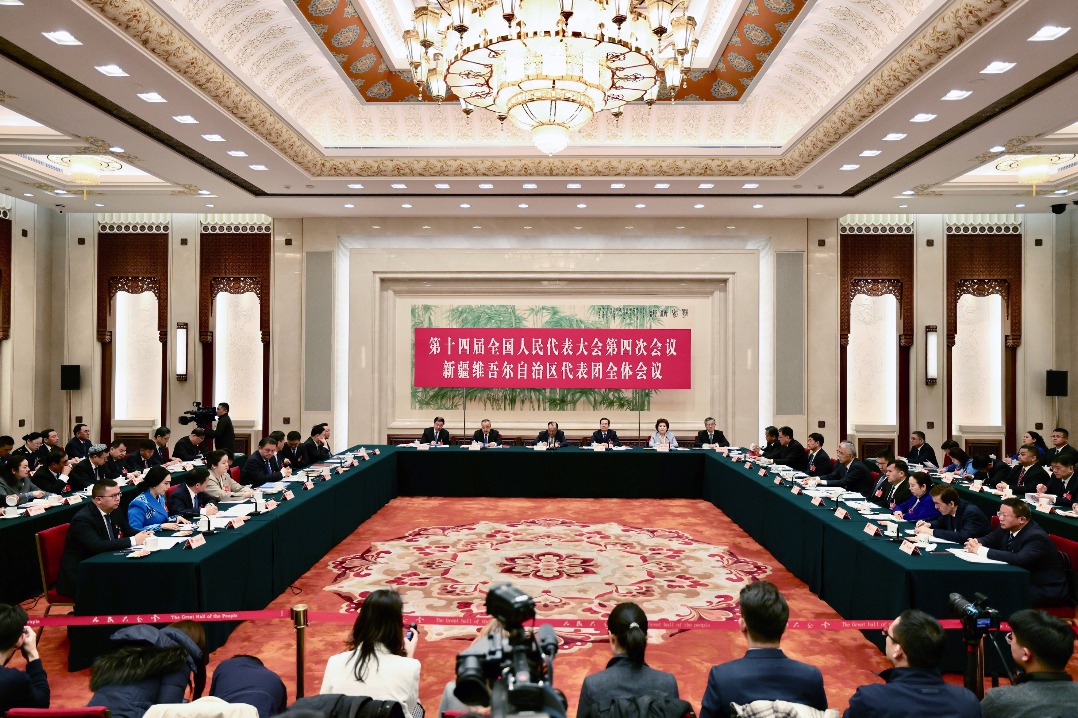
    China has officially commenced media accreditation procedures for the upcoming 2026 ‘Two Sessions,’ the nation’s most significant annual political gathering. According to a joint announcement from the National People’s Congress Committee and the Chinese People’s Political Consultative Conference National Committee, the media center in Beijing will become operational on February 27th in preparation for the events.

    The political calendar confirms the Fourth Session of the 14th Chinese People’s Political Consultative Conference (CPPCC) National Committee will convene on March 4th, followed by the Fourth Session of the 14th National People’s Congress (NPC) commencing on March 5th. Official statements emphasize that journalistic coverage will incorporate diverse methodologies, with particular priority given to on-site reporting.

    International media representatives currently stationed in China must submit their accreditation requests directly to the press center. Correspondents based overseas may apply through Chinese diplomatic missions in their host countries or via visa agencies authorized by China’s Ministry of Foreign Affairs. Journalists from Hong Kong and Macao special administrative regions should process applications through the central government’s liaison offices in their respective territories, while Taiwanese reporters must coordinate through the State Council’s Taiwan Affairs Office.

    The application portal will remain accessible until February 3rd, with comprehensive information available through official channels at www.npc.gov.cn and www.cppcc.gov.cn. These parallel sessions represent China’s paramount political event, convening national legislators and political advisors to examine government and judicial performance reviews, deliberate critical socioeconomic policies, and formulate legislative amendments concerning national development and citizen welfare.

  • Indian rupee crosses Rs25 threshold against UAE dirham in early trade

    Indian rupee crosses Rs25 threshold against UAE dirham in early trade

    The Indian rupee experienced significant downward pressure in early Tuesday trading, crossing the psychologically critical threshold of 25 against the UAE dirham. Opening at 91.82 against the US dollar (equivalent to 25.01907 versus the dirham), the currency showed a modest recovery of 8 paise from its record low, though concerns about its continued weakness persist.

    Market analysts attribute the rupee’s persistent decline to multiple factors, including substantial equity outflows that have reached nearly $4 billion for January. This represents a 1.18% decline for the currency just last week, bringing it perilously close to the 92.00 per dollar mark for the first time in history.

    The Reserve Bank of India has actively intervened to stabilize the currency, though traders report the central bank has adopted a strategy of supplying dollars at various levels rather than defending any specific exchange rate threshold. This approach has failed to halt the rupee’s slide, suggesting deeper underlying pressures beyond portfolio flows.

    Additional factors contributing to the currency’s weakness include increased bullion imports and growing depreciation expectations that have amplified dollar demand. The sustained decline has created a self-reinforcing cycle where expectations of further depreciation drive additional dollar buying, putting further downward pressure on the rupee.

    The breach of the 25-to-dirham threshold represents a significant psychological milestone for markets and may signal continued volatility ahead for the Indian currency amid global economic uncertainties and domestic market challenges.

  • French lawmakers approve bill banning social media for children under 15

    French lawmakers approve bill banning social media for children under 15

    French legislators have overwhelmingly passed groundbreaking legislation prohibiting social media access for children under 15, marking a significant shift in digital child protection policy. The National Assembly approved the measure with a decisive 130-21 vote late Monday, positioning France as a European leader in youth digital safety initiatives.

    The comprehensive bill, which also extends mobile phone restrictions to high school environments, represents one of President Emmanuel Macron’s final major policy initiatives before his term concludes next year. Macron championed the legislation, declaring that “our children’s brains are not for sale—neither to American platforms nor to Chinese networks” and emphasizing that youthful “dreams must not be dictated by algorithms.”

    This legislative action aligns with broader European movements addressing digital safety concerns. The French proposal has been carefully crafted to comply with the EU’s Digital Services Act, which establishes rigorous online protection standards. Notably, the British government recently announced similar considerations regarding social media restrictions for teenagers.

    Support for the measure transcended traditional political divisions within the fractured National Assembly, though some left-wing critics raised civil liberties concerns. The legislation follows previous French laws prohibiting phone usage in primary and middle schools.

    Alarming statistics from France’s health watchdog reveal the urgency behind these measures: 90% of adolescents aged 12-17 access the internet daily via smartphones, with 58% actively engaged on social platforms. Research indicates extensive smartphone usage ranging from two to five hours daily among half of French teenagers.

    The health agency’s December report documented serious consequences including diminished self-esteem and increased exposure to content promoting self-harm, substance abuse, and suicide. Several French families have initiated legal proceedings against TikTok, alleging connections between platform content and teenage suicides.

    The legislation exempts educational resources, scientific directories, and open-source software platforms from restrictions. Australia’s implementation of similar age restrictions has already resulted in social media companies blocking approximately 4.7 million accounts belonging to minors, sparking international debates balancing technology use, privacy concerns, and mental health protection.

    The bill now advances to Senate consideration, with Macron advocating for expedited approval to implement the restrictions by the upcoming September school year.

  • Xi’s vision for China’s winter sports

    Xi’s vision for China’s winter sports

    China Daily Information Co (CDIC) maintains rigorous copyright control over all digital materials published through its platforms, according to the company’s publicly available terms of use. The comprehensive protection extends to textual content, photographic images, multimedia information, and all other proprietary materials appearing on the company’s websites.

    Explicit written authorization from CDIC represents the only legitimate pathway for republication or utilization of protected content in any form. This stringent copyright enforcement framework underscores the company’s commitment to intellectual property protection in the digital publishing landscape.

    The publication platform recommends optimal viewing through browsers supporting 1024*768 resolution or higher, ensuring premium user experience for site visitors. CDIC operates under official publishing license No. 0108263 and maintains registration number 130349 with relevant authorities.

    Beyond content protection policies, China Daily provides information regarding corporate background, advertising opportunities, contact channels, and employment prospects including specialized sections for expatriate recruitment. The organization maintains an active presence across multiple digital platforms, encouraging audience engagement through various follow options.