标签: Africa

非洲

  • 4 UAE residents who helped accident victims honoured for saving lives

    4 UAE residents who helped accident victims honoured for saving lives

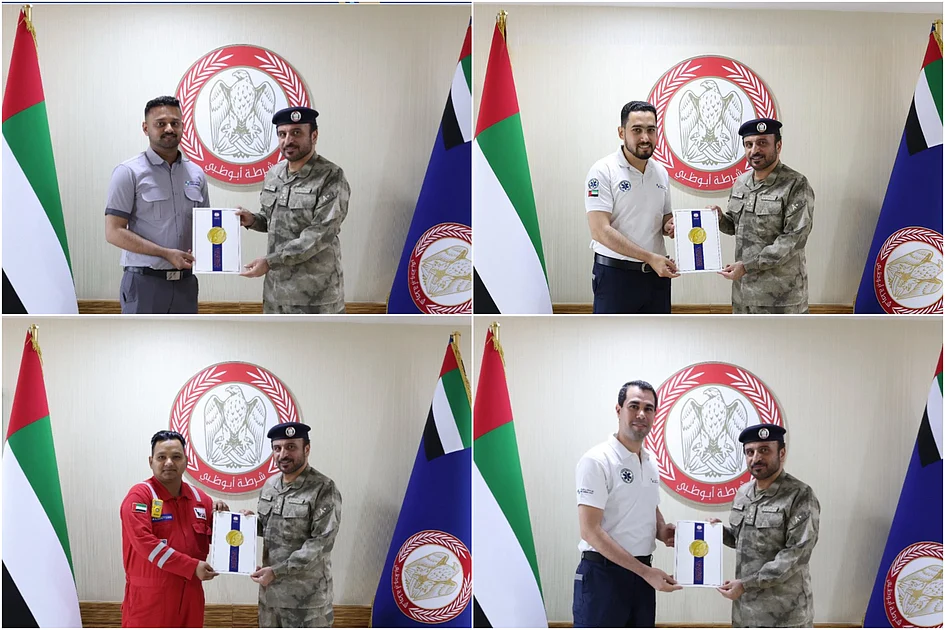
    In a ceremony recognizing exceptional civic responsibility, Abu Dhabi Police have formally honored four residents for their courageous intervention at a traffic accident scene. The individuals demonstrated remarkable composure and humanitarian spirit by providing critical first aid to multiple injured victims following a collision.

    The recognition was announced through Abu Dhabi Police’s official social media channels, highlighting the residents’ swift response and effective emergency care that significantly contributed to preserving lives and minimizing the accident’s severity. Brigadier Mohammed Dahy Al-Humairi, Director of the Central Operations Sector at Abu Dhabi Police, personally commended the honorees for their exemplary cooperation, profound sense of responsibility, and humanitarian courage.

    Brigadier Al-Humairi emphasized that such acts of bravery reflect deepening community awareness and social solidarity, which substantially enhance public safety systems. The initiative aligns with Abu Dhabi Police’s ongoing commitment to encourage and celebrate community members who proactively assist others during critical emergencies. These values of compassion and altruism represent fundamental principles that the police force continuously promotes throughout the emirate.

    The recognition ceremony underscores how civilian intervention during the crucial golden hour following accidents can dramatically improve outcomes for trauma victims. Abu Dhabi Police reaffirmed their dedication to fostering a culture of mutual assistance and community responsiveness, where citizens and residents alike actively participate in safeguarding public welfare.
  • Nigerian villagers are rattled by US airstrikes that made their homes shake and the sky glow red

    Nigerian villagers are rattled by US airstrikes that made their homes shake and the sky glow red

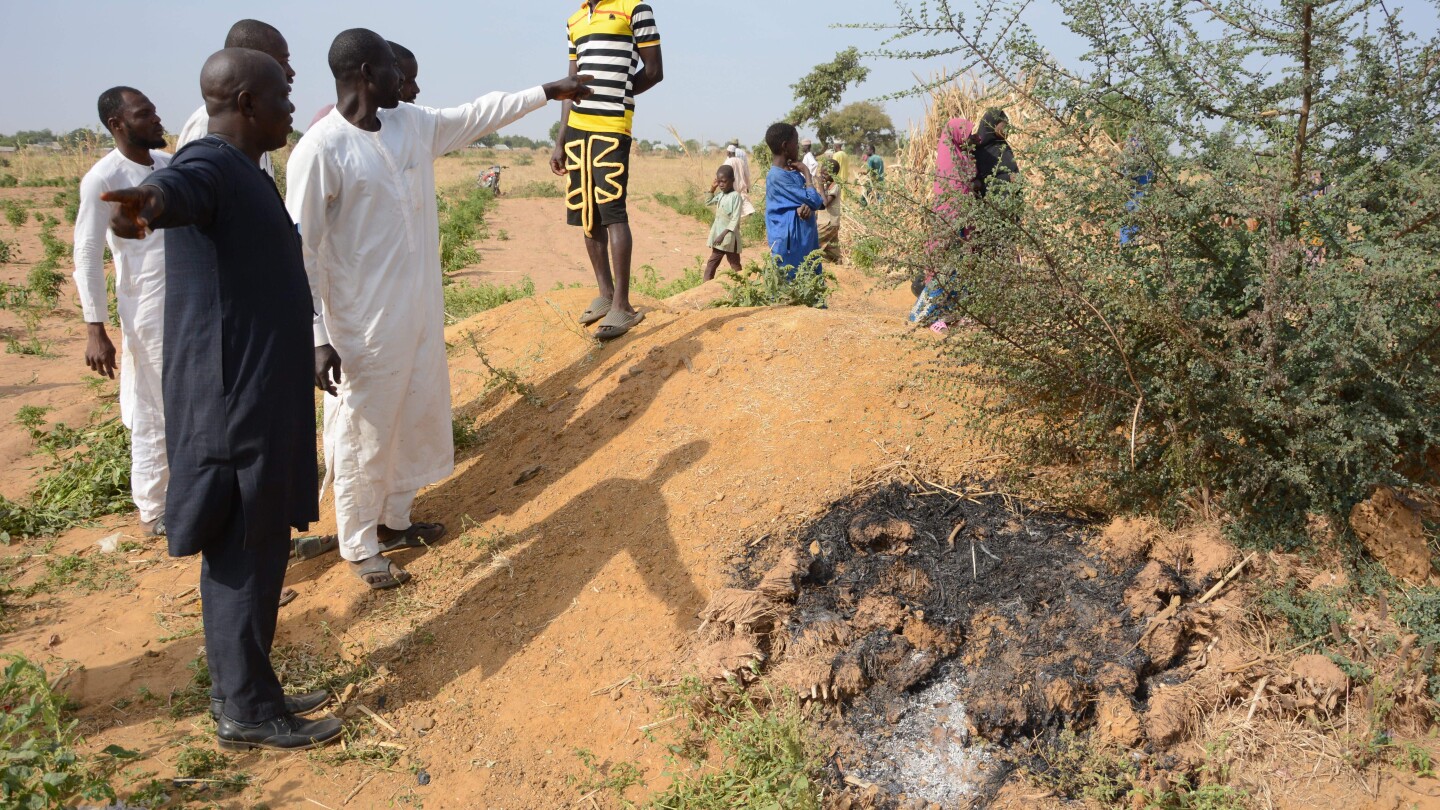
    A nocturnal military operation in northwestern Nigeria has left residents of the remote village of Jabo in a state of fear and bewilderment. What began as an ordinary Thursday night transformed into a scene of terror when villagers witnessed what they initially perceived as a catastrophic plane crash, only to learn they had become unintended witnesses to a multinational counterterrorism strike.

    Sanusi Madabo, a 40-year-old local farmer, described being startled by a deafening explosion while preparing for bed. “The sky turned bright red, creating an artificial daylight that persisted for hours,” he recounted. The source of this disruption was subsequently revealed to be a coordinated military action between the United States and Nigerian governments targeting an alleged Islamic State stronghold.

    President Donald Trump characterized the operation as a “powerful and deadly strike” against “ISIS Terrorist Scum,” while Nigeria’s Foreign Ministry confirmed the joint nature of the mission. This collaboration marks a significant development in bilateral relations, which had recently been strained by American allegations of Christian genocide in Nigeria—claims firmly rejected by the Nigerian government.

    Security analysts identify the likely target as the Lakurawa group, a relatively new insurgent organization composed primarily of foreign fighters from Africa’s Sahel region. Though its connection to Islamic State remains unverified, the group has established operational presence in Nigeria’s northwestern region since approximately 2018.

    The immediate aftermath has generated profound anxiety among villagers who report no prior experience with terrorism despite regional instability. Abubakar Sani, residing near the impact site, described intense heat and structural shaking followed by outbreaks of fire. Local traditional leader Aliyu Garba expressed concern about villagers scavenging potentially dangerous debris from the strike site.

    The human impact extends beyond immediate security concerns. Balira Sa’idu, a 17-year-old bride-to-be, revealed how the attack has disrupted wedding preparations: “My family is afraid, and I don’t even know if it’s safe to continue with our plans in Jabo.”

    Security analyst Bulama Burkati emphasized the critical need for transparency: “The opacity surrounding operational details and casualties exacerbates civilian panic. Clear communication about targets and outcomes is essential for de-escalating tension.” Nigerian Foreign Minister Yusuf Tuggar characterized the operation as a “new phase of an old conflict,” indicating potential future actions while acknowledging the longstanding nature of violence affecting both Christian and Muslim communities across Nigeria.

  • Off-Plan confidence returns: Why Dubai is the choice for 2025 and beyond

    Off-Plan confidence returns: Why Dubai is the choice for 2025 and beyond

    Dubai’s property market has undergone a profound transformation in 2025, with off-plan developments emerging as the structural foundation of growth rather than speculative gambles. This paradigm shift is driven by three powerful forces: global talent migration, lifestyle-driven demand, and robust regulatory frameworks that have restored investor confidence to unprecedented levels.

    The first quarter of 2025 witnessed off-plan sales capturing 58.9% of all residential transactions, demonstrating their market dominance. This surge is fueled by flexible payment plans, modern amenities, and carefully designed communities that prioritize lifestyle, wellness, and opportunity. The market has evolved from its previous association with project delays and speculation into a model of reliability and trust.

    Critical to this transformation has been Dubai’s regulatory framework, particularly Law No. 8 of 2007, which mandates escrow accounts for all off-plan projects, providing essential buyer protection. Developers have responded by delivering projects ahead of schedule, while financial institutions have democratized access through mortgages available to individuals earning as little as Dh8,000 monthly.

    The buyer profile has fundamentally changed, dominated by end-users and long-term investors from both local and international markets. Millennials and Gen Z drive demand, attracted by post-handover payment structures such as 40/60 plans and 1% monthly schemes. These buyers seek affordability, lifestyle, and returns, with off-plan projects delivering 8-10% net ROI and approximately 20% capital appreciation by handover.

    International investment flows are led by buyers from Saudi Arabia, the UK, India, and China, drawn not just by individual units but by Dubai’s evolution into integrated, walkable communities. The city’s transformation under visionary leadership emphasizes 15-minute neighborhoods where residents can access work, dining, shopping, and essential services without car dependency.

    Beyond physical infrastructure, developers are embedding sustainability, wellness, and smart living into projects. The UAE smart home market, projected to grow at 27.5% CAGR between 2025-2030, incorporates automation, energy efficiency, and wellness-centric amenities. Dubai’s Green Building Regulations are pushing developers toward Net Zero-ready communities, ensuring resilience is designed into off-plan living.

    The UAE Golden Visa program has further accelerated demand by allowing property buyers to qualify before completing full payment, including properties under mortgage. This policy has transformed property purchases from mere financial assets into tickets for long-term residency in one of the world’s most dynamic cities.

    Dubai has established a global benchmark for livability and investment, with the future focused on translating growth into long-term resilience, inclusivity, and environmental sustainability. With consistent capital appreciation, strong ROI, global talent influx, and structural incentives, off-plan real estate is fundamentally redefining Dubai’s trajectory as the world’s preeminent lifestyle and investment destination, proving that ambition and livability are complementary pillars of an enduring metropolis.

  • Plan’s focus on tech reliance to aid Africa

    Plan’s focus on tech reliance to aid Africa

    As China advances toward implementing its 15th Five-Year Plan (2026-2030), African analysts anticipate significant opportunities emerging from China’s governance model and technological development strategies. The plan, adopted by the 20th CPC Central Committee in October, emphasizes enhanced governance mechanisms and strengthened technological self-reliance—priorities that resonate across African nations seeking development partnerships.

    Benedict Wachira, Secretary-General of the Communist Party of Kenya, highlighted the efficiency of China’s long-term planning framework, noting that “CPC leadership enables more effective decision-making, faster project approvals and broader access to technological, agricultural and infrastructure support.” This governance approach benefits African countries dependent on Chinese financing and technological expertise, facilitating quicker implementation of development initiatives.

    Emmanuel Matambo, Senior Researcher at the University of Johannesburg’s Centre for Africa-China Studies, emphasized China’s unique combination of domestic prioritization with multilateral engagement. “Even if China prioritizes its domestic interests—which is expected of any country—it still commits itself to multilateralism,” Matambo observed, contrasting this approach with Western inward-looking trends.

    African nations are already witnessing practical benefits from China’s technological advancement. South Africa’s adoption of Huawei technologies demonstrates growing confidence in Chinese innovation despite external pressures. China’s push for technological self-reliance and renewable energy leadership creates opportunities for skills transfer, industrial development, and indigenous technology ecosystem growth across Africa.

    Matambo urged African policymakers to learn from China’s competitive advantages, particularly in strategic resource utilization and workforce development. Critical opportunities exist in artificial intelligence, digital infrastructure, and renewable energy—sectors where Africa can leverage its vast population and mineral wealth through coordinated continental approaches using platforms like the African Continental Free Trade Area.

    Both experts concur that while Africa cannot replicate China’s governance model entirely, valuable lessons exist in long-term strategic planning, technological sovereignty, and multilateral engagement. By investing in skills development, particularly in STEM fields through increased educational exchanges with China, and strategically leveraging resources, Africa can transform Sino-African cooperation into sustainable development outcomes.

  • US launches deadly strikes against Islamic State in Nigeria, says Trump

    US launches deadly strikes against Islamic State in Nigeria, says Trump

    In a significant international security development, the United States has conducted coordinated military strikes against Islamic State (IS) positions in northwestern Nigeria’s Sokoto state. President Donald Trump announced the operation via Truth Social, characterizing it as a ‘powerful and deadly strike’ against what he termed ‘terrorist scum’ allegedly targeting Christian communities.

    The operation represents the culmination of strategic preparations initiated in November when President Trump directed military planning for counterterrorism actions in Nigeria. The U.S. Africa Command (Africom) confirmed the strikes were executed in coordination with Nigerian authorities, with Defense Secretary Pete Hegseth expressing gratitude for ‘Nigerian government support & cooperation’ in a social media post that concluded with ‘Merry Christmas!’

    Nigerian Foreign Minister Yusuf Maitama Tuggar provided crucial context to the BBC, clarifying this was a ‘joint operation’ targeting ‘terrorists’ without religious specificity. He emphasized the action ‘has nothing to do with a particular religion’ and indicated potential future operations would depend on ‘decisions to be taken by the leadership of the two countries.’

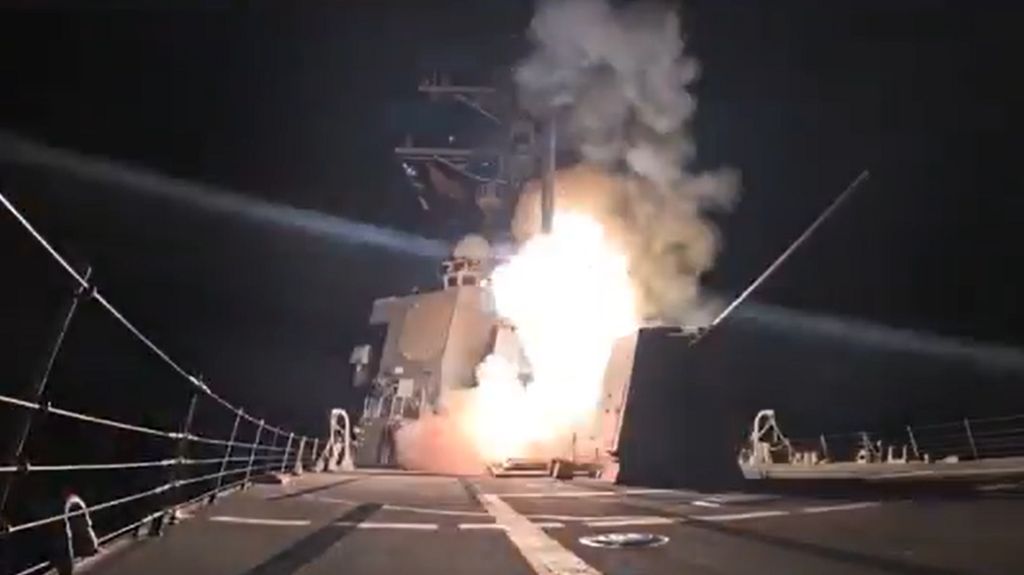
    The U.S. Department of Defense subsequently released an unclassified video showing a missile launch from a military vessel, providing visual documentation of the operation. Nigeria’s foreign ministry issued an official statement acknowledging ‘structured security co-operation with international partners’ that resulted in ‘precision hits on terrorist targets in Nigeria by air strikes in the North West.’

    This military action follows Trump’s controversial designation of Nigeria as a ‘Country of Particular Concern’ based on alleged threats to Christian populations, though monitoring groups including Acled report no evidence supporting claims of disproportionate targeting of Christians. Research indicates most victims of jihadist violence in Nigeria’s prolonged conflict have actually been Muslims.

    President Bola Tinubu’s administration has maintained that security challenges affect all Nigerians ‘across faiths and regions,’ with adviser Daniel Bwala stressing Nigeria’s sovereignty while welcoming international cooperation against insurgent groups that have killed people ‘from all faiths, or none.’

    The Nigeria operation coincides with recent U.S. military actions against IS in Syria, where Central Command reported ‘massive strikes’ involving fighter jets, attack helicopters, and artillery against more than 70 targets in central Syria with Jordanian participation.

  • Fathima Healthcare Group celebrates Christmas with employees at FMC Network corporate office

    Fathima Healthcare Group celebrates Christmas with employees at FMC Network corporate office

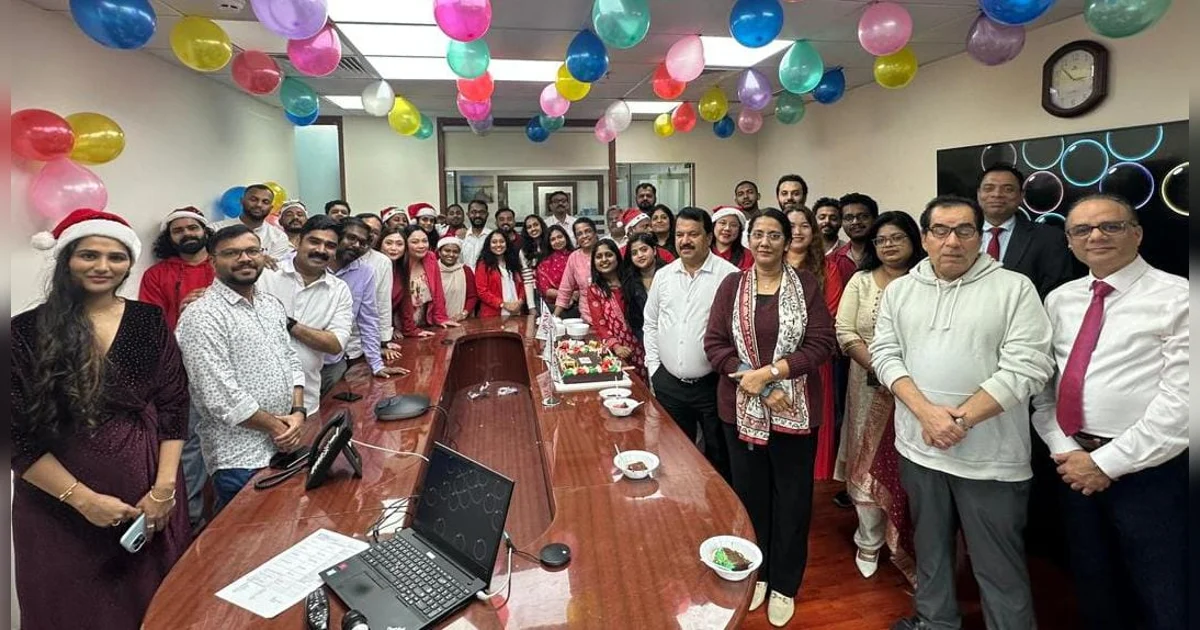
    Fathima Healthcare Group transformed its FMC Network corporate office in Bur Dubai into a vibrant holiday venue, hosting an elaborate Christmas celebration that emphasized organizational unity and employee appreciation. The December gathering served as both a seasonal festivity and a strategic reinforcement of the Group’s corporate values.

    The event featured meticulously orchestrated team dance performances, musical presentations, and extensive festive decorations that created an atmosphere of genuine camaraderie. Employees from various departments and hierarchical levels participated enthusiastically, demonstrating their creative talents while building cross-functional relationships in an informal setting.

    Dr K P Hussain, Founder Chairman, and Dr Beena Hussain, Executive Director, personally addressed the assembled staff, extending Christmas greetings and emphasizing the organization’s foundational principles of joy, unity, and togetherness. Their presence underscored leadership’s commitment to maintaining a people-centric culture that aligns with the Group’s long-term vision.

    Beyond seasonal merriment, the celebration represented a deliberate investment in organizational culture—reinforcing Fathima Healthcare Group’s dedication to creating an inclusive workplace environment where professional excellence coexists with strong community bonds. The event successfully translated corporate values into tangible experiences, highlighting how the organization celebrates both diversity and shared achievement.

    This gathering exemplifies contemporary corporate approaches to employee engagement, where festive celebrations serve dual purposes: acknowledging cultural diversity within multinational workforces while strengthening the social fabric that supports operational excellence throughout the year.

  • My grandfather encouraged me to play for Algeria, says Luca Zidane

    My grandfather encouraged me to play for Algeria, says Luca Zidane

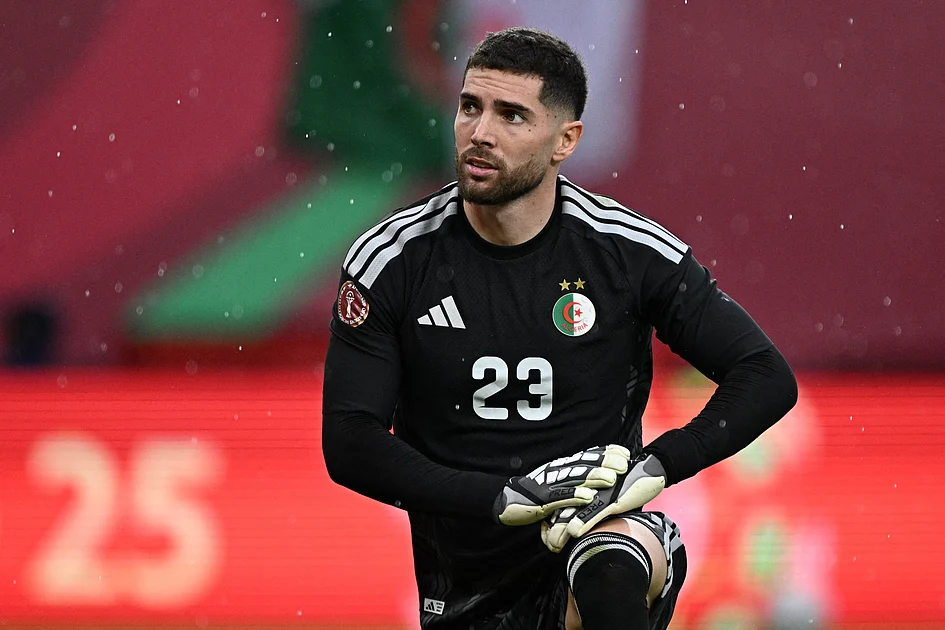
    In a heartfelt revelation that bridges family legacy and international football, Luca Zidane has detailed the profound familial encouragement behind his decision to represent Algeria on the global stage. The son of French football icon Zinedine Zidane, Luca made the significant switch from French junior teams to Algeria’s senior squad at age 27, a choice he attributes to deep-rooted cultural ties and his grandfather’s unwavering support.

    Zinedine Zidane, celebrated for leading France to 1998 World Cup and Euro 2000 glory, fully endorsed his son’s autonomous decision. Luca recounted his father’s advice: ‘Be careful, this is your choice. I can give you advice, but the final decision is yours.’ This paternal guidance came after outreach from Algeria’s coach and federation president, which solidified Luca’s commitment to honor his Algerian heritage.

    The goalkeeper, who plays for Spain’s Granada CF after beginning his career at Real Madrid, has become Algeria’s first-choice keeper. His father witnessed his competitive debut for the Desert Foxes in their 3-0 Africa Cup of Nations victory over Sudan, where Luca made a crucial save to preserve a narrow lead.

    Luca emphasized that his grandfather’s pride remains a driving force, stating that each international call-up prompts celebratory calls from his elder relative. In a poignant tribute, Luca has opted to wear ‘Zidane’ on his national team jersey—a departure from his club custom of using ‘Luca’—specifically to honor his grandfather’s legacy and their shared Algerian identity.

  • Abu Dhabi: Five suffocate after using firewood, charcoal heating in homes

    Abu Dhabi: Five suffocate after using firewood, charcoal heating in homes

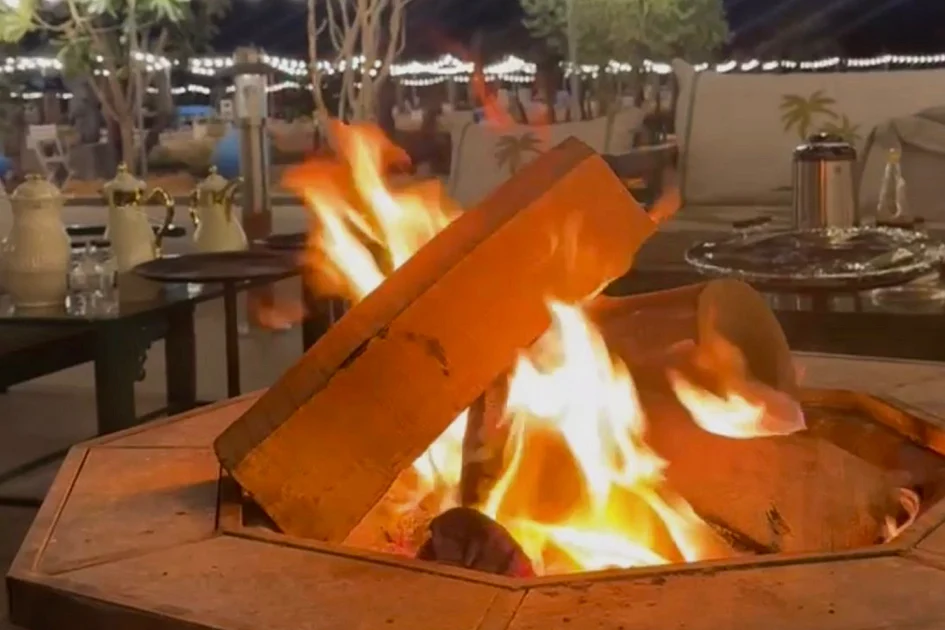
    Abu Dhabi police authorities have issued a critical public safety alert following multiple incidents of carbon monoxide poisoning from traditional heating methods. Five individuals required emergency medical attention after using firewood and charcoal heaters in poorly ventilated residential spaces during recent colder weather.

    Major General Mohammed Suhail Al Rashdi, Director of the Criminal Security Sector at Abu Dhabi Police, confirmed that rapid emergency response prevented fatalities in these cases. The incidents highlight a persistent public health challenge as some residents continue using traditional heating methods despite widespread availability of modern alternatives.

    Brigadier Saeed Humaid bin Dalmouj Al Dhaheri, Director of Al Ain Police Directorate, elaborated on the dangers: ‘The practice of lighting fires using firewood or charcoal inside enclosed spaces presents severe risks, particularly when safety measures are neglected.’ He specifically warned against overnight use of such heaters and sleeping in proximity to them due to dual threats of suffocation and fire hazards.

    Police recommendations include operating traditional heaters exclusively outdoors or ensuring they are equipped with specialized exhaust systems to direct smoke outside. Authorities emphasized the necessity of maintaining adequate ventilation in all living spaces and completely extinguishing heating devices outside residential areas after use.

    The warning comes during a period of increased heating needs in the region, with officials urging residents to prioritize modern, safe heating solutions over traditional methods that pose significant health and safety risks.

  • Abu Dhabi to allow pets in some restaurants, hotels under new law

    Abu Dhabi to allow pets in some restaurants, hotels under new law

    In a significant policy shift, Abu Dhabi has officially amended its municipal regulations to permit companion animals in designated hospitality venues across the emirate. The Department of Municipalities and Transport (DMT) announced the regulatory changes on December 25, 2025, marking a departure from previous restrictions that exclusively allowed certified service animals in food establishments.

    The amendments to Chairman’s Decision No. (4) of 2018, established under Law No. (2) of 2012, specifically enable hotels and restaurants holding tourism licenses to welcome pets alongside their owners. The revised legislation defines companion animals as domesticated pets that typically accompany owners outside residential settings, primarily encompassing cats and dogs.

    Under the new framework, participating establishments must implement specific zoning arrangements to accommodate animal companions. The regulations mandate designated pet-friendly areas, preferably in open-air environments such as outdoor terraces or balcony sections. For indoor accommodations, venues are required to create appropriately enclosed zones that comply with established health and safety protocols while ensuring animal welfare standards.

    The regulatory update emphasizes the importance of maintaining equilibrium between pet owners’ privileges and general public comfort. Establishments choosing to implement pet-friendly policies must ensure that their animal accommodation provisions do not compromise overall hygiene standards or disrupt the dining experience of other patrons. This balanced approach aims to foster a harmonious environment for all guests while progressively expanding pet accessibility in the emirate’s hospitality sector.

    The policy revision reflects Abu Dhabi’s ongoing efforts to modernize urban regulations in line with evolving societal trends and international best practices regarding animal companionship in public spaces.

  • Dubai cuts travel times by up to 20% with smart road message signs

    Dubai cuts travel times by up to 20% with smart road message signs

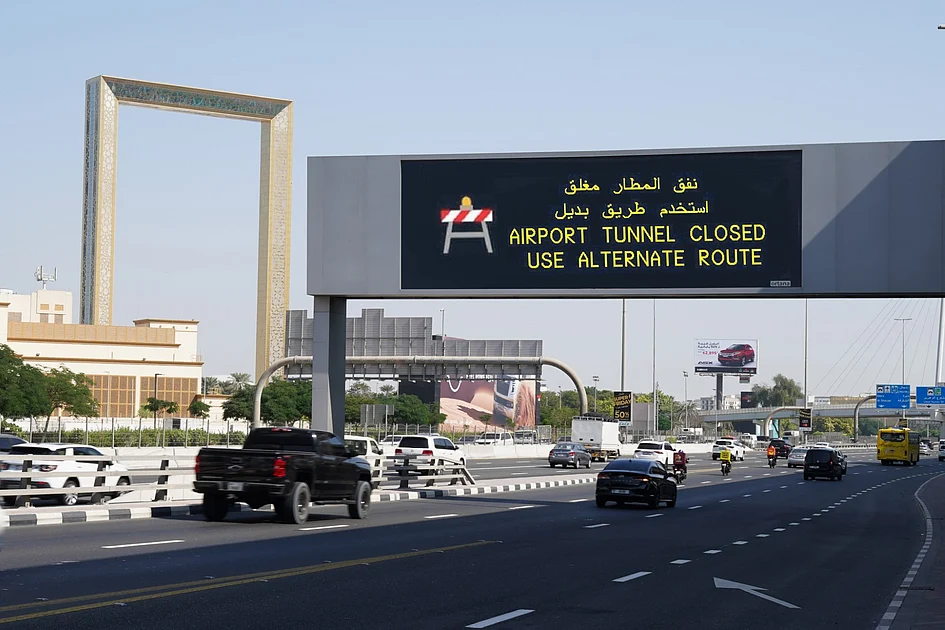
    Dubai’s transportation network has achieved remarkable efficiency gains through its advanced intelligent traffic management system, with real-time electronic signage reducing journey durations by up to 20% on major corridors. The Roads and Transport Authority (RTA) revealed that its network of 112 Dynamic Message Signs (DMS), integrated with artificial intelligence and big data analytics, has fundamentally transformed urban mobility across the emirate.

    During the first half of 2025, these intelligent displays generated 17,819 customized messages addressing various roadway conditions. Accident notifications constituted the majority of alerts, followed by real-time warnings about traffic congestion, vehicle breakdowns, road closures, adverse weather patterns, and ongoing construction activities.

    Salah Al Marzouqi, Director of Intelligent Traffic Systems at RTA’s Traffic and Roads Agency, explained the sophisticated operational methodology: “Our system implements sequential safety notifications beginning approximately two kilometers prior to incident locations. This multi-stage approach includes initial hazard warnings, subsequent congestion alerts, and finally strategic guidance messages to facilitate vehicle rerouting, significantly mitigating the risk of secondary accidents.”

    The infrastructure incorporates 22 specialized signs that provide live travel time estimates to key destinations including Dubai International Airport and Dubai Marina, empowering drivers to make informed routing decisions. The system processes real-time data from an extensive network of field sensors, traffic volume and speed detectors, travel time monitoring technologies, and meteorological stations.

    This comprehensive data ecosystem feeds into the central iTraffic platform, which utilizes advanced algorithms to generate immediate response protocols. These protocols can be manually authorized by traffic operators or automatically activated during emergency situations such as dense fog or heavy rainfall.

    The continuous enhancement of Dubai’s dynamic messaging infrastructure aligns with the emirate’s broader smart city initiative, which prioritizes the creation of safer, more efficient, and seamlessly integrated transportation experiences for both residents and international visitors.