
Matthew Gruter, a South African national who relocated to Australia in 2022, has had his visa revoked after being identified at a neo-Nazi rally outside the New South Wales parliament. The protest, organized by the National Socialist Network on November 8, featured approximately 60 men dressed in black, with Gruter prominently positioned in the front row. The group displayed a banner reading ‘Abolish the Jewish lobby’ and chanted slogans associated with the Hitler Youth, such as ‘blood and honour.’ The event, which lasted less than 20 minutes, was legally authorized but has sparked widespread condemnation. Australia’s Home Affairs Minister Tony Burke emphasized that visa holders are guests in the country and must adhere to its values. Gruter, a civil engineer and senior member of the National Socialist Network in New South Wales, now faces deportation. This incident highlights the growing concern over right-wing extremism in Australia, which recently criminalized the Nazi salute with mandatory prison terms.
标签: Africa
非洲
-
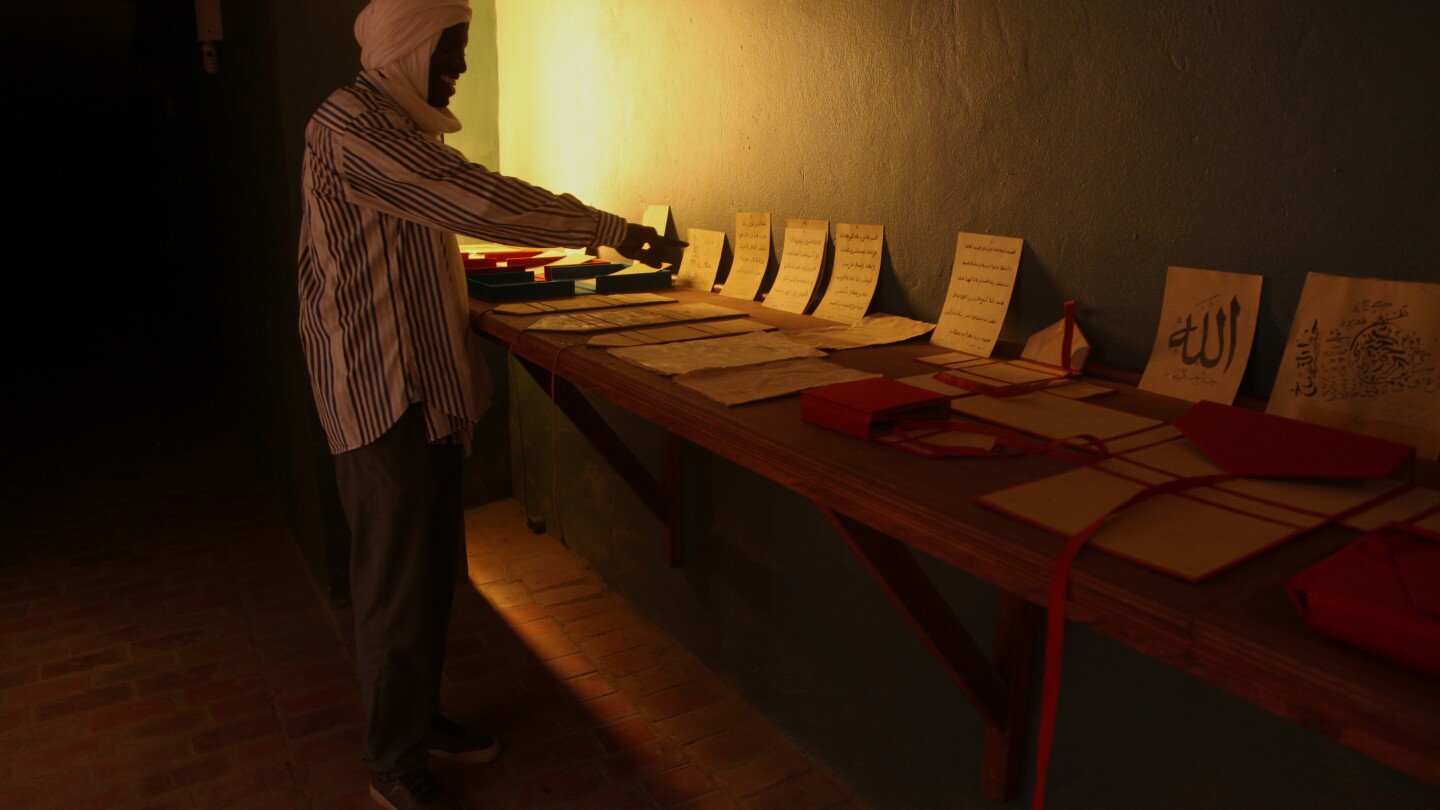
Timbuktu’s famed manuscripts escaped al-Qaida but the threat remains
In a daring act of cultural preservation, Abdoulaye Cissé, the general secretary of the Ahmed Baba Institute of Higher Islamic Studies and Research, risked his life to smuggle 28,000 fragile manuscripts out of Timbuktu thirteen years ago. This heroic effort unfolded as al-Qaida-linked extremists overran the historic desert town. Under the cover of darkness, Cissé and his team transported the manuscripts via donkey carts, wooden boats, and buses on a perilous 1,200-kilometer journey to Mali’s capital, Bamako. The operation, which took a month, was fraught with danger but ultimately successful in safeguarding these irreplaceable artifacts of West African history. In August, the manuscripts were returned to Timbuktu, a move celebrated by local leaders and the Malian government as a triumph of cultural pride and preservation. However, the threat of al-Qaida persists, with recent attacks and a fuel blockade imposed by the JNIM group underscoring the ongoing instability in the region. Timbuktu, once a global center of Islamic learning, houses an estimated 377,000 manuscripts in both public and private collections. These documents, many of which were also smuggled to Bamako, challenge the misconception that African history was primarily oral. They provide a rich archive of West African empires, scholarly debates, and historical events dating back centuries. The manuscripts reveal a tolerant and respectful Islamic tradition, with one decree in a private library explicitly protecting women’s rights. The destruction of over 4,000 manuscripts and UNESCO World Heritage Sites by al-Qaida in 2012 was a devastating blow, prompting renewed efforts to digitize and protect these treasures. Today, nearly all of the institute’s manuscripts are digitized, with backups stored on remote servers. Despite these advancements, challenges remain, including the need for modern storage facilities and surveillance systems. Timbuktu’s residents, deeply committed to their cultural heritage, strive to balance preservation with accessibility, ensuring that these manuscripts continue to inspire and educate future generations.
-

How Tanzania police crushed election protests with lethal force
Tanzania’s recent presidential and parliamentary elections were overshadowed by violent clashes between police and protesters, resulting in significant casualties and widespread condemnation. The unrest began on October 29 in Dar es Salaam, the nation’s largest city, and quickly spread to other urban centers, including Mwanza and Arusha. The protests, largely organized by young people, were fueled by frustration over a political system perceived as dominated by a single party since Tanzania’s independence in the 1960s.
-
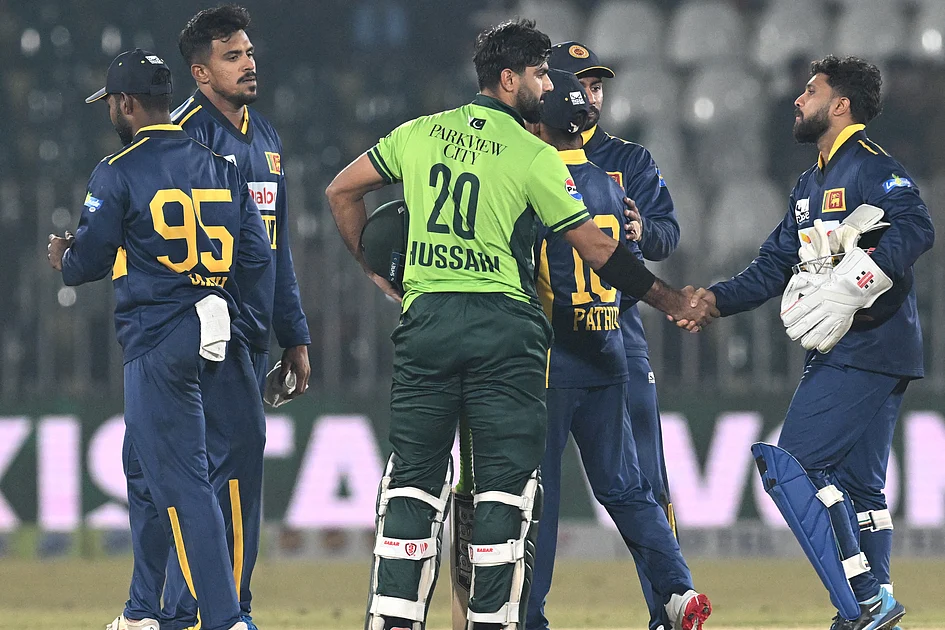
Clinical Pakistan whitewash Sri Lanka 3-0 in ODI series
Pakistan continued their cricketing dominance over Sri Lanka with a commanding 3-0 victory in the ODI series, marking their fourth consecutive series win against the island nation since 2015. The final match, held at Rawalpindi Stadium, saw Pakistan chase down a modest target of 212 with ease, finishing at 215-4 in 44.4 overs. Mohammad Rizwan’s unbeaten 61 and Fakhar Zaman’s 55 were pivotal in the chase, supported by a solid 42 not out from Hussain Talat. Earlier, Pakistan’s bowlers, led by Mohammad Wasim (3-47), Haris Rauf, and Faisal Akram, restricted Sri Lanka to a below-par total. Despite a brief resurgence from Sri Lanka’s leg-spinner Jeffrey Vandersay, who claimed three wickets, Pakistan’s batting depth proved insurmountable. The series, however, was marred by security concerns following a suicide bombing in Islamabad, which led to a one-day delay in the second ODI. Enhanced security measures ensured the completion of the series, with both teams now set to compete in a T20 tri-series alongside Zimbabwe starting November 18.
-
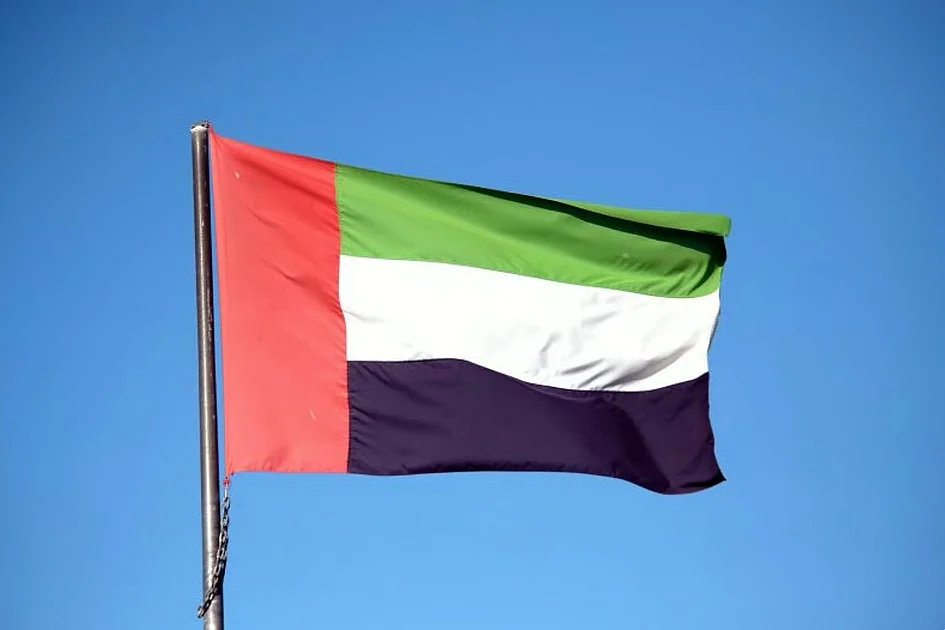
UAE condemns Israeli violations in West Bank, Al-Aqsa Mosque compound in Jerusalem
The United Arab Emirates (UAE) has issued a stern condemnation of Israel’s ongoing violations in the occupied West Bank and the Al-Aqsa Mosque compound in Jerusalem. In a statement released by the Ministry of Foreign Affairs (Mofa), the UAE expressed deep concern over the repeated incursions into the Al-Aqsa Mosque, provocations against worshippers, and attacks on a mosque in the Palestinian village of Kifl Hares. These actions, the UAE warned, risk escalating regional tensions and undermining stability. The Ministry emphasized the critical need to halt such dangerous and provocative practices, particularly in Al-Haram Al-Sharif, and called on Israeli authorities to take immediate steps to prevent further escalation. The UAE also reaffirmed its support for Jordan’s custodial role in safeguarding Jerusalem’s holy sites, including the Al-Aqsa Mosque and the Dome of the Rock. Additionally, Mofa urged the international community to intensify efforts toward achieving a lasting and comprehensive peace based on a two-state solution, ensuring the Palestinian people’s right to an independent and sovereign state in line with international law.
-

Sharjah’s green realty boom accelerates as Beeah’s Khalid bin Sultan City Phase 1 sells out
Sharjah’s real estate market has reached a significant milestone with the complete sell-out of Phase 1 of Khalid Bin Sultan City, a flagship mixed-use development by Beeah. This project, designed by the globally acclaimed Zaha Hadid Architects, represents the UAE’s first fully master-planned residential initiative by the firm. The strong buyer response, including the immediate sale of an entire residential cluster during the launch event, underscores Sharjah’s growing reputation as a hub for sustainable, master-planned living.
-
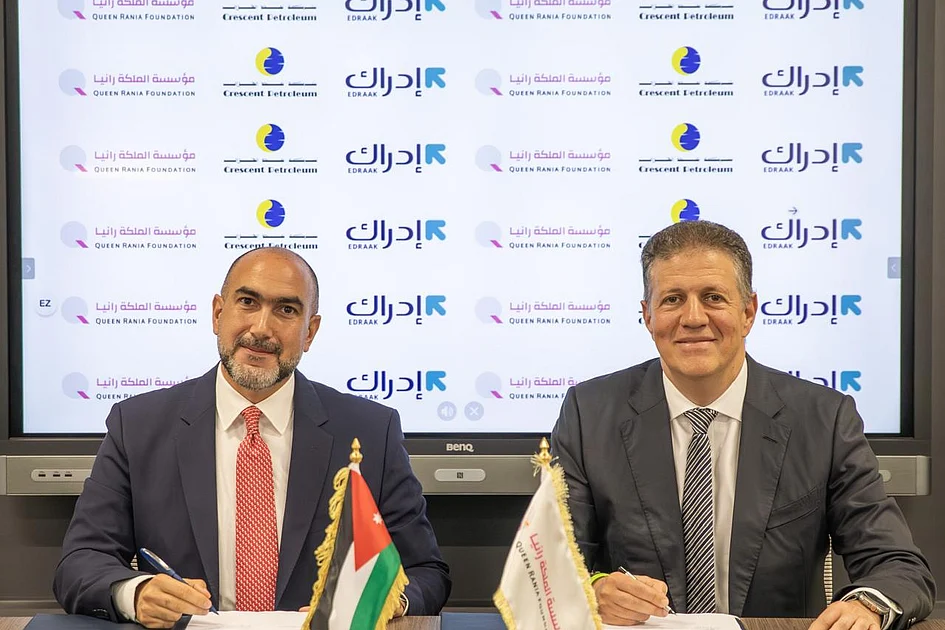
Crescent Petroleum and Edraak partner to boost AI readiness among Arab youth
Crescent Petroleum, the Middle East’s oldest and largest private oil and gas company, has joined forces with Edraak, the Arab world’s leading non-profit online education platform, to launch a groundbreaking AI training program. This initiative, titled ‘AI for Employment,’ aims to equip young people across the Arab world with essential AI skills to enhance their workplace capabilities and career prospects. The program builds on the success of the Career Compass Pathway, a joint venture launched in 2024 that has already trained 1.3 million young individuals in business skills, IT, and English language proficiency. Edraak, an initiative of the Queen Rania Foundation in Jordan, is renowned for its accessible, high-quality Arabic-language online courses. The new AI specialisation will offer four online courses, providing practical skills and hands-on experience in applying AI across various industries. Participants will learn to leverage AI productivity tools, craft effective AI prompts, and apply AI in real-world job functions. The courses, delivered in Arabic by expert practitioners, will culminate in a certificate, signalling participants’ readiness to innovate in a rapidly evolving job market. Majid Jafar, CEO of Crescent Petroleum, emphasised the transformative role of AI in the future of work, stating that the program will prepare young people to compete and thrive. Bassem Saad, CEO of the Queen Rania Foundation and Chairman of Edraak, highlighted the importance of AI as a core competency for career success and Edraak’s mission to meet market needs through accessible education. With youth unemployment in the MENA region exceeding 25%—the highest globally—and 78 million jobs expected to evolve by 2030, initiatives like AI for Employment are critical for equipping young Arabic speakers with future-ready skills. The program reinforces the Career Compass Pathway, which continues to offer modules in digital literacy, business communication, CV writing, and interview skills. Edraak’s broader initiatives, including AI for Employment and Career Compass, are pivotal in driving inclusive growth and opportunity across the Arab world.
-

South Africa beats India in Test match; Harmer powers thrilling 30-run victory
In a gripping display of skill and determination, South Africa triumphed over India by 30 runs in the opening Test match at Eden Gardens, Kolkata. The victory, achieved within three days, was powered by off-spinner Simon Harmer’s exceptional bowling performance, claiming 4-21 as India crumbled to 93 while chasing a modest target of 124. The match, played in front of a nearly 40,000-strong crowd, saw India’s batting lineup collapse dramatically. Earlier, Temba Bavuma’s gritty unbeaten 55 had given South Africa a fighting chance after they resumed Day Three at a precarious 93-7. Bavuma’s resilience on a challenging pitch, marked by inconsistent bounce and spin, provided the Proteas with a defendable total. India’s chase was further hampered by the absence of skipper Shubman Gill, who retired hurt in the first innings. Marco Jansen’s early breakthroughs, dismissing Yashasvi Jaiswal and KL Rahul, set the tone for India’s downfall. Harmer’s crucial wickets, including Dhruv Jurel, Rishabh Pant, and Ravindra Jadeja, dismantled India’s middle order. Aiden Markram’s dismissal of Washington Sundar (31) and Axar Patel’s brief but spirited 26, including two sixes, were not enough to salvage the match for India. South Africa’s lion-hearted bowling effort sealed a memorable victory, setting the stage for an intense series.
-

Keerthy Suresh is UNICEF India’s celebrity advocate for child rights
Indian actress Keerthy Suresh has been named UNICEF India’s Celebrity Advocate, a role that will see her championing the rights and well-being of children and adolescents. Known for her acclaimed performances in Tamil, Telugu, Malayalam, and Hindi cinema, the National Award-winning actress will focus on advancing mental health awareness and other critical child rights issues. Her appointment underscores her commitment to social change and gender equality, themes she has often explored through her film roles. UNICEF India Representative Cynthia McCaffrey praised Suresh’s deep connection with audiences, stating that her influence will serve as a powerful platform to advocate for children’s rights. Suresh expressed her honor in joining UNICEF India, emphasizing the importance of nurturing care in helping children lead fulfilling lives. Meanwhile, the actress is set to star in the upcoming Telugu film ‘Revolver Rita,’ scheduled for release on November 28.
-

Dubai: 60% work complete for first flying taxi vertiport near DXB
Dubai is making significant strides in its ambitious plan to launch the world’s first aerial taxi network by 2026, with the construction of its inaugural vertiport near Dubai International Airport (DXB) now 60% complete. Developed by Skyports Infrastructure, this cutting-edge facility spans 3,100 square meters across four floors and features dedicated levels for parking, take-off and landing pads, electric aircraft charging stations, and fully air-conditioned passenger areas. Once operational, the vertiport is expected to handle approximately 42,000 landings annually, catering to around 170,000 passengers. This project is a cornerstone of Dubai’s broader initiative to establish a network of vertiports across key locations, including Zabeel Dubai Mall, Atlantis The Royal on Palm Jumeirah, and Dubai Marina. These sites, developed in collaboration with Emaar Properties, Atlantis The Royal, and Wasl Asset Management Group, will form the backbone of the city’s electric aerial taxi network. The Roads and Transport Authority (RTA) has also completed the first crewed electric vertical take-off and landing (eVTOL) flight in the UAE, conducted with Joby Aviation, marking a pivotal milestone in the project’s development. Mattar Al Tayer, Director-General of RTA, emphasized that the service aims to provide a fast, safe, and convenient mobility option, significantly reducing travel times across the city. For instance, a journey from Dubai International Airport to Palm Jumeirah is expected to take just 10 minutes, compared to 45 minutes by road. The aerial taxis, equipped with six rotors and four battery packs, can carry four passengers and a pilot, reaching speeds of up to 320 km/h with a range of 160 kilometers. Skyports Infrastructure CEO Duncan Walker hailed the vertiport’s development as a historic moment, while Joby Aviation founder JoeBen Bevirt expressed confidence in the project’s progress towards a 2026 commercial rollout. This initiative is part of a multi-agency collaboration involving RTA, the General Civil Aviation Authority, Dubai Civil Aviation Authority, Dubai Air Navigation Services, Skyports Infrastructure, and Joby Aviation.