In a unified and urgent appeal, the foreign ministers of Germany, Jordan, and the United Kingdom have called for an immediate ceasefire in Sudan, highlighting the catastrophic humanitarian crisis unfolding in the East African nation. The plea comes as the paramilitary Rapid Support Forces (RSF) seized control of el-Fasher, the last major city in Darfur, amid reports of widespread violence, ethnic killings, and sexual assaults. United Nations officials have confirmed that over 450 people were killed in a hospital attack, though the RSF denies involvement. Satellite imagery and social media footage, however, depict scenes of mass slaughter and devastation. Speaking at the Manama Dialogue security summit in Bahrain, British Foreign Secretary Yvette Cooper described the situation as a ‘truly horrifying’ humanitarian crisis, emphasizing the use of mass executions, starvation, and rape as weapons of war. German Foreign Minister Johann Wadephul echoed these concerns, labeling the crisis as ‘apocalyptic,’ while Jordan’s Foreign Minister Ayman Safadi criticized the international community for neglecting Sudan’s plight. The ministers stressed that no amount of aid can alleviate the suffering until the violence ceases. Meanwhile, Bahrain’s government revoked The Associated Press’s accreditation to cover the summit following a story on detained activist Abdulhadi al-Khawaja, who ended his hunger strike after receiving letters from the European Union and Denmark.
标签: Africa
非洲
-

Samia wins Tanzania election with 98% of votes amid unrest
Tanzania’s President Samia Suluhu Hassan has been re-elected for another term, securing a landslide victory with 98% of the votes, according to the electoral commission. The announcement came after days of widespread unrest, with reports of hundreds of casualties and a nationwide internet shutdown complicating efforts to verify the death toll. International observers have raised concerns over the lack of transparency and the violent clashes that have marred the election process. The government has downplayed the scale of the violence, extending a curfew to restore order. In Zanzibar, the semi-autonomous archipelago, incumbent President Hussein Mwinyi also won re-election with nearly 80% of the vote, though the opposition has alleged ‘massive fraud.’ Protests erupted in major cities, with demonstrators tearing down campaign posters and clashing with security forces. Opposition leaders have accused the government of undermining democracy by suppressing their candidates, one of whom is jailed and another disqualified on technical grounds. Rights groups, including Amnesty International, have condemned the government’s alleged repression, citing enforced disappearances and extrajudicial killings. Samia, Tanzania’s first female president, assumed office in 2021 following the death of her predecessor, John Magufuli. Her ruling party, Chama Cha Mapinduzi (CCM), has dominated Tanzanian politics since independence.
-

Tanzania President Hassan wins disputed election with more than 97% of vote, official results show
Tanzanian President Samia Suluhu Hassan has secured a landslide victory in the country’s disputed election, garnering over 97% of the vote, as per official results announced early Saturday. This unprecedented win, rare in the region, has sparked concerns among critics and opposition groups, who argue that the election was less of a contest and more of a coronation. Hassan’s two main rivals were either barred or prevented from running, leaving her to face 16 candidates from smaller parties. The October 29 election was marred by violence, with demonstrators taking to the streets of major cities to protest the vote and halt the counting process. The military was deployed to assist police in quelling riots, and internet connectivity in the East African nation was intermittently disrupted. Tundu Lissu, leader of the opposition group Chadema, has been jailed for months on treason charges after calling for electoral reforms he deemed essential for free and fair elections. Another opposition figure, Luhaga Mpina of the ACT-Wazalendo group, was also barred from running. The ruling Chama Cha Mapinduzi party’s decades-long grip on power was at stake, as charismatic opposition figures emerged, hoping to lead the country toward political change. Rights groups, including Amnesty International, have cited a pattern of enforced disappearances, arbitrary arrests, and extrajudicial killings in Tanzania ahead of the polls. In June, a United Nations panel of human rights experts reported over 200 cases of enforced disappearance since 2019, expressing alarm at the repression ahead of the elections. The International Crisis Group noted that Tanzania’s president oversaw an unprecedented crackdown on political opponents, curbing freedom of expression through bans on platforms like X and restrictions on the Tanzanian digital platform JamiiForums, as well as silencing critical voices through intimidation or arrest. The political maneuvering by Tanzanian authorities is unprecedented, even in a country where single-party rule has been the norm since the advent of multi-party politics in 1992. Critics argue that previous leaders tolerated opposition while maintaining a firm grip on power, whereas Hassan is accused of leading with an authoritarian style that defies youth-led democracy movements elsewhere in the region.
-

Egypt’s Grand Museum opens, displaying Tutankhamun tomb in full for first time
Egypt has officially unveiled the Grand Egyptian Museum (GEM), a monumental cultural institution near the Great Pyramid of Khufu in Giza. Described as the world’s largest archaeological museum, the GEM houses approximately 100,000 artefacts spanning seven millennia of Egyptian history, from pre-dynastic times to the Greek and Roman eras. A centerpiece of the museum is the complete collection from Tutankhamun’s tomb, including his iconic gold mask, throne, and chariots, displayed together for the first time since their discovery by British Egyptologist Howard Carter in 1922. Dr. Tarek Tawfik, President of the International Association of Egyptologists, emphasized the significance of showcasing the entire tomb, offering visitors an immersive experience akin to Carter’s original discovery. The $1.2 billion museum complex, which spans 500,000 square meters, is expected to attract up to 8 million visitors annually, revitalizing Egypt’s tourism sector. The GEM also features other remarkable exhibits, such as the 4,500-year-old funerary boat of Khufu and a 16-meter-long suspended obelisk of Ramesses II. The museum’s opening has reignited calls for the repatriation of key Egyptian antiquities, including the Rosetta Stone, the Dendera Zodiac, and the Bust of Nefertiti, currently held in foreign institutions. Dr. Zahi Hawass, Egypt’s former minister of tourism and antiquities, expressed pride in the museum’s completion, highlighting its role in showcasing Egypt’s cultural heritage and modern achievements. The GEM, which began construction in 2005, faced numerous challenges, including financial crises, political turmoil, and the COVID-19 pandemic, but its completion marks a new era for Egyptology and cultural tourism.
-

‘I was accused of spying and beaten’ – a boy’s escape from captured Sudan city
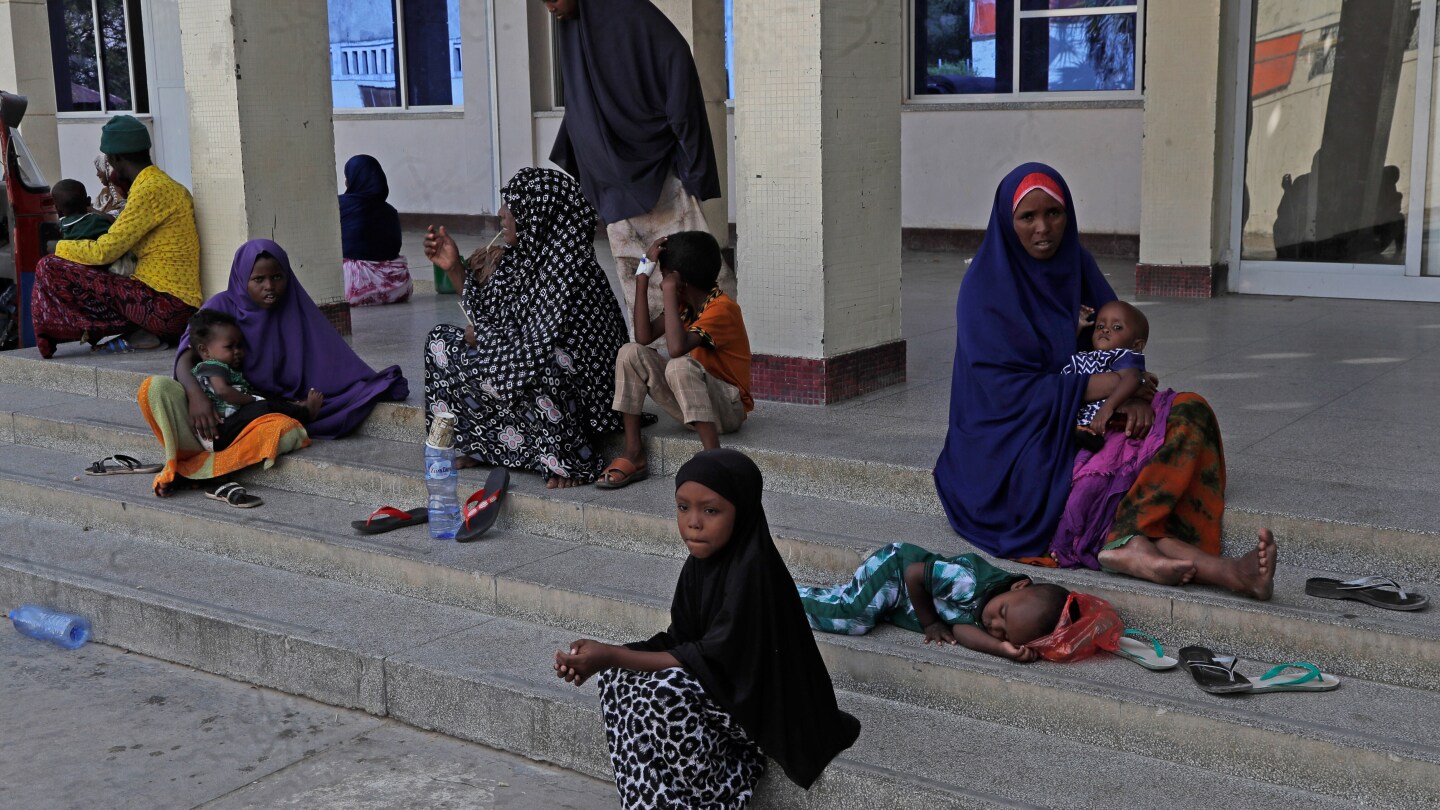
The western Sudanese city of el-Fasher has become a focal point of the ongoing civil war between the Rapid Support Forces (RSF) and the Sudanese army. Twelve-year-old Abdiwahab, whose name has been changed for safety, recently escaped the city after it fell to the RSF. In a video shared with the BBC, he recounts being assaulted multiple times by RSF fighters, who accused him of espionage. Separated from his family during the chaos, Abdiwahab walked 80 kilometers over three days to reach Tawila, a town offering relative safety. His story mirrors those of thousands of others fleeing el-Fasher, where the UN estimates 60,000 have escaped amid reports of atrocities, including rape and mass killings. Many survivors arrive in Tawila alone, traumatized, and in desperate need of aid. Ali, a volunteer aid worker who fled el-Fasher himself, filmed Abdiwahab’s account and is now helping new arrivals at a temporary camp. The situation remains dire, with aid agencies overwhelmed by the influx of displaced people, many of whom are unaccompanied minors or suffering from injuries and malnutrition. Despite the RSF leader’s admission of ‘violations’ and promises of investigation, the humanitarian crisis continues to deepen, leaving over 260,000 civilians, including 130,000 children, trapped in el-Fasher under famine-like conditions.
-

UAE’s dancing horses: Inside Abu Dhabi Royal Equestrian Arts, where stallions perform ballet
The Abu Dhabi Royal Equestrian Arts (ADREA), a groundbreaking Andalusian-style dressage facility, has officially opened its doors on Jubail Island, marking a historic moment for classical horsemanship in the Gulf region. Inaugurated by Sheikh Mansour bin Zayed Al Nahyan, ADREA is the fifth major school globally dedicated to this centuries-old art form, blending traditional stewardship with cutting-edge technology. The opening gala featured a mesmerizing horse-ballet performance, uniting riders from Austria, Spain, Portugal, France, and the UAE, accompanied by Andalusian guitar and Arabian melodies, striking light projections, and intricate choreography. The event showcased the artistic essence of classical horsemanship, transforming movements once used in battle into balletic gestures executed with precision and theatricality. Gonzalo Marques, ADREA’s Chief Rider, emphasized the fusion of athletic training and artistic storytelling, stating, ‘It’s an art, not a science.’ ADREA’s mission is to preserve heritage while training a new generation of riders, fostering a relationship between horse and human based on trust and harmony. The facility spans 65,000 square meters and includes an Olympic arena, the Furusiyya Gallery showcasing rare equestrian artifacts, a Saddle Atelier, an equestrian library, and public spaces for exhibitions and research. The school’s curriculum offers five core programmes, ranging from a four-year rider degree to a Junior Academy for children as young as four. ADREA also integrates modern technology, such as an AI-based monitoring system that assesses horses’ physical activity, environmental conditions, and stress indicators, ensuring their welfare. The stables are strategically located away from city noise, allowing horses to rest and train in tranquillity. ADREA aims to be more than a school or performance venue; it is a cultural hub and tourist destination that celebrates the historical and cultural significance of horses. Weekly public performances and guided tours will make the facility accessible to all, fostering a deeper connection between the public and the art of classical horsemanship.
-

Dubai World Cup turns 30: How the UAE is fast becoming a global hub for horse racing
As the Dubai World Cup marks its 30th anniversary, the UAE solidifies its position as a global leader in horse racing. The event, which began in 1996 under the visionary leadership of Sheikh Mohammed bin Rashid Al Maktoum, has transformed Dubai into a premier destination for the sport. The 2025–2026 Dubai Racing Carnival, set to commence on November 7 at Meydan Racecourse, will feature 16 race meetings, culminating in the 30th Dubai World Cup on March 28, 2026, with a staggering total purse of $30.5 million. This milestone celebrates not only the event’s legacy but also the UAE’s commitment to innovation, integrity, and international collaboration in horse racing. The introduction of new initiatives, such as the Investigation Unit by the Emirates Racing Authority, underscores the nation’s dedication to maintaining the highest standards of fairness and transparency. Additionally, the expanded international lineup and enhanced prize money reflect Dubai’s growing influence in the global racing community. From its humble beginnings at Nad Al Sheba Racecourse to the state-of-the-art Meydan Racecourse, the Dubai World Cup has become a symbol of excellence, attracting the world’s finest horses, trainers, and owners. As the UAE continues to raise the bar, the 30th edition promises to be a historic celebration of the sport’s evolution and Dubai’s enduring legacy in horse racing.
-

AI in Arabic? How Gulf could soon lead Artificial Intelligence race
The Gulf region is emerging as a global leader in the development and export of Arabic-focused artificial intelligence (AI). What began as a regional push to digitize economies has evolved into a competitive race to create and export AI systems tailored to the linguistic and cultural nuances of the Arab world. At the forefront of this transformation are startups like Arabic.AI, which showcased advanced large language models (LLMs) at GITEX Global 2025, MENA’s premier tech event. These models, capable of processing and responding in Arabic, mark a significant shift from mere adoption to the creation of region-specific AI technologies.
-

What exactly is a QD-Mini LED TV – and how it’s suddenly everywhere
As home entertainment evolves, QD-Mini LED TVs are emerging as the pinnacle of display technology, blending cutting-edge innovation with immersive viewing experiences. Across the Gulf region, including the UAE, Saudi Arabia, and Qatar, rising incomes and a tech-savvy population are driving demand for larger, more advanced screens. QD-Mini LED technology, combining the precision of Mini LED backlighting with the vibrant colors of Quantum Dots, is at the forefront of this transformation.
Traditional LED TVs use a limited number of backlights, akin to illuminating a stage with a few spotlights. In contrast, Mini LED employs thousands of microscopic light sources, each individually controlled for superior contrast and brightness. Quantum Dot technology enhances this further by converting light into pure, vivid colors, delivering stunning reds, greens, and blues. The result is a display that offers unparalleled brightness, accuracy, and lifelike tones from any angle.
The global shift toward Mini LED began as consumers sought OLED-like contrast without the associated costs or risks of screen burn-in. Early innovators like TCL, which introduced the first Mini LED TV in 2019, have paved the way for this technology to become mainstream. Advances in optical control systems and AI-driven dimming algorithms have further refined the viewing experience, making QD-Mini LED TVs a benchmark for premium home entertainment.
In the GCC, where open-plan homes and natural daylight are common, QD-Mini LED TVs are particularly appealing. Brands like TCL have tailored their offerings to meet regional preferences, balancing high brightness with anti-glare coatings and wide viewing angles. With screen sizes up to 115 inches, these TVs combine cinematic visuals with sleek, modern designs, resonating strongly with consumers’ evolving lifestyles.
QD-Mini LED technology represents a harmonious blend of performance, design, and sustainability, offering energy-efficient solutions for modern homes. As televisions transition from mere screens to lifestyle statements, QD-Mini LED is redefining how we experience light, color, and immersion in our living rooms. TCL’s 2025 lineup, featuring models like the C6K, C7K, C8K, and X11K, exemplifies this innovation, making advanced technology accessible to a broader audience.
Explore TCL’s QD-Mini LED lineup and discover how this groundbreaking technology is transforming home entertainment at www.tcl.com/gulf/en/choose-qd-mini-led.
-

Guinea-Bissau arrests officers for alleged coup attempt
Guinea-Bissau’s armed forces announced on Friday the arrest of several military officers accused of orchestrating a coup attempt. The alleged plot, led by Brig. Gen. Daba Na Walna, director of a military training school, involved senior officers who had been reported missing since Monday. The announcement came just a day before the official start of the general election campaign, raising concerns about the nation’s stability. The armed forces’ General Staff condemned the incident, stating that it threatened the peace and socio-economic development crucial for attracting foreign investment. This marks the second known coup attempt against President Umaro Sissoco Embaló, who assumed power in 2020. The details of the accused plotters’ fate remain undisclosed. Guinea-Bissau, a small West African nation, has a history of political instability, with multiple coups since gaining independence from Portugal over 50 years ago. The current political climate is further strained by controversy over Embaló’s term. The opposition claims his term should have ended in February, but the Supreme Court extended it until September. Embaló, however, set the election date for November 30, declaring his first term would last until then. This decision has heightened tensions, with the opposition refusing to recognize his presidency. Earlier this year, a mediation mission from a West African regional bloc abruptly left the country after reportedly facing expulsion threats from Embaló.