Dubai, renowned for its high quality of life, safety, and world-class healthcare, has introduced a one-year residency visa that allows expatriates to sponsor their parents to live in the city. This initiative caters to the growing number of expats who, after establishing themselves in Dubai, wish to reunite with their families. The visa aims to provide a seamless process for bringing parents to the UAE, ensuring they can enjoy the city’s exceptional lifestyle. To qualify, applicants must meet specific criteria, including a minimum monthly salary of Dh10,000 and proof of adequate accommodation, such as a two-bedroom home registered under Ejari. The application process involves submitting essential documents, including the applicant’s Emirates ID, passport copies, labor contract, and proof of relationship with the parents. Additionally, a security deposit of Dh5,000 and various processing fees, including entry permits, medical tests, and Emirates ID charges, are required. This initiative underscores Dubai’s commitment to fostering family unity and enhancing the well-being of its diverse expatriate community.
标签: Africa
非洲
-

UK announces £5 million aid for Sudan after ‘truly horrifying’ reports
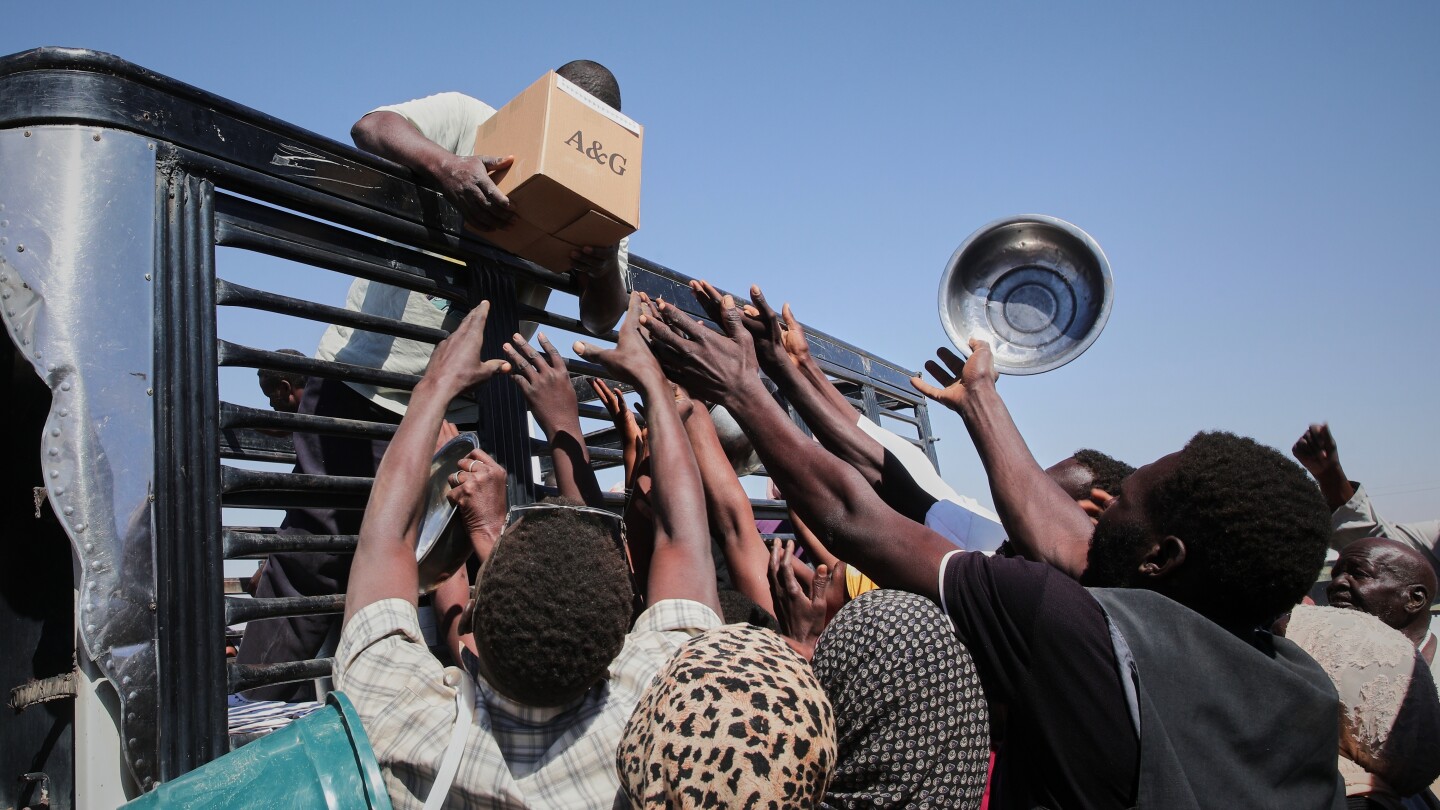
The United Kingdom has pledged an additional £5 million ($6.57 million) in emergency aid to Sudan following alarming reports of widespread atrocities committed by the paramilitary Rapid Support Forces (RSF) in Al-Fasher. This funding supplements the £120 million already committed by the UK over the past year. A significant portion of the new aid, £2 million, is earmarked to support survivors of sexual violence in the region. The RSF, which has been in conflict with the Sudanese army since April 2023, recently captured Al-Fasher, the army’s last stronghold in the western Darfur region, after an 18-month siege characterized by bombardment and starvation. UK Foreign Minister Yvette Cooper described the situation as ‘truly horrifying,’ citing mass executions, starvation, and the use of rape as a weapon of war. She emphasized that women and children are disproportionately affected in what she termed ‘the largest humanitarian crisis of the 21st century.’ The UK Foreign Office has reiterated its commitment to urging all parties to cease hostilities, protect civilians, and ensure unimpeded humanitarian access.
-

Kenyan landslide kills 21 after heavy rainfall
The Kenyan government has reported a tragic mudslide in the western region of the country, resulting in the deaths of 21 individuals. The disaster, triggered by relentless heavy rainfall, occurred in Marakwet East late Friday night. Interior Minister Kipchumba Murkomen confirmed that the victims’ bodies have been moved to a nearby airstrip. Additionally, over 30 people remain missing, while 25 others with severe injuries have been airlifted for urgent medical care. The Kenyan Red Cross, leading rescue operations, noted that the most affected areas are inaccessible due to mudslides and flash flooding. Search and rescue efforts were temporarily halted on Saturday evening but are set to resume on Sunday. Murkomen assured that preparations are underway to deliver food and essential supplies to the victims, with military and police helicopters on standby for transportation. Kenya is currently in its second rainy season, which typically brings shorter periods of wet weather compared to the earlier, more prolonged rainy season. Authorities have advised residents near seasonal rivers and landslide-prone areas to relocate to safer locations. Meanwhile, neighboring Uganda has also faced severe weather, with flash floods and landslides claiming lives since last Wednesday. The Uganda Red Cross reported a mudslide in Kapsomo village, eastern Uganda, which destroyed a home and killed four occupants. Floods have severely impacted villages near riverbanks in the Bulambuli District, with continuous heavy rains causing the River Astiri and River Sipi to overflow, leading to widespread destruction of homes, crops, and infrastructure.
-

Chinese cuisine championship bridges cultures in Kenya
The 2025 Africa Championship of Chinese Cuisine, held at Kenya’s Utalii College, became a vibrant hub of culinary excellence and cultural connection. The event, organized by the World Federation of Chinese Catering Industry with support from the Chinese embassy in Kenya and the Kenya Chinese Cuisine and Culture Association, attracted approximately 40 teams from across the globe. Participants included 15 Kenyan teams, 15 from China, and representatives from Australia, Senegal, South Africa, Nigeria, and the United States, alongside three non-professional Kenyan teams. The competition highlighted the artistry of Chinese cuisine, with chefs crafting innovative dishes that blended traditional Chinese flavors with African influences. From dim sum to Sichuan spice and Cantonese delicacies, the event showcased the diversity of Chinese culinary traditions. Rebecca Miano, Kenya’s cabinet secretary for Tourism, emphasized the event’s role in strengthening Kenya-China relations, aligning with the vision of a ‘China-Kenya Community with a Shared Future for the New Era.’ She also underscored the importance of gastronomy in promoting tourism and fostering economic diplomacy. The championship not only celebrated culinary skills but also served as a platform for cultural exchange, bridging communities through the universal language of food.
-

Sudan: New satellite images suggest mass killings continue in Al Fasher
New satellite imagery analyzed by Yale University’s Humanitarian Research Lab indicates that mass killings are likely continuing in and around Al Fasher, Sudan, following the city’s capture by the paramilitary Rapid Support Forces (RSF). The RSF seized Al Fasher on Sunday, marking the fall of the Sudanese army’s last stronghold in the Darfur region after an 18-month siege. Reports from survivors describe horrific atrocities, including the execution of children in front of their parents, widespread looting, and the abduction of civilians. The Yale report identified at least 31 clusters of objects consistent with human bodies across neighborhoods, university grounds, and military sites, suggesting a grim toll on the population. Tens of thousands remain trapped in the city, while over 65,000 have fled. The RSF claims to have arrested fighters accused of abuses, but UN officials have questioned their commitment to accountability. The conflict has deepened Sudan’s division, with the RSF now controlling all five state capitals in Darfur, effectively splitting the country along an east-west axis.
-

Nigeria pushes back after Trump claims country’s Christians face ‘existential threat’
ABUJA, Nigeria — Nigerian President Bola Ahmed Tinubu has firmly rejected the recent designation of Nigeria as a ‘country of particular concern’ by the United States, which accused the West African nation of failing to curb the persecution of Christians. In a statement released on social media on Saturday, Tinubu emphasized that Nigeria is a nation built on religious freedom and tolerance, rejecting the characterization as inaccurate and misleading. He stated, ‘Religious freedom and tolerance have been a core tenet of our collective identity and shall always remain so. Nigeria opposes religious persecution and does not encourage it. Our constitution guarantees protection for citizens of all faiths.’
The U.S. designation, which was echoed in a social media post by former President Donald Trump on Friday, claimed that Christianity faces an existential threat in Nigeria due to actions by radical Islamists. Trump’s comments followed weeks of similar claims by U.S. Senator Ted Cruz, who urged Congress to label Nigeria as a violator of religious freedom, citing alleged ‘Christian mass murder.’
Nigeria, with a population of 220 million, is nearly evenly split between Christians and Muslims. The country has long grappled with insecurity from various sources, including the extremist group Boko Haram, which seeks to impose its radical interpretation of Islamic law and has targeted both Christians and Muslims. Attacks in Nigeria are driven by a range of motives, including religious tensions, farmer-herder conflicts over dwindling resources, communal rivalries, and ethnic clashes.
Analysts note that while Christians are among those targeted, the majority of victims of armed groups are Muslims in Nigeria’s predominantly Muslim north, where most attacks occur. Kimiebi Ebienfa, a spokesperson for Nigeria’s Ministry of Foreign Affairs, reiterated the government’s commitment to protecting all citizens, regardless of religion. ‘The Federal Government of Nigeria will continue to defend all citizens, irrespective of race, creed, or religion,’ Ebienfa said. ‘Like America, Nigeria celebrates the diversity that is our greatest strength.’
Nigeria was first placed on the U.S. ‘country of particular concern’ list in 2020 over alleged ‘systematic violations of religious freedom.’ The designation, which did not specifically single out attacks on Christians, was lifted in 2023, a move seen as an effort to improve bilateral relations ahead of then-U.S. Secretary of State Antony Blinken’s visit.
-

‘Worth it’: Why young UAE residents are lifting heavy trash bags to keep desert clean
As winter approaches, the deserts of the UAE are becoming a popular destination for outdoor activities, picnics, and car shows. However, the surge in visitors has led to a concerning increase in litter, threatening the natural beauty and ecological balance of these pristine landscapes. In response, groups of young Emiratis have taken it upon themselves to launch volunteer-driven clean-up campaigns, transforming a simple idea into a widespread movement for environmental responsibility. What began as a small effort by two friends in 2022 has now grown into a coordinated initiative involving over fifty participants. These volunteers not only collect trash but also organize camping spots and raise awareness among visitors to ensure the desert remains clean after gatherings. The initiative has gained momentum, with local businesses and philanthropists offering support through donations and rewards. Despite the physical challenges of working in remote, rugged terrain, the volunteers remain motivated by their love for their country and pride in representing Emirati youth. Their efforts have started to yield results, with more visitors now packing up their belongings properly before leaving. The movement has also gained traction on social media, attracting attention from across the Gulf region. Volunteers emphasize the importance of safety, with many trained in first aid and emergency response. The initiative highlights the collective responsibility of preserving the nation’s natural heritage and serves as a reminder of the enduring value of volunteerism and environmental awareness.
-

India and SA prepare for game-changing World Cup final
A historic moment awaits as India and South Africa prepare to face off in the ICC Women’s Cricket World Cup final in Navi Mumbai on Sunday. This marks the first time in 25 years that a new champion will be crowned, symbolizing the growth and evolution of women’s cricket globally. Both teams carry stories of resilience and determination, making this final a transformative event for the sport. For South Africa, a victory would be a breakthrough, as they have often been the ‘nearly’ team, despite their men’s side achieving success earlier this year. India, on the other hand, seeks to capitalize on home advantage and a generational talent pool to claim their maiden title. The stakes are high, with a record prize money of £3.3 million on offer, which could significantly impact South Africa’s under-resourced cricket system. For India, the focus is on the broader cultural shift and increased opportunities for women in cricket. The match promises to be a thrilling contest, with both teams having overcome significant challenges to reach this stage. South Africa’s Laura Wolvaardt and Marizanne Kapp are key players, while India’s Harmanpreet Kaur and Smriti Mandhana lead a squad brimming with talent. The atmosphere at the DY Patil Stadium is expected to be electric, with a sell-out crowd rallying behind the home team. Regardless of the outcome, this final is poised to leave a lasting legacy, inspiring future generations of women cricketers worldwide.
-

UAE: Inside Dubai’s racing club where horses train for million-dollar glory
In a life-changing moment, an Indian expatriate residing in the United Arab Emirates (UAE) has struck gold by winning the Dh25-million grand prize in the latest Big Ticket draw. This remarkable win not only highlights the dreams of millions of expats in the region but also underscores the allure of such high-stakes lotteries. Meanwhile, Dubai has announced the launch of its Education Expo, a significant event featuring participation from over 60 private schools and early learning centers. The expo aims to showcase educational opportunities and innovations, catering to the diverse needs of families in the emirate. These two developments reflect the UAE’s dynamic landscape, where opportunities for personal success and educational advancement continue to thrive.
-

UN Security Council backs Morocco’s plan for Western Sahara autonomy
The United Nations Security Council has adopted a resolution supporting Morocco’s proposal for autonomy in Western Sahara, marking a significant step in resolving the decades-long territorial dispute. The resolution, drafted by the United States, emphasizes that genuine autonomy under Moroccan sovereignty could be the most viable solution to the conflict between Morocco and the Algeria-backed Polisario Front, which seeks independence for the region. Western Sahara, a vast desert territory comparable in size to Britain, has been a flashpoint of contention since Spain’s withdrawal in 1975. The UN Security Council’s resolution calls for renewed negotiations based on Morocco’s 2007 autonomy plan, which envisions local governance while retaining Moroccan control over defense, foreign affairs, and religious matters. The resolution also extended the mandate of the UN peacekeeping mission in Western Sahara, MINURSO, for another year. While 11 council members voted in favor, Russia, China, and Pakistan abstained, and Algeria did not participate in the vote. Algeria’s UN Ambassador Amar Bendjama criticized the resolution, stating that it disregarded the Polisario Front’s proposals and emphasized that the future of Western Sahara should be determined by its people. Morocco’s King Mohammed VI hailed the resolution as a ‘new chapter’ in asserting the ‘Moroccanness of the Sahara’ and called for dialogue with Algeria. Meanwhile, the Polisario Front rejected the resolution, vowing not to engage in any process that legitimizes Moroccan control. The resolution also requested UN Secretary-General Antonio Guterres to conduct a strategic review of MINURSO’s mandate within six months. The move aligns with growing international support for Morocco’s position, including backing from the US, France, Britain, and Spain, signaling a shift in global diplomatic perspectives on the issue.