标签: Africa

非洲

  • Inside RAK’s first aid ship to Gaza to send 4,000 tonnes of supplies before Ramadan

    Inside RAK’s first aid ship to Gaza to send 4,000 tonnes of supplies before Ramadan

    In a significant expansion of its humanitarian operations, Ras Al Khaimah has launched its inaugural maritime aid mission to Gaza, deploying a vessel carrying 4,000 tonnes of critical supplies destined for displaced Palestinian families ahead of Ramadan. The Saqr Humanitarian Ship departed from Ras Al Khaimah Port on January 22, embarking on a strategic journey to Egypt’s Port of Al Arish with an anticipated arrival date of February 5.

    The comprehensive cargo aboard represents a meticulously coordinated response to urgent needs in Gaza, containing food provisions for bakeries and communal kitchens, specialized Ramadan food parcels, clothing, blankets, shelter materials, and essential medical supplies to reinforce overwhelmed healthcare facilities. This shipment marks the 23rd humanitarian vessel dispatched under the UAE’s coordinated Gaza relief efforts.

    Hamoud Saeed Al Afari, Relief Operations Coordinator for Operation Chivalrous Knight 3, emphasized the strategic nature of this assistance: ‘This vessel carries essential supplies carefully selected based on urgent humanitarian needs, particularly in preparation for Ramadan. Our goal is to ensure aid reaches families, hospitals, and relief centers as quickly and efficiently as possible.’

    The UAE’s humanitarian infrastructure extends beyond maritime deliveries, encompassing a field hospital in Gaza, an operational eye hospital in Al Arish, and six constructed water desalination plants. These efforts are supplemented by daily water deliveries, sustained support for food production facilities, and comprehensive medical assistance that has facilitated treatment for 1,000 Palestinian children and 1,000 cancer patients within UAE facilities.

    Notably, this mission represents Ras Al Khaimah Port’s inaugural participation in humanitarian maritime operations, joining other UAE ports including Fujairah, Al Hamriyah in Dubai, and Khalifa Port in this coordinated effort. To date, the UAE has delivered more than 737 humanitarian flights and over 10,000 aid trucks into Gaza, accounting for more than 46% of total international assistance.

    The Saqr Mohammed Al Qasimi Foundation for Charity and Humanitarian Work fully funded and loaded this historic shipment, marking the foundation’s first complete humanitarian ship contribution. Mohammed Al Shareef, official spokesperson for Operation Chivalrous Knight 3, confirmed that aid selection was based on real-time assessments by UAE field teams to ensure alignment with the most pressing civilian needs.

    With total aid volume under Operation Chivalrous Knight 3 reaching 110,000 tonnes valued at over $2.6 billion, the UAE continues to dominate international relief efforts for Gaza. A subsequent humanitarian vessel carrying more than 7,000 tonnes of aid is already scheduled for loading and dispatch in early February, reinforcing the sustained pipeline of assistance.

  • ‘Blood was all over’ – victim of Nigeria church abduction describes escape

    ‘Blood was all over’ – victim of Nigeria church abduction describes escape

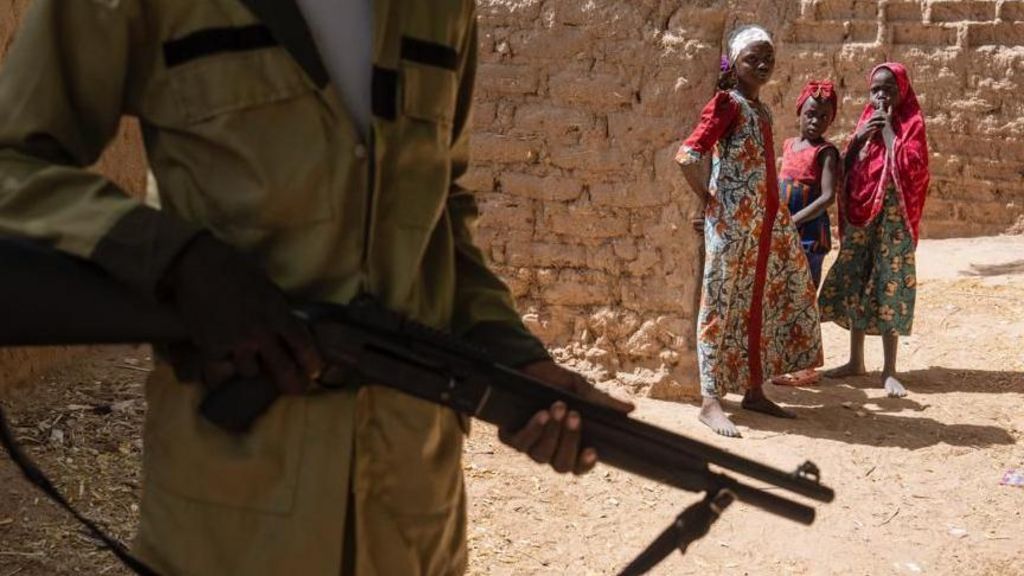
    A 60-year-old Nigerian woman identified as Sarah Peter has described her miraculous escape from armed kidnappers who attacked her church in Kurmin Wali village, approximately 135km north of Abuja. The assault occurred during Sunday morning worship services when gunmen stormed multiple churches in the region.

    Sarah, whose name has been changed for security reasons, sustained a severe head injury when attackers struck her with a rifle butt to force compliance. ‘Blood was all over,’ she recounted, visibly traumatized days after the incident. Despite her injuries and physical limitations, she managed to hide from her captors during the forced march and crawled back to safety.

    The coordinated attacks targeted branches of the Cherubim and Seraphim Movement Church and two other congregations, resulting in what local Christian Association of Nigeria officials describe as over 160 missing persons. While 11 worshippers including Sarah successfully escaped, the majority remain unaccounted for three days after the incident.

    Kurmin Wali’s proximity to Rijana forest in Kaduna state presents particular security challenges, as the area serves as a known hideout for criminal gangs locally referred to as ‘bandits.’ These groups have increasingly engaged in ransom-driven abductions across Nigeria’s northwestern region, creating a widespread security crisis.

    Authorities initially denied the attacks occurred despite eyewitness accounts, only confirming the incidents after 48 hours of confusion. Local residents have accused officials of attempting to suppress information about the kidnappings, with reports of journalists being blocked from accessing the village.

    Kaduna State Governor Uba Sani eventually visited the traumatized community, promising to establish a military base between the village and Rijana forest, construct a hospital and road infrastructure, and provide medical support to affected residents. ‘We cannot relocate them because they have to farm… but to ensure that we protect them going forward, we need to have a military base,’ Governor Sani told the BBC.

    The attack reflects Nigeria’s escalating security challenges, with kidnapping for ransom becoming increasingly commonplace despite official prohibitions on payments to captors. While international attention has grown regarding religious targeting in Nigeria, officials maintain that Muslims, Christians, and non-religious individuals have all been affected by the insecurity.

    Survivor Christopher Yohanna, who escaped with his two-year-old daughter but lost two wives and other children, encapsulated the community’s despair: ‘If my family is not with me then my life is worthless and free of any joy.’ As families await news of their missing relatives, they hope the governor’s security promises will materialize before further attacks occur.

  • Arada triples home sales to Dh17.3b as UAE property boom powers record year

    Arada triples home sales to Dh17.3b as UAE property boom powers record year

    Dubai-based master developer Arada has achieved unprecedented growth in 2025, capitalizing on the United Arab Emirates’ thriving real estate market with home sales reaching Dh17.3 billion—triple its previous year’s performance. The company reported selling 5,140 residential units throughout the year, representing a remarkable 199% year-on-year increase from the 2,171 units sold in 2024.

    This extraordinary sales performance generated substantial financial gains, with total revenue surging 170% to Dh6.7 billion. Earnings before interest, depreciation, and amortization (EBITDA) experienced even stronger growth, climbing 174% to Dh1.6 billion. This financial upswing reflects intensified project activity, accelerated absorption rates, and expanding contributions from the company’s diversified portfolio including hospitality, retail, wellness, and entertainment sectors.

    Arada’s success stemmed from several strategic initiatives, including the high-profile launch of Akala in Dubai—promoted as the world’s inaugural precision wellness destination—and the rapid sales of Masaar 2 and Masaar 3 residential communities in Sharjah. The company accelerated its construction pipeline, awarding contracts worth Dh12.7 billion for developments including Madar Mall in Aljada, Armani Beach Residences on Palm Jumeirah, and the Anantara Sharjah Resort and Residences.

    The developer’s record-breaking year mirrors the broader UAE property sector expansion. Dubai Land Department data indicates property sales increased 29% in 2025, exceeding Dh680 billion—the highest annual total recorded. Sharjah demonstrated even more dramatic growth, with transaction values rising 64% year-on-year to Dh65.6 billion according to the Sharjah Real Estate Registration Department. Market analysts attribute this sustained growth to population expansion, business-friendly regulatory reforms, long-term visa programs, infrastructure investments, and continued economic diversification efforts.

    Concurrently, Arada pursued aggressive international expansion, committing Dh2.5 billion to acquire a 75% stake in British developer Regal (rebranded as Arada London) and securing an 80% holding in Thameside West, a mixed-use development in the UK capital. The company also advanced plans for its inaugural Sydney projects following its 2024 Australian market entry.

    Prince Khaled bin Alwaleed bin Talal Al Saud, Arada’s Executive Vice Chairman, stated that the company’s performance demonstrates strong buyer confidence in its long-term vision. Group CEO Ahmed Alkhoshaibi confirmed the company exceeded its Dh15 billion sales target by over 15% and is preparing for another active year with planned project launches across the UAE, UK, and Australian markets.

    Since its establishment in 2017, Arada has launched 11 projects in the UAE and delivered more than 10,000 homes. With a global development pipeline valued at approximately Dh130 billion, the company is currently developing around 55,000 units internationally, positioning itself to benefit from both the UAE’s ongoing real estate expansion and its growing global footprint.

  • Osaka tones down outfit and beats Cirstea to reach Australian Open third round

    Osaka tones down outfit and beats Cirstea to reach Australian Open third round

    Former champion Naomi Osaka secured her place in the Australian Open third round with a hard-fought 6-3, 4-6, 6-2 victory over Romania’s Sorana Cirstea on Thursday. The match marked a noticeable shift in the Japanese star’s court presentation, as she opted for a more conventional athletic ensemble compared to her headline-making first-round outfit.

    Osaka’s previous marine-themed attire, complete with pastel yellow tassels, white parasol, veil, and broad-brimmed hat, had generated significant attention throughout the tournament. The bold fashion choice drew commendations from fellow players and became an instant talking point at Melbourne Park.

    When questioned about the overwhelming response to her initial outfit, Osaka expressed surprise: ‘Honestly, not really. For me, it’s just something fun I love to do on the court. I don’t really talk that much but I like to express myself through clothes.’

    Despite her toned-down appearance for the second round, fans at Margaret Court Arena paid homage to Osaka’s distinctive style by wearing replica hats and veils. The four-time Grand Slam champion acknowledged their support, saying, ‘I’m really glad that you guys loved it. You guys look really cool by the way.’

    The match itself presented challenges for the 16th seed, who struggled initially with service breaks and unforced errors. After dropping the opening game, Osaka recovered to claim the first set. The experienced Cirstea, who announced this would be her final Australian Open before retiring at year’s end, fought back to level the match by taking the second set.

    The deciding set featured dramatic moments, including a medical timeout for Osaka while leading 3-1 and tension arising from Cirstea’s objection to Osaka’s motivational shouts between serves. Despite these interruptions, Osaka elevated her game with powerful groundstrokes to secure victory.

    Reflecting on the confrontation, Osaka commented: ‘(There were) apparently a lot of ‘come ons’ that she was angry about. I mean I tried to play well. I think I hit a lot of unforced errors but I tried my best. She’s a great player. I think this was her last Australian Open, so sorry she was mad about it.’

    Osaka now prepares to face Australian qualifier Maddison Inglis in the next round, continuing her campaign for a third Australian Open title following previous victories in 2019 and 2021.

  • Sharjah Islamic Bank proposes 20% cash dividend as it posts net profit of Dh1.3 billion for 2025

    Sharjah Islamic Bank proposes 20% cash dividend as it posts net profit of Dh1.3 billion for 2025

    Sharjah Islamic Bank has demonstrated remarkable financial resilience by announcing a net profit of Dh1.32 billion for fiscal year 2025, representing a substantial 26% increase from the previous year’s Dh1.05 billion. This outstanding performance has prompted the Board of Directors to recommend a generous 20% cash dividend distribution, significantly higher than the 15% payout in 2024, pending shareholder approval at the upcoming General Assembly.

    The bank’s financial expansion was particularly evident in its asset growth, with total assets surging by 14% to reach Dh90.3 billion, compared to Dh79.2 billion at the close of 2024. This robust growth was primarily fueled by a notable 19.6% increase in customer financing, which climbed to Dh45.6 billion from Dh38.1 billion in the preceding year.

    Revenue streams showed impressive diversification as income from Islamic financing investments and sukuk grew by 4.7% to approximately Dh3.9 billion. Meanwhile, net fees and commission income experienced exceptional growth, skyrocketing by 50% to reach Dh598.8 million. This contributed significantly to the bank’s total operating income, which expanded by 14% year-on-year to approximately Dh2.5 billion.

    Despite strategic investments in human capital development and technological infrastructure that pushed general and administrative expenses to Dh897.5 million (a 15.2% increase), the bank maintained strong operational efficiency. Operating income before impairment provisions grew by 13.3% to Dh1.6 billion, underscoring effective cost management practices.

    The institution’s risk management framework yielded substantial improvements, with net impairment on financial assets remaining stable at Dh217.0 million. Notably, the non-performing financing ratio decreased significantly to 3.8% from 4.9%, while the coverage ratio strengthened to 109% from 99.5%, reflecting enhanced portfolio quality.

    Customer deposits reached Dh55.7 billion, resulting in a healthy financing-to-deposit ratio of 81.8%. The bank maintained strong liquidity buffers at 22.3% of total assets, amounting to Dh20.2 billion. Profitability metrics showed consistent improvement, with return on average assets reaching 1.55% and return on average equity climbing to 14.78%.

    In a strategic move to bolster future growth, the Board approved a proposal to increase the bank’s capital, subject to regulatory approvals. This initiative will enable existing shareholders to subscribe to new shares, strengthening the capital base while ensuring compliance with regulatory requirements and supporting sustainable long-term returns.

  • Safer, cheaper, smarter? What Dubai’s new shared school rides mean for families

    Safer, cheaper, smarter? What Dubai’s new shared school rides mean for families

    Dubai is embarking on a transformative pilot program that could redefine the daily school commute for thousands of families. The Roads and Transport Authority (RTA), in collaboration with Yango Group and Urban Express Transport, is launching a shared, tech-enabled SUV service specifically for students aged 14 and above. This initiative directly targets the chronic congestion plaguing school zones, particularly in the Al Barsha education hub, where morning and afternoon traffic routinely spikes.

    The operational model groups students from neighboring households, even those attending different schools, into luxury SUVs. Routes are meticulously mapped using real-time data and synchronized with school schedules, with a strict commitment to keeping each journey under 60 minutes. A central feature for parents is a dedicated application that provides live vehicle tracking and advanced notifications for precise pick-up and drop-off times, injecting a new level of predictability into hectic mornings.

    Financially, the pilot is introduced at a special rate of Dh1,000 per student per month. The RTA estimates this pooled model could be approximately 15% more cost-effective than traditional school transport when factoring in fuel, time lost in traffic, and standard bus fees.

    Safety and safeguarding are paramount concerns addressed by the initiative. All drivers undergo rigorous vetting, and vehicles are subject to stringent safety checks and continuous tech monitoring. Partner schools, including prominent institutions like Brighton College Dubai and Dubai American Academy, are actively involved in establishing protocols for age-appropriate seating and behavior. Simon Crane, Headmaster of Brighton College Dubai, emphasized the school’s close collaboration with providers to ensure the highest standards of student welfare.

    While some parents express hesitation, preferring the ‘tried and tested’ traditional school bus, others see significant potential. Working parents highlight the promise of reduced stress and time savings. Traffic expert Thomas Edelmann of RoadSafetyUAE endorsed the scheme, noting that a single shared vehicle can remove up to 50 private cars from the road during critical peak hours, offering a substantial benefit to public congestion and sustainability. If successful, the RTA plans a city-wide expansion for the 2026-27 academic year.

  • What to know about the devastating floods in southern Africa

    What to know about the devastating floods in southern Africa

    CAPE TOWN, South Africa — A catastrophic weather system has unleashed severe flooding across southern Africa, resulting in a confirmed death toll exceeding 100 individuals and triggering widespread devastation in Mozambique, South Africa, and Zimbabwe. The region has been subjected to unusually intense rainfall since late last year, culminating in what authorities describe as the worst flooding incident in years, with fatalities anticipated to rise as emergency operations persist.

    The human impact is profound. South Africa reports over 30 fatalities, while neighboring Zimbabwe has suffered at least 70 deaths from the relentless downpours. Mozambique has officially attributed 13 deaths directly to the floods over a two-week period, though the actual number is believed to be significantly higher. Central and southern Mozambique are among the hardest-hit areas, with the government estimating over half a million citizens have been affected. In the southern Gaza province alone, more than 300,000 people have been displaced, prompting official evacuation orders for several towns. The provincial capital, Xai-Xai, and the agricultural hub of Chokwe have been completely submerged, with only building rooftops visible in satellite imagery. The tourist destination of Marracuene, north of the capital Maputo, is now encircled by water and effectively isolated.

    Beyond the humanitarian crisis, the environmental and economic toll is staggering. South Africa’s renowned Kruger National Park, a premier wildlife sanctuary and major tourist destination, has sustained infrastructural damage estimated in the tens of millions of dollars. Environment Minister Willie Aucamp confirmed that sections of the vast, 20,000-square-kilometer park are entirely cut off after roads and bridges were washed away. Staff accommodations and tourist facilities have been destroyed, with a full recovery expected to take several years. A special reconstruction fund has been established. Park officials noted that wildlife, including critically endangered black rhinos, typically migrates to higher ground during floods, though the full impact on animal populations remains unclear. Hundreds of tourists and staff were successfully evacuated, with no reported fatalities within the park.

    Cross-border rescue missions are underway to mitigate the disaster. The South African Air Force has deployed helicopters to conduct lifesaving operations in its northern provinces of Mpumalanga and Limpopo, rescuing citizens stranded on rooftops and in trees. The military has extended these efforts into Mozambique, where it has airlifted nearly 500 stranded individuals to safety. The scale of destruction is immense, with thousands of homes obliterated, leading South Africa to declare a national disaster. Engineers are also assessing the structural integrity of a dam in the northeast under severe pressure from the floodwaters, with preemptive evacuations ordered in case of a potential breach.

    Humanitarian agencies are raising alarms over secondary crises. The flooding has decimated crops relied upon by millions of subsistence farmers, drastically increasing the threat of widespread hunger. Furthermore, the standing water creates a fertile ground for waterborne diseases, with cholera posing a significant risk. The United Nations Children’s Fund (UNICEF) has highlighted the extreme vulnerability of children among the affected populations in Mozambique, where access to essentials like clean water, food, and healthcare has been severely compromised.

  • Trump launches his Board of Peace, says it will work ‘in conjunction’ with UN

    Trump launches his Board of Peace, says it will work ‘in conjunction’ with UN

    In a significant geopolitical move at the World Economic Forum in Davos, former U.S. President Donald Trump officially inaugurated his controversial “Board of Peace” initiative on Thursday. The ceremonial signing event featured leaders and senior officials from 19 nations, including prominent Trump allies such as Argentina’s Javier Milei and Hungary’s Viktor Orbán, who collectively endorsed the organization’s founding charter.

    The newly established board, chaired by Trump himself, carries a substantial $1 billion membership fee and has sparked international debate regarding its purpose and composition. While initially conceived to oversee post-conflict peace in Gaza following the Hamas-Israel war, the board’s charter now envisions a broader mandate in resolving international disputes, raising concerns among traditional diplomatic circles about its potential to challenge the United Nations’ authority.

    Trump addressed these concerns during the launch, asserting that the organization would operate “in conjunction” with the UN rather than as a competitor. However, the membership roster has generated controversy, particularly regarding the inclusion of Russian President Vladimir Putin, despite Russia’s ongoing invasion of Ukraine. Trump confirmed Putin’s agreement to join, though the Kremlin leader stated he remains undecided.

    The initiative faced immediate diplomatic setbacks as key U.S. allies including the United Kingdom and France declined participation, expressing skepticism about the board’s legitimacy and objectives. Other signatories included representatives from Bahrain, Morocco, Armenia, Azerbaijan, Bulgaria, Indonesia, Jordan, Kazakhstan, Kosovo, Pakistan, Paraguay, Qatar, Saudi Arabia, Turkey, the United Arab Emirates, Uzbekistan, and Mongolia.

    U.S. Secretary of State Marco Rubio emphasized that the board’s primary focus would be “ensuring that the Gaza peace deal becomes enduring.” Trump delivered a stern warning to Hamas, stating they must disarm in the next phase of the ceasefire agreement or face consequences.

    The launch occurs against the backdrop of Trump’s previously expressed frustration at not receiving the Nobel Peace Prize, despite his claims of having ended multiple conflicts. Concurrently, Trump prepared to meet Ukrainian President Volodymyr Zelensky to discuss potential ceasefire negotiations regarding the ongoing Russian invasion, while his special envoy Steve Witkoff indicated substantial progress in peace talks, noting they had been narrowed to “one solvable issue.”

  • Global Knee Summit brings global knee care experts to Dubai

    Global Knee Summit brings global knee care experts to Dubai

    Dubai has positioned itself as the epicenter of orthopedic advancement by hosting the Global Knee Summit, transforming from a traditional medical conference into the world’s foremost platform for knee innovation and surgical excellence. Under the leadership of Course Director Dr. Kevin Plancher, this groundbreaking assembly brings together renowned surgeons and medical innovators from across six continents to challenge conventional approaches and redefine the future of knee care.

    The summit’s comprehensive program addresses the most pressing challenges in contemporary orthopedics, featuring intensive sessions on arthroplasty techniques, sports medicine applications, joint preservation methodologies, and cutting-edge biologic treatments. Unlike conventional medical conferences, the program emphasizes contrasting philosophical approaches that stimulate intellectual debate rather than seeking easy consensus, recognizing that genuine medical progress emerges from rigorous discussion.

    Practical application forms the core of the educational experience, with live surgical demonstrations, case-based discussions, and interactive panels enabling direct engagement with next-generation technologies. Participants gain hands-on exposure to robotic-assisted systems, artificial intelligence-driven surgical planning, advanced implant designs, and innovative biologic solutions, all complemented by unfiltered assessments of their clinical effectiveness and limitations.

    Dubai’s strategic location at the intersection of Europe, Asia, Africa, and the Americas provides an ideal setting for global medical dialogue, supported by the city’s state-of-the-art infrastructure and growing reputation as a medical innovation hub. The summit fosters unprecedented networking opportunities, creating lasting professional relationships that extend beyond the conference through cross-specialty collaborations and ongoing educational initiatives.

    This gathering represents an essential educational opportunity for orthopedic surgeons specializing in knee arthroplasty, sports medicine professionals navigating evolving treatment indications, and medical leaders responsible for complex revision cases. The summit’s ultimate objective remains clear: providing every participant with immediately applicable knowledge and techniques that will directly enhance their clinical practice in the coming week.

  • Sharjah property prices not ‘peaked’ yet, set to rise over 10% in 2026

    Sharjah property prices not ‘peaked’ yet, set to rise over 10% in 2026

    Sharjah’s property market is poised for another year of significant growth, with industry executives projecting price increases exceeding 10% throughout 2026. This optimistic outlook emerged during the ACRES 2026 exhibition at Expo Centre, where market leaders identified multiple factors driving the emirate’s sustained real estate expansion.

    The recent legislative reform allowing all nationalities to invest in Sharjah’s real estate market has created unprecedented momentum. Amer Al Zarooni, General Manager of Asas Real Estate Company, confirmed that 2025 delivered record transactions with property values appreciating between 10-12%. He anticipates similar performance this year, projecting approximately 10% capital appreciation driven by dramatically increased foreign investor participation.

    Market stability remains a key differentiator for Sharjah. Unlike more volatile markets, Sharjah’s growth pattern demonstrates logical, steady progression rather than wild fluctuations. Lamia Al Jewaied, Head of Studies and Research Bureau at Sharjah Real Estate Registration Department, emphasized that property prices haven’t yet peaked, indicating continued strong returns for investors.

    Multiple structural advantages support this growth trajectory. The emirate’s central geographic location, family-oriented environment, and inclusive investment policies create a compelling market foundation. Government support through facilitative regulations and project encouragement further strengthens real estate company performance, according to Ali Mohammed Mousa, CEO of North Coast Real Estate.

    Specific market segments show particularly strong momentum. Raymond Khouzami, Vice Chairman of Al Thuriah Group, noted waterfront properties experiencing heightened demand with 2025 price increases reaching 20% in some cases. Construction material costs contributed to these increases, though high demand remains the primary driver.

    The convergence of demographic growth, tourism expansion, and supportive government policies creates ideal conditions for sustained market development. Noreen Nasralla, Senior Vice President for Marketing Strategy and Branding at Alef Group, highlighted market stability as a central government focus that will continue attracting both residents and investors throughout the coming year.