
In a historic showdown at the Wellington Regional Stadium, South Africa delivered a commanding performance, defeating New Zealand 43-10 in the Rugby Championship. This marked New Zealand’s heaviest defeat in history, surpassing their previous 35-7 loss to the Springboks in 2023. The world champions showcased their prowess with six tries and an impressive 36 unanswered points in the second half, bouncing back from their loss to the All Blacks just a week prior. Key players like Cheslin Kolbe, who scored two tries, and Manie Libbok, who contributed 16 points through conversions and a penalty, were instrumental in the victory. South Africa’s captain, Siya Kolisi, praised his team’s fearless approach and self-belief, crediting their success to a united effort and strategic execution. New Zealand’s captain, Scott Barrett, acknowledged the Springboks’ dominance and admitted his team’s shortcomings, emphasizing the need for improvement. Meanwhile, in another Rugby Championship clash, Argentina edged out Australia 28-26 in a tense match in Sydney, with Santiago Carreras’ accurate kicking proving decisive. As the championship progresses, South Africa and New Zealand remain in close contention, with Australia currently leading the standings.
标签: Africa
非洲
-
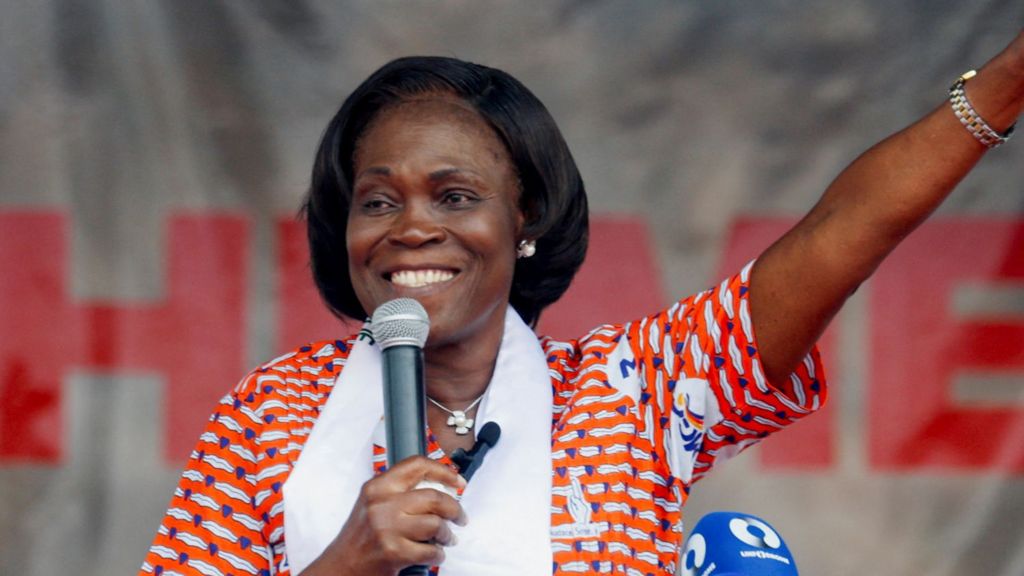
Ivory Coast’s ‘iron lady’ – from hiding in a bunker to presidential hopeful
In a dramatic political resurgence, former Ivory Coast First Lady Simone Gbagbo has announced her candidacy for the upcoming presidential election, marking a significant turn in her tumultuous career. Once a fugitive hiding in a bunker to evade arrest, Gbagbo, now 76, has emerged as a defiant contender, promising to modernize and revitalize the nation. Her journey from the shadows of her ex-husband Laurent Gbagbo’s presidency to the forefront of Ivorian politics is a testament to her resilience and ambition. Known as the ‘Iron Lady’ for her steely demeanor, Gbagbo has long been a polarizing figure in Ivory Coast’s political landscape. Her tenure as first lady from 2000 to 2011 was marked by her influential role in her husband’s administration, where she was both revered and feared. Despite a criminal conviction and a highly publicized divorce, Gbagbo has methodically rebuilt her political base, founding the leftist Movement of Capable Generations (MGC) and positioning herself as a formidable challenger to incumbent President Alassane Ouattara. Her candidacy is not only a political milestone but also a symbolic one, as she seeks to become Ivory Coast’s first female president. Gbagbo’s campaign, fueled by her powerful rhetoric and extensive political experience, has garnered significant attention, particularly among her ex-husband’s supporters, who have been barred from backing Laurent due to his ineligibility. As the election approaches, all eyes are on Simone Gbagbo, whose potential victory would mark a historic chapter in Ivory Coast’s turbulent political history.
-
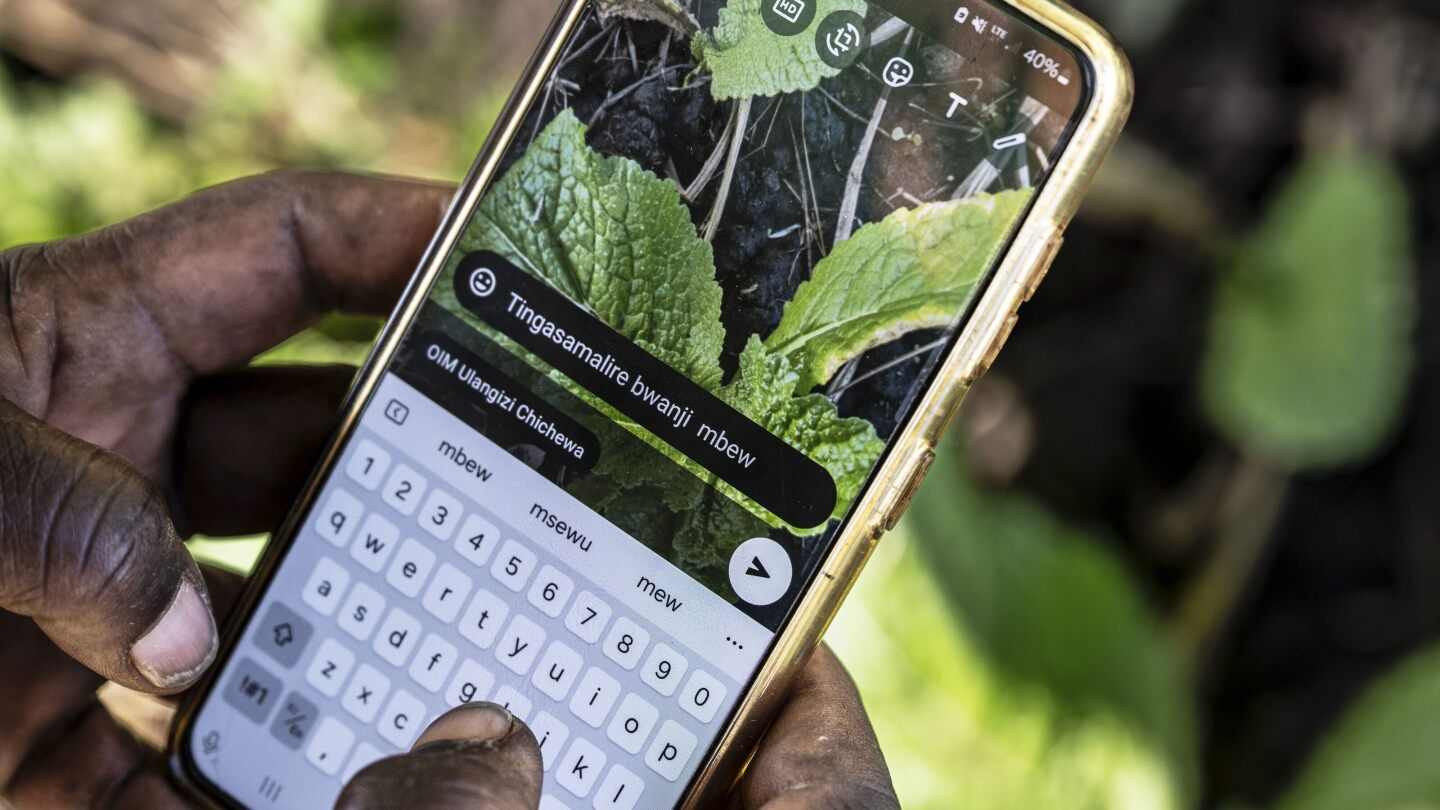
How AI is helping some small-scale farmers weather a changing climate
In the wake of Cyclone Freddy’s devastation in 2023, Alex Maere, a 59-year-old farmer from Malawi, faced the loss of his farm and livelihood. The catastrophic floods stripped his land of fertile soil, leaving behind a barren wasteland of sand and rocks. Once producing 850 kilograms of corn annually to support his family, Maere salvaged a mere 8 kilograms from the wreckage. Determined to adapt, he turned to an AI chatbot developed by Opportunity International, a non-profit organization, for farming advice. Supported by the Malawi government, the AI tool suggested Maere diversify his crops by growing potatoes alongside corn and cassava. Following the guidance, Maere cultivated half a soccer field’s worth of potatoes, earning over $800 in sales and securing his children’s education. This success story highlights the transformative potential of AI in sub-Saharan Africa, where smallholder farms account for 70-80% of the food supply. Despite challenges like language diversity, low literacy, and poor digital infrastructure, AI is empowering farmers with critical insights on crop diseases, drought forecasting, and yield optimization. The Ulangizi app, accessible via WhatsApp and available in Chichewa and English, bridges the gap for farmers without smartphones through on-the-ground support agents. However, scaling up remains a hurdle due to limited internet access and affordability. Trust in AI is fragile, as inaccurate advice could devastate already vulnerable farmers. Yet, by combining AI with traditional community collaboration, Malawi is fostering resilience and productivity in its agriculture sector.
-
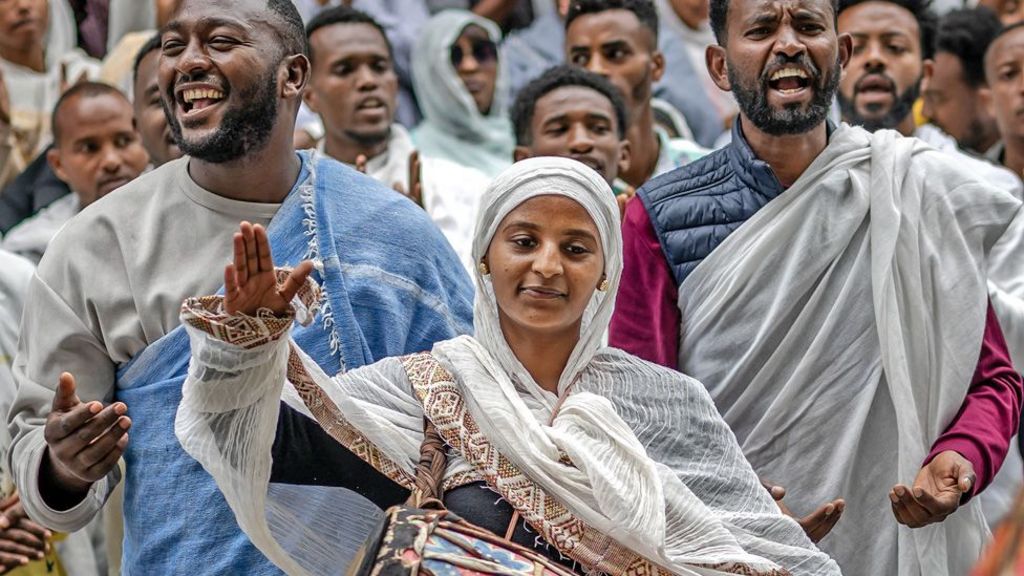
Party like it’s 2018 – Ethiopians celebrate their new year
Ethiopia has ushered in its new year, 2018, according to its unique calendar, which is seven years behind the Gregorian calendar. This discrepancy stems from a different calculation of the birth year of Jesus Christ, as the Ethiopian Orthodox Church did not adopt the Catholic Church’s revised calculation in 500 AD. The celebrations, known as Enkutatash, are a time of joy and renewal for all Ethiopians, transcending religious boundaries. The capital, Addis Ababa, is adorned with yellow ‘adey ababa’ flowers, which grow wild this time of year and are sold in small bunches for around 50 Ethiopian birr ($0.35). These flowers, along with freshly cut grass, play a central role in traditional coffee ceremonies, a nod to Ethiopia’s status as the birthplace of coffee. The festivities also include bustling markets, where vendors sell chickens, mutton, and even oxen for New Year’s feasts. Chickens, priced between 2,000 and 3,000 birr, are popular for making ‘doro wat,’ a spicy stew served with injera, while mutton and oxen cater to those with larger budgets. Families gather to share meals and invite friends, and the celebrations culminate in concerts and live music on New Year’s Eve. The following morning, the traditional song ‘Abebayehosh’ fills the air, performed by young girls who go door-to-door in some neighborhoods. Orthodox Christians attend church services, and vendors sell ceremonial umbrellas near churches. The Ethiopian calendar, with its 13 months, marks the end of the rainy season and the start of spring, symbolizing renewal and optimism. This year’s celebrations are particularly significant, as they coincide with the formal launch of the Grand Ethiopian Renaissance Dam (Gerd), a source of national pride and unity.
-
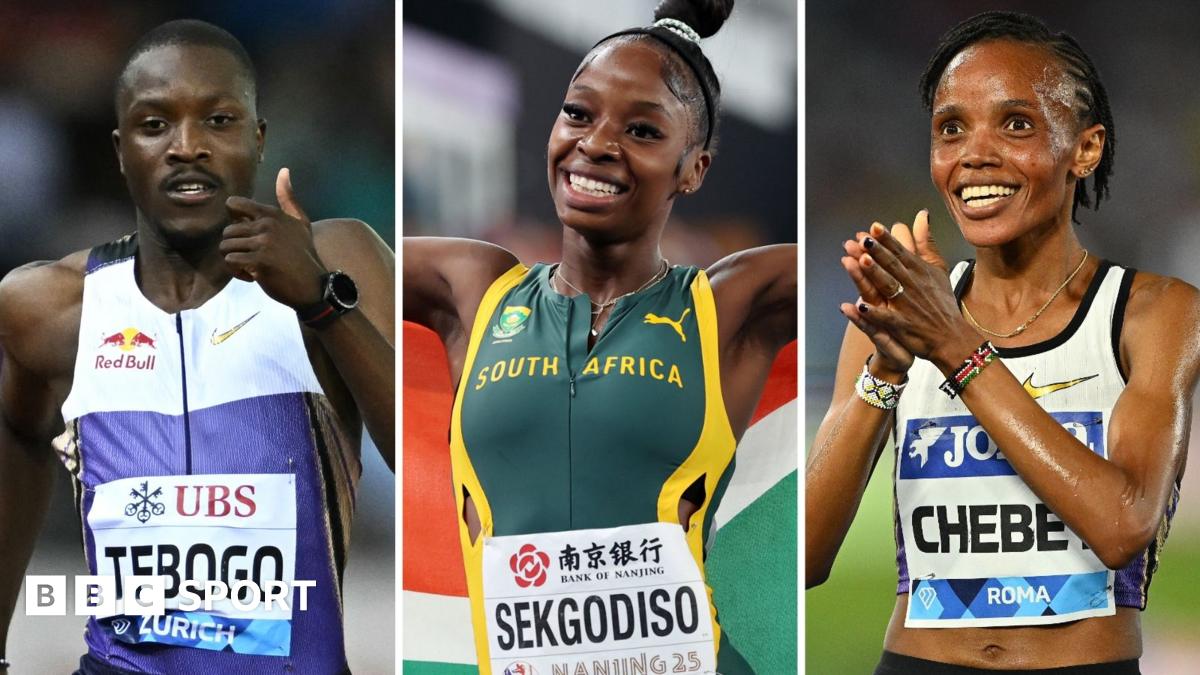
The Africans to watch at the World Athletics Championships
The 2025 World Athletics Championships in Tokyo are set to be a spectacular showcase of talent, with over 2,200 athletes from across the globe competing for glory. Among them, a host of African stars are poised to make their mark on the world stage. The event, scheduled from September 13 to 21, will feature some of the most celebrated names in track and field, including Kenya’s Faith Kipyegon, Botswana’s Letsile Tebogo, and South Africa’s Prudence Sekgodiso.
Faith Kipyegon, the reigning world champion in the 1500m and 5000m, is one of the most decorated athletes in Kenyan history. With three Olympic gold medals and four world titles to her name, Kipyegon is aiming to defend her titles and make history by becoming the first athlete to win gold in both distance events at more than one World Championships. Despite a recent setback in her attempt to break the four-minute mile barrier, Kipyegon shattered her own 1500m world record earlier this year, proving her dominance in the sport.
Prudence Sekgodiso, the 23-year-old South African middle-distance runner, is on a mission to break one of the oldest world records in athletics. After becoming the World Indoor champion in Nanjing earlier this year, Sekgodiso has set her sights on surpassing Caster Semenya’s national record of 1:54.25 and Czech runner Jarmila Kratochvilova’s long-standing world record of 1:53.28. ‘I just have to believe and know what I want and train hard for it,’ Sekgodiso told the BBC World Service. ‘It’s doable, but it’s a long-term goal for me.’
Letsile Tebogo, the 22-year-old Botswanan sprinter, made history at the Paris Olympics by winning the 200m gold medal. Despite a mixed season marred by a recurring hamstring injury, Tebogo remains optimistic about his chances in Tokyo. ‘I feel there is still a lot more in the tank that people need to see,’ he said. Tebogo, who claimed silver in the 200m and bronze in the 100m at the last World Championships in Budapest, will compete in both events again, aiming to showcase his true potential.
Other notable African athletes include Kenya’s Beatrice Chebet, who completed the Olympic double in the 5000m and 10,000m in Paris last year, and Ethiopia’s Tadese Takele, who clocked the fastest marathon time this year in Tokyo. With such a stellar lineup, the 2025 World Athletics Championships promise to be an unforgettable event, showcasing the best of African talent on the global stage.
-
Fatal dam collapse: ‘How do you restart from nothing?’
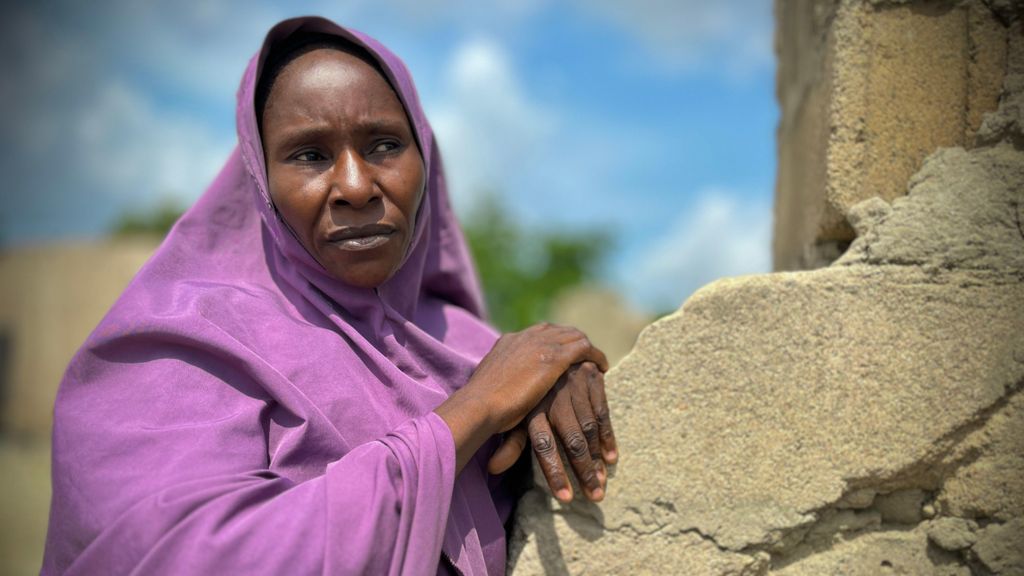
The city of Maiduguri in northeastern Nigeria remains haunted by the devastating floods that struck a year ago, leaving a trail of destruction, loss, and ongoing suffering. Torrential rains and the collapse of the Alau dam submerged entire neighborhoods, claiming at least 37 lives and displacing two million people. For many residents, the scars of the disaster are still fresh, and the looming threat of another flood season has heightened anxiety. Among the victims is Sa’adatu Dahiru, a 42-year-old mother who lost her two-year-old son to hunger and fever during the crisis. ‘We had no proper food, no medicine, and no safe place to stay,’ she recounted, describing how her family fled in the middle of the night with only a few belongings. Despite receiving 10,000 naira ($7) in state aid initially, Dahiru claims that further government promises remain unfulfilled, leaving her family in continued hardship. The Borno state government asserts that it has provided relief camps, food aid, and cash handouts to affected communities. Reconstruction of the dam and dyke system at Alau, which caused the flooding, is also underway. However, the region’s long-standing insurgency by the Boko Haram group has complicated maintenance efforts, according to Mohammed Shettima, head of the Chad Basin Development Authority’s engineering department. The dam’s proximity to the Sambisa forest, a known jihadist stronghold, has made it vulnerable to neglect and attacks. The floods have compounded the struggles of residents already displaced by Islamist violence. Maryam Jidda, a 72-year-old grandmother, fled her hometown of Damboa after a Boko Haram attack four years ago, only to face the floods in Maiduguri. ‘I stood in waist-deep water, crying,’ she recalled, describing the moment her home was overwhelmed. Now living in temporary shelter with scarce food and unclean water, Jidda mourns the loss of her family’s memories, including cherished photographs. Young people like Ali Kadau, 21, have also been severely impacted. Kadau, who once worked at a mechanic shop, lost his livelihood and possessions in the flood. ‘Now, I just sit around. No job. No school. No money to start anything,’ he lamented. The Borno state government, led by Governor Babagana Umara Zulum, has described the flood response as a daunting task, particularly given the region’s ongoing conflict with violent extremism. Efforts to address the crisis have included desilting rivers, constructing new drainage systems, and distributing 28.2 billion naira ($18 million) in aid to over 100,000 households. However, the need for additional funding to rebuild infrastructure remains critical. As the rainy season peaks, residents like Dahiru and Jidda face an uncertain future, grappling with the question of how to rebuild their lives from nothing.
-
Childhood obesity: The South African campaigners fighting for healthy food
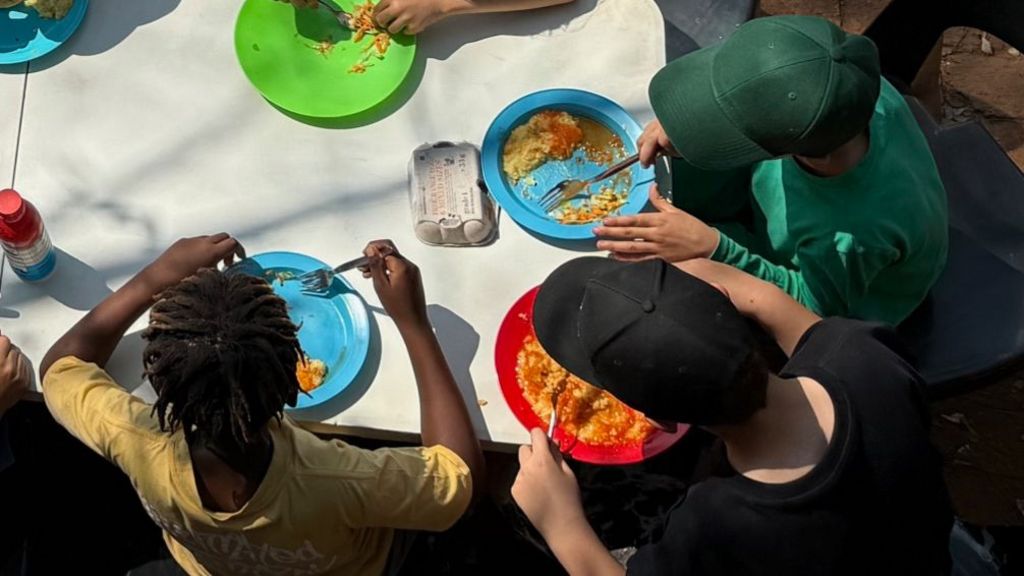
In the heart of Randburg, South Africa, the Kairos School of Inquiry is making waves with its innovative approach to combating childhood obesity. At lunchtime, students eagerly line up for a meal that’s not only nutritious but also predominantly vegetarian. The menu features dishes like kitchari—a blend of daal and rice—accompanied by tomato chutney, halloumi, and fresh salad. This initiative is part of the school’s broader strategy to address a global health crisis: the alarming rise in childhood obesity, which has now surpassed undernutrition in prevalence. Headteacher Marc Loon has implemented a strict healthy food policy, emphasizing the importance of mindful eating. ‘If all schools adopted our approach, children’s health would significantly improve,’ he asserts. The United Nations reports that the number of overweight and obese adolescents has nearly tripled in the past two decades, with South Africa being one of the hardest-hit countries. Unicef highlights the role of convenience foods in this surge, particularly in low- and middle-income nations. Mamkhabela Mthembu, a 23-year-old trainee lawyer, shared her personal struggle with weight gain during university, attributing it to her reliance on fast food. ‘I never saw junk food as unhealthy; it was a symbol of aspiration,’ she recalls. Now an advocate for Unicef, Mthembu is raising awareness about the long-term health impacts of poor dietary choices. The South African government has taken steps to curb obesity, such as taxing sugary drinks, but challenges remain. Unicef’s Gilbert Tshitaudzi stresses the need for systemic changes, including restricting the marketing of unhealthy foods to children. Meanwhile, parents like Memory Padi face daily battles to keep their children healthy. Her eight-year-old daughter, Sophia, struggles with weight issues linked to steroid treatments for a rare autoimmune disease. Despite efforts to maintain a low-carb diet, Sophia’s weight remains a concern. The Kairos School’s initiative serves as a beacon of hope, demonstrating how institutions can play a pivotal role in fostering healthier futures for the next generation.
-
Sri Lanka & Zimbabwe in Pakistan 2025
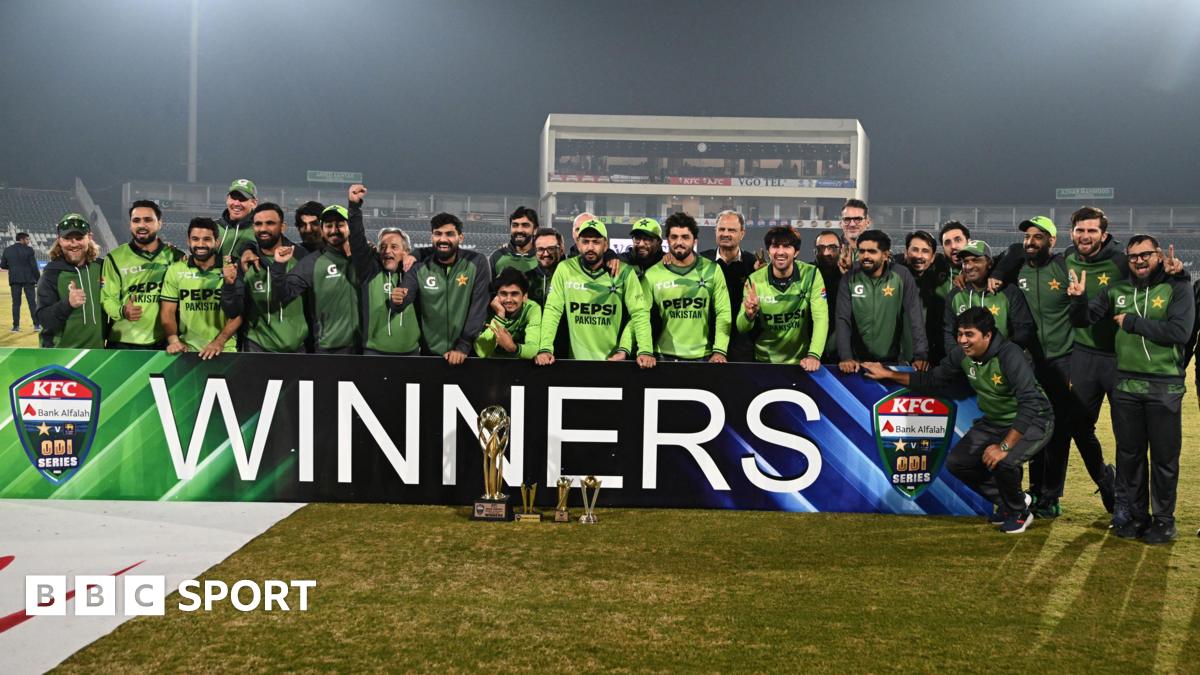
In a thrilling display of cricketing prowess, Pakistan has emerged victorious in the ongoing One Day International (ODI) series against Zimbabwe and Sri Lanka. The series, which began on November 11, 2025, has seen Pakistan secure multiple wins, showcasing their dominance on the field. The matches, originally scheduled to be held in Lahore, were relocated to Rawalpindi due to unforeseen circumstances. Zimbabwe stepped in to replace Afghanistan, who withdrew from the series following an air strike incident in October that tragically claimed the lives of three players during a local tournament. Despite the challenges, the series has been a testament to Pakistan’s cricketing strength. Key highlights include Pakistan’s six-run victory in the 1st ODI, an eight-wicket win in the 2nd ODI, and a six-wicket triumph in the 3rd ODI. The series continues with more matches scheduled, including a final on November 29. Cricket enthusiasts can stay updated with live scorecards and match details as the action unfolds.
-
Kony crimes still felt in Uganda, 20 years on, ICC hears
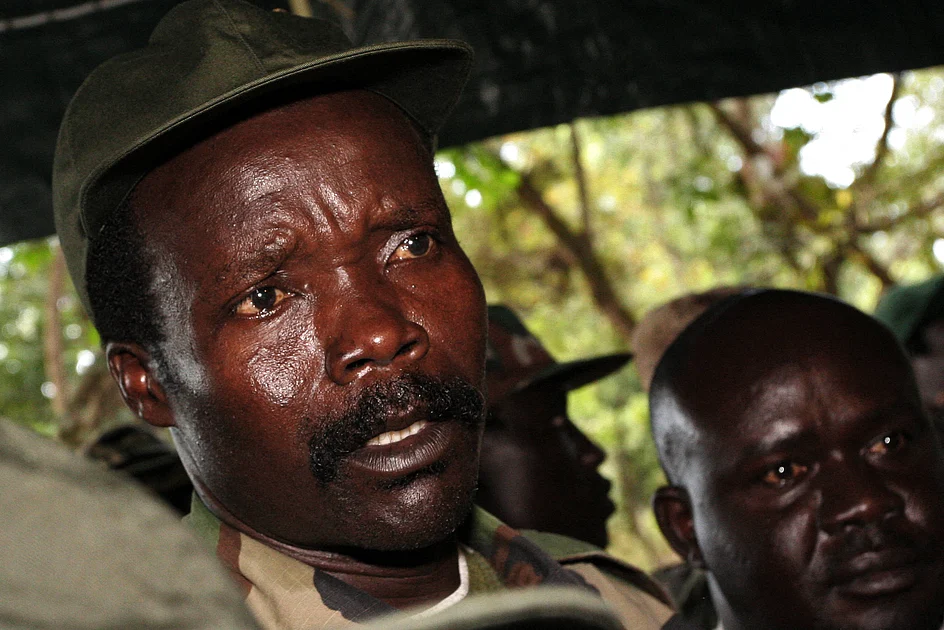
The enduring scars of Joseph Kony’s alleged atrocities in Uganda were brought to the forefront during a landmark hearing at the International Criminal Court (ICC) on Tuesday. Kony, the elusive leader of the Lord’s Resistance Army (LRA), faces 39 charges of war crimes and crimes against humanity, including murder, rape, torture, and enslavement, reportedly committed between 2002 and 2005 in northern Uganda. Despite the passage of two decades, the repercussions of these brutal acts remain deeply felt, with survivors still grappling with physical and psychological trauma. Prosecutor Mame Mandiaye Niang emphasized the lasting devastation, stating, ‘The social and cultural fabric of Uganda has been torn apart, and they are struggling to recover.’ The LRA’s insurgency, which targeted the Ugandan government, resulted in over 100,000 deaths and the abduction of 60,000 children, according to UN estimates. The group’s notoriety for extreme violence, including forced cannibalism and drinking of blood, has left indelible marks on survivors like Everlyn Ayo, who recounted the horrors of her childhood. Now 39, Ayo plans to follow the proceedings from Gulu, far from the ICC courtroom in The Hague. The hearing, the first of its kind to be held in absentia, aims to confirm charges against Kony, who has been on the run since 2006. While a trial cannot proceed without his presence, prosecutors hope the process will expedite justice if he is ever apprehended. Stella Angel Lanam, a former child soldier and now a counselor for victims, expressed a shared sentiment: ‘Even though we have passed through a lot, we cannot lose hope. At least I will get justice.’
-
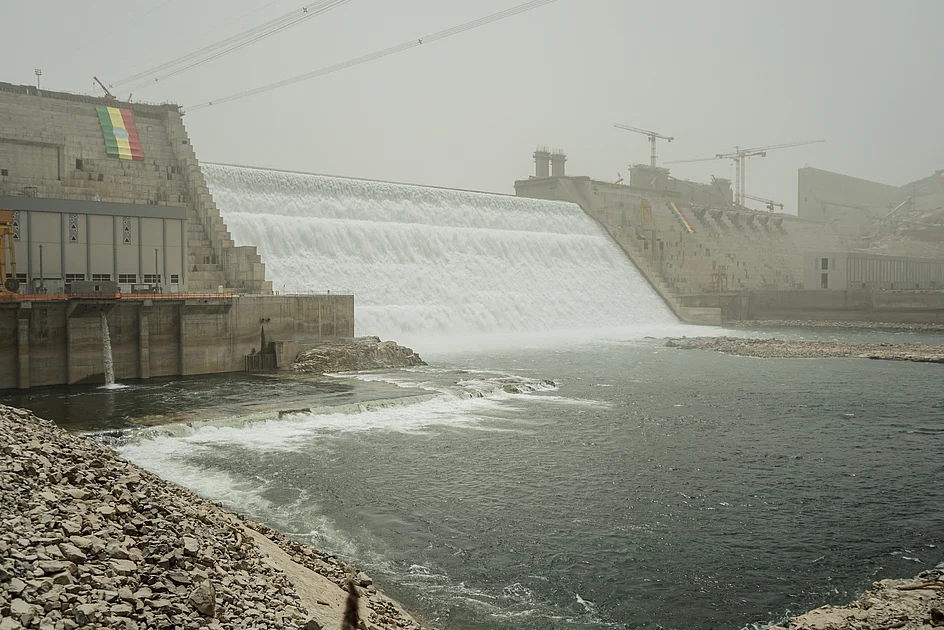
Ethiopia launches Africa’s largest hydroelectric dam amid deep rift with Egypt
Ethiopia has officially launched the Grand Ethiopian Renaissance Dam (GERD), Africa’s largest hydroelectric project, marking a significant milestone in the nation’s development ambitions. The $5 billion dam, situated on a tributary of the River Nile, is expected to generate up to 5,150 MW of electricity, providing power to millions of Ethiopians and enabling energy exports to neighboring countries. However, the project has exacerbated long-standing tensions with downstream Egypt, which relies on the Nile for 90% of its freshwater supply. Egypt fears the dam could disrupt its water access during droughts and has vehemently opposed the project, citing violations of colonial-era water treaties. Sudan, another downstream nation, has joined Egypt in calling for legally binding agreements on the dam’s operation but could benefit from improved flood management and affordable energy. The GERD has become a symbol of national unity in Ethiopia, which funded the project domestically without foreign assistance. Despite the geopolitical rift, Ethiopian Prime Minister Abiy Ahmed has emphasized the dam’s potential as a ‘shared opportunity’ for regional development. Independent studies indicate no significant disruptions to downstream water flow so far, attributed to cautious reservoir filling during wet seasons. However, rural Ethiopians may face delays in accessing the dam’s benefits, as only half of the population is connected to the national grid. The dam’s reservoir has flooded an area larger than Greater London, promising steady water supply for hydropower and irrigation while mitigating floods and droughts. Meanwhile, Ethiopia’s strategic plans to gain access to the Red Sea via Eritrea or Somalia have further strained relations with Egypt, which has backed Ethiopia’s regional adversaries. Analysts warn that tensions over the dam could escalate, potentially destabilizing the region.