
标签: Africa

非洲

  • Trump’s Board of Peace: Which countries accepted, rejected invites?

    Trump’s Board of Peace: Which countries accepted, rejected invites?

    The international community is exhibiting starkly divergent responses to the Trump administration’s controversial proposal for a ‘Board of Peace,’ with numerous nations either embracing or rejecting the initiative based on its unprecedented financial requirements and potential implications for global governance.

    Initially conceived as part of a 20-point Gaza peace plan in September, the initiative has evolved into a comprehensive global conflict resolution mechanism according to charter documents distributed to over 60 nations in January 2026. The proposed organization aims to ‘promote stability, restore dependable and lawful governance, and secure enduring peace in areas affected or threatened by conflict’ while operating ‘in accordance with international law.’

    The most contentious aspect emerges from the membership structure: participating nations would receive three-year provisional terms unless they contribute $1 billion toward funding the board’s operations, thereby securing permanent membership status. This financial prerequisite has generated significant diplomatic apprehension regarding the initiative’s potential to undermine existing international institutions.

    Multiple Middle Eastern powers have demonstrated enthusiastic support. The UAE, Bahrain, and Morocco have formally accepted membership, citing commitment to implementing Trump’s Gaza peace framework. They join Israel, Hungary, Belarus, Canada, Kosovo, and several Central Asian nations in supporting the initiative. Notably, seven Muslim-majority nations—Saudi Arabia, Qatar, Egypt, Jordan, Turkey, Indonesia, and Pakistan—issued a joint statement with the UAE confirming their participation.

    Conversely, major European powers have expressed firm opposition. France declared it ‘does not intend to answer favourably’ to the invitation, citing concerns about the charter’s broad mandate potentially compromising United Nations principles. Germany, Norway, and Slovenia similarly rejected participation, with Slovenian Prime Minister Robert Golob warning the initiative could ‘dangerously undermine the international order based on the United Nations Charter.’

    Several significant global powers remain undecided. China confirmed receipt of the invitation but withheld commitment regarding participation. India acknowledged reviewing the proposal, while Ukraine’s President Zelensky expressed reservations about collaborating with Russia within the same organizational framework. The developing situation continues to evolve as nations weigh the strategic implications of this unconventional peacebuilding approach against traditional multilateral mechanisms.

  • As Trump talks tariffs, his Argentine ally welcomes a shipload of Chinese EVs for the first time

    As Trump talks tariffs, his Argentine ally welcomes a shipload of Chinese EVs for the first time

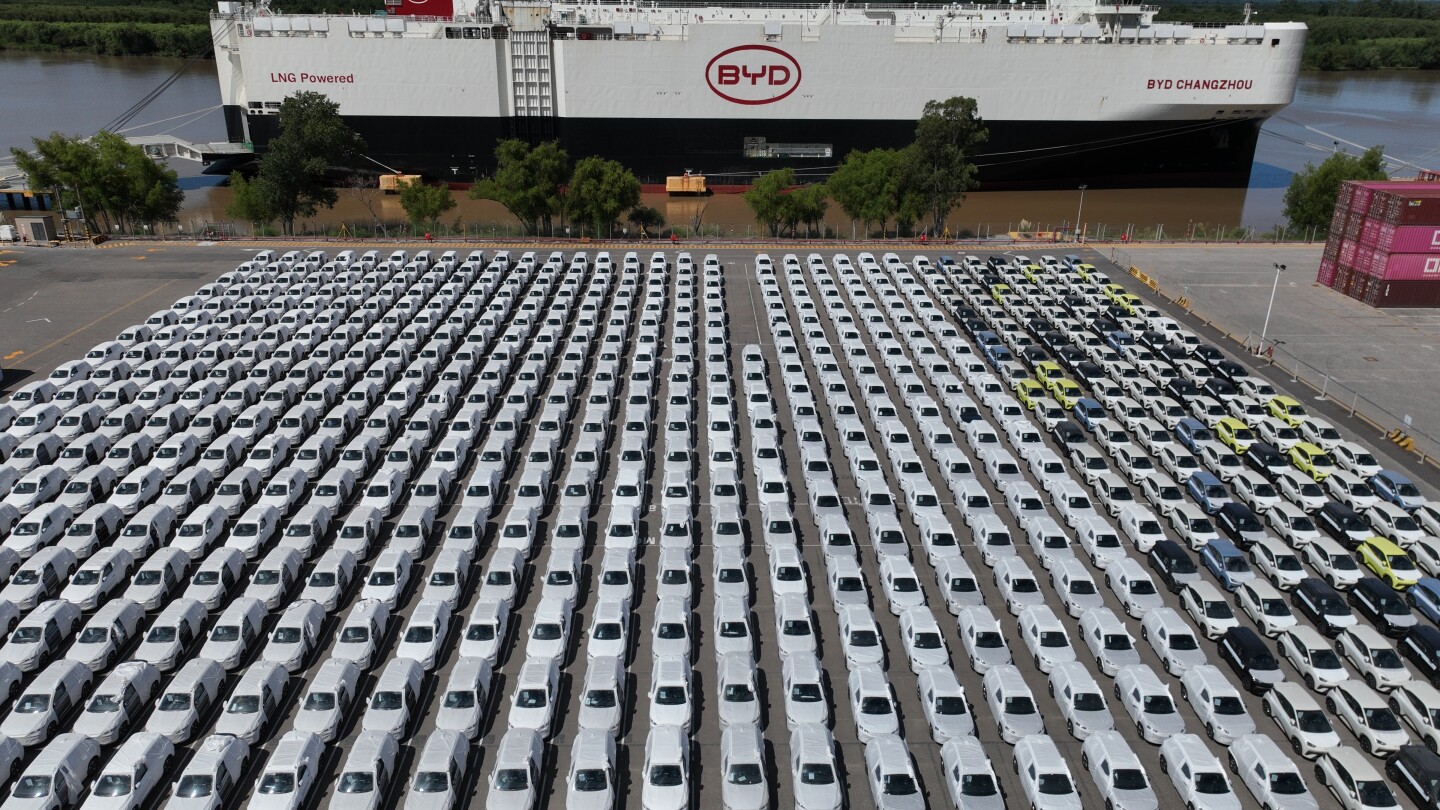
    ZÁRATE, Argentina — A monumental shift is underway in Argentina’s automotive landscape as thousands of Chinese electric and hybrid vehicles disembark at the port of Zárate, signaling a dramatic transformation in one of South America’s traditionally most protected economies. The arrival of BYD’s massive shipment represents both a symbolic and commercial breakthrough for Chinese automakers expanding their global footprint.

    This development comes amid President Javier Milei’s radical economic liberalization agenda that has dismantled decades of Peronist protectionism. Where previous governments imposed stiff tariffs and import restrictions to shield local industry, Milei has flung open Argentina’s doors to foreign goods, resulting in a record 30% surge in imports last year.

    Chinese manufacturers, particularly BYD, are positioned to capitalize on Milei’s new zero-tariff quota allowing 50,000 electric and hybrid vehicles into the country this year. The policy specifically benefits vehicles under $16,000—a price point where Chinese automakers hold significant competitive advantage over Western and Japanese rivals.

    The economic relationship between Argentina and China has deepened substantially, with Chinese imports surging 57% last year compared to a 9.6% increase from the United States. Chinese investment has simultaneously flowed into Argentina’s energy and mining sectors, creating comprehensive economic ties.

    While Western automakers express concern about unfair competition and opposition lawmakers warn of market disruption, industry analysts note that Chinese manufacturers possess both the technological capability and pricing structure to dominate this new market opening. The aging state of Argentina’s electrical infrastructure and lack of specialized repair networks for EVs present current limitations, but Chinese companies appear well-positioned for long-term dominance.

    The arrival of Chinese EVs also carries geopolitical significance, occurring simultaneously with the European Union’s hesitation to ratify a landmark free trade agreement with Mercosur nations. As European manufacturers struggle to compete with Chinese pricing, Argentina’s market becomes another front in the global EV competition.

  • Not just rain: How UAE researchers are spotting hail, snow, even insects inside a storm

    Not just rain: How UAE researchers are spotting hail, snow, even insects inside a storm

    The United Arab Emirates is transforming weather modification science through cutting-edge radar technology and artificial intelligence, moving beyond traditional cloud seeding methods to achieve unprecedented precision in rainfall enhancement. Spearheaded by Dr. Dixon Michael, a prominent atmospheric scientist working with the UAE’s Rain Enhancement Programme (UAEREP), this innovative approach utilizes dual-polarization radar systems capable of identifying specific particles within storms—including hail, snow, ice, and even insects—rather than merely measuring precipitation intensity.

    The research addresses a fundamental challenge in weather modification: determining whether cloud seeding operations actually produce measurable results. Traditional methods relied on radar reflectivity to estimate storm strength but provided limited insight into internal cloud microphysics. “It doesn’t tell you a lot about what’s going on inside the storm,” Dr. Michael noted during the announcement of the sixth cycle awardees of UAEREP. “It doesn’t give you clues about the microphysics.”

    The upgraded system integrates advanced dual-polarization radar with AI algorithms to analyze storm composition in real-time, enabling operators to distinguish between various hydrometeors (particles of water or ice in the atmosphere). This technological advancement represents a significant upgrade to the long-standing LROSE/TITAN storm tracking system, which has been utilized globally for over three decades.

    A critical component of this initiative involves developing local expertise at the National Center of Meteorology (NCM), creating what Dr. Michael describes as “a pipeline of qualified personnel who can operate this system into the future.” This capacity-building ensures the sustainability of the UAE’s investment in water security technologies.

    Unlike historical randomized experiments where scientists would “flip a coin and seed half the storms” for comparison, the UAE’s operational program requires more sophisticated evaluation methods. AI now enables researchers to analyze massive datasets to detect patterns indicating successful seeding operations—whether a storm persisted longer, expanded further, or generated more precipitation following intervention.

    The integration of real-time aircraft telemetry with advanced modeling establishes the UAE as possessing one of the world’s most sophisticated cloud seeding infrastructures. This comprehensive approach transforms each storm into a data-rich experiment in sustainability, ultimately working toward ensuring water security for future generations in the region.

  • UAE: Parkonic to revise on-street parking rules in Discovery Gardens for some tenants

    UAE: Parkonic to revise on-street parking rules in Discovery Gardens for some tenants

    Dubai’s parking management operator Parkonic has implemented significant revisions to on-street parking regulations specifically affecting residents of the Zen Cluster within Discovery Gardens. The adjustments come following initial confusion regarding eligibility for complimentary parking permits among studio apartment tenants in this distinctive residential zone.

    The Zen Cluster, alternatively referred to as Pink Buildings (Structures 1-20), maintains a unique parking configuration distinct from other Discovery Gardens sectors due to divergent building ownership patterns and architectural design considerations. These particular buildings fall under private ownership rather than Dubai Holding jurisdiction and feature independently managed basement parking facilities.

    Parkonic officials have clarified that the revised approach does not constitute an alteration of fundamental parking entitlements but rather represents an alignment strategy to accommodate capacity limitations. Each residential unit retains eligibility for one complimentary parking tenancy, consistent with the overarching policy framework applied throughout Discovery Gardens. However, due to basement parking capacity constraints that don’t perfectly correspond with unit numbers, Parkonic has coordinated with building management entities to allocate limited on-street parking spaces per structure.

    The allocation breakdown specifies: Buildings 1-6 and 8-10 receive 80 on-street spaces each; Buildings 13-20 obtain 68 spaces; while Building 7 (functioning as hotel apartments) and Buildings 11-12 remain excluded from the on-street allocation program. These supplementary spaces are intended to bridge capacity gaps during the transitional phase, with access governed through building-level registration protocols to ensure equitable distribution and prevent system exploitation.

    Residents who previously registered via PIN authentication will experience temporary disablement of digital parking cards effective January 24, 2026, to facilitate realignment with the new building-specific allocation framework. The operator has emphasized this procedural interruption does not imply rejection or penalty. Furthermore, tenants who purchased paid parking memberships during the transition may qualify for one-time refund consideration, subject to verification and management coordination, with all refund petitions requiring submission before January 30, 2026.

    Tenant responses reflect cautious optimism, with residents expressing relief tempered by practical concerns regarding implementation specifics. The resolution addresses financial anxieties for many tenants for whom the alternative monthly payment of Dh945 would have represented significant economic burden.

  • How Ras Al Khaimah airport expanded international flights to 16 countries in 2025

    How Ras Al Khaimah airport expanded international flights to 16 countries in 2025

    Ras Al Khaimah International Airport has firmly established itself as a major aviation hub after achieving a monumental operational milestone in 2025. The airport successfully handled over 1.3 million passengers, marking its evolution from a medium-sized facility into a significant player in regional air travel. This remarkable growth represents a 51% surge in passenger traffic compared to previous years, accompanied by substantial expansions in both flight operations and destination networks.

    The airport’s strategic development has yielded an impressive international route map encompassing 16 countries across pivotal markets. Key destinations now include India, Pakistan, Saudi Arabia, Russia, and Egypt, reflecting the airport’s focused approach to connecting emerging economic corridors. This expansion contributed to a 14% increase in served destinations and a 37% growth in flight movements throughout the year.

    Under the leadership of Sheikh Salem bin Sultan Al Qasimi, Chairman of the Ras Al Khaimah Civil Aviation Authority, the airport executed comprehensive infrastructure enhancements. These included terminal facility upgrades, advanced operational systems implementation, and sophisticated passenger experience improvements. The development strategy prioritized seamless travel standards while maintaining rigorous international security protocols.

    Financial performance mirrored operational success, with net profits climbing 29.4% amid the expansion. The airport simultaneously renewed its ISO certifications across multiple domains including environmental management, innovation protocols, business continuity planning, and quality assurance—all without recording any regulatory violations.

    Innovation initiatives formed a core component of the growth strategy, highlighted by the launch of an advanced Drone Management System and strategic partnerships with aviation authorities in Dubai and Fujairah. The airport also achieved recognition as first runner-up in the Arab Award for Social Responsibility and Sustainability among small government entities.

    A particularly groundbreaking achievement involved the successful experimental flight of an electric vertical take-off and landing aircraft developed in partnership with Chinese aerospace company XPENG AEROHT, positioning the airport at the forefront of aviation technology adoption.

    Sheikh Salem attributed these accomplishments to the visionary leadership of Sheikh Saud bin Saqr Al Qasimi, Ruler of Ras Al Khaimah, and the oversight of Sheikh Mohammed bin Saud Al Qasimi, Crown Prince and Chairman of the Executive Council. Their support has enabled the airport to drive innovation while maintaining operational excellence.

    These developments collectively reinforce Ras Al Khaimah International Airport’s strategic position as a growing connectivity hub that actively supports the emirate’s broader economic diversification goals, tourism expansion initiatives, and commercial development objectives.

  • ICE activity increases in Maine as anxiety grows in immigrant communities

    ICE activity increases in Maine as anxiety grows in immigrant communities

    PORTLAND, Maine — The Trump administration has expanded its immigration enforcement operations to Maine through a controversial initiative dubbed ‘Operation Catch of the Day,’ drawing significant opposition from local governments and communities. Despite Maine’s relatively small population of undocumented residents, the state hosts substantial African refugee communities in Portland and Lewiston that have become primary targets of this enforcement surge.

    The Department of Homeland Security’s operation follows similar pattern-based initiatives in other states, including ‘Metro Surge’ in Minnesota and ‘Midway Blitz’ in Chicago. The deployment has triggered widespread anxiety within immigrant communities, prompting organized resistance from civic leaders, educational institutions, and local businesses.

    Governor Janet Mills and Democratic officials have mounted substantial opposition, including the state’s refusal to provide undercover license plates to Immigration and Customs Enforcement agents. Secretary of State Shenna Bellows, a longstanding Trump critic, explicitly denied federal requests for confidential vehicle identification, citing concerns about potential misuse following similar controversies in Illinois.

    Community response has been immediate and multifaceted. Portland residents have established neighborhood alert networks to monitor ICE movements, while local businesses have displayed signage prohibiting ICE agents from their premises. The Portland Public School district, where more than half of students identify as non-white, has developed contingency plans for online learning and implemented temporary security ‘lockouts’ due to immigration enforcement activities.

    City Council Member Pious Ali, originally from Ghana, reported approximately 25% absenteeism among immigrant students and described how fear has permeated essential workforce sectors. ‘Immigrants work in our hospitals, schools, and hotels—they are part of the economic engine of our community,’ Ali emphasized, criticizing the administration’s approach for generating unnecessary trauma.

    Homeland Security officials confirmed approximately 1,400 enforcement targets in Maine, with initial arrests including individuals convicted of aggravated assault, false imprisonment, and child endangerment. However, local leaders including Portland Mayor Mark Dion have challenged the operation’s proportionality, stating ‘There is no evidence of unchecked criminal activity in our community requiring a disproportionate presence of federal agents.’

    The political confrontation extends beyond immediate enforcement concerns. Bellows previously attempted to remove Trump from Maine’s presidential ballot under the 14th Amendment’s insurrection clause and recently refused to share state voter rolls with federal authorities. Republican leaders argue that withholding undercover plates compromises public safety, while federal prosecutor Andrew Benson—a Trump appointee—has urged demonstrators to maintain peaceful conduct amid growing tensions.

  • Ras Al Khaimah’s ultra-luxury residence sells for record-breaking Dh130 million

    Ras Al Khaimah’s ultra-luxury residence sells for record-breaking Dh130 million

    Ras Al Khaimah’s luxury property market has achieved an unprecedented milestone with the historic sale of the Sky Palace at Waldorf Astoria Residences for Dh130 million ($35.4 million), establishing a new benchmark as the highest-value single-unit residential transaction ever recorded in the emirate.

    The landmark transaction, announced by developer Al Hamra, was accompanied by the separate sale of the development’s signature penthouse for Dh55 million ($15 million), collectively demonstrating robust investor appetite for ultra-premium waterfront properties in the northern emirate.

    This record-breaking sale occurs amid Ras Al Khaimah’s remarkable transformation into one of the UAE’s most dynamic real estate markets. The emirate’s strategic infrastructure investments, government-supported initiatives, and growing portfolio of branded residential developments have propelled its emergence as a premier investment destination.

    Market data reveals substantial property appreciation throughout 2025, with villa prices in Al Hamra Village surging by 42 percent and five-bedroom homes exceeding Dh14 million. Apartments similarly demonstrated strong growth, driven by heightened investor participation and sustained demand for resort-style communities.

    The Sky Palace itself represents the pinnacle of luxury living, occupying the top three floors of the beachfront tower across approximately 10,000 square feet. The residence offers breathtaking panoramic views of the Arabian Gulf, Wynn Al Marjan Island integrated resort, and surrounding mountain ranges. Residents enjoy exclusive access to premium amenities including private lounges, a library, cigar salon, and cinema facilities, complemented by a dedicated ferry connection to the entertainment offerings of Wynn Al Marjan Island.

    Benoy J. Kurien, Group Chief Executive Officer of Al Hamra, emphasized that these transactions reflect growing confidence in Ras Al Khaimah’s long-term economic trajectory and the increasing appeal of meticulously designed luxury developments that meet international standards.

    These landmark sales not only establish new parameters for ultra-luxury real estate in the region but significantly enhance Ras Al Khaimah’s positioning as an emerging global hub for high-net-worth investors seeking sophisticated lifestyle investments.

  • Meraki Developers launches wellbeing-focused Nirvana Residence 1 in the 
heart of Dubai Production City

    Meraki Developers launches wellbeing-focused Nirvana Residence 1 in the heart of Dubai Production City

    Dubai’s real estate landscape gains a new wellness-oriented residential development with the official launch of Nirvana Residence 1 by Meraki Developers. This 22-story tower, situated in the serene Me’aisem district within Dubai Production City, introduces 392 meticulously crafted residential units ranging from studios to three-bedroom configurations.

    The development represents a paradigm shift in urban living, prioritizing resident well-being through thoughtfully integrated amenities and expansive green spaces known as Nirvana Groves. These wellness zones are strategically distributed throughout the property, creating natural retreats that promote relaxation and community interaction alongside comprehensive fitness facilities.

    Ajay Rajendran, Founder and Chairman of Meraki Developers, articulated the project’s philosophy: “Our vision transcends conventional housing by creating environments that actively nurture the human spirit. Nirvana Residence 1 embodies our commitment to harmonizing modern living with natural elements and community connectivity.”

    The project’s strategic location offers dual advantages: proximity to major transportation arteries ensuring quick access to Dubai’s urban core, while maintaining a tranquil residential atmosphere. This balance reflects Meraki’s overarching design principle of creating sanctuary-like communities without sacrificing urban convenience.

    With over 100 completed projects, the award-winning developer continues to emphasize sustainable design practices and customer-centric development, positioning Nirvana Residence 1 as their latest innovation in quality-conscious real estate that merges architectural excellence with holistic living concepts.

  • UAE: 2025 among hottest years on record, as nation ramps up AI use to boost rainfall

    UAE: 2025 among hottest years on record, as nation ramps up AI use to boost rainfall

    The United Arab Emirates is dramatically scaling its deployment of artificial intelligence in weather modification initiatives as global temperature records continue to climb. With 2025 confirmed as one of the hottest years in recorded history, the arid nation is confronting its water security challenges through technological innovation.

    The National Center of Meteorology (NCM) unveiled three pioneering research projects selected for the Sixth Cycle of the UAE Research Programme for Rain Enhancement Science (UAEREP), each receiving up to $1.5 million in funding over three years. This cycle demonstrates a strategic pivot toward AI-integrated solutions across cloud seeding analysis, smart material development, and land-use modeling.

    Alya Al Mazrouei, Director of UAEREP and Director of Research and Weather Enhancement at NCM, emphasized the critical nature of the situation: ‘Water security remains among the most urgent global challenges. With annual precipitation averaging below 100 millimeters, exceptionally high evaporation rates, and constrained groundwater replenishment, innovative approaches have transitioned from optional to essential.’

    The global context underscores this urgency. According to World Meteorological Organization data, Earth’s average surface temperatures have risen 1.44°C above pre-industrial benchmarks, with 2023, 2024, and 2025 constituting the three warmest years ever documented.

    The selected projects represent cutting-edge intersections of meteorology and artificial intelligence. Dr. Dixon Michael, a radar meteorologist from the United States, will employ machine learning to enhance assessment methodologies for cloud seeding effectiveness, advancing beyond conventional storm tracking to analyze microphysical processes and precipitation outcomes.

    Professor Linda Zou from Australia’s Victoria University will develop advanced nanocomposite materials serving as ice nucleation agents, optimized through AI-powered analytics. Her work includes deploying a portable cloud chamber at NCM facilities and conducting specialized training programs.

    Dr. Oliver Branch from Germany’s University of Hohenheim will investigate how strategic land cover modifications might naturally induce rainfall, providing complementary approaches to aerial interventions.

    Dr. Abdulla Al Mandous, President of the World Meteorological Organization and Director General of NCM, noted the program’s evolving role: ‘Since its 2015 inception, UAEREP has matured into a global nexus for scientific collaboration, translating visionary concepts into practical, sustainable solutions that simultaneously foster economic growth and address environmental challenges.’

  • Dubai: Poets, musicians, performers open Emirates LitFest with nostalgic storytelling

    Dubai: Poets, musicians, performers open Emirates LitFest with nostalgic storytelling

    The 18th Emirates Airline Festival of Literature commenced on January 21st along Dubai Creek, launching an eight-day celebration of global literary arts with a profoundly local spirit. This year’s opening ceremony at InterContinental Festival City transformed into an evocative homage to pre-literate storytelling traditions, emphasizing memory and oral history over written texts.

    Emirati poets, musicians, and performers established the festival’s thematic foundation by revisiting an era when narratives traveled verbally through homes rather than libraries. The National Youth String Chamber Orchestra and Repton Al Barsha Choir provided melodic accompaniment while Dubai Police’s mounted cavalry and young drummers contributed visual rhythm, creating a multisensory experience that connected contemporary arts with cultural heritage.

    One of the most poignant moments featured Um Mohammed, whose recollections of old Dubai were preserved through the Erth Dubai heritage project. She described a tightly-knit community where open doors facilitated constant communication and the creek served as daily companion rather than tourist landmark. Emirati poet Shamma Al Bastaki later articulated poetry’s role as “a vessel for preserving lived experience,” drawing inspiration from her father’s nautical life and the celestial navigation methods of sailors.

    International voices echoed these themes, with children’s author Rachel Bright and poet Afra Atiq discussing poetry as “an act of belief” during a walk through Shindagha that inspired place-specific verse. Festival Director Ahlam Bolooki framed the evening as a reminder that “stories have always been part of who we are” long before they were committed to paper.

    The festival, featuring over 200 sessions and participants from 40 nationalities, will concurrently celebrate the 20th anniversaries of both the Sheikh Zayed Book Award and the Saif Ghobash Banipal Prize for Arabic Literary Translation. While promising diverse programming ranging from crime fiction to Nobel laureate conversations, the opening ceremony established literature not merely as written art but as living practice connecting generations through shared narrative traditions.