标签: Africa

非洲

  • Residents face early traffic, low visibility as monster fog blankets parts of UAE

    Residents face early traffic, low visibility as monster fog blankets parts of UAE

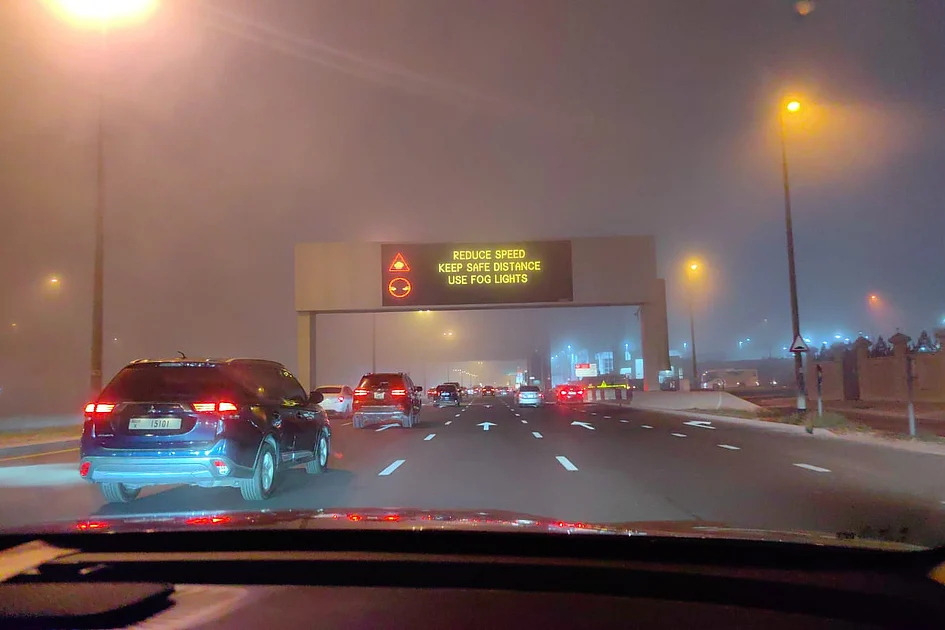
    A severe fog event descended upon the United Arab Emirates early Tuesday morning, significantly disrupting daily life and transportation across several emirates. Dense fog patches, described by residents as a ‘monster’ blanket, engulfed areas including Sharjah, Dubai, and Al Qusais, drastically reducing visibility to as low as 200 meters in some locations.

    The meteorological phenomenon triggered an immediate multi-agency response. The UAE’s National Centre of Meteorology (NCM) issued red and yellow weather alerts across most regions, warning of hazardous driving conditions persisting until 10:00 AM. Simultaneously, the Roads and Transport Authority (RTA) activated electronic signboards along major thoroughfares, broadcasting critical safety advisories urging motorists to reduce speed, maintain safe following distances, and utilize fog lights.

    Transportation networks experienced substantial disruptions with traffic congestion building hours earlier than typical patterns. Eyewitnesses reported heavy police presence on major highways including E311, where authorities implemented additional safety measures. Heavy vehicles were temporarily sidelined along Sheikh Mohammed Bin Zayed Road to prevent potential accidents in the low-visibility conditions.

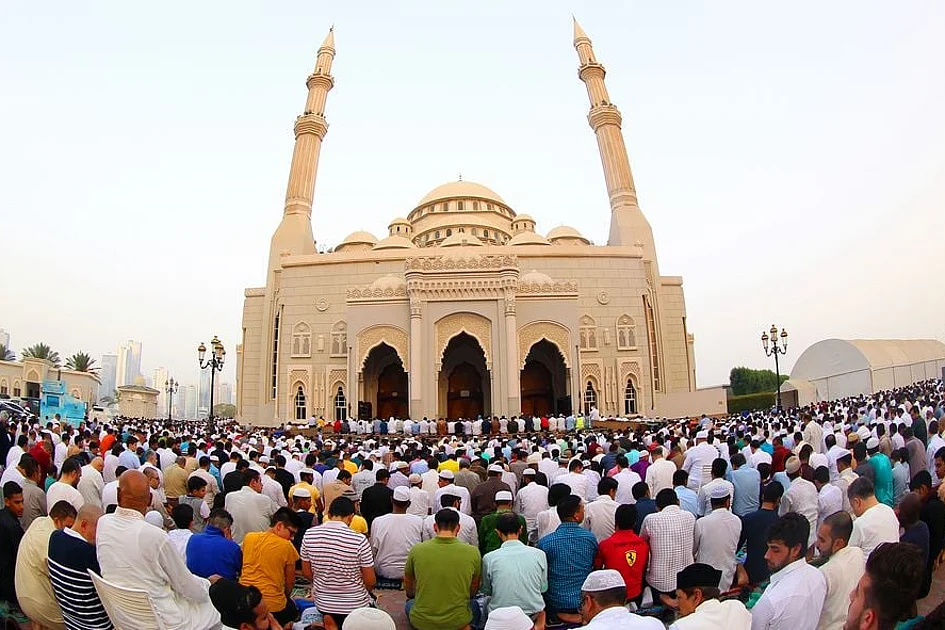
    The fog’s impact extended beyond roadways, affecting school transportation systems with numerous reports of delayed bus arrivals. Residents described surreal conditions where familiar landmarks disappeared within the thick blanket of fog. Long-time Sharjah resident Umm-e-Aiman noted the unusual intensity, stating, ‘The mosque, which is less than 200 metres from my home, was no longer visible.’

    Abu Dhabi Police implemented precautionary speed restrictions, activating an 80 km/h limit on most capital roads through electronic information boards. Motorists expressed cautious approaches to commuting, with Sharjah resident Usman Malik emphasizing, ‘We can arrive 30 minutes late, but in the event of a minor accident, we may lose more than an hour.’ The comprehensive response demonstrated the UAE’s coordinated approach to managing weather-related public safety challenges.
  • Sudanese paramilitary forces kill at least 28 people in an attack in Darfur, group says

    Sudanese paramilitary forces kill at least 28 people in an attack in Darfur, group says

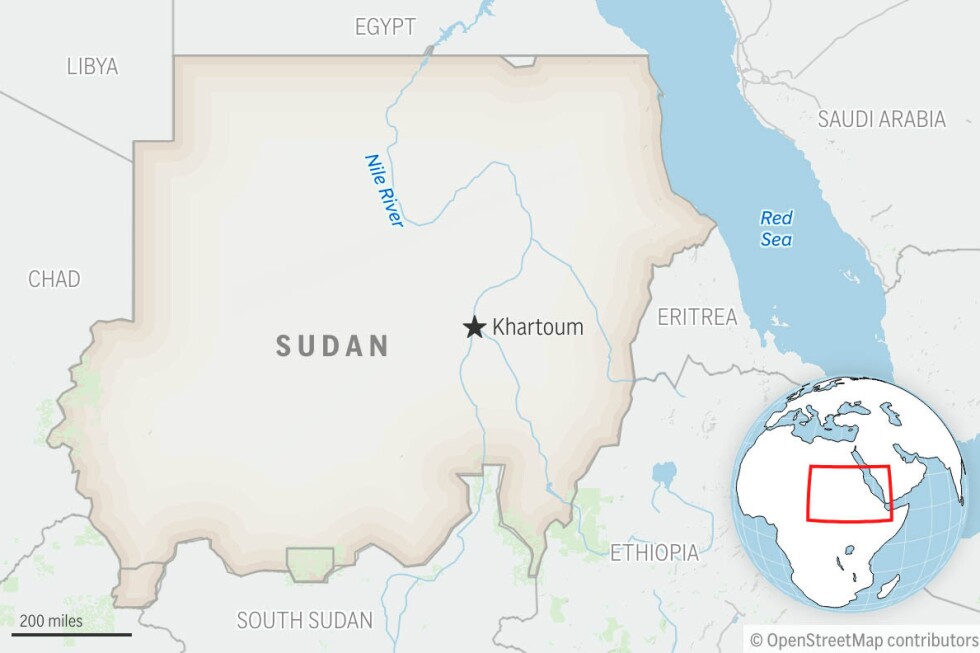
    CAIRO — A devastating assault by Sudan’s paramilitary Rapid Support Forces (RSF) on the North Darfur town of Misteriha has resulted in significant casualties, according to a Tuesday report from the Sudan Doctors Network. The medical organization, which monitors the nation’s ongoing conflict, confirmed at least 28 fatalities and 39 individuals wounded, including 10 women, during the Monday offensive.

    The town serves as a key stronghold for Arab tribal leader Musa Hilal, who shares ethnic ties with the majority Rizeigat Arab tribe of the RSF. The attack commenced over the weekend with drone strikes targeting Hilal’s guesthouse, escalating into a full-scale ground offensive on Monday that culminated in the RSF seizing control of Misteriha.

    In a particularly concerning development, the medical group reported that RSF shelling damaged the town’s healthcare facility. Following this, paramilitary fighters allegedly assaulted medical personnel and detained at least one staff member. This incident highlights the perilous conditions facing aid workers in the conflict zone.

    This violence emerges within the broader context of Sudan’s devastating war, which erupted in 2023 when tensions between the national army and the rival RSF escalated into open combat. Beginning in the capital Khartoum, the conflict has since spread nationwide, creating a humanitarian catastrophe characterized by thousands of deaths, mass displacement, disease outbreaks, and severe food insecurity.

    The capture of Misteriha solidifies RSF dominance across the Darfur region but risks inflaming longstanding tribal tensions in an area with a tragic history of violence and warfare.

  • Spiro secures $50 million from Afreximbank, others to expand Africa battery-swapping network

    Spiro secures $50 million from Afreximbank, others to expand Africa battery-swapping network

    NAIROBI, Kenya — Africa’s electric vehicle sector is experiencing significant financial acceleration as institutional investors demonstrate growing confidence in battery-swapping technologies and charging infrastructure. Three major funding announcements within days signal a transformative period for sustainable transportation across the continent.

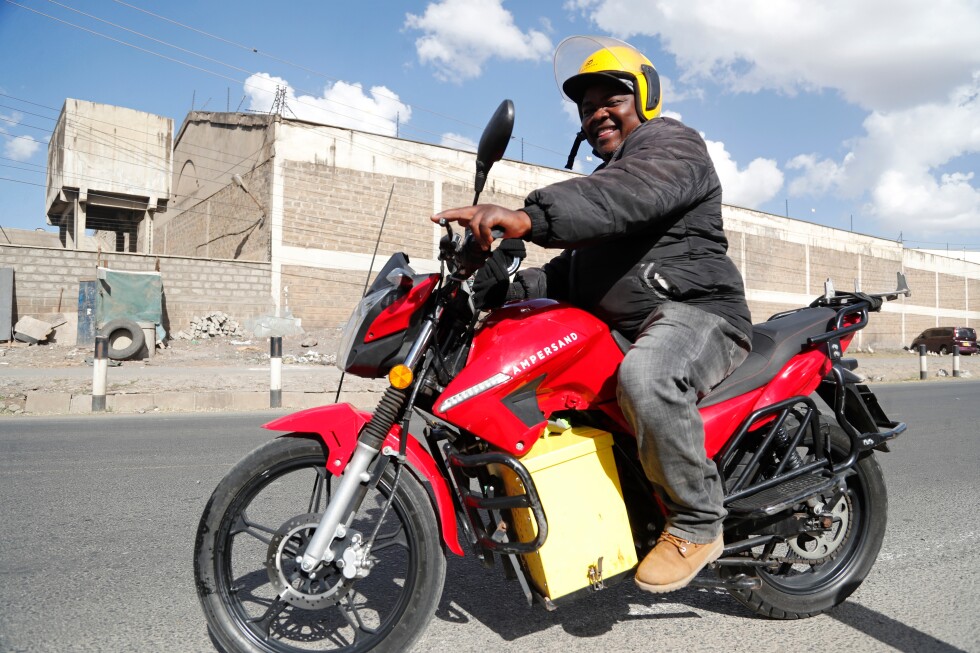
    Spiro, Africa’s predominant electric mobility operator, has secured a substantial $50 million debt financing package from a consortium comprising African Export-Import Bank (Afreximbank), U.S. climate fintech firm Nithio, and the Africa Go Green Fund. This capital injection will facilitate the expansion of Spiro’s battery-swapping network and advance technological innovations including automated battery exchange systems, rapid charging capabilities, and renewable energy integration.

    The funding momentum continued with Arc Ride, another e-mobility enterprise, receiving a $5 million equity commitment from the International Finance Corporation (IFC). Simultaneously, Ugandan electric bike startup Gogo Electric obtained $1 million from ElectriFi, an EU-funded electrification financing initiative managed by EDFI.

    Kaushik Burman, CEO of Spiro, emphasized the strategic importance of this investment: “This new funding reinforces our vision of building a robust, scalable energy network tailored for Africa by Africans.” The company currently operates across six African nations—Kenya, Uganda, Rwanda, Nigeria, Benin, and Togo—with pilot programs underway in Cameroon and Tanzania.

    Spiro’s operational metrics demonstrate substantial scale: deployment of over 80,000 electric motorcycles, circulation of more than 300,000 batteries, completion of 30 million battery swaps, and establishment of over 2,500 swap stations. These operations have enabled riders to accumulate over one billion carbon-free kilometers.

    Gagan Gupta, Spiro’s founder, outlined the environmental objectives: “We will use it to deploy energy infrastructure that will contribute meaningfully to a greener future in Africa.”

    Development financiers perceive electric mobility as both an environmental solution and an industrialization opportunity. Raghav Sachdeva, Chief Investment Officer at Nithio, noted: “Spiro is one of the largest and fastest-growing players in the Pan-African e-mobility market. We see e-mobility as a critical pillar of Africa’s clean energy transition.”

    Laurène Aigrain, Managing Director of Africa Go Green Fund, highlighted the commercial and environmental dual mandate: “The transaction reflects the fund’s commitment to backing commercially robust businesses that combine innovation with measurable environmental and social impact.”

    Afreximbank officials positioned their support within broader economic development goals. Oluranti Doherty, Managing Director for Export Development, stated: “Driving Africa’s transition to electric mobility is central to how we view sustainable economic development across the continent.”

    Since 2022, Spiro has raised more than $230 million, financing production and assembly facilities across Nigeria, Kenya, Uganda, and Rwanda. This investment pattern reflects the increasing flow of climate-focused capital into Africa’s emerging e-mobility sector, signaling both environmental commitment and economic opportunity.

  • Touch of Magic

    Touch of Magic

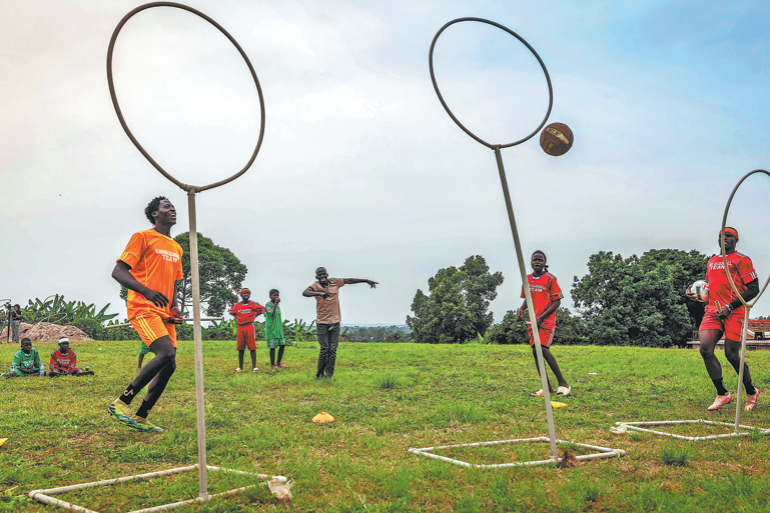
    Deep in the rural village of Katwadde, approximately 135 kilometers from Uganda’s capital Kampala, an extraordinary sporting phenomenon is taking root. Surrounded by banana trees, athletes maneuver across makeshift fields with broomstick-like implements between their legs, practicing a sport that bridges literary fantasy and athletic reality.

    This adaptation of Quidditch—the magical sport from J.K. Rowling’s Harry Potter series—has been officially rebranded as quadball in the muggle world. Unlike its fictional counterpart, quadball requires no magical abilities but has captured global imagination since its literary debut in 1997.

    The sport’s unlikely journey to rural Uganda began in 2013 when primary school teacher John Ssentamu, 47, encountered the concept during a bus journey. “The word ‘Quidditch’ meant nothing to me,” Ssentamu recalled. “I researched it online and immediately recognized its potential for my community.”

    Ssentamu established Uganda’s first quadball team at Good Shepherd Primary School where he teaches. Through ten years of dedicated coaching, his initiative has blossomed into a national movement with over 200 players across the East African nation. The sport’s hybrid nature—combining elements of netball, football, volleyball, and rugby—proves particularly appealing, as does its mandatory gender integration requiring mixed teams.

    The program achieved a significant milestone in 2023 when Ssentamu’s team hosted and won Uganda’s inaugural national quadball tournament. However, financial constraints prevent international participation, leaving the team unable to attend the biennial Quadball World Cup despite invitations. The most recent tournament in Belgium attracted 31 teams from across the globe.

    Beyond competitive aspirations, quadball has become a community unifier in Katwadde. Vicky Edith Nabbanja, Ssentamu’s 25-year-old daughter and team “beater,” emphasizes how the sport “has brought youth together and opened up their minds” while fostering “a community of belonging” in a region where educational priorities often face challenges.

    Ssentamu’s vision remains undimmed: “My dream is to see a team from here going to the Quidditch World Cup because it would be a revelation for the whole world.”

  • Hetmyer runs rampage as West Indies crush Zimbabwe in T20 World Cup

    Hetmyer runs rampage as West Indies crush Zimbabwe in T20 World Cup

    In a spectacular display of power hitting, Shimron Hetmyer delivered a career-defining performance that propelled the West Indies to a monumental 107-run victory against Zimbabwe during their Super Eights clash in the T20 World Cup. The destructive left-hander bludgeoned an electrifying 85 runs from a mere 34 deliveries, a personal best in T20 internationals, to set a formidable target that proved insurmountable for the African side.

    The foundation for the Caribbean triumph was laid early as Hetmyer registered the fastest fifty ever by a West Indian in T20 World Cup history, reaching the milestone in just 19 balls. His explosive innings, featuring seven boundaries and seven massive sixes, formed the core of the team’s colossal total of 254-6—the second-highest ever recorded in the tournament’s history, narrowly trailing Sri Lanka’s 260-6 against Kenya in 2007.

    Zimbabwe’s fielding woes significantly contributed to their downfall, with Tashinga Musekiwa dropping Hetmyer on two critical occasions at long-on. Captain Rovman Powell provided substantial support with a well-crafted 59 from 35 balls, combining with Hetmyer in a devastating 122-run partnership for the third wicket that dismantled Zimbabwe’s bowling attack. Sherfane Rutherford’s late cameo of 31 not out from 13 deliveries further accelerated the scoring in the final overs.

    Facing a record chase of 255, Zimbabwe’s innings never gained momentum as left-arm spinner Gudakesh Motie orchestrated a spectacular collapse with his four-wicket haul (4-28). The African team crumbled to 20-3 within the first three overs, with Akeal Hosein claiming two wickets in a maiden over. Despite brief resistance from Dion Myers (28) and a defiant 43 from Brad Evans, Zimbabwe were eventually bowled out for 147 in 18.3 overs.

    The comprehensive victory elevated West Indies to the top of Group One based on superior net run rate ahead of South Africa, setting up a crucial encounter between the two teams. Zimbabwe will seek redemption against defending champions India in their next fixture as they attempt to keep their semifinal hopes alive in the tournament.

  • Saudi Aramco sells first Jafurah condensate cargoes to US firms, India, sources say

    Saudi Aramco sells first Jafurah condensate cargoes to US firms, India, sources say

    In a landmark development for global energy markets, Saudi Aramco has finalized its first international sales of ultra-light crude from the colossal Jafurah gas field. According to industry sources, the state energy giant has allocated initial cargoes to prominent U.S. firms Chevron and ExxonMobil, alongside India’s leading refiner, Indian Oil Corporation (IOC).

    The transactions, structured at premiums of $2 to $3 per barrel above Dubai benchmarks on a free-on-board basis, signify the commercial launch of one of the world’s most ambitious energy ventures. Chevron has secured two shipments for loading in late February and March, with supply chains indicating destinations at its South Korean joint-venture GS Caltex and Thailand’s Star Petroleum Refining facility.

    This export initiative stems from Aramco’s $100 billion Jafurah development, which holds estimated reserves of 229 trillion cubic feet of raw gas and 75 billion barrels of condensate. The project represents a strategic pivot toward gas production expansion and diversification of the kingdom’s light crude offerings.

    Positioned as the largest shale gas undertaking outside the United States, Jafurah is projected to achieve sustainable production capacity of 2 billion cubic feet daily by 2030. Monthly export volumes are anticipated to reach 4-6 cargoes of 500,000 barrels each from Yanbu port on Saudi Arabia’s eastern coast.

    The condensate grade boasts exceptional quality characteristics with 49.7° API gravity and minimal sulfur content (0.17%). Preliminary assays indicate approximately 40% of yield converts to petrochemical feedstock naphtha, predominantly heavier grades, with remaining output comprising gasoil and kerosene.

    Aramco officials confirmed coordination with the Ministry of Energy for production ramp-up aligned with development plans and market requirements, while maintaining corporate policy of not commenting on specific commercial arrangements. Major purchasers have declined or not responded to requests for commentary regarding the transactions.

  • Bitcoin slides toward $65,000 as tariff shock rattles risk appetite

    Bitcoin slides toward $65,000 as tariff shock rattles risk appetite

    Digital asset markets experienced significant turbulence Monday as Bitcoin plunged toward the $65,000 threshold, reflecting heightened investor anxiety following unexpected U.S. trade policy developments. The cryptocurrency’s 5% intraday decline underscores its continued vulnerability to macroeconomic shocks and institutional capital movements.

    The market deterioration follows a dual policy shock: the Supreme Court’s invalidation of previous presidential tariff authorities and the subsequent White House announcement of new 15% global import duties. This policy whiplash has reignited concerns about potential trade conflicts and their implications for global economic growth.

    Financial analysts observe that cryptocurrency assets are facing compounded pressure from multiple fronts. Linh Tran, Senior Market Analyst at XS.com, noted: ‘The earlier recovery from $60,000 levels lacked substantive institutional backing and couldn’t overcome medium-term bearish tendencies. Current market dynamics are being shaped by trade policy ambiguity, diminished institutional participation, persistent high interest rates, and dollar strength.’

    Institutional engagement, previously a cornerstone of crypto market advances, has notably weakened. U.S. spot Bitcoin ETFs have witnessed substantial capital outflows, with over 100,000 Bitcoin withdrawn from fund holdings since October 2025. This reduction brings total ETF reserves to approximately 1.26 million Bitcoin, indicating cautious institutional positioning.

    Jeff Mei, Chief Operating Officer at blockchain firm BTSE, highlighted how escalating trade tensions are prompting portfolio adjustments: ‘The tariff rate increase is triggering crypto asset divestment as investors anticipate broader market deterioration. Geopolitical risks and potential trade flow disruptions are additionally dampening market sentiment.’

    Bitcoin’s current valuation represents a 26% year-to-date decline and a 47% retreat from its October peak above $125,000. This correction magnitude has simultaneously pressured cryptocurrency-equivalent stocks, with major U.S. digital asset firms seeing pre-market share declines.

    Market intelligence from 10x Research suggests the downturn reflects structural vulnerabilities rather than isolated events. Head of Research Markus Thielen observed: ‘This decline aligns with typical bear-market characteristics featuring limited liquidity and weak conviction. Policy uncertainty and global macroeconomic trends continue restraining upward potential.’

    The divergence between cryptocurrency performance and traditional safe havens has become particularly striking. While gold gained over 1% amid the uncertainty, Bitcoin’s correlation with risk assets rather than protective investments has challenged its ‘digital gold’ narrative.

    Despite current pressures, some analysts identify potential support levels around $60,000, citing persistent long-term investor interest and absence of severe liquidity crises. However, sustainable recovery likely requires renewed ETF inflows, Federal Reserve monetary easing signals, and stabilization in global trade relations.

    Near-term trading expectations suggest continued volatility within a broad range, with $65,000 representing crucial support and the $69,000-$70,000 zone constituting significant resistance. Market participants anticipate potential retests of lower support levels should current pressure factors persist.

  • Middle East cyber threats surge as UAE emerges as a global model for digital resilience

    Middle East cyber threats surge as UAE emerges as a global model for digital resilience

    The Middle East is experiencing a dramatic surge in cybersecurity threats, with attempted digital intrusions exceeding 200,000 per day in the United Arab Emirates alone—representing a 40% year-over-year increase across the Gulf Cooperation Council region. This alarming trend coincides with accelerated digital transformation initiatives throughout government services, energy sectors, financial technology, and smart-city infrastructure development.

    According to cybersecurity experts, the region has reached a critical inflection point where digital protection mechanisms have evolved from technical considerations to fundamental national security priorities. Deep Chanda, Chief Officer at Ampcus Cyber, emphasizes that contemporary cybersecurity transcends traditional IT concerns, noting that “It is about whether a nation keeps running, its economy, its public services, and preserves the trust of its citizens.”

    The UAE’s ambitious digital economy project, valued at over Dh100 billion, has catalyzed a strategic shift toward resilience-by-design frameworks. This approach integrates security protocols directly into digital services and national infrastructure rather than treating protection as an afterthought. Chanda asserts that “You cannot build a digital economy on speed alone. You build it on trust engineered by design.”

    Identity-centric security models have emerged as critical defense mechanisms, with 70% of regional organizations identifying insider threats as primary vulnerabilities. Enterprises across finance, energy, and government sectors are implementing continuous verification systems, behavioral monitoring technologies, and stringent privileged-access controls in response to escalating credential-theft attacks and supply-chain infiltration attempts.

    The rapid integration of artificial intelligence and large language models presents both operational opportunities and novel threat vectors. UAE organizations are addressing this dual nature through structured governance controls encompassing data access protocols, model accountability measures, and security-by-design principles. This governance framework enables innovation while mitigating risks associated with AI adoption at scale.

    In response to growing cybersecurity challenges, the recently established CISO Intelligence Council in Dubai facilitates collaboration among top security leaders across banking, healthcare, telecommunications, fintech, government, and critical infrastructure sectors. This invitation-only platform serves as a regional nerve center for intelligence sharing, threat briefings, and cross-sector coordination, positioning Dubai as a hub for cybersecurity strategy development.

    As operational technology footprints expand across utilities, healthcare, logistics, and manufacturing sectors, cybersecurity has become intrinsically linked to national operational continuity and public safety. The ultimate measure of digital resilience in the Middle East’s evolving threat landscape now depends on maintaining uninterrupted services, ensuring operational continuity, and preserving institutional trust.

  • Sharjah announces Eid Al Fitr holidays for public sector employees

    Sharjah announces Eid Al Fitr holidays for public sector employees

    The Emirate of Sharjah has officially declared its Eid Al Fitr holiday schedule for public sector employees, marking the conclusion of the holy month of Ramadan. According to the Sharjah Human Resources Department, government staff will enjoy a four-day break commencing Thursday, March 19, 2026, through Sunday, March 22, with regular operations resuming on Monday, March 23.

    This early announcement enables both governmental departments and employees to strategically organize their schedules around one of the most significant religious observances in the Islamic calendar. The timing provides adequate preparation window for residents and businesses to coordinate festivities and family gatherings.

    Concurrently, federal authorities including the UAE Federal Authority for Government Human Resources and the Ministry of Human Resources and Emiratisation have synchronized holiday declarations across sectors. Federal government employees will mirror Sharjah’s four-day holiday timeframe, while private sector workers are scheduled to receive a slightly shorter break from March 19 to March 21.

    Notably, authorities have specified a contingency provision: should Ramadan extend to its full 30-day duration, private sector employees will receive an additional day off, extending their holiday through Sunday, March 22. This coordinated approach ensures nationwide synchronization while accommodating religious uncertainties inherent in the lunar calendar-based observance.

  • Who wore what at BAFTAs 2026: Top red carpet looks in pictures

    Who wore what at BAFTAs 2026: Top red carpet looks in pictures

    London’s Royal Festival Hall transformed into a spectacle of sartorial excellence on February 23, 2026, as the British Academy Film Awards showcased fashion narratives as compelling as the cinematic achievements being honored. The 2026 BAFTAs red carpet delivered a masterclass in style evolution, blending timeless elegance with avant-garde experimentation.

    This year’s fashion landscape revealed distinct stylistic approaches among Hollywood’s elite. Multiple nominees including Emma Stone and Jessie Buckley demonstrated the enduring power of classical craftsmanship reinterpreted through contemporary lenses. Their selections balanced traditional elegance with modern sophistication, creating red carpet moments that resonated with both critics and audiences.

    Contrasting sharply with these refined approaches, trendsetters like Teyana Taylor embraced architectural silhouettes and daring accessories that commanded immediate attention. These bold fashion statements generated instant social media buzz, with sculptural designs and unconventional proportions challenging traditional red carpet conventions.

    A significant contingent of celebrities opted for minimalist excellence, proving that understated elegance can make powerful statements. Through impeccable tailoring, vintage-inspired archival pieces, and meticulously chosen jewelry, these stars demonstrated that sophistication often lies in precision rather than extravagance.

    Fashion analysts observed that the BAFTAs 2026 collections potentially establish key trends for the upcoming Oscar ceremonies. The prevailing themes suggest awards season fashion is moving toward dramatic presentations, exacting craftsmanship, and strong expressions of individual style rather than safe, predictable choices.

    The diversity of fashion approaches at this year’s event highlighted the evolving nature of red carpet culture, where personal expression increasingly rivals traditional glamour in importance. From Old Hollywood nostalgia to futuristic innovation, the 2026 BAFTAs red carpet served as both celebration and laboratory for fashion’s continuing evolution within entertainment’s most visible stage.