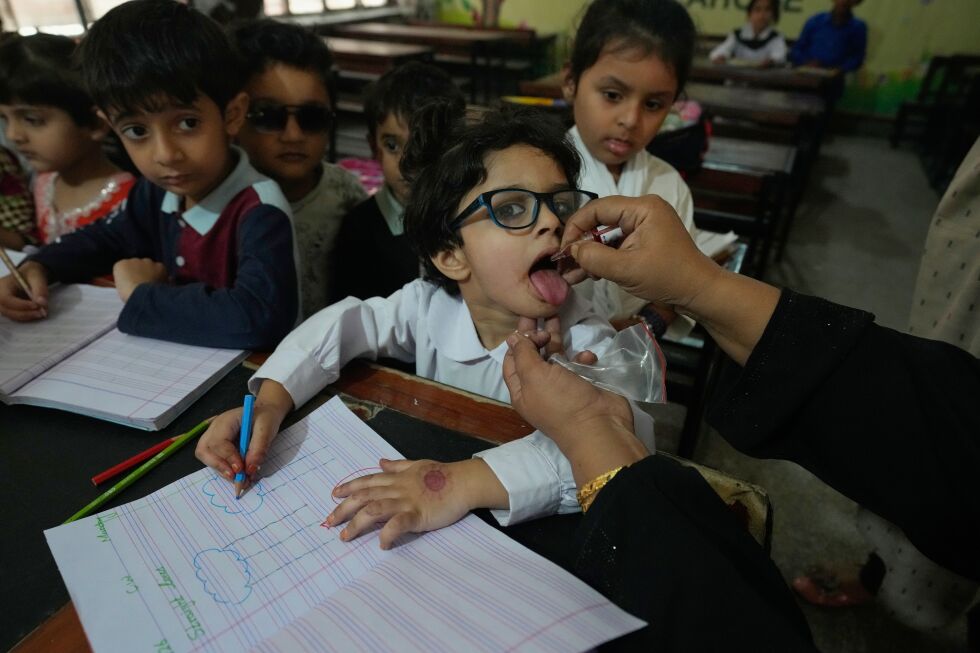
A deadly militant attack targeted a police convoy assigned to protect polio vaccination workers in northwestern Pakistan on Tuesday, leaving one officer dead and four more injured, local law enforcement confirmed. Two assailants were fatally shot by responding officers before the remaining attackers fled the scene, according to initial reports.
The shooting unfolded in Hangu District, located in Khyber Pakhtunkhwa province along Pakistan’s border with Afghanistan, just days after Pakistan kicked off its second nationwide anti-polio vaccination drive of 2026, said Mahmood Alam, a local senior police official. As of Wednesday, no militant organization had issued a public claim of responsibility, but investigators widely point to the Pakistani Taliban and regional extremist groups, which have a long history of targeting polio immunization efforts across the country.
The World Health Organization designates Pakistan and Afghanistan as the only two nations on Earth where wild poliovirus transmission has never been stopped, making the coordinated cross-border campaigns a critical global public health priority. Pakistan’s weeklong initiative aims to deliver life-saving polio vaccines to more than 45 million children under the age of 5 across all of the country’s provinces and administrative regions. Aseefa Bhutto Zardari, Pakistan’s first lady and daughter of President Asif Ali Zardari and assassinated former Prime Minister Benazir Bhutto, has spearheaded public outreach for the current drive.
Benazir Bhutto, who was killed in a 2007 militant attack, personally led national polio eradication efforts during her time in office, carrying forward the family’s longstanding commitment to ending the disease. In an official statement marking the campaign’s launch, Aseefa Bhutto Zardari noted that Pakistan stands at a pivotal juncture in its decades-long fight against polio. While the country has made unprecedented progress, she emphasized, the final push to eradication remains the most dangerous and challenging phase.
Citing recent public health data, Aseefa pointed to 31 confirmed wild polio cases recorded across Pakistan in 2025, with only one case documented so far in 2026. Even with this dramatic progress, she warned against public complacency, stressing that a single undetected case can reignite widespread transmission. The first lady also highlighted the unprecedented coordination between Pakistan and Afghanistan for this round of campaigns, a measure designed to block cross-border virus spread and close immunization gaps along the shared frontier.
The two neighboring nations employ different approaches to reach vulnerable children: Pakistan relies heavily on door-to-door teams that administer vaccines directly in family homes, while Afghanistan’s strategy centers on fixed immunization sites at health facilities, where parents are encouraged to bring their children for doses. Afghanistan launched its own first national anti-polio drive of 2026 in parallel with Pakistan’s effort, in partnership with global health organizations. The campaign targets 12.6 million children under age 5 across the country, though Sharafat Zaman, spokesperson for Afghanistan’s Ministry of Public Health, confirmed that rollout has been delayed in some high-altitude regions due to unseasonably cold weather.
Zaman called on parents, religious leaders and local community influencers to encourage full participation in the drive, stressing that vaccination remains the only proven preventive measure against the paralytic disease. For decades, Pakistan’s national polio eradication program has faced violent opposition from militant groups, which spread false conspiracy theories claiming immunization drives are a Western plot to sterilize Muslim children. Since the 1990s, more than 200 polio workers and security personnel assigned to protect them have been killed in targeted attacks across Pakistan, official data shows. In response to intelligence warnings of potential attacks ahead of this latest campaign, Pakistani authorities have deployed thousands of additional police officers to guard vaccination teams as they work across high-risk regions.