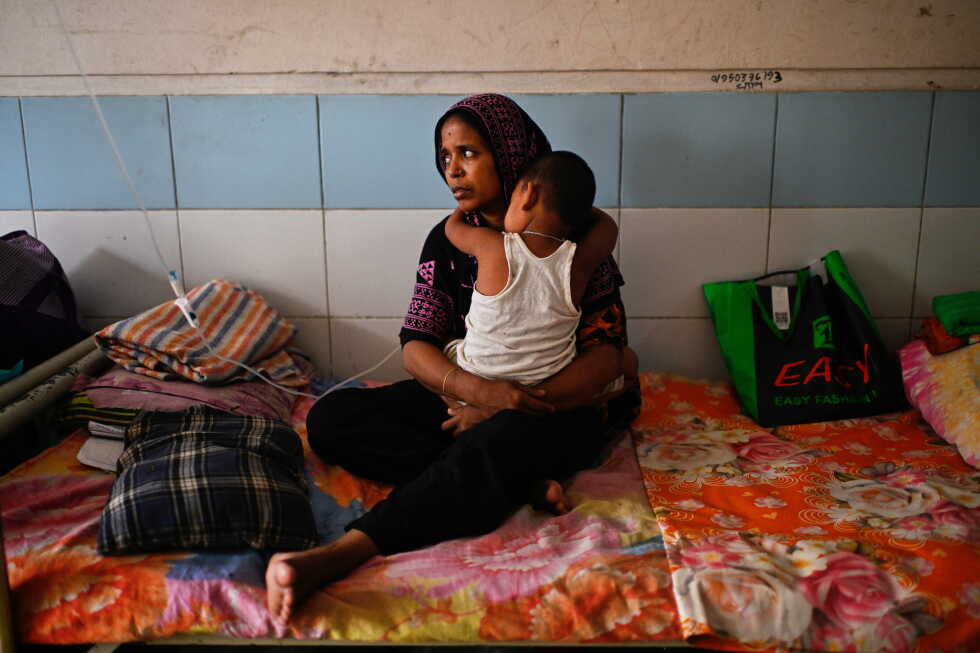
In a overcrowded pediatric ward in Dhaka, the capital of Bangladesh, 8-month-old Rojatun Jannat Ramisa fights for every breath, her small body wracked by the effects of measles. Beside her bed, her helpless parents watch, their hopes pinned on scarce medical care after traveling hundreds of kilometers for specialized treatment. Ramisa is far from alone: she is one of tens of thousands of children falling ill during a catastrophic measles outbreak that has claimed hundreds of young lives, after years of disruptions to the nation’s routine childhood immunization efforts left a large gap in population protection.
Ramisa’s mother, Ranu Akhter, recalled the alarming scale of the crisis she witnessed at her local district hospital before being referred to Dhaka Shishu Hospital, the country’s leading specialized children’s facility. “Fourteen days ago, when we were at the district hospital, every other child being treated alongside my daughter had the same telltale signs: red rashes covering their bodies, painful sores in their mouths, and raging fevers,” Akhter told the Associated Press. “It was then I understood just how far this outbreak has spread.”
As of this week, the crisis has grown steadily worse: official data from Bangladesh’s Directorate General of Health Services puts the death toll from suspected measles cases at 999 since January 1, 2025. Since the outbreak began accelerating in March, the Ministry of Health has recorded more than 166,000 suspected infections across the country, with just under 20,000 cases confirmed by laboratory testing. The outbreak first triggered alarm in March, when more than 100 children died in less than four weeks, prompting authorities to launch an emergency response.
In partnership with the World Health Organization (WHO), the United Nations Children’s Fund (UNICEF), and the Gavi vaccine alliance, the Bangladeshi government rolled out a mass emergency vaccination campaign starting in March. The effort initially targeted children between 6 months and 5 years of age, the group most vulnerable to severe measles complications, before expanding in phased stages to cover all at-risk communities nationwide.
Public health experts emphasize that measles is an extremely contagious airborne pathogen that causes high fever, respiratory distress, and a distinctive full-body rash. While many cases are mild, the disease can trigger life-threatening complications including pneumonia, brain swelling, and organ damage, particularly in infants and young children. Two doses of the measles vaccine provide robust, long-lasting protection, but public health protocols require 95% of a population to be fully immunized to achieve herd immunity — a threshold that stops transmission and protects people who cannot be vaccinated, including infants too young for the shot and immunocompromised individuals.
Just a few years ago, Bangladesh had effectively controlled measles through a decades-old routine immunization program that successfully protected generations of children from a range of preventable diseases including tuberculosis, diphtheria, whooping cough, polio, and measles. After reporting 2,410 cases in 2020, the nation saw annual cases drop to just 100 to 300 between 2021 and 2024, a public health success story that has now been upended by successive disruptions to immunization services.
Two major events created the gap in vaccination coverage that allowed the current outbreak to take hold. First, widespread lockdowns and disruptions to healthcare access during the COVID-19 pandemic left many children without their routine scheduled shots. Then, political upheaval in 2024 derailed the nation’s quadrennial mass measles vaccination campaign, a routine effort that had previously kept coverage high.
Atiqul Islam, a leading neonatal and child specialist at Dhaka Shishu Hospital and Institute, explained that the missed doses have created a large susceptible population of young children. “During 2021 and 2022, at the height of pandemic disruptions, many families were unable or afraid to bring their children in for routine vaccinations,” Islam said. “So now, children who are four or five years old have largely missed their required doses. That created a critical immunity gap. Even after the pandemic, during the previous interim government, many local vaccination centers reported consistent vaccine shortages that left the gap unaddressed.”
The crisis has also become a flashpoint for political blame-games between rival factions. Bangladesh’s current elected government, led by Prime Minister Tarique Rahman, argues that systemic planning failures under ousted former Prime Minister Sheikh Hasina and interim leader Muhammad Yunus left the country with depleted vaccine stockpiles and far below target immunization coverage. The 2024 mass vaccination campaign was directly disrupted by the mass political uprising that led to Hasina’s ouster from power in August 2024. Hasina fled into exile in India, and Yunus took over as head of an interim administration that oversaw a February 2025 election that transferred power to the current elected government. From her exile in India, Hasina has pushed back, blaming the Yunus-led interim government for the public health disaster.
At Dhaka Shishu Hospital, where frontline clinicians have been working nonstop for six months to treat infected children, Islam says the emergency response has led to modest improvements, but progress remains far too slow to stem the death toll. Many children arrive at the hospital already suffering from severe complications including pneumonia, severe diarrhea, and encephalitis — swelling of the brain that can cause permanent damage or death. “For the past six months, we have been treating measles patients continuously, without a break,” Islam said. “Our entire team is exhausted.”