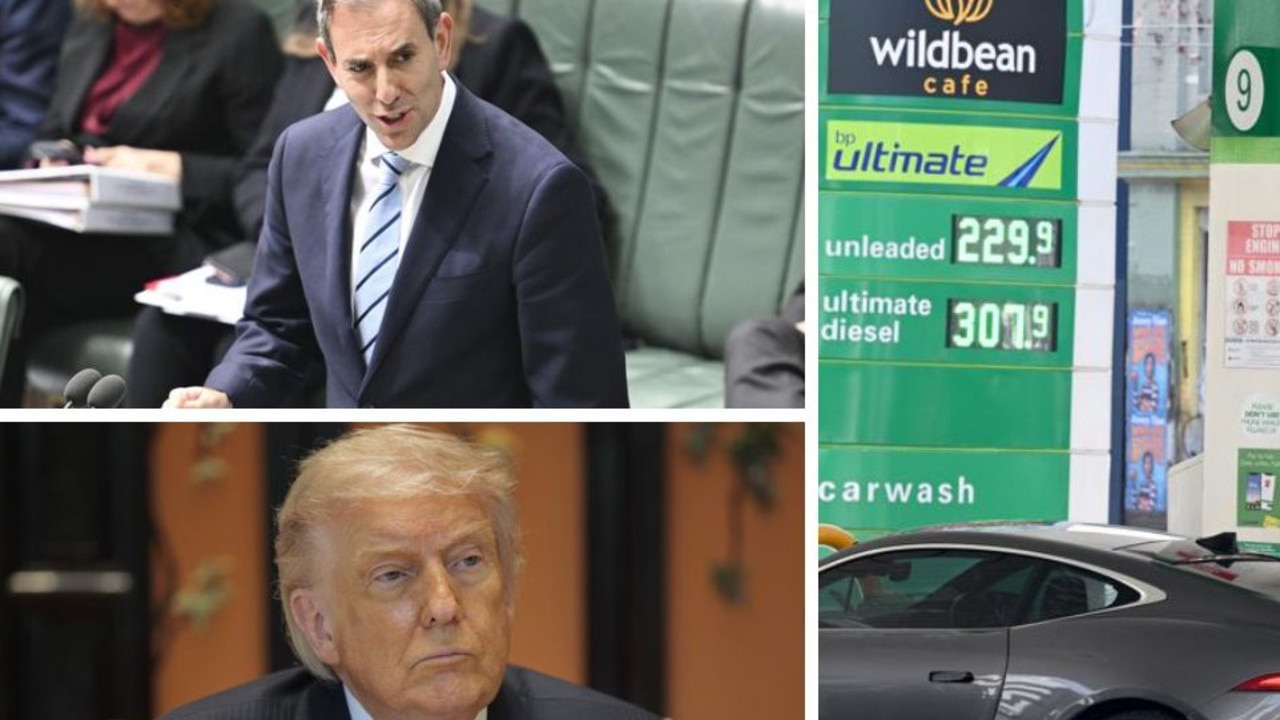
Australian drivers are bracing for a dramatic spike in petrol prices that could push costs to nearly $2 per litre in the coming weeks, compounded by three overlapping pressures: a global oil market rally, the phased rollback of government fuel subsidies, and new geopolitical tensions around the Strait of Hormuz. This latest development delivers another significant financial blow to households already stretched thin by ongoing cost-of-living pressures across the country.
Over the past seven days alone, global benchmark Brent Crude has jumped more than 15%, climbing above $84 per barrel. The upward trajectory has accelerated sharply following U.S. President Donald Trump’s announcement that the United States will position itself as the “guardian” of the Strait of Hormuz — a critical chokepoint that carries roughly a fifth of the world’s daily oil trade — and impose a 20% toll on all cargo passing through the waterway to offset security costs. “The USA will be, from this point forward, known as ‘THE GUARDIAN OF THE HORMUZ STRAIT,’ but as such, and as a matter of FAIRNESS, will be reimbursed, at the rate of 20 per cent on all cargo shipped, for any and all costs necessary to do the job of providing safety and security to this very volatile section of the World,” Trump wrote on his social platform Truth Social, confirming the security initiative would begin immediately.
AMP’s chief economist Shane Oliver notes that oil markets have already adjusted to the heightened tensions, with prices up roughly $11 per barrel since hostilities between the U.S. and Iran resumed. Industry convention holds that every $10 increase in per-barrel crude translates to a 10-cent rise in retail petrol prices. “The longer the Strait of Hormuz stays effectively closed and the more the world economy runs down its oil reserves, that will become unsustainable and we could get a much bigger spike in oil prices,” Oliver warned. That said, he added that the most extreme scenario of crude climbing to $150 per barrel remains unlikely, as both the U.S. and Iran would face severe economic damage from sustained high fuel prices. Australia, he noted, is also better positioned to weather the crisis than it was at the onset of tensions, thanks to strategic stockpiling of oil reserves by the federal government earlier this year.
Geopolitical volatility is not the only factor pushing up prices at the pump. Australia’s federal government began unwinding its six-month fuel excise cut this month. Introduced in March to offset post-conflict price increases, the policy halved the fuel excise, delivering a 26.3-cent per litre discount that cut the cost of a 50-litre tank by $13. State governments followed by returning excess GST revenue to drivers, bringing total combined discounts to 32 cents per litre. That discount was halved to 16 cents per litre on July 1, and will expire entirely on August 2, returning excise taxes to pre-crisis levels. Combined with the global crude rally, this phased rollback is expected to push average retail petrol prices from the current ~$1.50 per litre toward the $2 threshold. Early data from the NRMA already shows prices surging: in Sydney, regular unleaded has jumped 17 cents per litre in a week to 164.4 cents, while diesel has risen 21.1 cents to 182.2 cents per litre.
The price spike is mounting political pressure on the federal government to extend the excise cut, though Oliver said that broad-based relief is poor policy. “As a motorist I’d say they should extend it but as an economist I’d say they shouldn’t extend it because there are better ways to help those who need a hand,” he explained, noting that broad tax cuts distort market price signals that encourage fuel conservation. “There are better ways to channel money or assistance to farmers, truck drivers and low income earners who need the help.”
Already, months of sustained high fuel prices have pushed a large share of Australian drivers to make permanent changes to their transportation habits, new data from Credit24 (compiled by Primara Research) shows. The survey found 37% of Australians have cut back on driving to offset persistent fuel cost increases. Among those adjusting their habits, 23.5% have shifted to public transport for regular commutes, 14% now walk or cycle more often, 6% have purchased an electric vehicle, and 4.6% have even changed jobs to cut down on commuting fuel costs.
Primara Research head Peter Drennan noted that these shifts are not temporary adjustments — they are permanent behavioral changes driven by sustained cost pressure. “Once a cost stops feeling temporary, Australians adjust and stay adjusted. That’s the real signal in this data,” he said. “When a cost holds for long enough, budgeting isn’t optional anymore, people are forced to find the money somewhere else in their lives.”
The survey also revealed a clear generational divide in behavioral change. Millennials, who are more likely to juggle overlapping financial pressures including mortgages, childcare, and household budget constraints, were the most likely to adopt permanent changes, with 47.8% reporting cutbacks. They were followed by Gen Z and Gen X, while Baby Boomers — who generally have fewer overlapping financial commitments and larger savings buffers — were the least likely to change their driving habits. “The generational gap here is really a gap in how much financial buffer people have to begin with,” Drennan added.