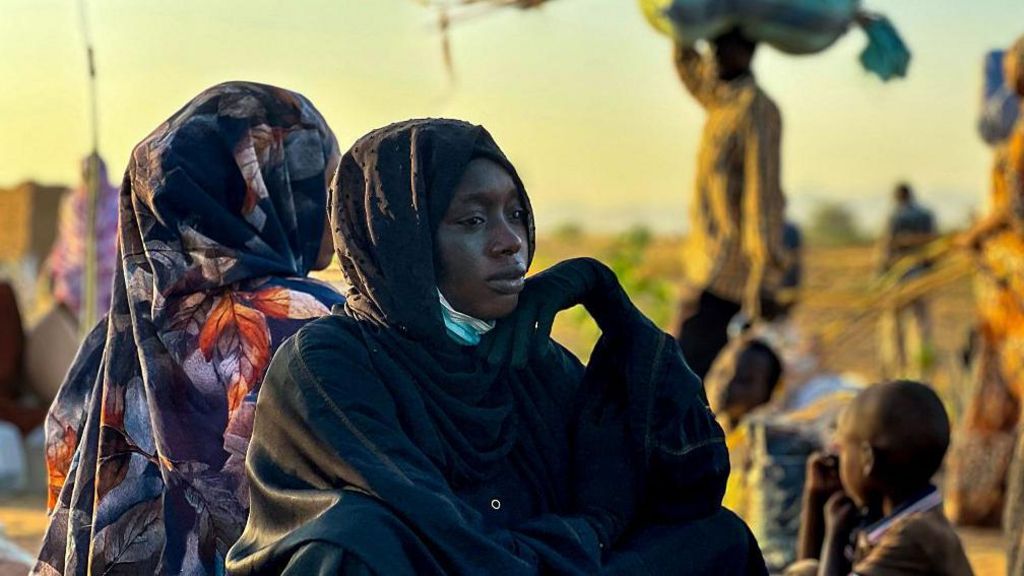
Three years into Sudan’s devastating civil conflict between the country’s official armed forces and the Rapid Support Forces (RSF), a new bombshell investigation from Amnesty International has laid bare systematic, widespread atrocities carried out by the RSF during its 18-month campaign to seize control of el-Fasher, the main city in Sudan’s war-torn North Darfur region. The rights group’s findings, published Wednesday, confirm the RSF committed crimes against humanity and targeted ethnic cleansing in the territory, in what stands as one of the bloodiest chapters of the ongoing power struggle.
Amnesty’s investigation draws on firsthand testimonies from more than 200 survivors, analysis of 89 open-source video recordings, and extensive review of satellite imagery captured across North Darfur. The documentation outlines a litany of grotesque violations carried out by RSF fighters: mass murder, forcible population transfers, unlawful imprisonment, systematic torture, widespread rape, sexual slavery, other forms of sexual violence, enslavement, mass extermination, and targeted persecution of non-Arab ethnic communities. The report also notes that evidence collected by researchers may meet the legal threshold for the crime of genocide, echoing earlier findings from United Nations officials that flagged el-Fasher violence as bearing the “hallmarks of genocide.”
“Children were not collateral damage of this violence – often, they were deliberately targeted and have suffered immensely. They have been killed, injured, raped, abducted, and forcibly recruited on a massive scale,” said Agnès Callamard, Secretary General of Amnesty International, in a statement accompanying the report. Survivor accounts included harrowing tales of unprovoked attacks on civilian communities. A 17-year-old survivor from Abu Zerega, a small town south of el-Fasher, described being tied up and beaten before being shot in the leg, an injury that now leaves him dependent on crutches to walk. Eight of his cousins, four of them boys between the ages of 11 and 17, were killed in the same attack.
Amnesty’s research confirms that most civilian victims were targeted explicitly because of their ethnic identity. Arab militias aligned with the RSF systematically targeted members of local non-Arab communities across el-Fasher and surrounding areas, with witnesses repeatedly describing mass killings of civilians, systematic sexual violence, and intentional targeting of children.
United Nations data has already placed the death toll from the el-Fasher assault at staggering levels: more than 6,000 people were killed in just the first three days of the RSF’s final push to take the city last year. The broader civil war has now killed hundreds of thousands of people overall, uprooted more than 14 million Sudanese from their homes, and pushed 28 million more into acute hunger, marking it as the world’s worst active humanitarian crisis, according to international aid organizations. The United Nations has previously warned that sexual violence against men, women, and children is being systematically used as a weapon of war by both warring parties, which have both been accused of widespread atrocities.
The timeline of the conflict puts the el-Fasher campaign in context: after pushing the Sudanese Armed Forces (SAF) out of the capital Khartoum in March 2023, the RSF redirected its military focus to Sudan’s Kordofan region and el-Fasher, laying the city under a brutal 18-month siege before ultimately seizing control. Callamard emphasized that global leaders were given advance warning of the impending humanitarian catastrophe in el-Fasher, yet failed to act to protect civilians. “It is a stain on the conscience of humanity,” she said, calling for an immediate bilateral ceasefire across Sudan and the urgent deployment of an international protection force to shield vulnerable civilian populations.
Amnesty says it has already identified specific RSF commanders linked to the violations of international law documented in the report, and is calling for full accountability for all perpetrators of atrocities. The RSF has previously acknowledged isolated violations by its fighters, but has consistently claimed the scale of atrocities attributed to the group is exaggerated, and has not issued any specific comment on Amnesty’s latest report. International pressure has grown in recent months to force foreign backers of both the SAF and RSF to cut all military and financial support to the warring parties, amid growing global recognition of the scale of the humanitarian disaster unfolding in Sudan.