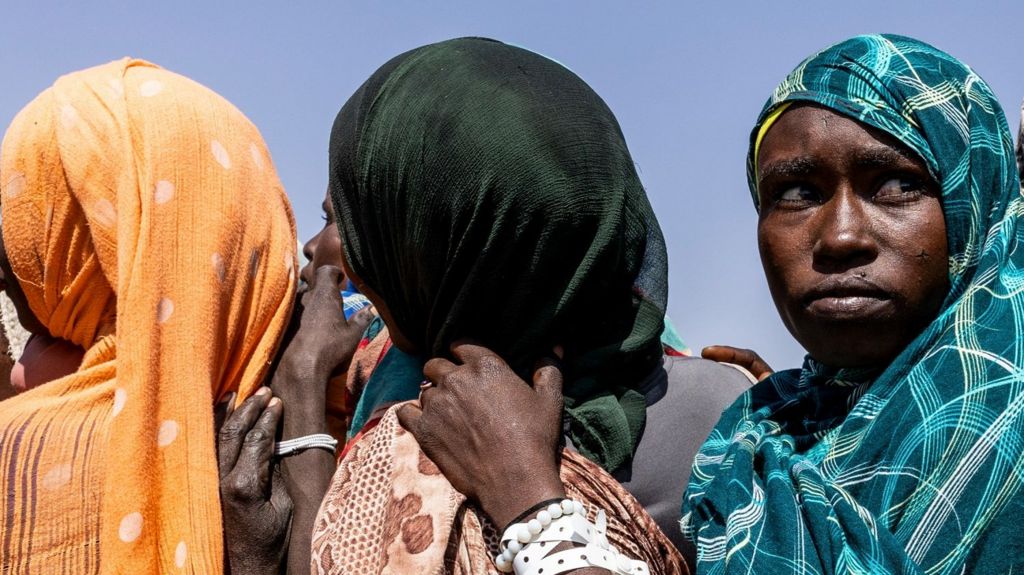
A United Nations investigation has revealed harrowing details of mass violence during the paramilitary Rapid Support Forces’ (RSF) capture of el-Fasher, Sudan, with over 6,000 civilians reportedly killed within just three days last year. The comprehensive report, based on testimonies from more than 140 victims and witnesses gathered in Sudan’s Northern state and eastern Chad in late 2025, describes scenes of unprecedented brutality.
According to eyewitness accounts, RSF fighters opened fire on approximately 1,000 people seeking refuge in a university building last October, with one survivor describing the incident as ‘a scene out of a horror movie’ with bodies thrown into the air from the impact of gunfire. The UN documentation provides evidence of systematic mass killings, summary executions, torture, abductions, and widespread sexual violence against civilians—atrocities that the report classifies as war crimes and potential crimes against humanity.
The siege of el-Fasher, a strategically vital city in the Darfur region, lasted 18 months and has become emblematic of the nearly three-year power struggle between Sudan’s regular army and the RSF paramilitaries. The ongoing civil conflict has resulted in hundreds of thousands of deaths and displaced more than 13 million people from their homes, with sexual violence being systematically employed as a weapon of war against men, women, and children.
While the RSF has not responded to the specific allegations in the UN report, the paramilitary group has consistently denied previous accusations of atrocities. Both the RSF and the Sudanese Armed Forces face international condemnation for human rights violations.
The United States and Human Rights Watch have characterized the RSF’s campaign in Darfur as genocide targeting the Massalit people and other non-Arab communities, though recent UN reports have stopped short of using this terminology.
UN Human Rights Chief Volker Türk has intensified calls for all conflict parties to cease violations perpetrated by forces under their command. Meanwhile, international pressure mounts on external backers of the conflict, with the United Arab Emirates denying widespread allegations that it serves as the primary arms supplier to RSF fighters.
In response to the escalating crisis, the United Kingdom recently imposed sanctions on six key figures accused of fueling Sudan’s war, including senior commanders from both the army and RSF, plus three foreign nationals allegedly responsible for recruiting Colombian mercenaries for the paramilitary force. British lawmakers have also addressed concerns about UK-manufactured weapons being diverted to the RSF via the UAE.
In a concerning political development, a coalition aligned with the RSF known as the Sudan Founding Alliance has announced plans to establish a rival government based in western Sudan—a move rejected by the African Union as threatening any prospect of national unity.
Amid the humanitarian catastrophe, the BBC World Service has launched a new season of its educational program ‘Dars’ (Lesson) in Arabic to support children in Sudan and other Arabic-speaking countries who face restricted access to education due to the conflict.