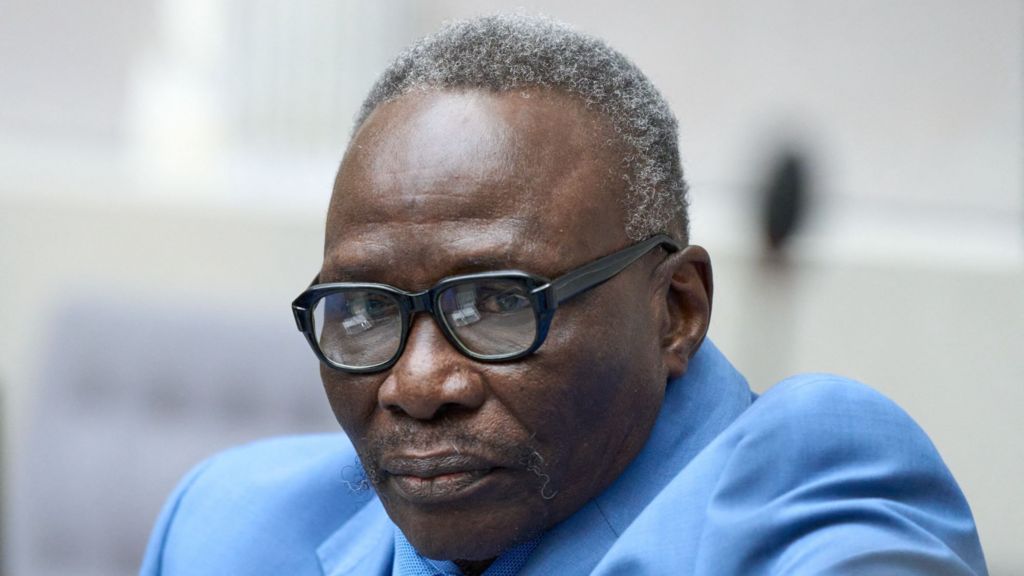
In a landmark ruling at The Hague, the International Criminal Court (ICC) has imposed a 20-year prison term on Ali Muhammad Ali Abd-Al-Rahman, the notorious Sudanese militia commander commonly known as Ali Kushayb. The 76-year-old former Janjaweed leader received his sentence from Presiding Judge Joanna Korner on Tuesday, marking the first ICC conviction specifically addressing atrocities committed during Sudan’s prolonged civil conflict.
The conviction stems from Kushayb’s October guilty verdict on 27 separate counts encompassing both war crimes and crimes against humanity. These charges specifically relate to systematic attacks conducted between 2003-2004 in Darfur, where government-backed Janjaweed militias orchestrated what international observers characterized as ethnic cleansing against non-Arab populations.
During sentencing proceedings, Judge Korner detailed how Kushayb not only issued direct orders resulting in mass atrocities but personally participated in their execution. Survivor testimonies presented during the trial described villages systematically burned, males summarily executed, and women forced into sexual slavery under Kushayb’s command. The presiding judge specifically noted his instructions to subordinates to ‘wipe out and sweep away’ non-Arab tribes and to ‘bring no one alive.’
This sentencing occurs against the troubling backdrop of renewed violence in Darfur, where many former Janjaweed combatants have now joined the Rapid Support Forces (RSF) paramilitary group. Current conflict between the RSF and Sudan’s national army has reignited patterns of systematic violence against civilian populations, with multiple international entities including the US and UK accusing RSF forces of continuing ethnic cleansing campaigns.
Dr. Matthew Benson-Strohmayer, Sudan Research Director at the London School of Economics, observed that despite the symbolic importance of Kushayb’s conviction, the cyclical nature of violence in Darfur continues largely unabated. The region remains embroiled in what he characterized as ‘a war of terror’ employing similar tactics of militia mobilization and sexual violence as tools of warfare.
While the ICC emphasized that Kushayb’s sentence serves both retributive and deterrent purposes, outstanding arrest warrants for other Sudanese officials—including ousted President Omar al-Bashir—remain unexecuted. Most victims of the initial Darfur conflict continue living in displacement camps, their plight compounded by renewed violence that echoes the very atrocities for which Kushayb has now been condemned.