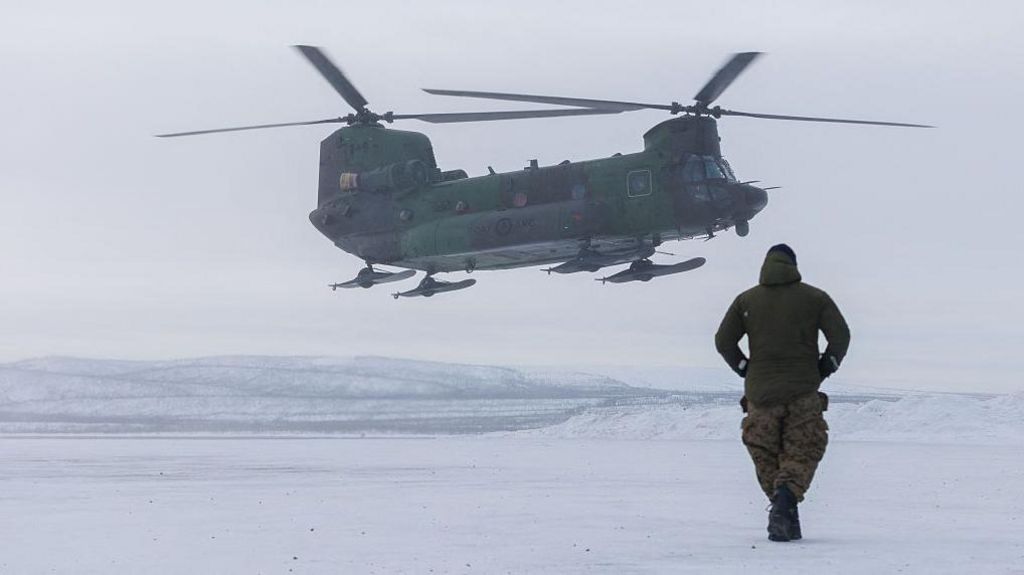
In a significant strategic shift, Canadian Prime Minister Mark Carney has committed to deploying substantial military resources—including personnel, advanced radar systems, submarines, and aircraft—to secure Canada’s vast Arctic territories. This massive region spans nearly 4 million square kilometers, an area larger than continental Europe, yet is sparsely populated and notoriously treacherous.
The Arctic has become a focal point of intense geopolitical competition, with Russia and the United States bordering the North Pole, and China aggressively expanding its naval and icebreaker fleets while declaring itself a ‘near Arctic state.’ The security landscape has been further complicated by the Trump administration’s expressed interest in Greenland and its criticism of Canada’s defense capabilities.
Former Canadian Forces Northern Area Commander Pierre Leblanc emphasized the environmental and strategic challenges, noting that existing infrastructure—aging early warning radars, eight military bases, and approximately 100 Coast Guard personnel monitoring 162,000 km of coastline—is inadequate for modern threats. This assessment is supported by experts who point to the emergence of hypersonic missiles, which travel at least five times the speed of sound and render traditional defense systems obsolete.
Russia’s operational use of hypersonic weapons in Ukraine, including the nuclear-capable ‘Oreshnik’ missile, has accelerated the need for advanced defense technologies. The Trump administration’s proposed Golden Dome missile defense system, incorporating over-the-horizon radar and space-based sensors, has sparked complex negotiations with Canada. Despite public tensions and provocative statements from Trump—including suggestions that Canada could become the ’51st state’—on-the-ground cooperation between U.S. and Canadian military practitioners remains strong.
Canada’s defense spending is set to increase from 2% to 5% of GDP by 2035, funding what Col. Leblanc describes as ‘real action’ in Arctic security. However, logistical challenges persist, including limited port facilities and the difficulty of resupplying remote bases. While political rhetoric escalates, experts like Troy Bouffard of the Center for Arctic Security and Resilience affirm that bilateral operational coordination continues effectively, for now.