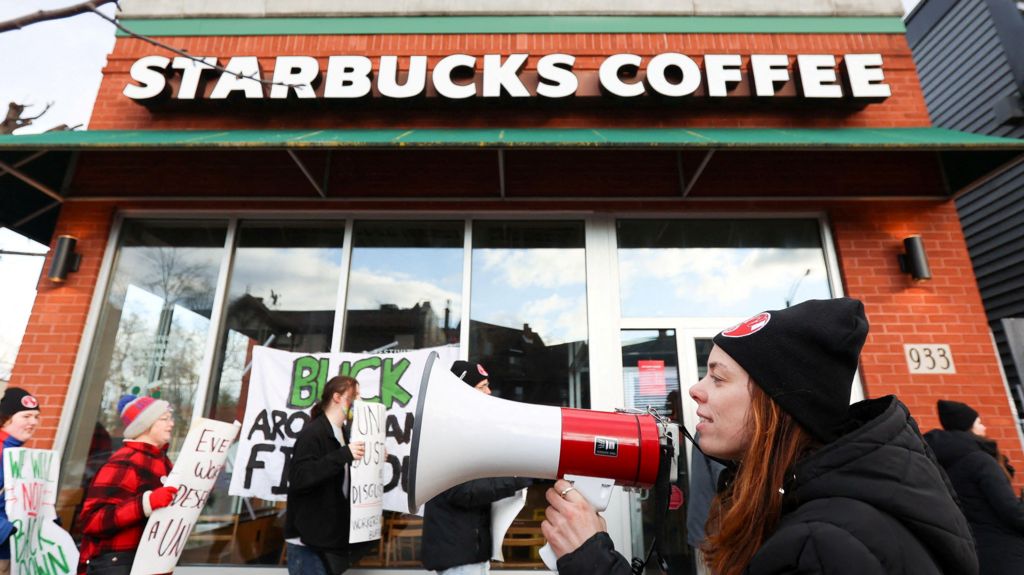
Starbucks, the global coffeehouse giant, is navigating a challenging period as it attempts to revive its brand while grappling with ongoing labor disputes. On November 17, 2022, unionized baristas staged a one-day strike across multiple U.S. cities, demanding better pay and increased staffing. This marked the third major strike since the formation of Starbucks Workers United four years ago. The union, representing employees at over 600 stores, claims that recent turnaround policies have exacerbated workloads, making it increasingly difficult for baristas to perform their duties. Michelle Eisen, a union spokesperson and former barista, emphasized the toll these changes have taken on workers, stating, ‘You should not be evolving to the point of running your workers to the ground.’ Despite Starbucks’ assurance that the strike would not disrupt the ‘vast majority’ of its 10,000+ company-operated stores, the timing of the protest—coinciding with the high-profile Red Cup Day—threatens to draw unwanted attention to the company. Starbucks has been striving to reconnect with its coffeehouse roots, reintroducing ceramic mugs and handwritten notes, while investing $500 million in staffing and training improvements. However, progress has been slow, with U.S. sales remaining flat despite a 1% global growth in same-store sales last quarter. The company’s labor tensions have persisted, with union leaders accusing Starbucks of stalling contract negotiations and offering inadequate pay raises. Starbucks, in turn, blames the union for the impasse, arguing that their demands would disrupt operations. Analysts warn that the ongoing standoff poses both operational and reputational risks, as Starbucks’ brand strength has already declined in recent years. The situation underscores the broader challenge of balancing customer satisfaction with employee well-being, a critical factor in the company’s long-term success.
Starbucks’ baristas are striking again – will that hold back the chain’s recovery?