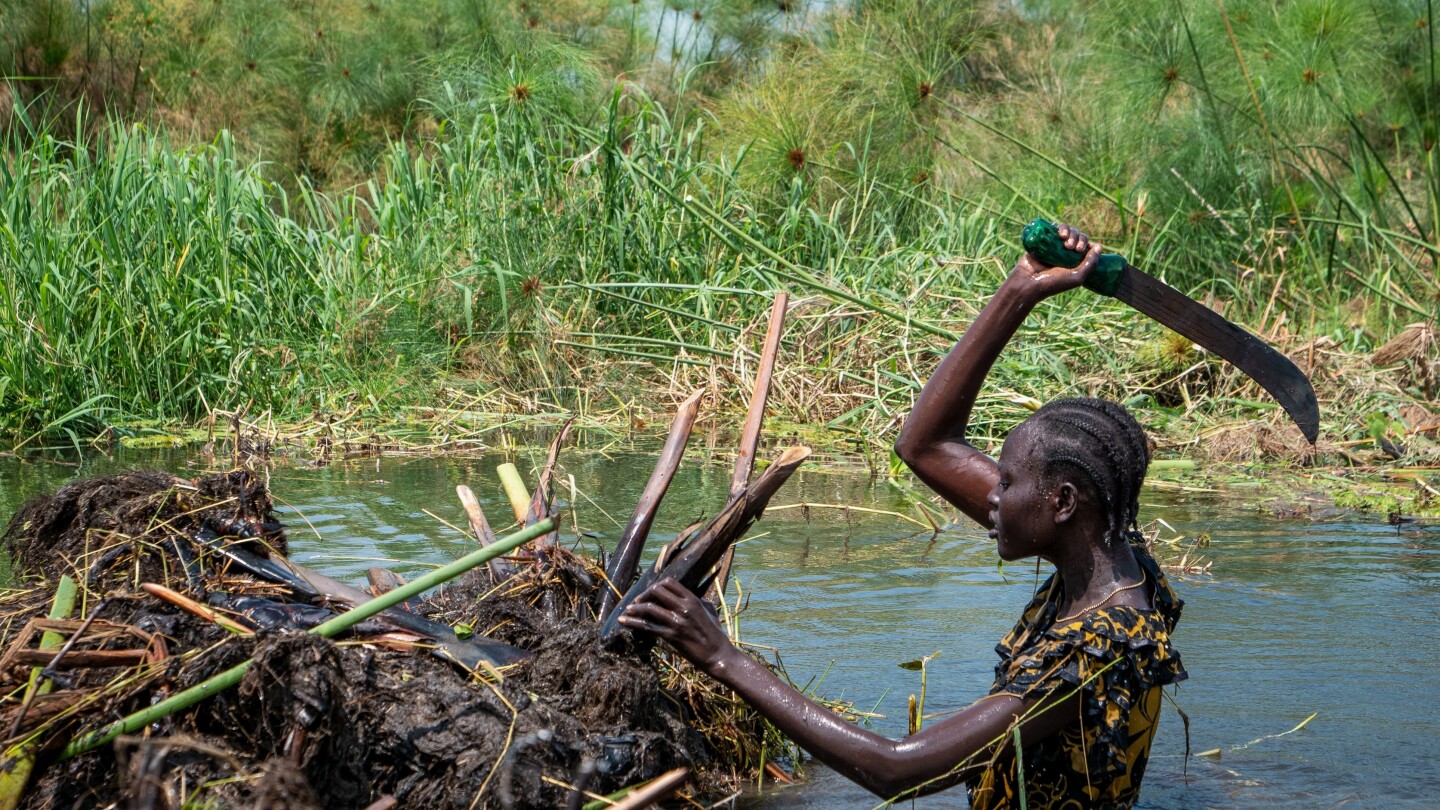
In the vast swamplands along the Nile River in South Sudan, the Akuak community demonstrates extraordinary resilience against catastrophic flooding through generations-old adaptation techniques. For approximately 2,000 residents of this aquatic region, daily survival involves the meticulous construction and maintenance of human-made islands using papyrus plants, grass, and clay mud—a centuries-old method now challenged by intensifying climate conditions.
Ayen Deng Duot, a mother of six, exemplifies this relentless struggle as she stands waist-deep in water, wielding a machete to harvest papyrus roots. Each piece contributes to expanding the spongy, layered foundation that keeps her family’s home above water. “We must do this work every day so water does not chase us away,” Duot explains. “We have no choice; we need to protect our homes because we have nowhere else to go.”
The Akuak people, part of the Dinka ethnic group, have inhabited this watery landscape for countless generations. Their existence revolves around canoes rather than roads, with traditional grass-thatched tukuls dotting the artificial atolls. According to Chief Makech Kuol Kuany, the community abandoned cattle herding in the late 1980s due to rising water levels, transitioning entirely to fishing—a shift that significantly reduced their economic resilience.
South Sudan currently experiences its sixth consecutive year of catastrophic flooding, with over 375,000 people displaced nationwide according to UN estimates. The Norwegian Foreign Policy Institute confirms in a March 2025 report that seasonal flooding has become increasingly severe and unpredictable, with historical dry periods no longer providing relief. Researchers note that consecutive record-breaking floods have permanently altered the region’s geography.
The physical labor required to maintain these islands is immense. Fisherman Anyeth Manyang, 45, describes the process: “I learned this work from childhood with my father and mother. It’s very tiresome work because we do it with our bare hands—cutting grass and papyrus, gathering mud. At night, one’s body will be in pain.”
Beyond housing, the flooding has devastated community infrastructure. The region’s first school, established in 2018, closed within two years due to inundation. Eighteen-year-old Philip Jok Thon gestures toward a rusted, unreadable signpost: “We need our school back because we want to study. We want to learn about the world.”
Despite the hardships, the Akuak remain committed to their ancestral land. “This is the land of our ancestors,” states fisherman Matuor Mabior Ajith. “We have been living here for thousands of generations, so we have learned how to resist the water. We will never abandon our land.”
The community’s determination persists even as options diminish. While some consider relocation to urban centers like Bor—25 kilometers and five hours of rowing away—most recognize the challenges of urban transition. Duot expresses concerns about city life for her children: “If our children go there, they may become child laborers or gang members. It’s better for them to stay here, and for us to work hard for them, until we die here.”
As climate change intensifies, the Akuak’s traditional knowledge represents both an extraordinary adaptation story and a warning about the limits of indigenous resilience in facing unprecedented environmental challenges.