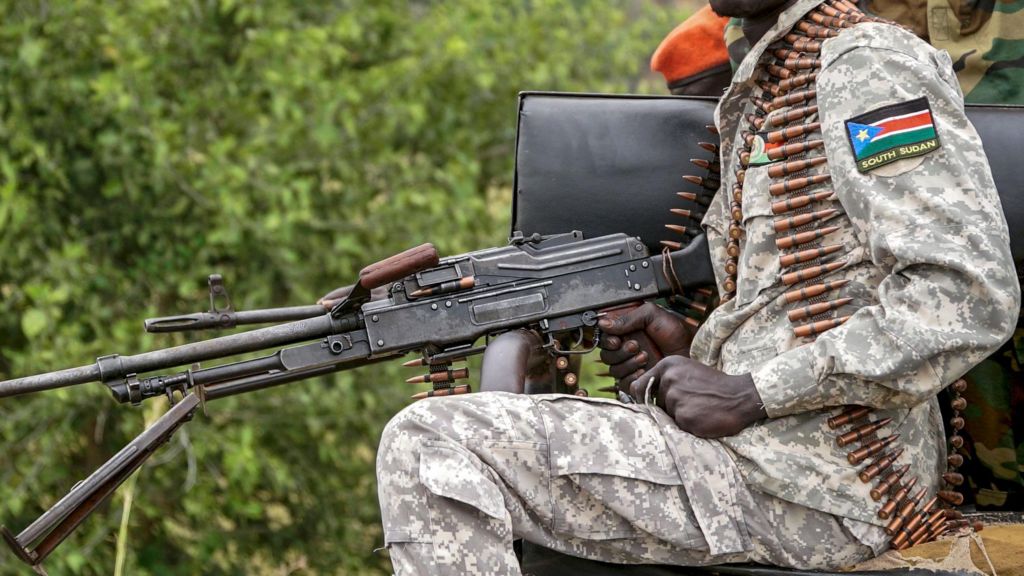
The United Nations has issued a stern condemnation of South Sudan’s military leadership following alarming statements from Deputy Army Chief Gen Johnson Oluny, who instructed his Agwelek militia to “spare no-one” during upcoming operations in Jonglei state. This inflammatory rhetoric specifically targeted vulnerable populations including children, the elderly, and civilians, prompting immediate concern from international observers.
The UN Mission in South Sudan (Unmiss) characterized these statements as “utterly abhorrent” while the UN Commission on Human Rights in South Sudan (UNCHRSS) expressed “grave alarm” over the deteriorating security situation. Current estimates indicate more than 180,000 civilians have already been displaced by recent fighting between government forces and opposition groups aligned with former Vice-President Riek Machar.
In response to the escalating crisis, South Sudan’s military has ordered the complete evacuation of all civilians from Nyirol, Uror, and Akobo counties in Jonglei state. The directive also extends to all UN personnel and non-governmental organization staff, who have been given 48 hours to leave the conflict zones. Despite these orders, Unmiss peacekeepers in Akobo remain stationed, continuing their mandate to de-escalate tensions and prevent further violence.
This recent escalation represents a dangerous deterioration in South Sudan’s fragile peace process. The 2018 agreement that ended the civil war—which claimed nearly 400,000 lives—has effectively collapsed amid renewed ethnic tensions and political maneuvering. The current power-sharing arrangement between President Salva Kiir and his rival Machar has become increasingly strained, with Machar currently facing trial for alleged crimes against humanity.
Independent UN experts warn the situation heightens “the risk of mass violence against civilians” as the conflict threatens to reignite along ethnic lines. The international community continues to monitor developments closely, with particular concern for civilian safety in the rapidly escalating conflict zones.