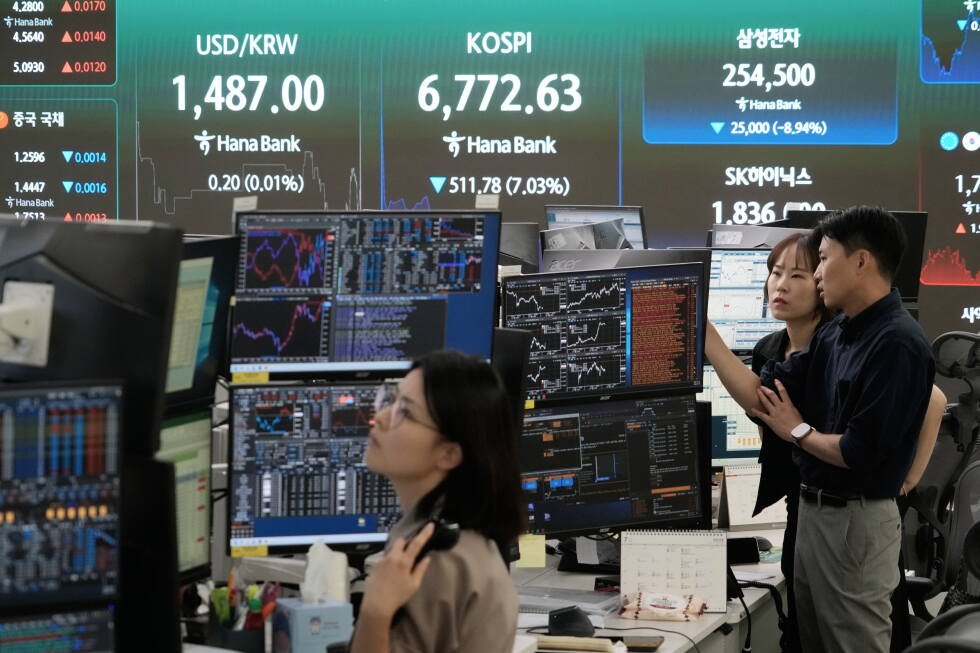
In a significant shift in monetary policy, South Korea’s central bank announced a quarter-percentage point increase to its benchmark interest rate on Thursday, marking the first adjustment upward in more than three years. The move, which lifts the key policy rate from 2.5% to 2.75%, comes as policymakers work to curb accelerating inflation and rein in the rapid expansion of the country’s household debt, two mounting challenges exacerbated by escalating geopolitical conflict in the Middle East.
The rate hike, the first since January 2021, followed a scheduled meeting of the Bank of Korea’s monetary policy committee. For years, the central bank had held rates steady or cut them in response to external economic pressures, prioritizing support for South Korea’s trade-reliant economy amid global geopolitical instability and the sweeping trade tariffs imposed by former U.S. President Donald Trump. Even as concerns mounted over surging household borrowing and skyrocketing real estate values, policymakers held off on tightening to avoid undermining economic momentum.
Today’s policy change is made possible by stronger-than-anticipated economic performance, fueled largely by a boom in global artificial intelligence investment that has driven robust demand for South Korea’s signature semiconductor exports. Just this week, the South Korean government upgraded its 2025 economic growth forecast to 3%, a figure that would represent the strongest annual expansion the country has seen since 2021.
The move was widely expected by market analysts after Bank of Korea Governor Rhee Chang-yong signaled at the central bank’s May policy meeting that a rate increase would be necessary at an “appropriate time.” Inflation data has cemented that case: consumer price inflation climbed above 3% in both May and June, well above the bank’s 2% long-term target. The upward pressure on prices stems largely from escalating conflict between Israel and Iran aligned factions in the Middle East, which has pushed up global energy costs, alongside persistent weakness in the South Korean won that makes imported goods more expensive.
Policymakers also cite growing concern over household debt as a key driver of the decision. Rising real estate prices in Seoul and the greater Seoul metropolitan area, combined with a rally in domestic technology stocks, have encouraged increased borrowing among consumers, creating potential financial stability risks that the central bank is moving to address ahead of broader systemic issues.