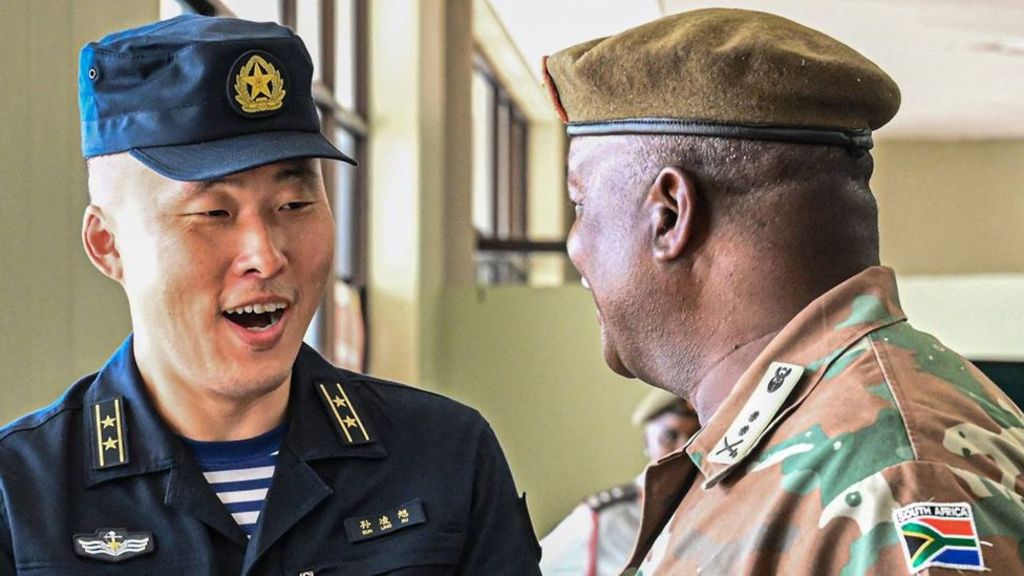
South Africa finds itself at a geopolitical crossroads as it hosts joint naval exercises with China, Russia, and Iran—a move that risks further deteriorating its already strained relationship with the United States. The week-long ‘Will for Peace’ maritime drills, initiated on Friday off the coast of Simon’s Town, represent an expansion of the BRICS+ alliance’s activities beyond economic cooperation into military collaboration.
The exercise, originally conceived as the third iteration of the China-Russia-South Africa ‘Mosi’ series, was rebranded and broadened to include other BRICS+ members following its postponement from November due to the G20 summit. This development occurs against the backdrop of severely compromised US-South Africa relations, exacerbated by the Trump administration’s accusations regarding treatment of white farmers and Pretoria’s genocide case against Israel at the International Court of Justice.
Defense analysts highlight the paradoxical nature of the military cooperation, noting that BRICS+ members include nations with opposing political interests and even active border conflicts. The South African government maintains the exercises focus on maritime safety and interoperability, while opposition parties condemn the participation of sanctioned nations as a violation of the country’s professed non-aligned stance.
The economic implications are substantial. With the US implementing 30% tariffs on South African exports—potentially costing 100,000 jobs—and remaining a crucial trading partner that supports over 500,000 jobs through American companies, the naval exercises risk further alienating a critical economic ally. Meanwhile, China’s economic footprint, while growing, reportedly generates significantly fewer jobs despite government claims of 400,000 positions.
South Africa’s military acknowledges practical motivations for the drills, citing budget constraints that have decimated naval capabilities and limited opportunities for international training. However, commentators warn that the optics of cooperating with US adversaries could provoke stronger reactions from the Trump administration, potentially squeezing South Africa in the escalating great power competition between Washington and the BRICS+ nations.