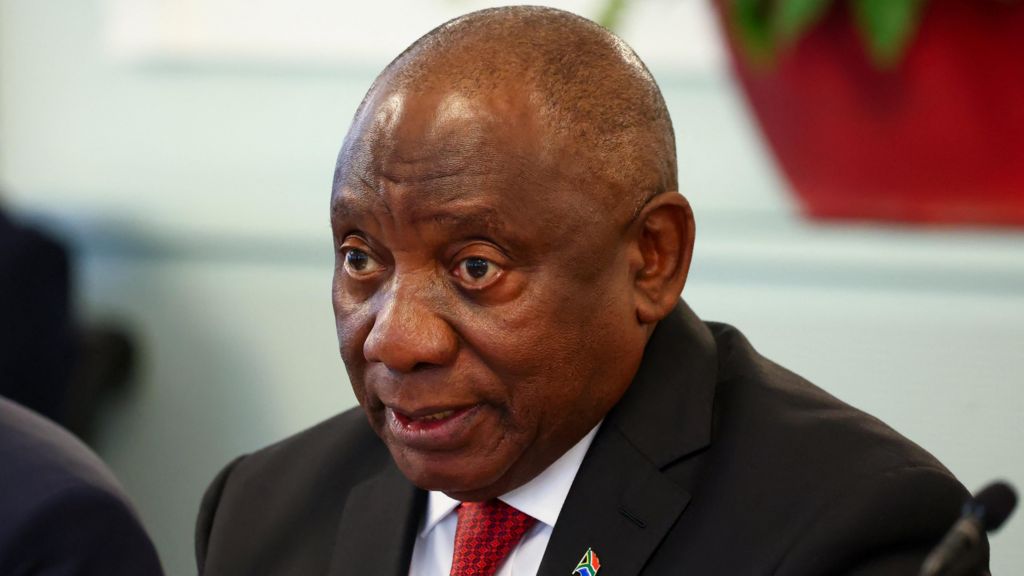
The South African government has disclosed that it has received distress calls from 17 of its citizens who were allegedly recruited as mercenaries in the ongoing Russia-Ukraine conflict. These individuals, aged between 20 and 39, are reportedly stranded in Ukraine’s war-torn Donbas region. President Cyril Ramaphosa has initiated an investigation into the circumstances surrounding their recruitment, which appears to have been facilitated under the guise of lucrative contracts. The government has not specified which side of the conflict these South Africans are fighting for, but it emphasized that such activities are illegal under South African law unless authorized by the government.
Vincent Magwenya, a government spokesperson, stated that the South African authorities are utilizing diplomatic channels to secure the safe return of these citizens. He also revealed that 16 of the men hail from KwaZulu-Natal, while one is from the Eastern Cape. President Ramaphosa has condemned the exploitation of vulnerable young people by foreign military entities, labeling it as a grave concern.
This incident comes amid broader geopolitical developments involving Russia’s expanding influence in Africa. The Africa Corps, a Russian mercenary group under the control of the Russian Ministry of Defence, has effectively replaced the Wagner Group in West Africa following the death of its leader, Yevgeny Prigozhin, in a plane crash. Additionally, the South African government had previously issued warnings about deceptive recruitment schemes targeting young women for jobs abroad, particularly in Russia. A BBC investigation uncovered that over 1,000 women from Africa and South Asia were recruited to work in weapons factories in Russia’s Alabuga Special Economic Zone.
In a related development, Kenyan police rescued over 20 individuals from a suspected human trafficking ring that lured them with job offers in Russia, only to intend sending them to fight in Ukraine. Ukraine has also reported holding citizens from various countries, including Somalia, Sierra Leone, Togo, Cuba, and Sri Lanka, in prisoner-of-war camps.