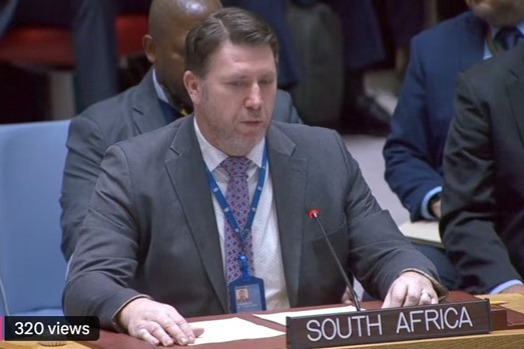
In a forceful address to the United Nations Security Council, South Africa’s representative delivered a scathing critique of recent United States military operations targeting Venezuela. The emergency session, convened on Monday in New York, addressed what the South African delegation characterized as unlawful cross-border enforcement actions.
The African nation’s statement condemned American unilateral strikes against Venezuelan territory and the reported abduction of President Nicolas Maduro alongside his spouse, describing these actions as flagrant violations of Venezuela’s sovereignty, territorial integrity, and political independence. The representative emphasized that such operations fundamentally contradict established international legal norms and dangerously reinforce the principle that ‘might makes right’ while simultaneously undermining diplomatic resolution mechanisms.
Citing foundational principles of international jurisprudence, the South African delegation underscored that states maintain exclusive jurisdiction over persons and conduct within their territorial boundaries. Any enforcement of domestic law—including arrest operations—by one nation within another’s territory without explicit consent constitutes an unlawful breach of sovereignty, according to the statement.
The address highlighted available recourse mechanisms under international law, including bringing cases before the International Court of Justice or seeking authorized action through the UN Security Council itself. South Africa warned that bypassing these established channels represents a dangerous regression to a pre-UN world order—one that precipitated two catastrophic world wars and fostered systemic international instability and lawlessness.
The statement concluded with a stark warning about the perils of abandoning the international legal framework, asserting that the global community cannot navigate an increasingly complex future without the stability and protection afforded by respecting international law and multilateral institutions.