More than two and a half years after launching its landmark genocide case against Israel at the International Court of Justice (ICJ), South Africa has upped the ante in its global legal and diplomatic campaign, formally accusing Israel of systematic non-compliance with the court’s binding provisional measures designed to protect Palestinian civilians in the Gaza Strip. In an official statement released by the South African Department of International Relations and Cooperation (DIRCO), Pretoria charged that Israel’s deliberate refusal to abide by three separate provisional orders issued by the UN’s highest court for state disputes undermines the court’s legal authority and has deepened the humanitarian catastrophe unfolding in Gaza.
The three provisional measures, issued by the ICJ in 2024, outline clear mandatory obligations for Israel: to halt all acts that could qualify as genocide, end incitement to genocidal violence against Palestinians, withdraw all military forces from the southern Gazan city of Rafah, and open unimpeded routes for life-saving humanitarian aid and basic services to reach the 2 million people trapped in Gaza. The ICJ also required Israel to submit regular public reports detailing steps it has taken to comply with the orders, a requirement Israel fulfilled formally in February 2024, but South Africa argues the substance of the orders has been ignored entirely.
To back its accusation of non-compliance, the South African government submitted a comprehensive evidence dossier earlier this month to the ICJ’s special committee of judges tasked with monitoring enforcement of provisional measures. Under the court’s Article 11 of Internal Judicial Practice, this committee reviews all submitted evidence from involved parties and recommends potential next steps to the full ICJ bench.
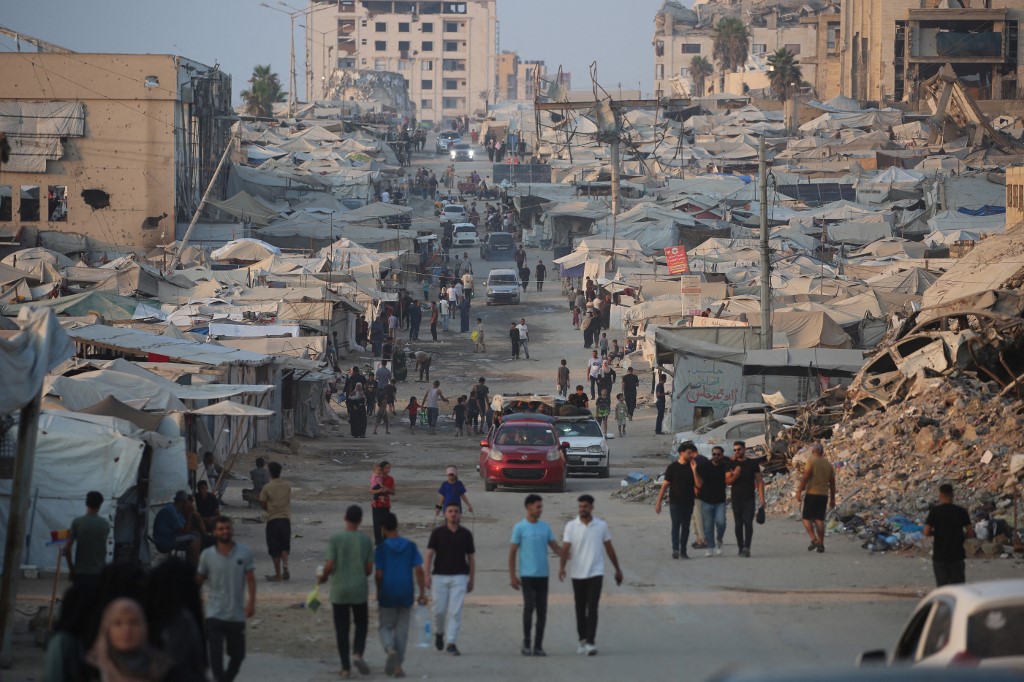
South Africa’s dossier lays out staggering, updated casualty and harm figures through August 2026. Since the outbreak of hostilities on 7 October 2023, at least 73,407 Palestinians have been killed in Israeli military operations across Gaza, with another 174,335 wounded. These figures amount to more than 10 percent of Gaza’s entire pre-conflict population. The submission further details that roughly 46,000 survivors, many of them children, live with permanent, severe disabilities including amputations, traumatic brain injuries and spinal cord damage caused by the conflict. Even after a nominal ceasefire was announced, the dossier notes, Israeli forces continue to kill an average of one Palestinian child per day. Worsening conditions in Gaza’s shrinking, overcrowded displacement enclaves have also driven a more than three-fold increase in Palestinian miscarriage rates since the start of 2026, according to the evidence.
Beyond casualties, South Africa’s statement accuses Israel of widespread, systemic abuse against detained Palestinians. The document notes that Israeli authorities have arbitrarily detained and forcibly deported thousands of Palestinians to Israeli prisons and detention facilities, where detainees routinely face torture, sexual and gender-based violence, and cruel, inhuman and degrading treatment that violates international law. Pretoria also charged that Israel is actively working to conceal evidence of its actions by targeting and killing local Palestinian journalists, barring access for all foreign media outlets, and blocking UN-mandated independent investigative bodies from entering the besieged territory.
South Africa’s legal action carries historic weight: it was the first UN member state to formally file a genocide case against Israel at the ICJ, launching the proceeding in December 2023. The August 2026 evidence dossier is the latest step in a sustained diplomatic and legal push by Pretoria to force global action. South Africa previously submitted multiple detailed evidence dossiers to the United Nations Security Council in May 2024, February 2025 and September 2025, urging all UN member states to uphold their obligations under international law and intervene to stop the violence. It also submitted separate dossiers focused on Israel’s deliberate use of starvation as a weapon of war to the UN General Assembly and the UN Economic and Social Council in October 2025, requesting urgent intervention under Article VIII of the Genocide Convention.
DIRCO emphasized in its statement that the ICJ’s provisional orders are not merely advisory—they carry full binding legal weight under international law for Israel. Beyond Israel’s obligations, the department noted that the entire international community has a collective legal obligation under the Genocide Convention to take all necessary measures to prevent and punish acts of genocide. The statement also stressed that upholding the provisional measures is critical not only to protect Palestinian rights, but also to preserve the integrity of the international justice system and the ICJ’s own legitimacy, ensuring the court can issue a meaningful final ruling without the rights it is tasked with defending being destroyed before a decision is reached.
Leading Palestinian human rights organization Al-Haq has welcomed South Africa’s latest submission, calling on the ICJ to take immediate proactive action, including issuing new expanded provisional measures if necessary. “As the genocide continues, we call on the Court to act propio motu, including through additional Provisional Measures Orders,” the organization said in a statement responding to the submission.