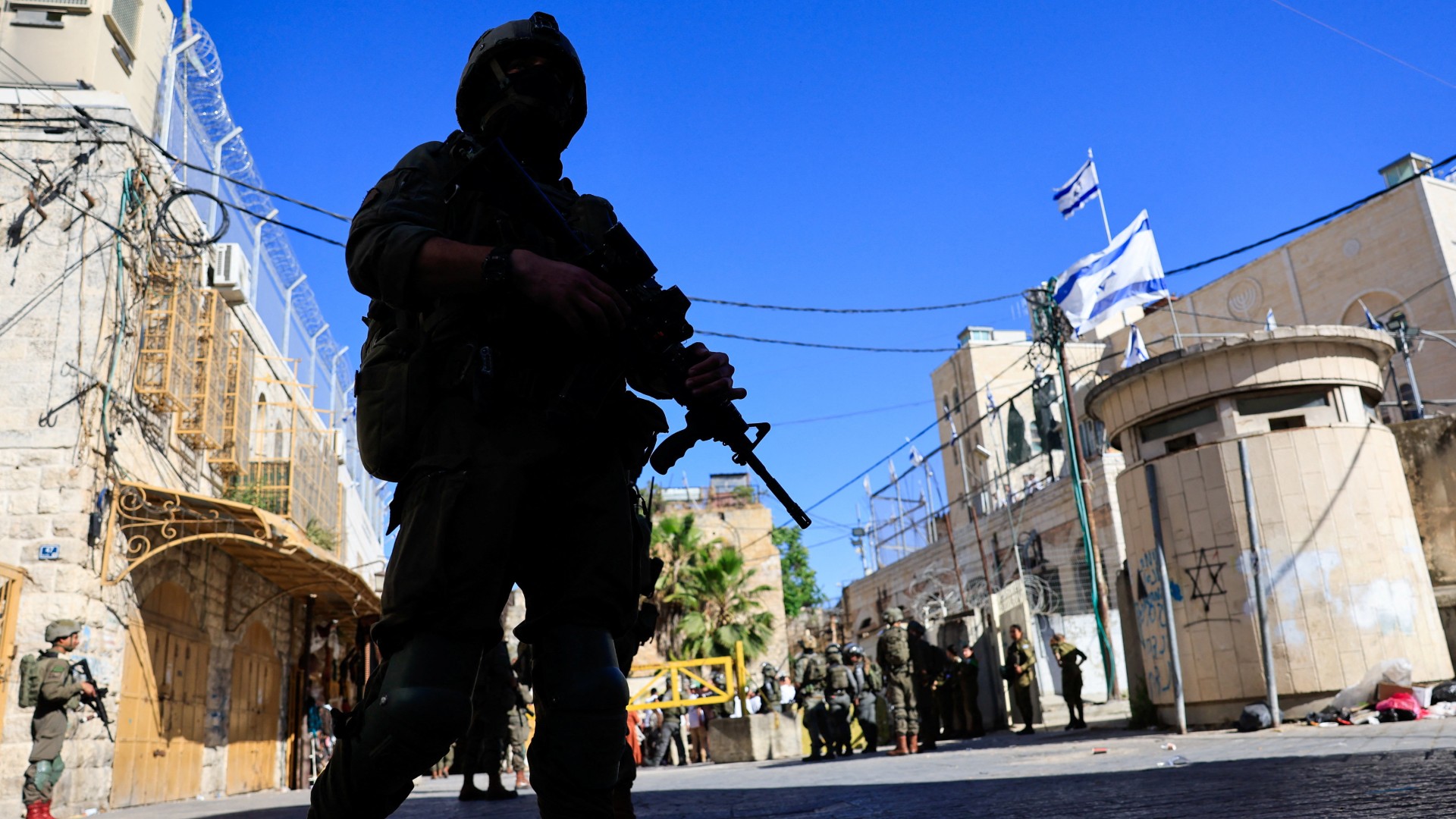
On a Monday earlier this year, Israeli Finance Minister Bezalel Smotrich made a provocative announcement that sent shockwaves across the occupied West Bank: the decades-old Hebron Agreements, a core component of the 1990s Oslo Accords peace framework, are formally canceled. The move immediately strips the Palestinian-administered Hebron Municipality of all its legal authority over construction and urban planning across large swathes of the occupied city, transferring full control to the Israeli state.
Speaking at an inauguration ceremony for a new illegal Israeli settlement outpost in the southern Mount Hebron region, Smotrich framed the cancellation as a long-overdue correction, claiming that for decades, planning powers for Jewish settlements in Hebron had absurdly rested with what he called Hebron’s “terror municipality.” The policy change was not a spontaneous announcement: following months of advocacy led by Smotrich, Israel’s security cabinet approved the measure in principle back in February, and the country’s Higher Planning Council — the governing body that oversees all construction in occupied West Bank territories — gave the decision final approval on the same night of Smotrich’s public announcement.
The Hebron Protocol, originally signed in 1997 by then-Israeli Prime Minister Benjamin Netanyahu and late Palestine Liberation Organization leader Yasser Arafat as an extension of the Oslo Accords, established a split governance structure for the contested city. The larger H1 zone, covering roughly 80% of Hebron’s total territory, was placed under the full civil control of the Palestinian Authority. The smaller H2 zone, which encompasses Hebron’s historic Old City, the revered Ibrahimi Mosque (a site holy to both Muslims and Jews), and multiple southern residential neighborhoods, was designated to remain under exclusive Israeli military control, while the Palestinian municipality retained planning and construction jurisdiction for Palestinian communities and holy sites within the zone.
Smotrich’s cancellation of the protocol erases that long-standing arrangement, meaning even planning and development projects at the Ibrahimi Mosque now fall outside Palestinian municipal jurisdiction. The site has already been a decades-long flashpoint of tension: shortly after the protocol was signed, illegal Israeli settlers seized control of roughly half of the mosque compound, and the site remains a top target for settler takeover efforts.
Earlier this year, the Israeli military had already begun rolling back Palestinian control of the holy site, issuing a 15-day entry ban that barred the mosque’s director Mu’taz Abu Sneineh and its head custodian Hammam Abu Murkhiya from accessing the compound. Local observers have widely interpreted this sequence of moves as a deliberate effort to shift full control of the Ibrahimi Mosque from the Palestinian Hebron Municipality to the settler religious council of the nearby illegal Kiryat Arba settlement.
For more than 25 years, Israel has enforced a tight closure on the roughly one-square-kilometer area surrounding the Ibrahimi Mosque, installing more than 120 permanent checkpoints and access gates to restrict Palestinian movement. The closed zone is home to approximately 7,000 Palestinian residents, alongside multiple established illegal Israeli settlement outposts.
In recent months, Israeli forces have ramped up military operations across occupied Hebron, carrying out frequent raids on Palestinian residential neighborhoods, imposing multi-day consecutive curfews, blocking Palestinian access to work and commercial spaces, and deploying military vehicles and bulldozers to seal off neighborhood entrances. During these curfews, high-profile Israeli far-right officials regularly enter the occupied city under heavy military protection. Just one week before Smotrich’s announcement, far-right National Security Minister Itamar Ben Gvir led a heavily guarded military convoy through Hebron’s streets in a deliberate show of force.
Local Palestinian residents say the string of recent escalations and the cancellation of the Hebron Protocol are part of a clear, long-term strategy: to expand illegal Israeli settlement outposts across Hebron, connect isolated outposts into contiguous blocs of Israeli control, and permanently entrench a dominant settler presence across the entire southern occupied West Bank.
The controversial move comes as Smotrich faces potential international legal consequences for his actions in the occupied territories. Independent outlet Middle East Eye has confirmed that prosecutors at the International Criminal Court based in The Hague submitted an application for an arrest warrant for Smotrich back in April. The warrant application charges Smotrich with multiple crimes under international law, including forced displacement classified as a crime against humanity and war crime, the transfer of Israel’s own civilian population into occupied territory — a violation of the Fourth Geneva Convention classified as a war crime — and charges of persecution and apartheid as crimes against humanity.