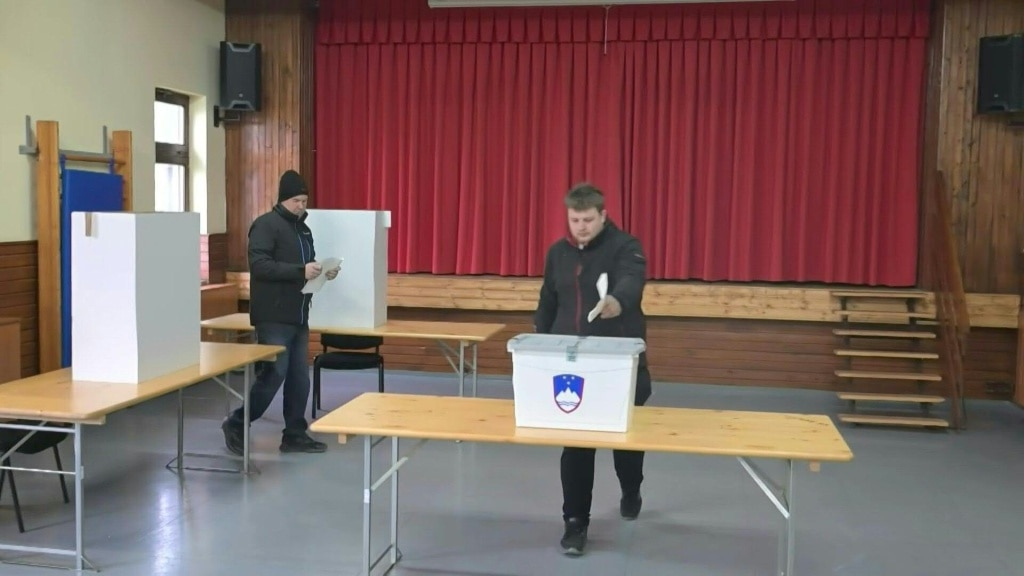
Slovenians participated in a closely contested parliamentary election on Sunday, marking a potential political turning point for the Central European nation. The electoral battle pitted incumbent Prime Minister Robert Golob’s liberal government against the conservative opposition led by veteran politician Janez Jansa, who has expressed admiration for former U.S. President Donald Trump.
This election could determine whether the EU member state of two million people maintains its progressive trajectory or reverts to the illiberal policies that characterized Jansa’s previous administration. The campaign has been marred by allegations of foreign interference, with Slovenian authorities investigating whether Israeli intelligence firm Black Cube orchestrated secretly recorded videos suggesting corruption within Golob’s government.
Voting commenced at 7:00 AM local time (0600 GMT) with polling stations scheduled to close at 7:00 PM, after which exit polls would be immediately released. The electoral contest has narrowed significantly in recent weeks, with opinion polls indicating the two main parties running neck-and-neck after Jansa’s conservatives initially maintained a substantial lead.
During his four-year tenure, Prime Minister Golob, a political newcomer when he assumed power in 2022, implemented several progressive policies including legalizing same-sex marriage. His government also took the controversial stance of describing Israel’s military operations in Gaza as ‘genocide,’ placing Slovenia among a minority of EU countries adopting this position.
Jansa’s campaign focused on economic concerns, accusing the current government of financial mismanagement and characterizing the election as ‘a referendum on corruption.’ The 67-year-old three-time prime minister promised to restore ‘Slovenian values’ including the ‘traditional family’ and restrict state funding to NGOs he considers politically motivated.
The election has generated intense public engagement, with over 1,000 citizens gathering outside parliament on Friday to encourage voter participation. Organizers described the campaign as one of the ‘dirtiest and most content-free’ in Slovenian history, expressing concerns about potential democratic backsliding.
Political analysts suggest the outcome could have significant implications for Europe’s political landscape, with one commentator noting that a right-wing victory would represent ‘the fall of another liberal stronghold in Europe, another nail in liberal democracy’s coffin.’ Jansa’s previous administration, which maintained close ties with Hungarian Prime Minister Viktor Orban, faced mass protests and criticism from EU institutions over rule-of-law concerns.