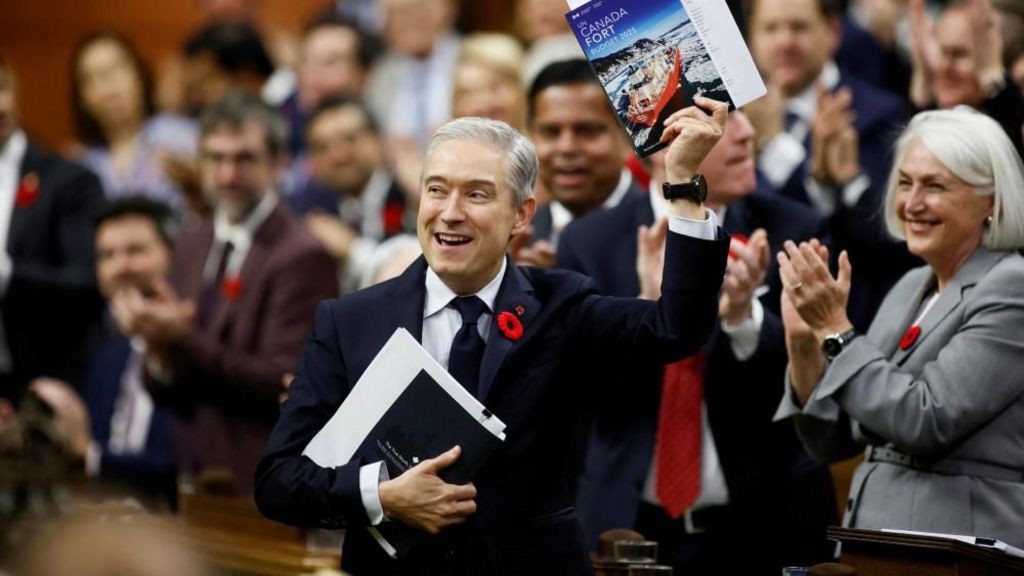
On Tuesday, Canada’s Finance Minister François-Philippe Champagne presented the nation’s federal budget, marking Prime Minister Mark Carney’s first major fiscal plan since taking office. The budget, described as both a political manifesto and a spending blueprint, outlines a comprehensive strategy to position Canada as the strongest economy in the G7. It comes at a time of significant global change, with Canada’s relationship with the US—its largest trading partner—undergoing rapid shifts. The budget warns of economic headwinds and emphasizes the need for a robust response to ensure Canada’s competitiveness on the global stage. The plan includes C$280 billion in spending, which could push the deficit to C$78.3 billion, the second-largest in Canadian history. Key investments target infrastructure, defense, housing, and digital corridors, while C$60 billion in spending cuts over five years will be achieved through public sector job reductions and AI adoption. The budget also introduces a Climate Competitiveness Strategy, aiming to make Canada a clean energy superpower by supporting low-emission projects and carbon capture technologies. Defense spending will see a significant boost, with C$81.8 billion allocated over five years to meet NATO targets and address Arctic security. Immigration targets are being reduced, and several Trudeau-era policies, including the consumer carbon tax and luxury vehicle tax, have been scrapped. The budget also addresses the impact of US tariffs, offering C$5 billion in support for affected industries and launching a C$10 billion loan facility to help businesses weather trade-related challenges.