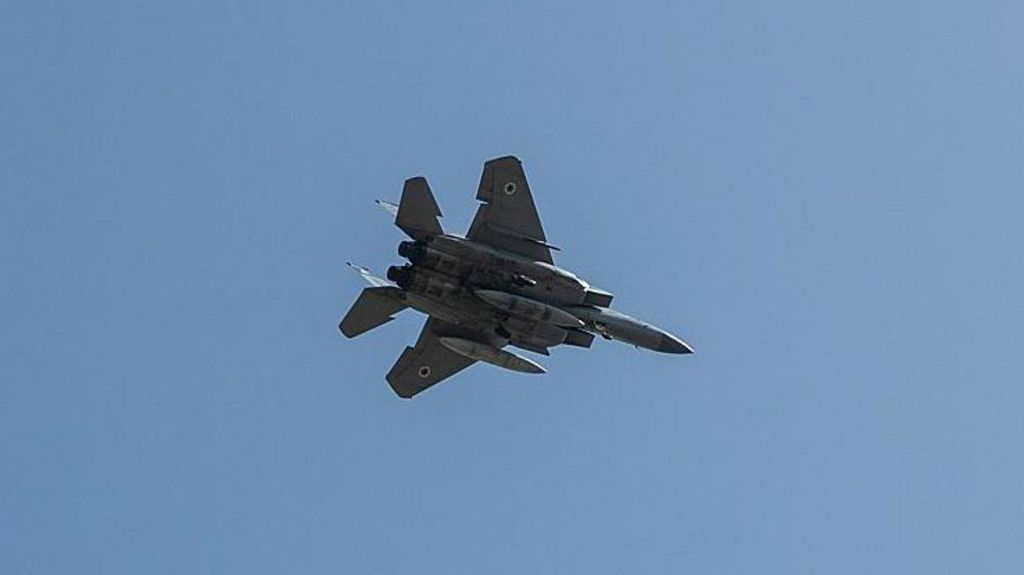
In a high-stakes operation that has been hailed as one of the most audacious rescue missions in modern U.S. military history, a second American airman missing after a U.S. F-15 fighter jet was shot down over Iran has been successfully recovered by U.S. forces.
The incident unfolded Friday after the jet crashed, forcing both the pilot and the on-board weapons systems officer to eject from the aircraft. The pilot was pulled from the area swiftly following the crash, but the second crew member remained unaccounted for, triggering parallel search efforts by both U.S. and Iranian forces in the rugged, mountainous terrain of southwestern Iran.
For U.S. military and intelligence leaders, the hours-long search carried enormous strategic risk: if Iranian forces had captured the airman first, he would almost certainly have become a high-value propaganda tool, and potentially held as a prisoner of war to use in negotiations with the U.S. Iran’s Islamic Revolutionary Guard Corps (IRGC) launched a large-scale manhunt for the missing service member, deploying ground troops and enlisting local civilians, with a reported reward of roughly $66,000 offered for anyone who helped capture him alive. Social media footage circulating in the hours after the crash appeared to show hundreds of Iranians heading into the mountains to join the search.
Details of the successful rescue first broke in U.S. media outlets late Saturday, and just minutes later, former U.S. President Donald Trump confirmed the mission’s outcome in a post on Truth Social, writing simply, “WE GOT HIM!” Trump added that the rescued airman, a respected colonel, had sustained injuries during the incident but was expected to make a full recovery, praising the operation as one of the most daring search and rescue efforts in U.S. history.
Multiple U.S. officials have shed new light on the complex operation, revealing that the weapons officer spent more than 24 hours evading capture alone in the mountains, armed only with a handgun. The CIA played a pivotal role in the mission, according to a senior U.S. official: intelligence operatives tracked the colonel to a remote mountain crevice, transmitted his exact coordinates to the Pentagon, and ran a sophisticated deception campaign across Iran to distract Iranian forces. During the rescue, the agency spread false information that the airman had already been captured and removed from the country, drawing Iranian search teams away from the actual extraction site.
Trump later confirmed that dozens of U.S. aircraft were deployed for the mission. One aircraft, an A-10 Warthog attack jet, sustained damage while operating over the Gulf, forcing its pilot to eject before being recovered safely by U.S. forces. The White House intentionally withheld public updates after the pilot’s initial recovery on Friday to protect the secrecy of the ongoing rescue operation, a decision that military sources say contributed to its success. The BBC has also confirmed that the first pilot may have suffered injuries during his ejection from the F-15.
Iran’s semi-official IRGC-affiliated news agency Tasnim reported that five Iranian civilians and service members were killed during the U.S. rescue operation, a claim that has not yet been independently verified by U.S. officials.
The successful recovery comes amid a sharp escalation of military conflict across the Middle East. On Sunday morning, Abu Dhabi authorities confirmed they were working to contain large fires at the Borouge petrochemical facility, sparked by falling debris from an Iranian missile strike. Kuwait reported that Iranian drone strikes caused extensive damage to the country’s oil and petrochemical infrastructure, and industrial sites in Bahrain were also targeted. Later the same day, Israeli media reported that a ballistic missile scored a direct hit on a residential building in Haifa, leaving at least four people injured.
Despite the escalating violence, Trump told Fox News in an interview Sunday that he believes there is a “good chance” of reaching a negotiated deal with Iran by Monday, one day ahead of a U.S.-imposed deadline for Tehran to reopen the strategically critical Strait of Hormuz. The interview came after Trump posted an expletive-laden threat on social media, repeating promises to bomb Iranian power plants and key bridges if the deadline is not met.