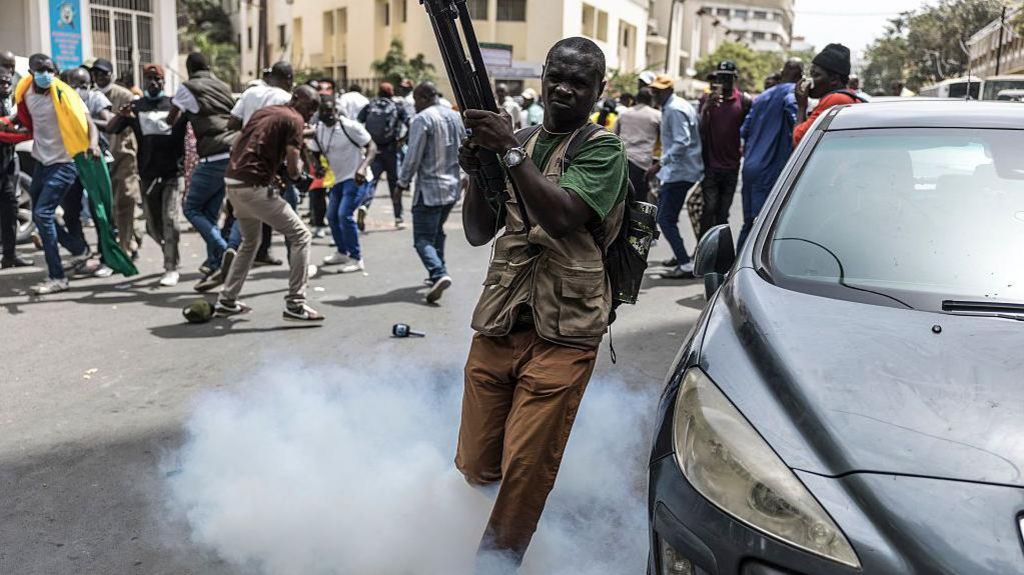
A bitter power struggle between Senegal’s top two political leaders boiled over this week as lawmakers approved a controversial package of constitutional changes that shift executive authority to the legislative branch, triggering street clashes outside the National Assembly and throwing the West African nation into renewed political uncertainty.
The amendments, which passed by an overwhelming majority following hours of heated, tense debate in the chamber, mark the latest escalation in a public feud between President Bassirou Diomaye Faye and parliamentary Speaker Ousmane Sonko — once close allies who swept to power together in 2024 on a platform of transformative systemic change, before their alliance collapsed into open rivalry earlier this year. Tensions between the pair had been simmering for months over disagreements about how to manage Senegal’s mounting debt crisis, with Sonko, who previously served as Faye’s prime minister, openly lambasting the president’s policy approach. The split reached a breaking point in May, when Faye dismissed Sonko from his cabinet. Sonko, however, retained overwhelming support from his Pastef party, which holds a supermajority of 130 out of 165 seats in the National Assembly, and was quickly elected speaker by legislative allies just weeks later.
The reform package, put forward by Pastef lawmakers, includes multiple key changes designed to expand parliamentary authority at the expense of the presidency. Provisions include broadening lawmakers’ investigative powers to strengthen legislative oversight of the executive branch, requiring full public disclosure of all natural resource contracts to parliament, and expanding the scope of authority held by permanent parliamentary committees. The reforms would also restructure the country’s top constitutional body, replacing the existing Constitutional Council with a new nine-member Constitutional Court, up from the current seven members. Another contested provision bars a sitting president from holding leadership position within a political party — a change widely viewed as targeted at Faye, who remains a dues-paying Pastef member despite stepping back from official party roles. If enacted, analysts say the rule could block Faye from launching his own independent political party ahead of the next national election. A final provision prohibits a sitting president from signing new legislation into law during the transition period between a presidential election and the inauguration of the president-elect.
Even as debate unfolded inside parliament on Monday, unrest broke out outside, where security forces were forced to deploy tear gas to disperse crowds of demonstrators who had gathered to oppose the reforms. Inside the chamber, opposition lawmakers walked out of the vote en masse to protest what they decried as an undemocratic power grab. Pastef leaders have defended the changes, framing them as a critical step to reinforce the separation of powers between Senegal’s executive, legislative, and judicial branches, and deliver on the 2024 campaign promise of deeper democratic reform. But critics across the political spectrum and civil society say the initiative is nothing more than a naked power grab by Sonko, who retains near-total control over the legislative majority and is seeking to weaken his former ally ahead of upcoming political contests.
In a surprise announcement during Monday’s debate, Justice Minister Moussa Sarr confirmed that President Faye intends to put the constitutional amendments to a national referendum, a step required for constitutional changes under current law, though no timeline for the public vote has yet been announced. The announcement immediately sparked pushback from Sonko, who questioned whether the president had the legal authority to call a public referendum after the reforms had already been approved by a legislative majority. Opposition parties and dozens of civil society organizations have already called for the full bill to be withdrawn immediately, warning that the power shift will erode democratic checks and balances and deepen political gridlock in the country. Protesters have repeatedly accused the ruling Pastef party of using the reforms to redirect executive authority away from the presidency and into the hands of the legislative branch controlled by Sonko.
The ongoing rift within what was once a united reform movement has plunged Senegal into a period of heightened political uncertainty just two years after the coalition won power on a pledge to clean up corruption and revitalize the country’s economy. With both sides digging in on their positions, the upcoming referendum process is expected to further polarize the West African nation.