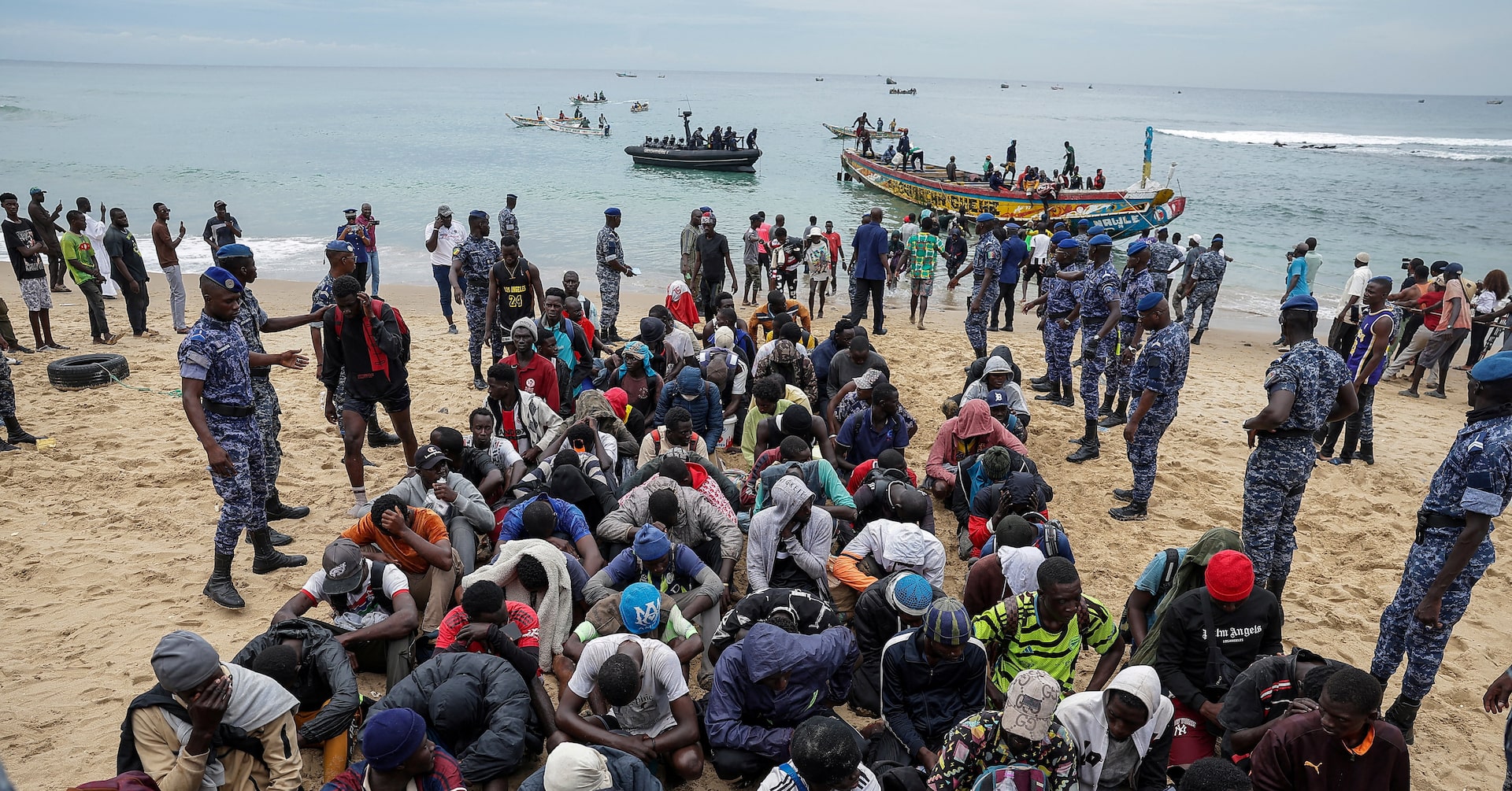
In a dramatic intervention off the coast of Dakar, Senegalese authorities intercepted a wooden fishing boat carrying 112 migrants attempting to reach Europe via the treacherous Atlantic Ocean route. The vessel, a traditional pirogue, was discovered drifting without an engine after local fishermen raised the alarm. Abdoul Aziz Gueye, the mayor of Dakar’s Ouakam district, revealed that the fishermen provided a motor to help the boat approach the shore, where it was subsequently intercepted by the Senegalese marines. All individuals on board were identified as young men, and an investigation has been launched to determine the origins of the vessel and the circumstances surrounding its engine failure. One migrant, speaking to Reuters on Ouakam Beach, disclosed that the group hailed from Gambia and had been at sea for five days. This incident highlights the ongoing challenge of irregular migration from West Africa to Europe, particularly via the perilous Atlantic route to Spain’s Canary Islands. Despite increased collaboration between European and West African nations to curb such migration, deep-rooted issues like economic hardship, political instability, and climate change continue to drive individuals to undertake these dangerous journeys. Senegalese authorities have intensified patrols in recent years, yet migrants persist in attempting the crossing, often in overcrowded and ill-equipped vessels.