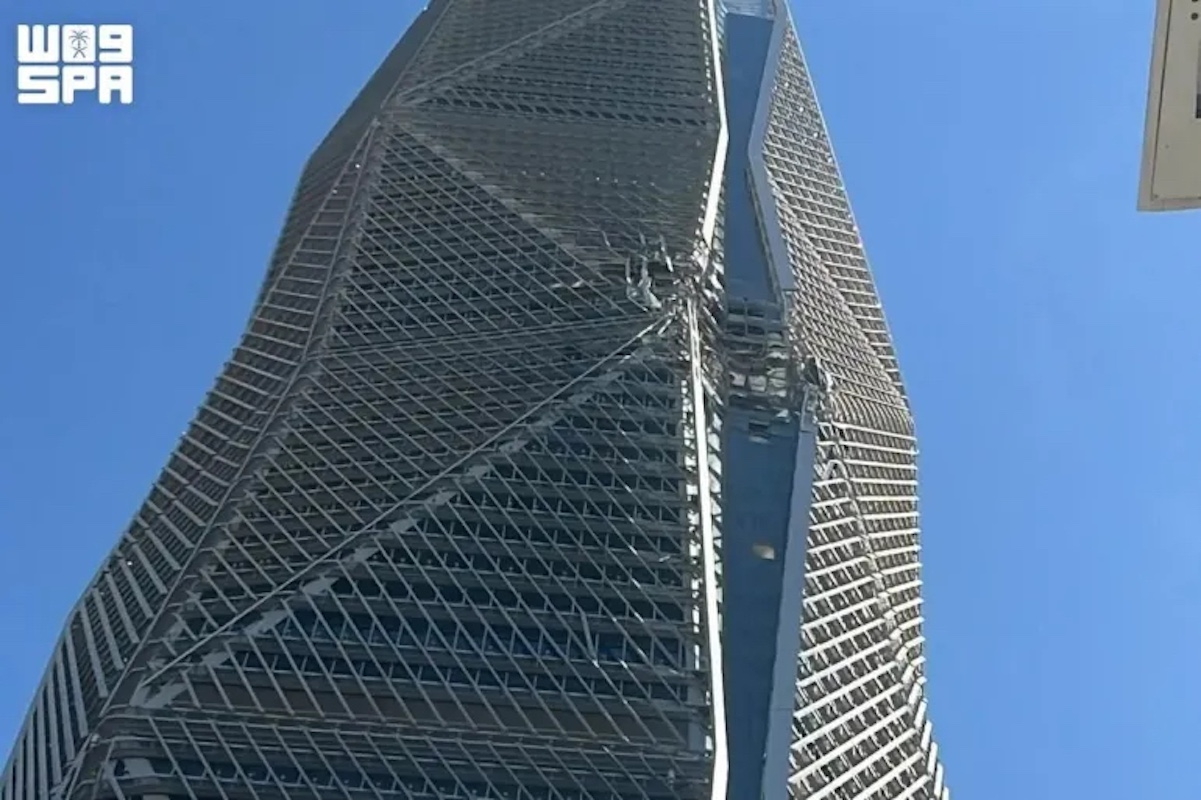
A string of reported assaults on the Riyadh headquarters of Saudi Arabia’s Public Investment Fund (PIF), one of the world’s largest sovereign wealth funds, marks a dangerous new escalation of ongoing regional conflicts tied to tensions involving Iran and Houthi-aligned Yemeni forces. For the second time in less than a week, the building housing the core institution driving Saudi Arabia’s Vision 2030 economic overhaul sustained damage, with Saudi Civil Defense authorities confirming 11 injuries in the latest November 25 incident, as verified by Reuters reporting. While independent third-party verification of formal responsibility for the strikes remains pending, their far-reaching strategic and economic ramifications are already impossible to dismiss. For generations, Gulf Cooperation Council (GCC) states’ primary geopolitical vulnerabilities were universally tied to energy sector assets: oil fields, refineries, export terminals, and critical maritime chokepoints such as the Strait of Hormuz and Bab el-Mandeb Strait. The repeated targeting of the PIF shatters that long-held paradigm, extending the theatre of potential hostilities directly into the heart of financial districts and the infrastructure built to underpin post-oil economic diversification. The PIF, which manages nearly $1 trillion in total assets, is not a conventional investment vehicle: it serves as the central policy tool for Crown Prince Mohammed bin Salman’s blueprint to reorient Saudi Arabia’s economy away from fossil fuel dependence, with holdings spanning artificial intelligence, advanced manufacturing, renewable energy, tourism, global sporting enterprises, and cross-border technology projects. As such, assaults on its headquarters carry profound symbolic weight that far outstrips the immediate physical damage to the facility. While structural harm to an office building does not directly erode the PIF’s global portfolio of assets, repeated targeting risks cascading secondary harms: eroded international investor confidence, skyrocketing commercial insurance premiums for Gulf-based operations, and growing barriers to recruiting top-tier global industry talent that Saudi Arabia needs to establish itself as a leading global financial and tech hub. This new layer of vulnerability does not impact Saudi Arabia alone. All five other GCC member states – the United Arab Emirates, Qatar, Kuwait, Bahrain, and Oman – have poured trillions of dollars into building their own diversified, globally competitive economic centers anchored by world-class sovereign wealth funds including the Abu Dhabi Investment Authority, Mubadala Investment Company, Qatar Investment Authority, and Kuwait Investment Authority, all of which rank among the world’s most influential institutional investors. Any widespread global perception that Gulf financial districts are now exposed to recurrent military strikes carries ripple effects that stretch far beyond West Asia. Sovereign wealth funds from the GCC are deeply integrated into the fabric of North American, European, and Asian economies, underwriting major infrastructure projects, multinational corporate expansion, emerging technology research, and broad market liquidity. Severe destabilization of their home operating environments could send shocks through the entire global financial system. Compounding that risk is the reality that decades of steady, uninterrupted development are required to deliver on Gulf economic diversification goals. Sustained regional conflict would force governments to redirect billions in capital from long-term productive investments to emergency defense spending, post-attack reconstruction, and humanitarian relief. The ongoing unresolved civil war in Yemen has already demonstrated that its destabilizing impacts cannot be contained within national borders: Houthi operations targeting Saudi infrastructure and Red Sea maritime shipping have already drawn widespread international concern, disrupting commercial aviation and trade flows across the region and displacing millions of Yemeni civilians. As the analysis outlines, a purely military response will never resolve Yemen’s deep-seated political and humanitarian crises. Saudi Arabia’s security concerns are entirely legitimate, but that does not justify consigning the Yemeni civilian population to endless cycles of warfare, poverty, and displacement. Under international humanitarian law, all civilian infrastructure – from Riyadh’s financial district to Yemeni hospitals, residential neighborhoods, and humanitarian aid facilities – is entitled to equal protection from targeted harm. The evolving security crisis in the Gulf carries tangible economic stakes for Southeast Asia’s ASEAN bloc as well, particularly for major economies including Singapore, Indonesia, and Malaysia. The GCC has grown into a critical source of foreign direct investment, stable energy supplies, and development capital for the region, and the landmark 2025 ASEAN-GCC-China Economic Summit held in Kuala Lumpur laid the groundwork for unprecedented trilateral economic cooperation that cannot reach its full potential amid sustained regional conflict. With the Strait of Hormuz already facing severe geopolitical disruption and the Bab el-Mandeb Strait growing increasingly insecure, the addition of financial sector targeting creates a new layer of systemic global risk, converging pre-existing crises of energy insecurity and maritime insecurity with emerging threats to financial stability. For ASEAN states, this makes active support for diplomatic initiatives to deliver comprehensive, sustainable ceasefires across West Asia – including a long-term resolution to the Yemeni conflict – a clear and direct national interest. The repeated strikes on the PIF headquarters serve as a stark warning that the economic fallout of modern warfare can no longer be contained within narrow geographic boundaries. For decades, Saudi Arabia and its GCC neighbors have made deliberate, long-term investments to build a stable, prosperous post-oil future for coming generations. It would be an irreversible tragedy if the very institutions designed to secure that future were left increasingly exposed to the destructive forces of regional conflict. Today, peace in the Gulf is no longer merely a local security priority: it is an indispensable precondition for the successful completion of the region’s economic transformation, and a critical pillar of global economic stability. This analysis was contributed by Dr. Phar Kim Beng, a professor of ASEAN studies and director of the Institute of International and ASEAN Studies at the International Islamic University of Malaysia.