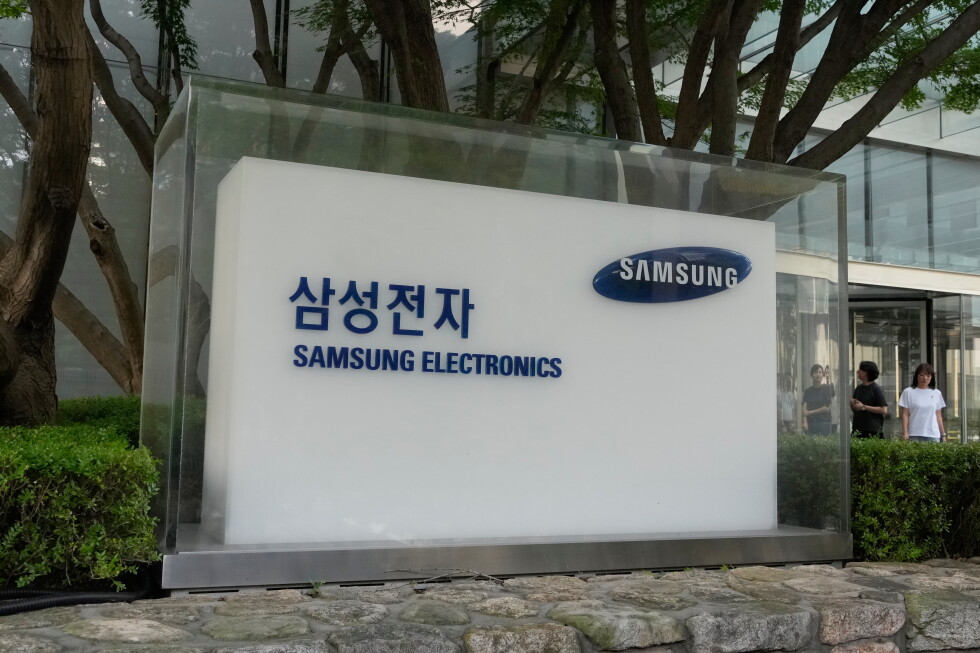
The global artificial intelligence boom has delivered historic financial results for the world’s two largest memory chip manufacturers, both based in South Korea — but growing investor anxiety over massive capital expansion plans and rising competition from China has sent their share prices sharply downward in recent trading.
Samsung Electronics, South Korea’s largest technology conglomerate, announced Thursday that it notched a record 89.5 trillion won (equal to $62 billion) in operating profit for the second quarter of the year, spanning April through June. This milestone result marks a more than 19-fold jump from the same period one year prior, and nearly all of the profit can be traced back to Samsung’s semiconductor division. The segment’s explosive growth has been fueled by skyrocketing demand for AI infrastructure, which has pushed up prices for memory chips and driven sharp increases in shipments of advanced high-bandwidth memory (HBM) chips — the core component that powers modern generative AI systems. This strong performance from semiconductors more than offset an operating loss reported in the company’s consumer division, which includes mobile devices, televisions, and home appliances, where higher component costs weighed on margins.
Samsung also hit an all-time high for quarterly revenue, which reached 171.5 trillion won ($119 billion). In a statement accompanying its earnings release, the company projected that robust demand for its memory products will continue through the second half of 2024, supported by ongoing global expansion of AI infrastructure and the growing mainstream adoption of agentic artificial intelligence. The firm added that demand for server-specific memory chips is expected to accelerate further, leaving the global market in a state of persistent undersupply.
Samsung’s blockbuster earnings report comes just one day after crosstown rival SK Hynix, the world’s second-largest memory chipmaker, released its own record-breaking second-quarter results. SK Hynix reported 60.5 trillion won ($42 billion) in quarterly revenue, a new all-time high, but its bottom-line profit fell short of the high expectations set by market analysts. The miss sent SK Hynix shares tumbling more than 9% on Monday, and Samsung’s stock has also declined this week amid broader market jitters.
The share price pullback comes as retail investors, who are the main driver of sharp volatility in South Korea’s equity market, have grown increasingly concerned about two key risk factors. First, both Samsung and SK Hynix have launched massive capital expenditure plans to expand semiconductor manufacturing capacity and build new data centers, part of South Korea’s broader national push to solidify its lead in the global AI arms race. But a growing number of industry analysts are questioning whether these multi-billion-dollar investments will ultimately deliver enough returns to justify the huge spending. Second, investors are growing wary of intensifying competition from Chinese chip manufacturers. Recent reports confirm that a Chinese state-owned enterprise has begun mass production of domestically developed immersion deep-ultraviolet (DUV) lithography machines, a critical piece of technology required for advanced chip manufacturing. Investor jitters were further amplified by the blockbuster, highly successful initial public offering of ChangXin Memory Technologies (CXMT), China’s leading homegrown memory chipmaker, which saw its shares surge on the Shanghai stock exchange in its debut.
The pullback in South Korean AI chip stocks has also aligned with a broader global trend: AI-sensitive equities have declined in recent sessions across major international markets, dragging down broader index values worldwide.