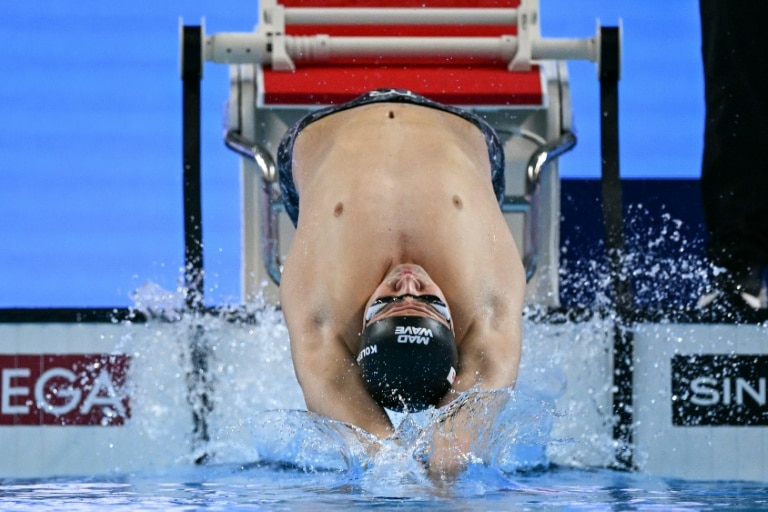
Global aquatic sports governing body World Aquatics announced a landmark policy shift on Monday, ending a years-long restriction that barred senior athletes from Russia and Belarus from competing under their national flags at official international events.
The ban on Russian and Belarusian competitors was first implemented in early 2022, in response to Russia’s full-scale invasion of Ukraine. For nearly two years starting in September 2023, athletes from the two nations were only permitted to participate as neutral competitors, with no official national symbols allowed. The new policy reverses this arrangement for senior competitors.
In an official statement released Monday, World Aquatics confirmed that after a vote by its governing bureau, and in consultation with the Aquatics Integrity Unit (AQIU) and the organization’s athletes’ committee, the existing participation guidelines put in place for periods of political conflict will no longer apply to senior athletes holding Russian or Belarusian sporting nationality. Going forward, these athletes will be granted the same privileges as competitors from all other countries, allowing them to compete with their official national uniforms, fly their national flags, and have their national anthems played for medal victories.
World Aquatics also emphasized that eligibility for competition is not automatic. All Russian and Belarusian athletes must clear a strict anti-doping requirement, passing at least four consecutive scheduled doping controls before they are allowed to participate in any official event.
World Aquatics President Husain Al-Musallam framed the decision as a commitment to keeping geopolitical division separate from athletic competition. “Over the last three years, World Aquatics and the AQIU have successfully helped ensure that conflict can be kept outside the sporting competition venues,” Al-Musallam said. “We are determined to ensure that pools and open water remain places where athletes from all nations can come together in peaceful competition.”
The policy shift puts World Aquatics in line with a recent decision from the International Paralympic Committee, which voted last year to allow Russian and Belarusian athletes to compete under their own national flags at the 2026 Winter Paralympic Games set to take place in Milan-Cortina.
Russian Sports Minister Mikhail Degtyarev publicly welcomed the new ruling, noting that it followed a meeting between himself and Al-Musallam in January at the Olympic Council of Asia gathering in Tashkent. Degtyarev wrote on his Telegram channel that the two officials had discussed the rights of Russian athletes during the meeting. “I am grateful to Mr Al-Musallam for his firm stance on the issue,” he said. “It is very important that the international sport dialogue is bearing fruits and contributing to the systematic restauration of sport ties.”
Degtyarev also addressed a related incident earlier Monday, when Ukrainian water polo athletes refused to compete against Russia in a World Cup qualifying match held in Malta. The refusal resulted in an automatic technical defeat for Ukraine, a outcome Degtyarev argued only harmed the Ukrainian team.
The next senior World Aquatics Championships after the 2025 event in Singapore will be hosted in Budapest in 2027.